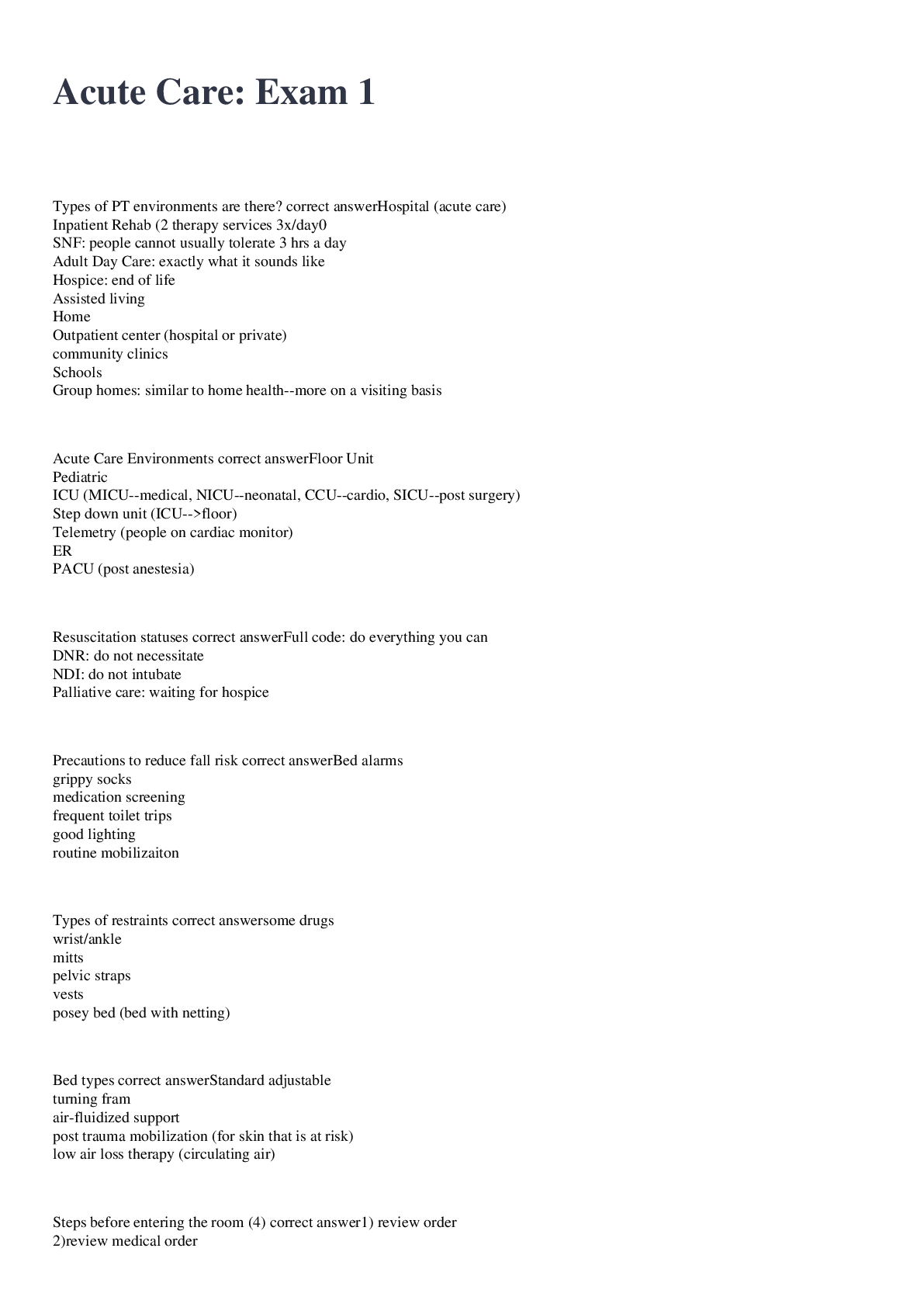
Types of PT environments are there? correct answerHospital (acute care)
Inpatient Rehab (2 therapy services 3x/day0
SNF: people cannot usually tolerate 3 hrs a day
Adult Day Care: exactly what it sounds like
Hospi
...
Types of PT environments are there? correct answerHospital (acute care)
Inpatient Rehab (2 therapy services 3x/day0
SNF: people cannot usually tolerate 3 hrs a day
Adult Day Care: exactly what it sounds like
Hospice: end of life
Assisted living
Home
Outpatient center (hospital or private)
community clinics
Schools
Group homes: similar to home health--more on a visiting basis
Acute Care Environments correct answerFloor Unit
Pediatric
ICU (MICU--medical, NICU--neonatal, CCU--cardio, SICU--post surgery)
Step down unit (ICU-->floor)
Telemetry (people on cardiac monitor)
ER
PACU (post anestesia)
Resuscitation statuses correct answerFull code: do everything you can
DNR: do not necessitate
NDI: do not intubate
Palliative care: waiting for hospice
Precautions to reduce fall risk correct answerBed alarms
grippy socks
medication screening
frequent toilet trips
good lighting
routine mobilizaiton
Types of restraints correct answersome drugs
wrist/ankle
mitts
pelvic straps
vests
posey bed (bed with netting)
Bed types correct answerStandard adjustable
turning fram
air-fluidized support
post trauma mobilization (for skin that is at risk)
low air loss therapy (circulating air)
Steps before entering the room (4) correct answer1) review order
2)review medical order
3)check in with nurse and discuss planned intervention
4)ask about lines leads and tubes
Steps Upon entering room (7) correct answer1) wash hands
2) introduce yourself/explain presence
3) Observe space
4) Observe pt and position
5)follow lines and inspect integrity of lines
6) visualize activity you wish to perform
7) think of how activity might impact vitals
Steps to take during mobility (5) correct answer1) ensure patient safety
2) get assistance as needed
3) monitor lines
4) don't panic
5)monitor vitals
Steps after completing mobility (4) correct answer1)ensure patient safety
2) ensure lines are not tangled, trapped, or pulled taught
3) make sure all alarms are returned to normal
4)follow up with nurse (let them know you are done and how the intervention went)
Components of the PT evaluation correct answerExamination: History, review of systems, specific tests and measures
Evaluation: PT diagnosis
Prognosis: the patient's potential from PT services (ADLs and quality of life)
intervention
outcomes
Broad to specific model of evaluation process correct answerBroad: Subjective exam: chart review, screening questions, and tests
more specific: systems review/neuromusculoskeletal screen (posture, ROM, fxn and near screen)
specific: MMT, MLT, goniometry, Joint mobility, special tests)
components of the medical record correct answerdemographics sheet
orders
history and physical
progress notes
case management notes
nursing notes (v diff from PT notes)
diagnostic testing
lab results
interdisciplinary notes
Examples from the MD orders that might indicate that PT should not be performed correct answerDoppler US to r/o DVT
x-ray to r/o fracture
stat EKG due to chest pain
General data gathered from chart review correct answercurrent condition/chief complaint
general demographics
general health habits, status and prior level of fxn
social history/living environment
family history
PMH PSH
medications
lab values (esp changes)
results of diagnostic testing
ADLs correct answereating
bathing
grooming
dressing
bed mobility
transfers
instrumental activities if daily living correct answercooking
shopping
housekeeping
balancing a checkbook
driving a car
ability to use public transportation
When entering the room to evaluate correct answerwash hands
don PPE
introduce yourself
explain presence/purpose
check pt identity
ask permission to treat
additional information gathered from patient correct answercurrent condition
medical history
living situation
general health status DME (wheel chair, walker, rails)
patient goals
systems review: cardio pull exam correct answerHR
BP
RR
Percieved level of exertion
[Show More]