Ch 1: Rapid Response Teams and safety (also called Medical Emergency Team): Team of critical care experts who... correct answer...save lives and decrease the risk of harm by providing care to patients before a respirator
...
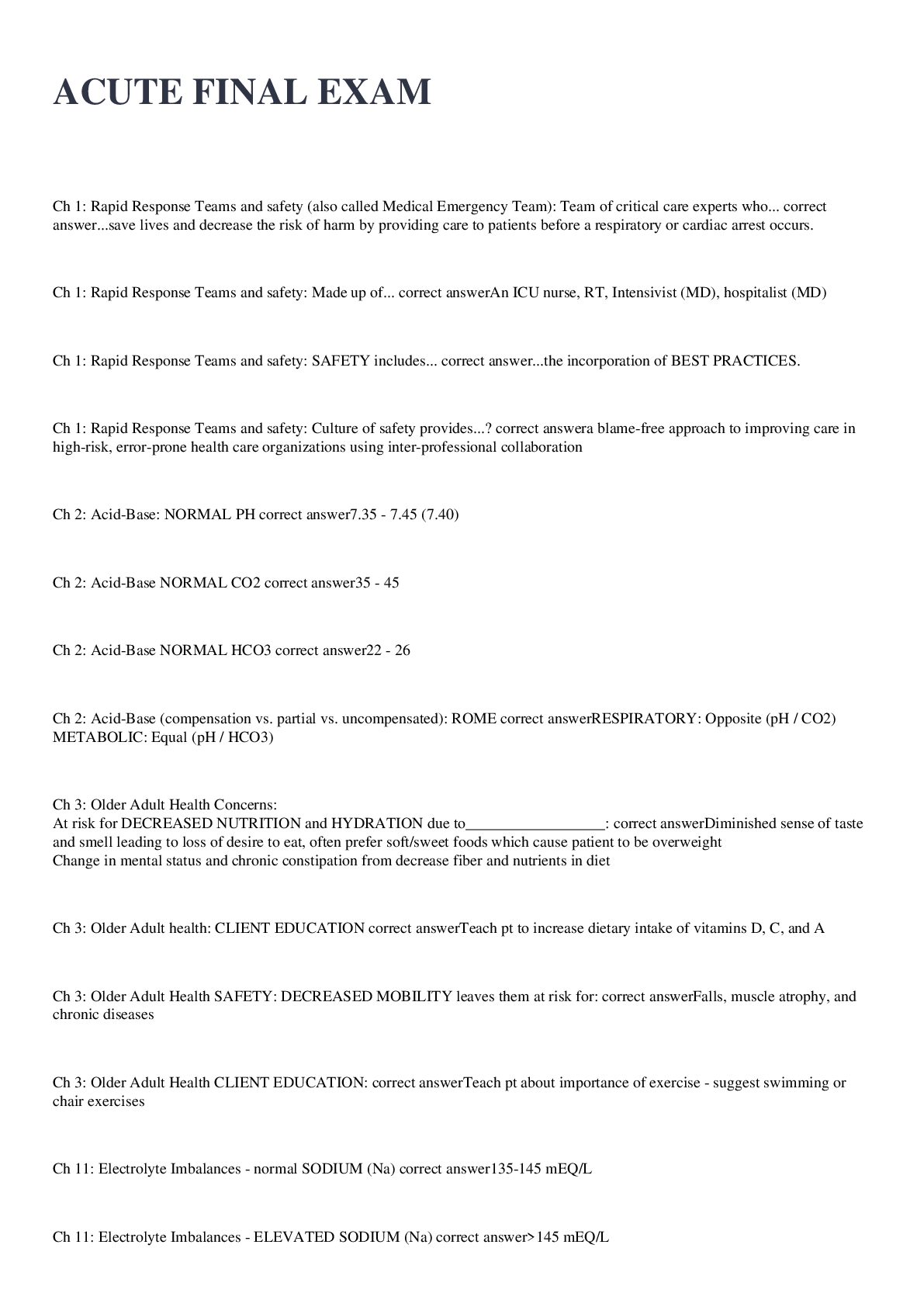
Ch 1: Rapid Response Teams and safety (also called Medical Emergency Team): Team of critical care experts who... correct answer...save lives and decrease the risk of harm by providing care to patients before a respiratory or cardiac arrest occurs.
Ch 1: Rapid Response Teams and safety: Made up of... correct answerAn ICU nurse, RT, Intensivist (MD), hospitalist (MD)
Ch 1: Rapid Response Teams and safety: SAFETY includes... correct answer...the incorporation of BEST PRACTICES.
Ch 1: Rapid Response Teams and safety: Culture of safety provides...? correct answera blame-free approach to improving care in high-risk, error-prone health care organizations using inter-professional collaboration
Ch 2: Acid-Base: NORMAL PH correct answer7.35 - 7.45 (7.40)
Ch 2: Acid-Base NORMAL CO2 correct answer35 - 45
Ch 2: Acid-Base NORMAL HCO3 correct answer22 - 26
Ch 2: Acid-Base (compensation vs. partial vs. uncompensated): ROME correct answerRESPIRATORY: Opposite (pH / CO2)
METABOLIC: Equal (pH / HCO3)
Ch 3: Older Adult Health Concerns:
At risk for DECREASED NUTRITION and HYDRATION due to__________________: correct answerDiminished sense of taste and smell leading to loss of desire to eat, often prefer soft/sweet foods which cause patient to be overweight
Change in mental status and chronic constipation from decrease fiber and nutrients in diet
Ch 3: Older Adult health: CLIENT EDUCATION correct answerTeach pt to increase dietary intake of vitamins D, C, and A
Ch 3: Older Adult Health SAFETY: DECREASED MOBILITY leaves them at risk for: correct answerFalls, muscle atrophy, and chronic diseases
Ch 3: Older Adult Health CLIENT EDUCATION: correct answerTeach pt about importance of exercise - suggest swimming or chair exercises
Ch 11: Electrolyte Imbalances - normal SODIUM (Na) correct answer135-145 mEQ/L
Ch 11: Electrolyte Imbalances - ELEVATED SODIUM (Na) correct answer>145 mEQ/L
Hypernatremia
Dehydration
Kidney disease
Hypercortisolism
Ch 11: Electrolyte Imbalances - LOW SODIUM (Na) correct answer<135 mEQ/L
Hyponatremia
Fluid Overload
Liver disease
Renal insufficiency
Ch 11: Electrolyte Imbalances - normal POTASSIUM (K+) correct answer3.5-5.0 mEQ/L
Ch 11: Electrolyte Imbalances - ELEVATED POTASSIUM (K+) correct answer>5.0 mEQ/L
Hyperkalemia
Dehydration
Kidney disease
Acidosis
Adrenal insufficiency
Crush injuries
Ch 11: Electrolyte Imbalances - LOW POTASSIUM (K+) correct answer<3.5 mEQ/L
Hypokalemia
Fluid Overload
Diuretic therapy
Alkalosis
Insulin administration
Aldosteronism
[Show More]