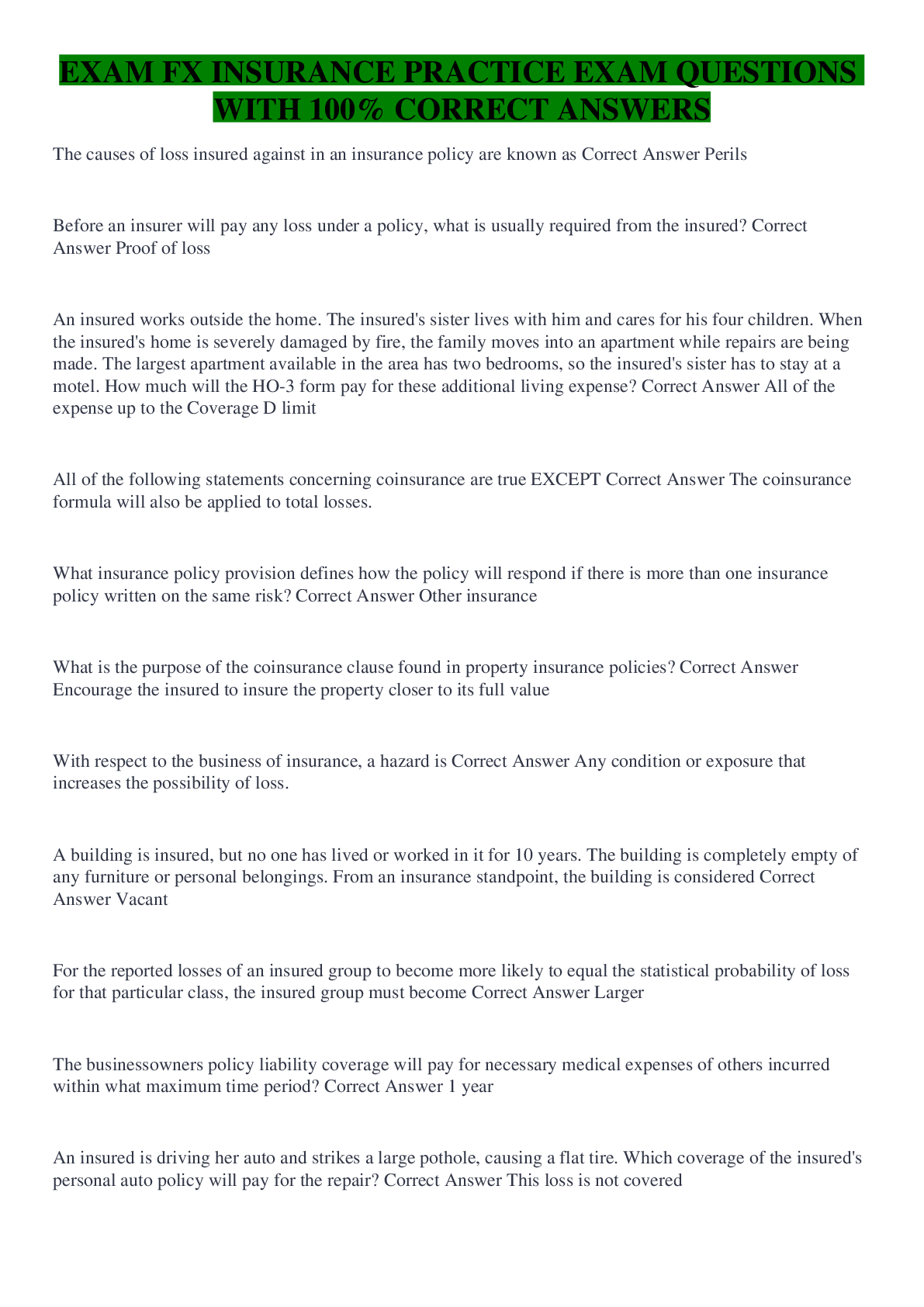
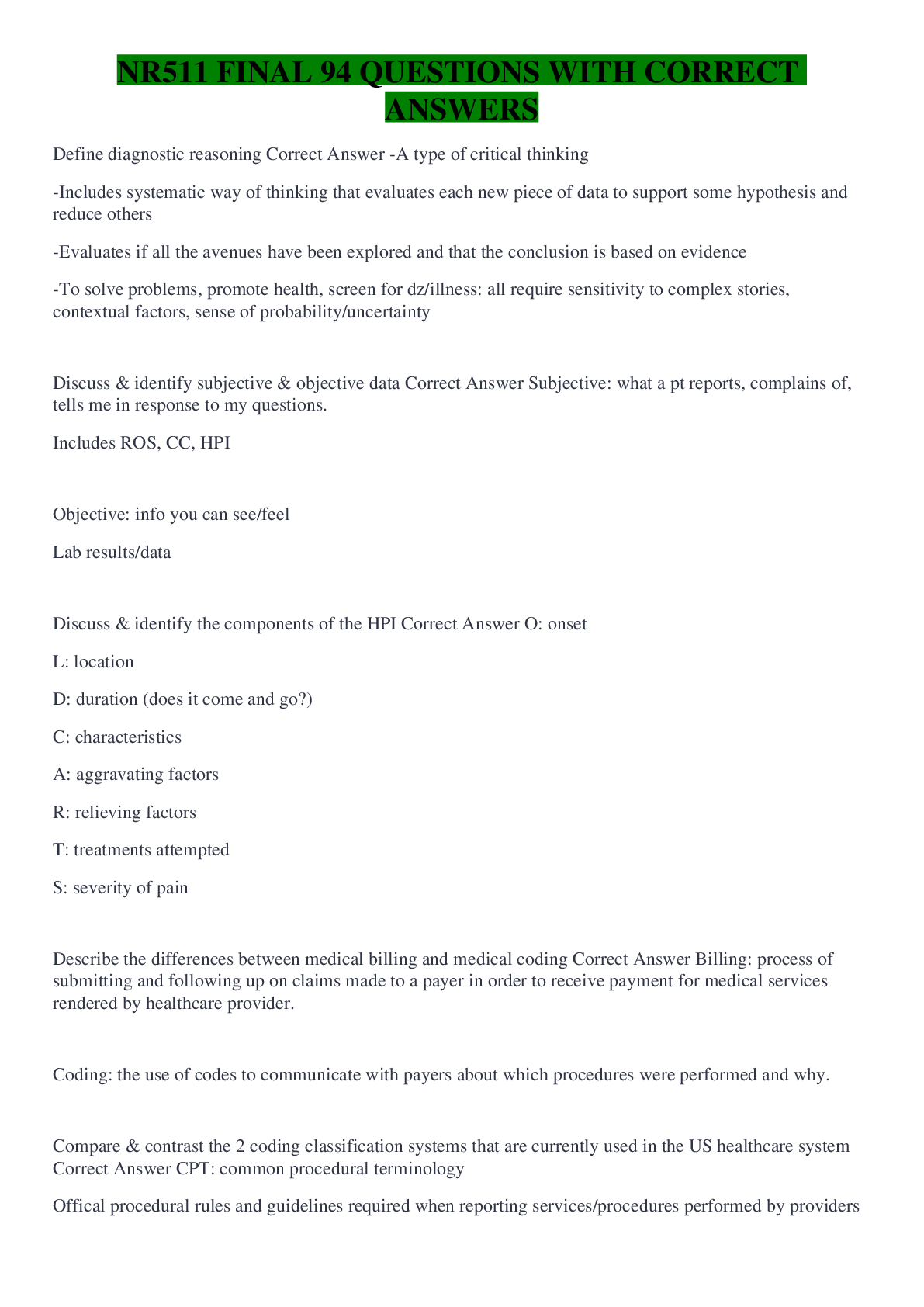
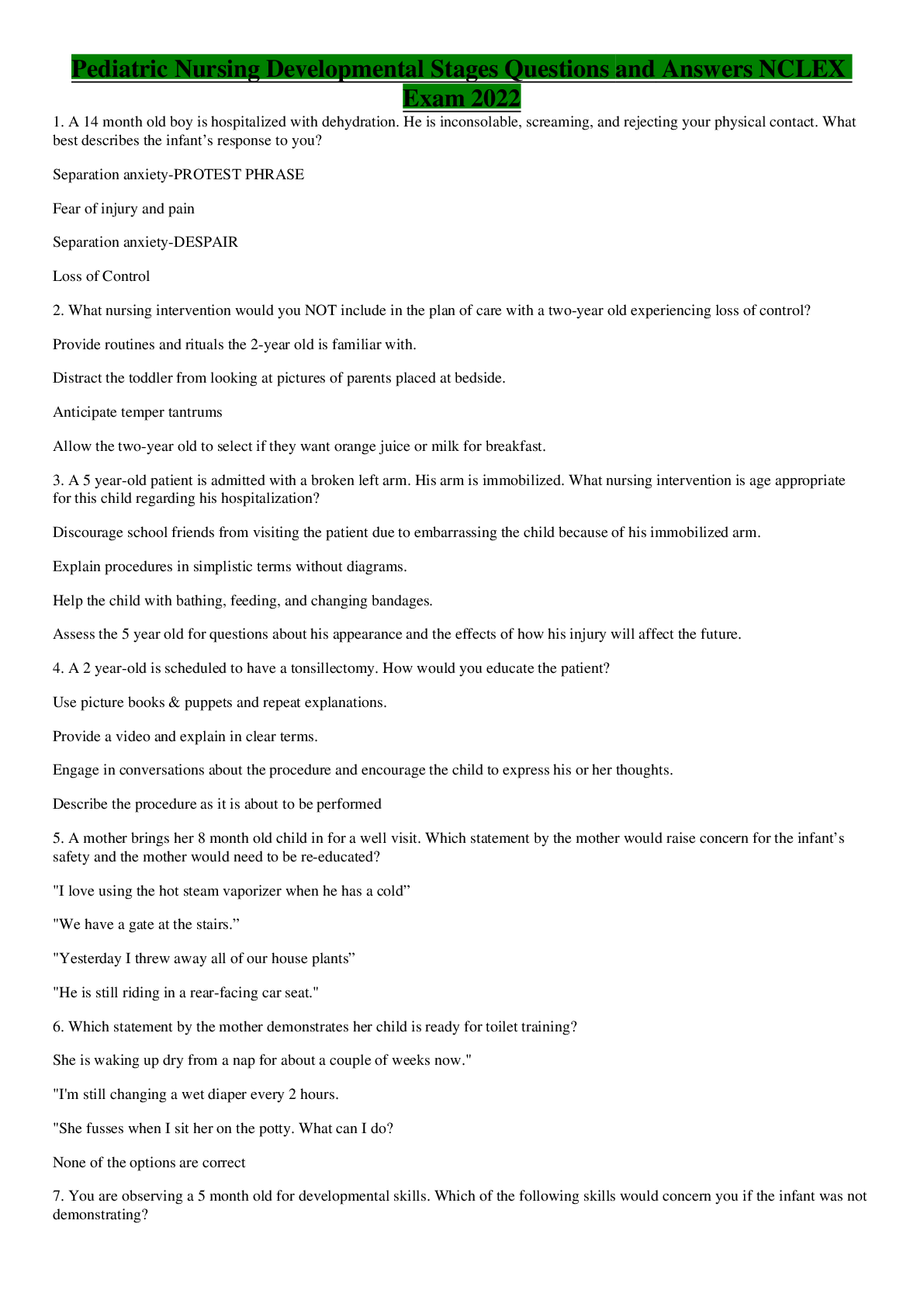
Child Learning and Development > QUESTIONS & ANSWERS > SLP PRAXIS PRACTICE (FORM 2) QUESTIONS WITH CORRECT ANSWERS (All)
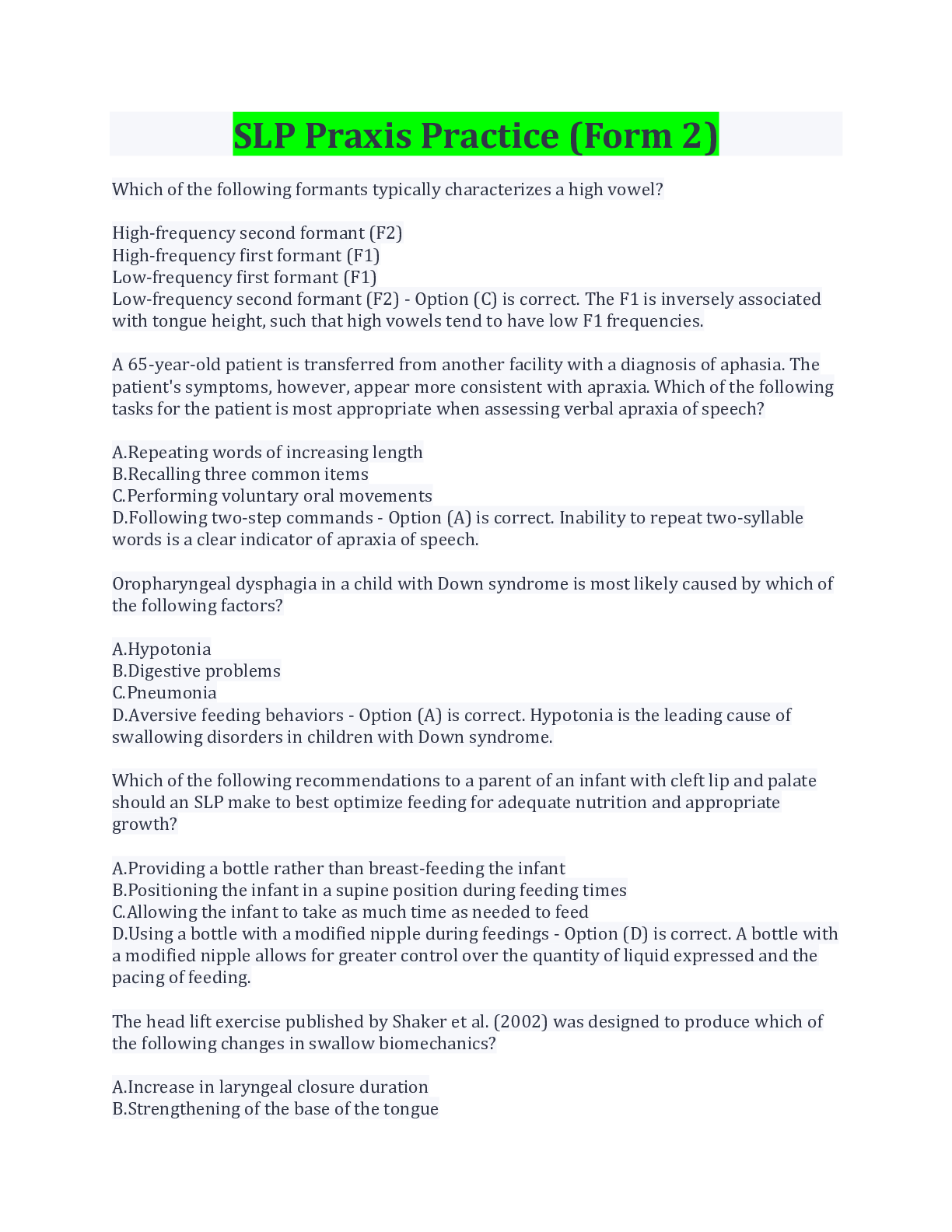
SLP PRAXIS PRACTICE (FORM 2) QUESTIONS WITH CORRECT ANSWERS
Document Content and Description Below
Last updated: 3 years ago
Preview 1 out of 41 pages
Instant download

Buy this Document to get the Full Access Instantly
Provided by Students Who Aced it
We Verify Document Content to Gurantee Accuracy
Reviews( 0 )
Document information
Connected school, study & course
About the document
Uploaded On
Dec 03, 2022
Number of pages
41
Written in
All

Additional information
This document has been written for:
Uploaded
Dec 03, 2022
Downloads
0
Views
163
Topic Tags
Recommended For You
Get more on QUESTIONS & ANSWERS »
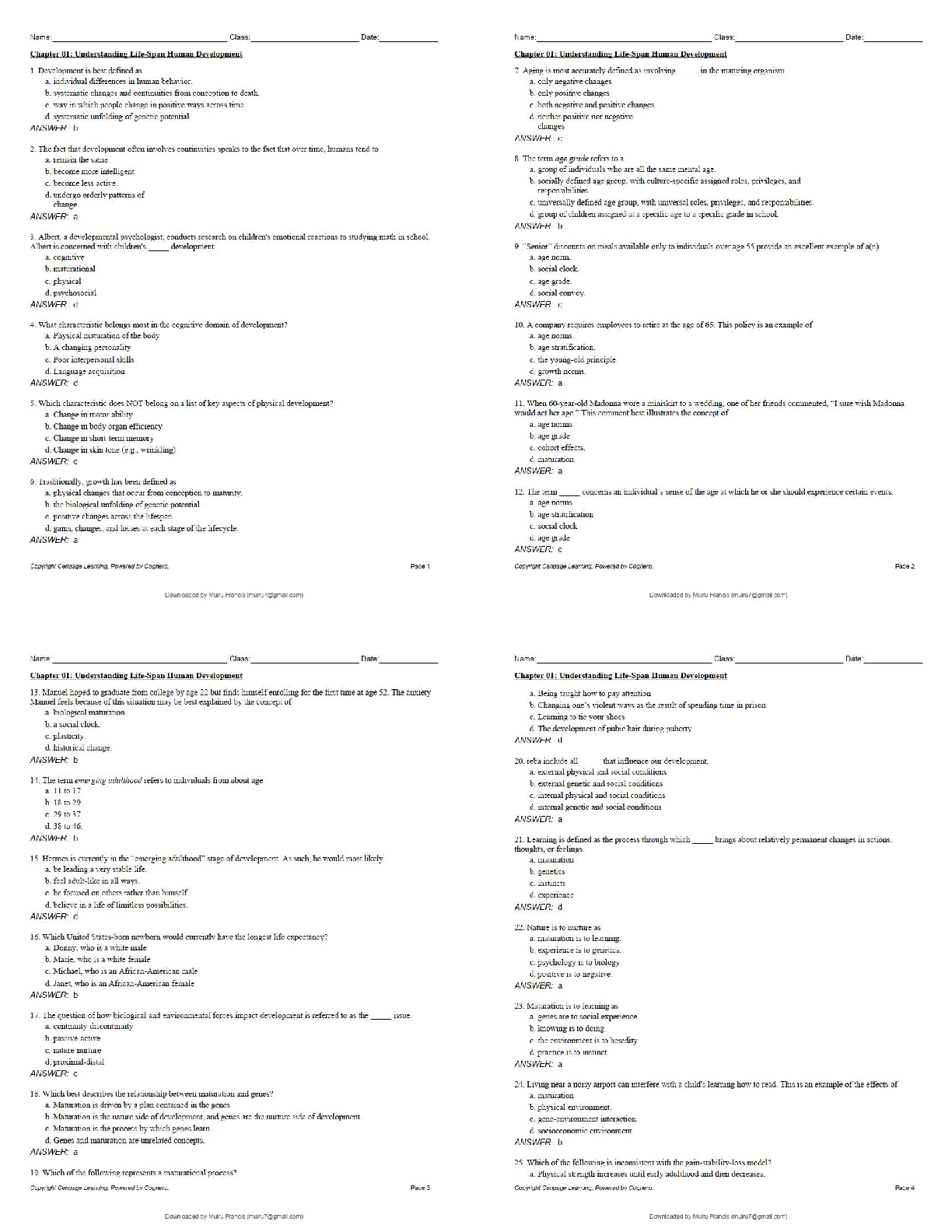
Lifespan Development PSY 204 Test Bank / Human Development Exa...
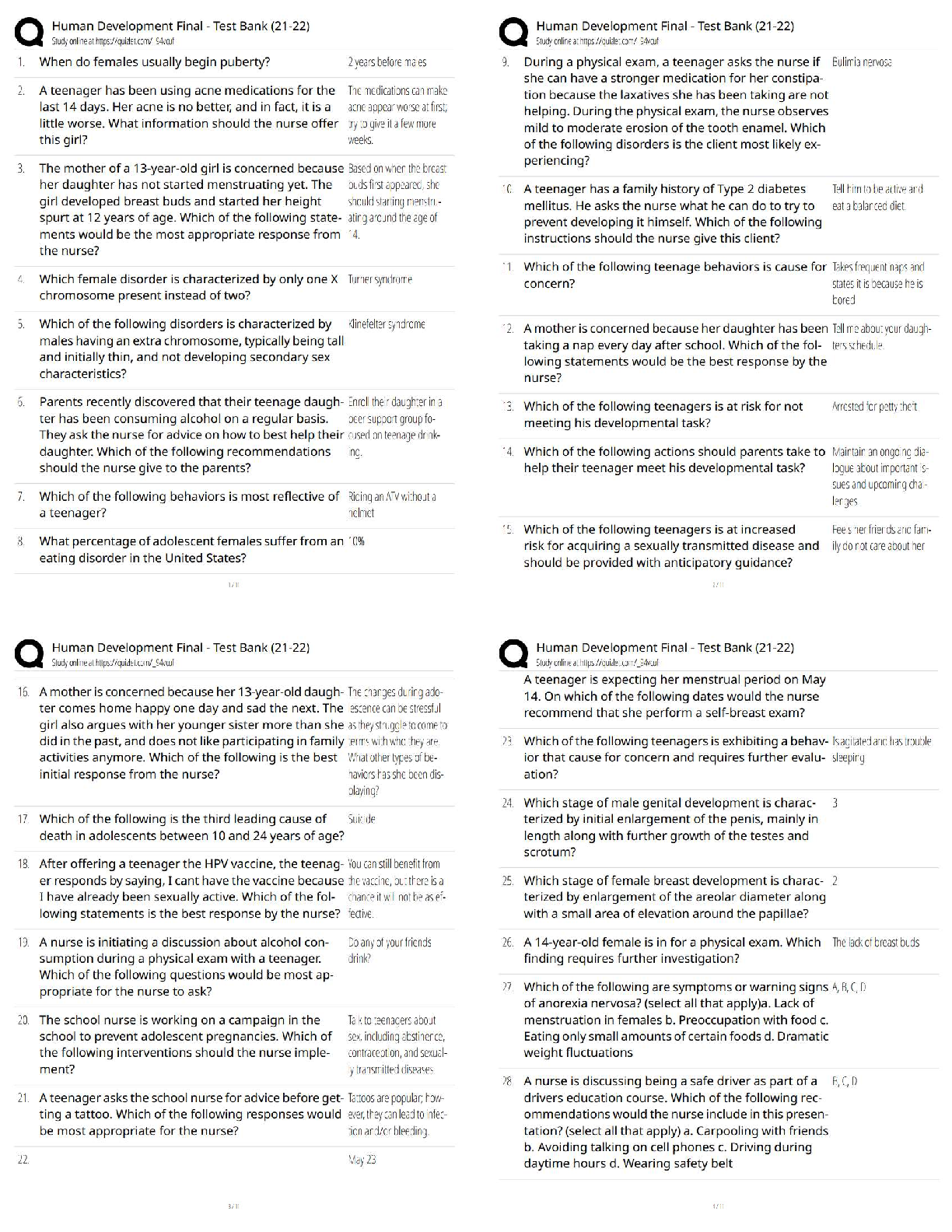
Human Development Final Exam Test Bank Chapters 21–22 / Aging,...
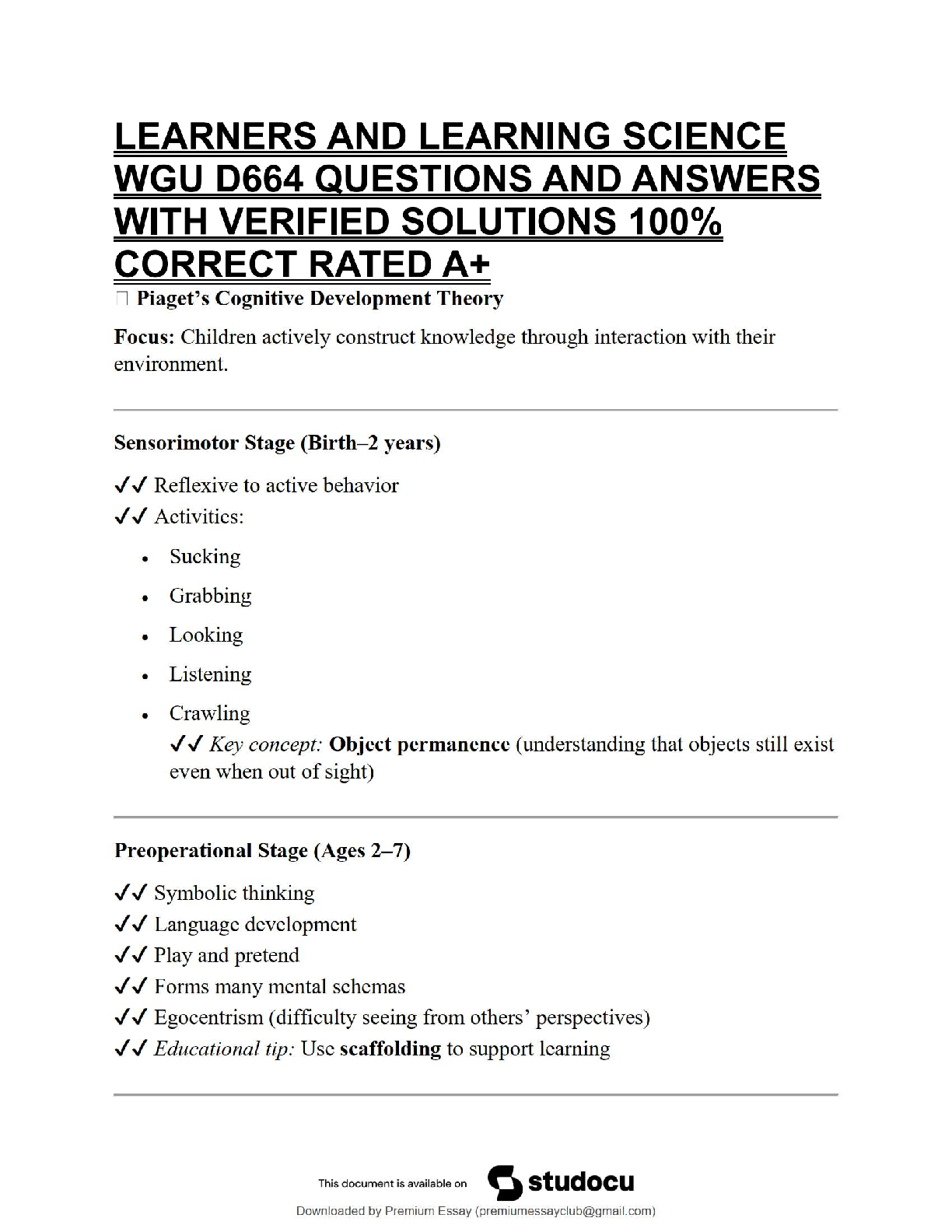
WGU D664 Learners and Learning Science Final Exam – Verified Q...

Through the Eyes of a Child, An Introduction to Children's Lit...

The Developing Person Through Childhood and Adolescence,12e Ka...

Test Bank for Abnormal Child and Adolescent Psychology, DSM-5...
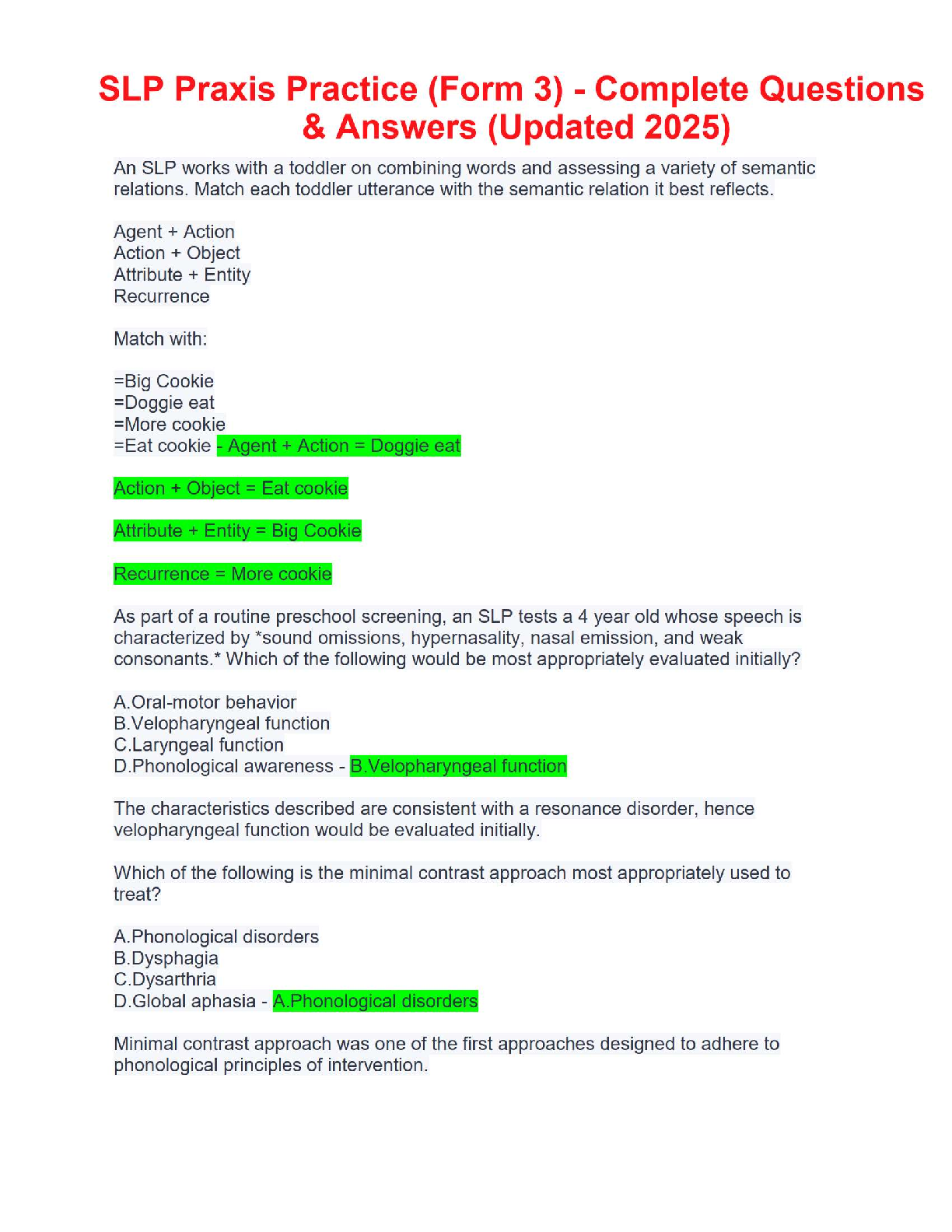
📘 SLP Praxis Practice (Form 3) - Complete Questions & Answers...
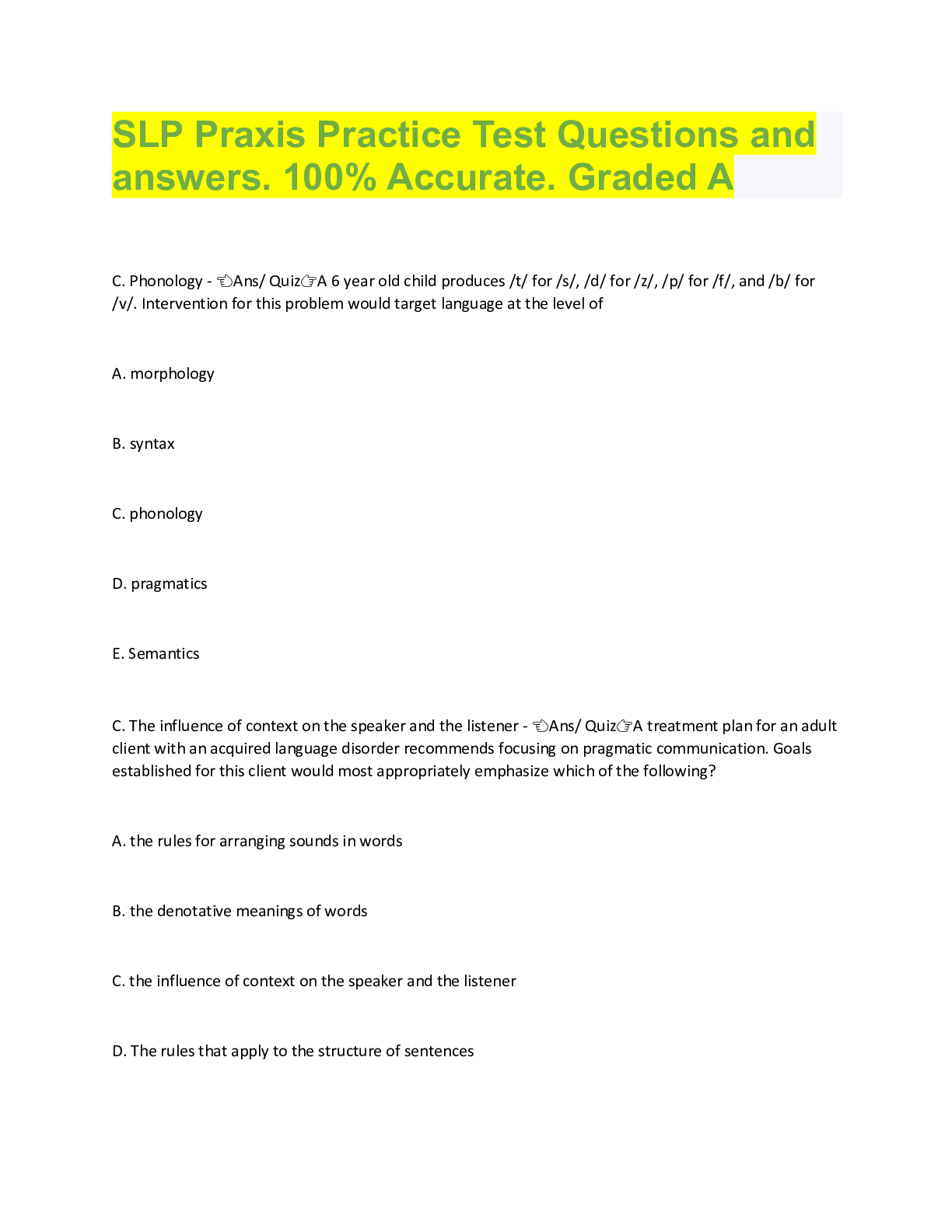
SLP Praxis Practice Test Questions and answers. 100% Accurate...
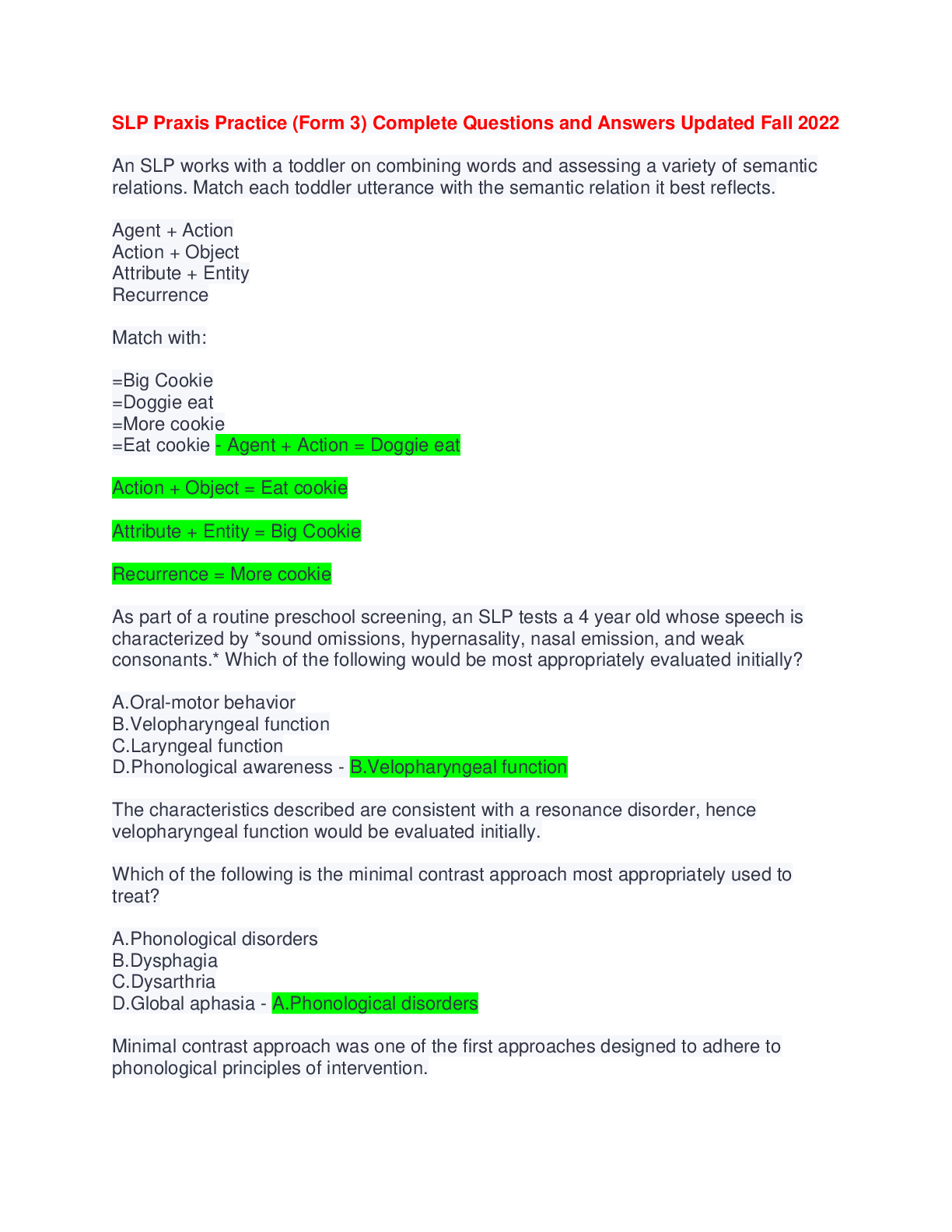
SLP Praxis Practice (Form 3) Complete Questions and Answers Up...
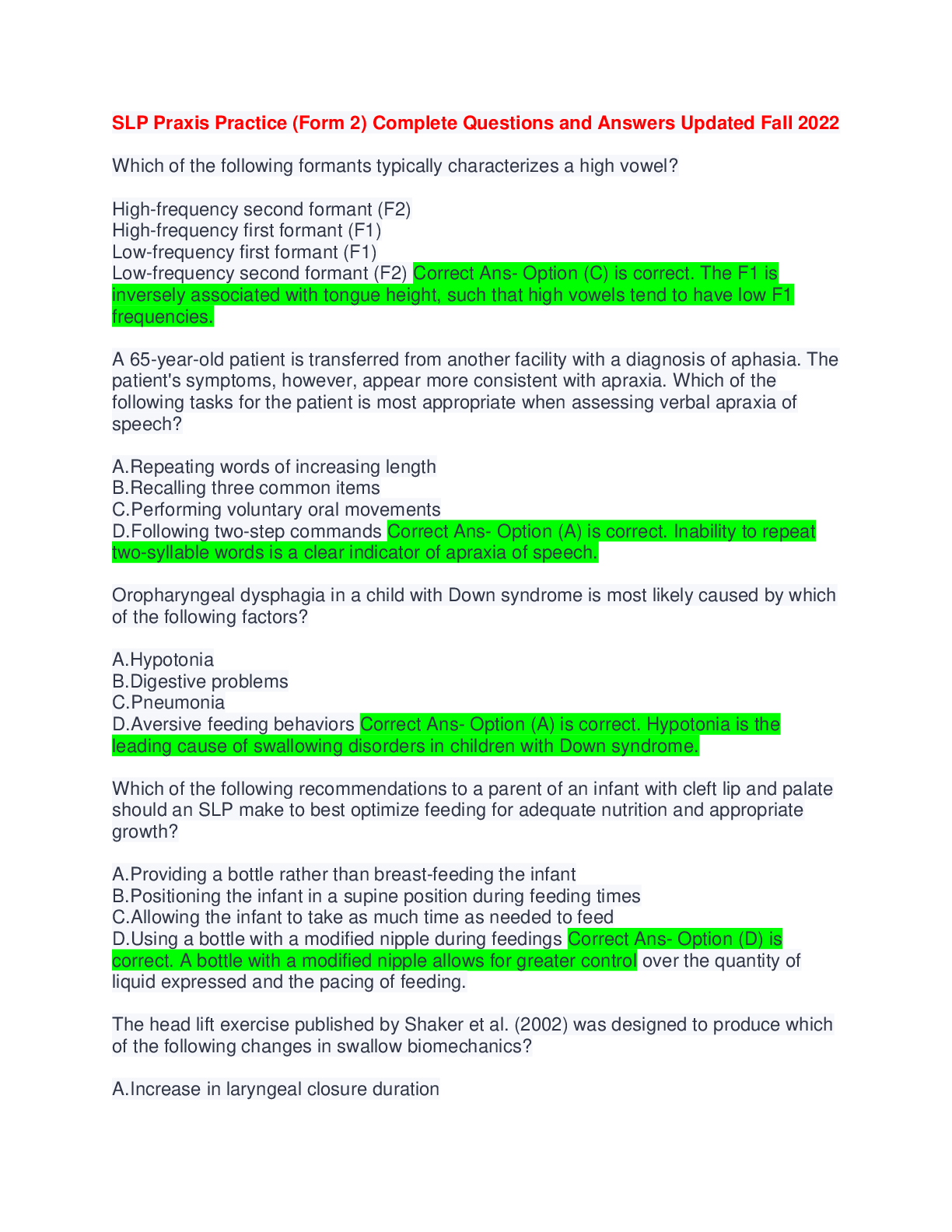
SLP Praxis Practice (Form 2) Complete Questions and Answers Up...
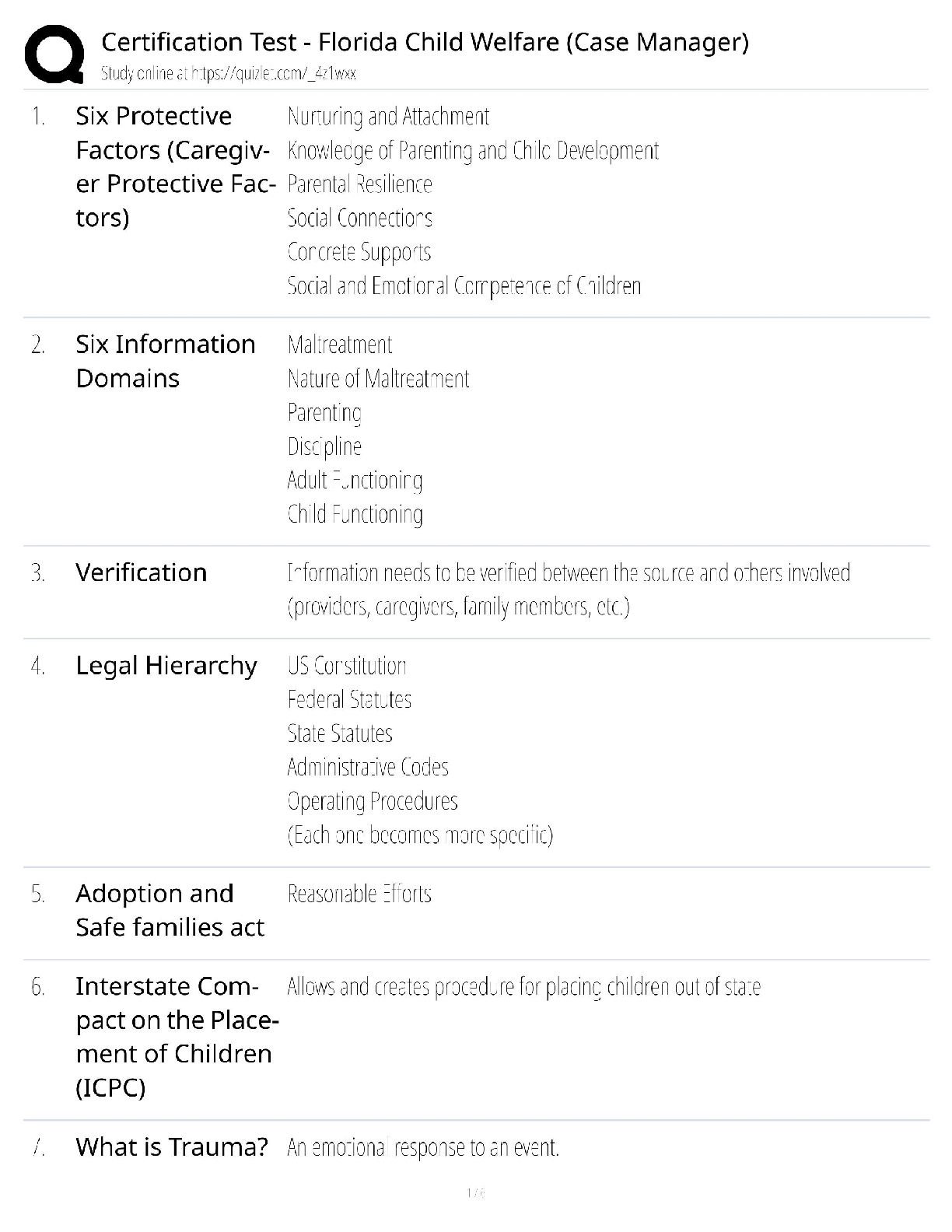
Certification Test - Florida Child Welfare Case Manager / Scor...
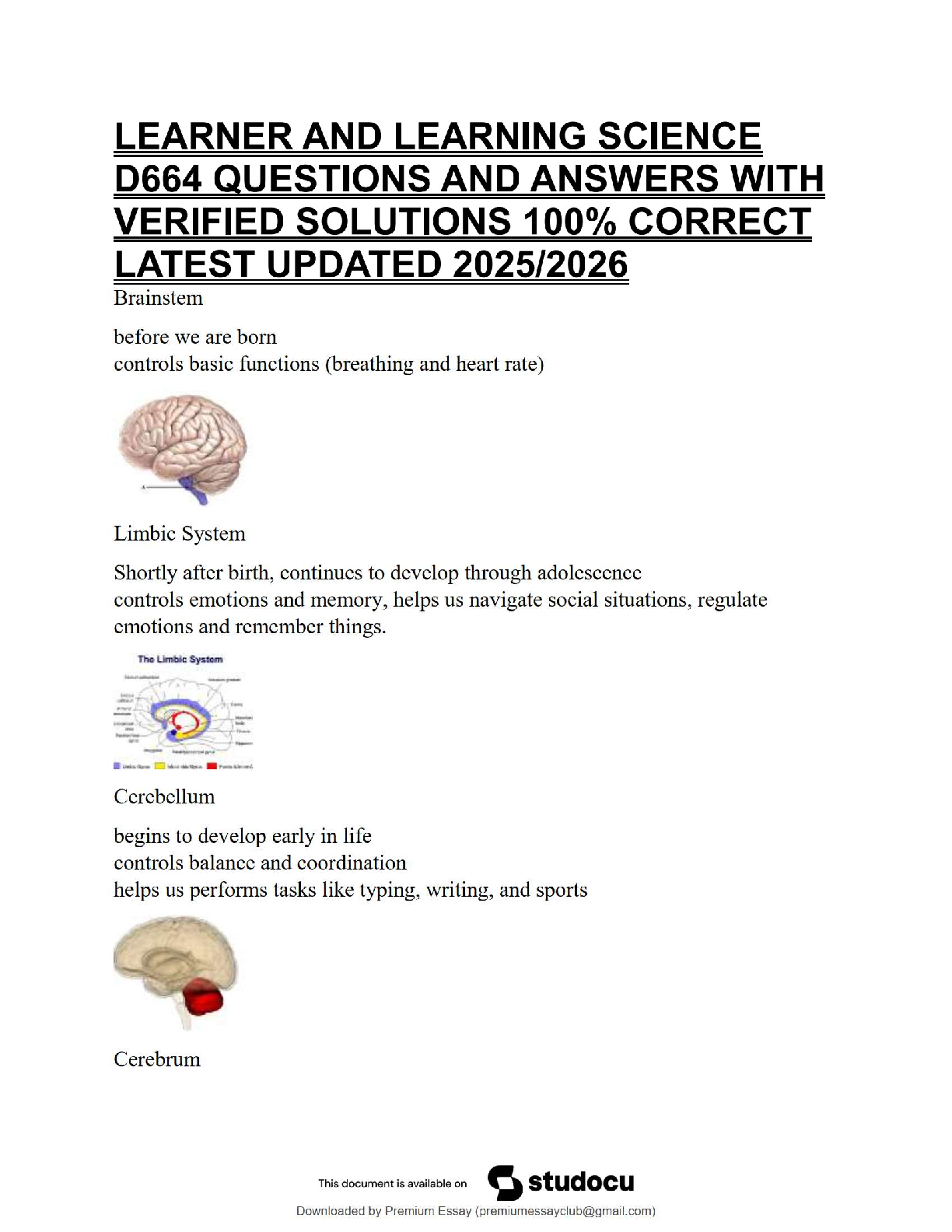
Learners and Learning Science D664: Verified Q&A Solutions (20...
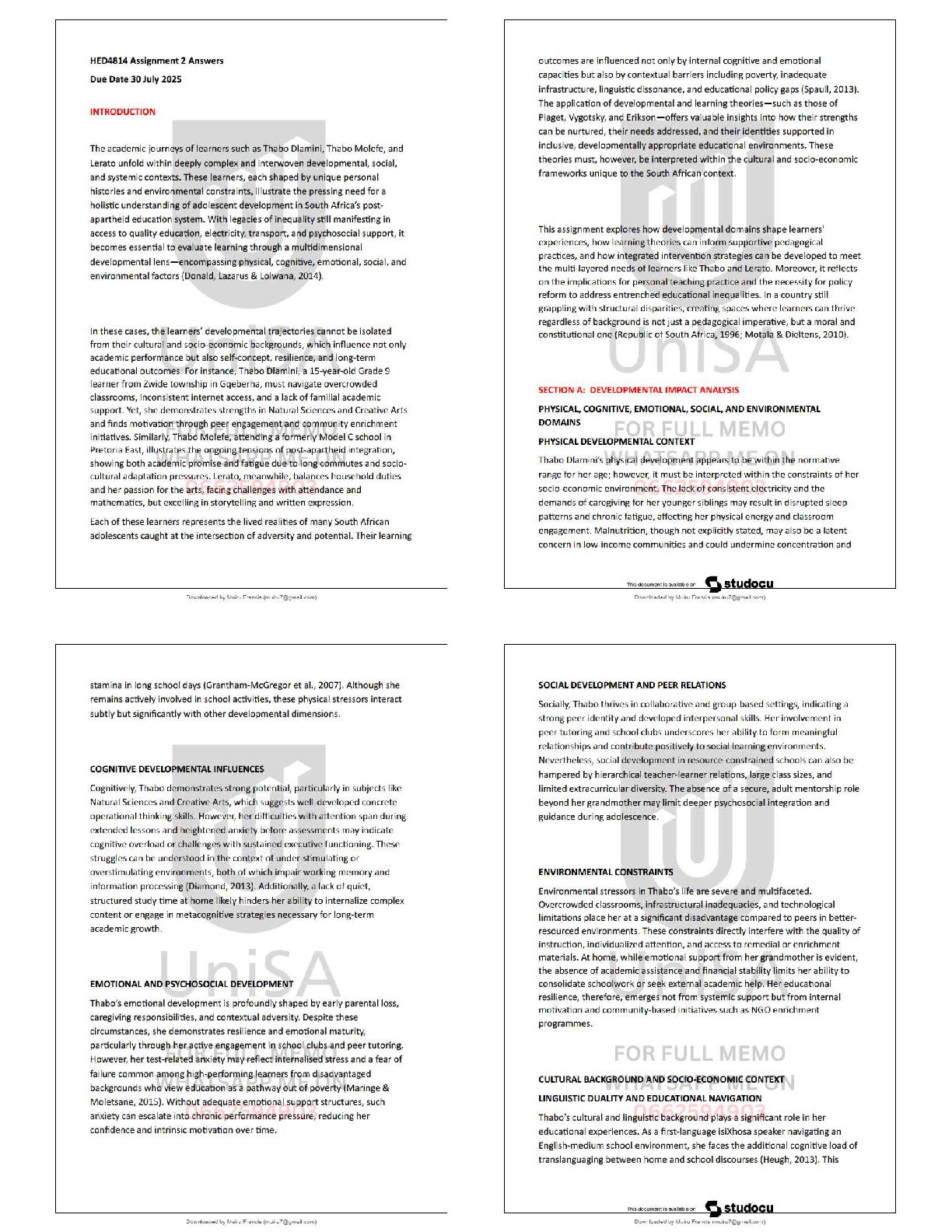
HED4814 Assignment 2 / Analyzing Adolescent Development in Sou...
Solution Manual for Developing Person Through the Life Span, 1...