Function of Parathyroid Hormone (PTH) - ANSWER -Raises the level of calcium in the blood
-Decreases the level of blood phosphate
-Partially antagonistic to calcitonin
Calcium Homeostasis - ANSWER -PTH secretion stim
...
Function of Parathyroid Hormone (PTH) - ANSWER -Raises the level of calcium in the blood
-Decreases the level of blood phosphate
-Partially antagonistic to calcitonin
Calcium Homeostasis - ANSWER -PTH secretion stimulated by fall in serum calcium
-Calcium mobilized from bone
-Increased renal absorption of calcium; decreased renal clearance of calcium
-Increased calcium absorption in intestine
-Calcitonin is released by the "C" cells (parafollicular cells in the thyroid gland) in response to small increases in plasma ionic calcium
-It acts on the kidney and bones to restore the level of calcium to just below a normal set point which in turn inhibits secretion of the hormone.
Hypoparathyroidism - ANSWER -Too little PTH
-low serum calcium
-high serum phosphate
-RARE endocrine disorder
-Three types:
-Iatrogenic hypoparathyroidism
-Idiopathic hypoparathyroidism
-Hypomagnesemia-induced hypoparathyroidism
Hyperparathyroidism - ANSWER Too much PTH
-high serum calcium
-low serum phosphate
-Incidence increases dramatically after the age of 50
-2 - 4 times more common in women
-Single adenoma occurs in 80% of patients with primary hyperparathyroidism.
-Parathyroid carcinoma is etiology in < 1%
-Bone (osteitis fibrosa cystica)
-Excessive PTH levels increase bone resorption by decreasing osteoblastic activity and increasing ostoclastic activity
-Releases calcium and phosphate into blood
-Results in decreased bone density
-Chronic hypercalcemia → calcium deposits on soft tissue
-Caused by nonresponse to feedback of serum calcium
Hyperparathyroidism Causes - ANSWER -Benign tumor in one parathyroid gland
-parathyroid adenoma
-parathyroid carcinoma
-Congenital hyperplasia
-Neck trauma or radiation
-Vitamin D deficiency
-Chronic kidney disease with hypocalcemia
-Parathyroid hormone-secreting carcinomas of the lung, kidney, or GI tract
Hyperparathyroidism Sx's - ANSWER Bones
-Resorption of distal phalanges
-Distal tapering of clavicles
-"salt & pepper" appearance of skull
-Bone cysts and brown tumors of the long bones
Kidney (20%)
-Renal stones (nephrolithiasis)
-Diffuse deposition of calcium/phosphate complexes in the parenchyma (nephrocalcinosis)
Other Sx's:
-muscle weakness & easy fatigability
-peptic ulcer disease
-pancreatitis
-hypertension
-gout
-anemia
-depression
Hyperparathyroidism Diagnostics - ANSWER -Presence of established
-hypercalcaemia in more than one serum measurement
-elevated immunoreactive PTH
-Lab Studies
-Serum calcium → increased in primary (90%)
-Serum phosphate →decreased
-Serum magnesium →Increased
-Serum parathyroid hormone → increased
-Vitamin D (calciferol) → variable
-Urine cAMP → increased (80%)
-Venous sampling of thyroid for blood PTH levels
-Glucocortisoid Suppression Test
-Radiology
-X-rays (hands & skull)
-CTs
-US
Glucocortisoid Suppression Test - ANSWER Hypercalcemia of non-parathyroid origin generally respond to the administration of prednisolone in a dose of 40-60 mg daily for 10 days by a decrease in serum calcium level
-vitamin D intoxication
-sarcoidosis
-lymphoproliferative syndromes
Hyperparathyroidism Treatment - ANSWER -Monitor cardiac and neurologic function
-Injury prevention
-Patient Education
-Drug Therapy
Hyperparathyroidism Drug Therapy - ANSWER -Diuretic and hydration therapy
-Furosemide (Lasix) with large volumes of IV NS
-if unsuccessful or contraindicated, oral phosphates inhibit bone resorption and interfere with calcium absorption.
-Calcium chelators
-Glucocorticoids (hematological malignant neoplasms)
-Mithramycin
-Inhibit bone resorption
-Used in hematological and solid neoplasms causing hypercalcemia
-Phosphate (used as a temporary measure during diagnostic workup)
-Estrogen (decreases bone resorption and can be given to postmenopausal women with primary hyperparathyroidism
Parathyroidectomy (resection) - ANSWER Surgical Tx of hyperparathyroidism
-calcium levels must be near normal prior to surgery
-same procedure as for thyroidectomy
**MONITOR CALCIUM LEVELS POST-OP**
Iatrogenic hypoparathyroidism - ANSWER -most common form of hypothyroidism
-caused by removal of all parathyroid tissue during total thyroidectomy or deliberate surgical removal of parathyroid glands.
Idiopathic hypoparathyroidism - ANSWER -May occur spontaneously
-Genetic (autosomal recessive transmission)
-Cause unknown, but autoimmune is suspected
-May occur with other autoimmune disorders
Hypomagnesemia-induced hypoparathyroidism - ANSWER Often seen in alcoholics and in patients with malabsorption syndromes, chronic kidney disease, and malnutrition.
Hypoparathyroidism Assessment - ANSWER Patient history
-Damage to parathyroid glands
-Serious injury from car crash
-Serious strangulation injury
Monitor
-Signs and symptoms of hypocalcemia
-Tingling, numbness, muscle cramps, seizures, AMS, tetany.
Hypoparathyroidism Causes - ANSWER -Vitamin D deficiency or calcium
-decreased intestinal absorption
-tissue resistance to Vitamin D
-drugs (phenytoin, phenobarbital, & laxatives)
-Excessive phosphate intake
-Severe hypomagnesemia
-Chronic renal failure
Hypoparathyroidism Clinical Manifestations - ANSWER Neuromuscular
-paresthesia
-hyperventilation
-adrenergic symptoms
-convulsions
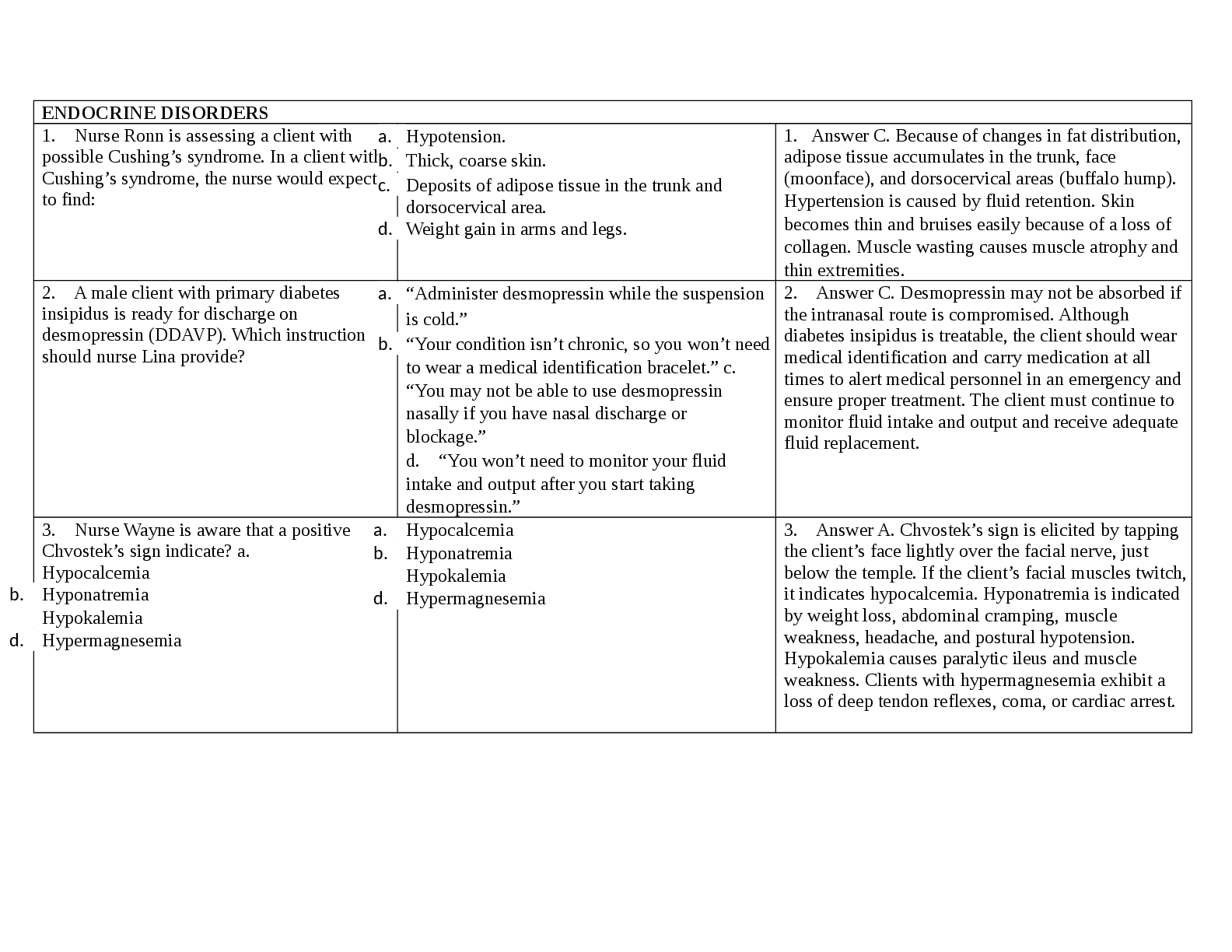
-tetany (Chvostek Sign, Trousseau Sign)
Cardiovascular
-prolonged QT interval
-resistance to digitalis
-hypotension
-refractory heart failure with cardiomegaly
Other
-dental manifestation (abnormal enamel formation with delayed or absent dental eruption)
-malabsorption syndrome (steatorrhea)
Hypoparathyroidism Diagnosis - ANSWER -EEG
-Blood tests
-Serum calcium → decreased
-Serum phosphate → increased
-Serum magnesium → decreased
-Serum parathyroid hormone → decreased
-Vitamin D (calciferol) → decreased
-Urine cAMP → decreased
-CT
Hypoparathyroidism Tx - ANSWER Correction of:
-hypocalcemia
-vitamin D deficiency
-hypomagnesemia
[Show More]