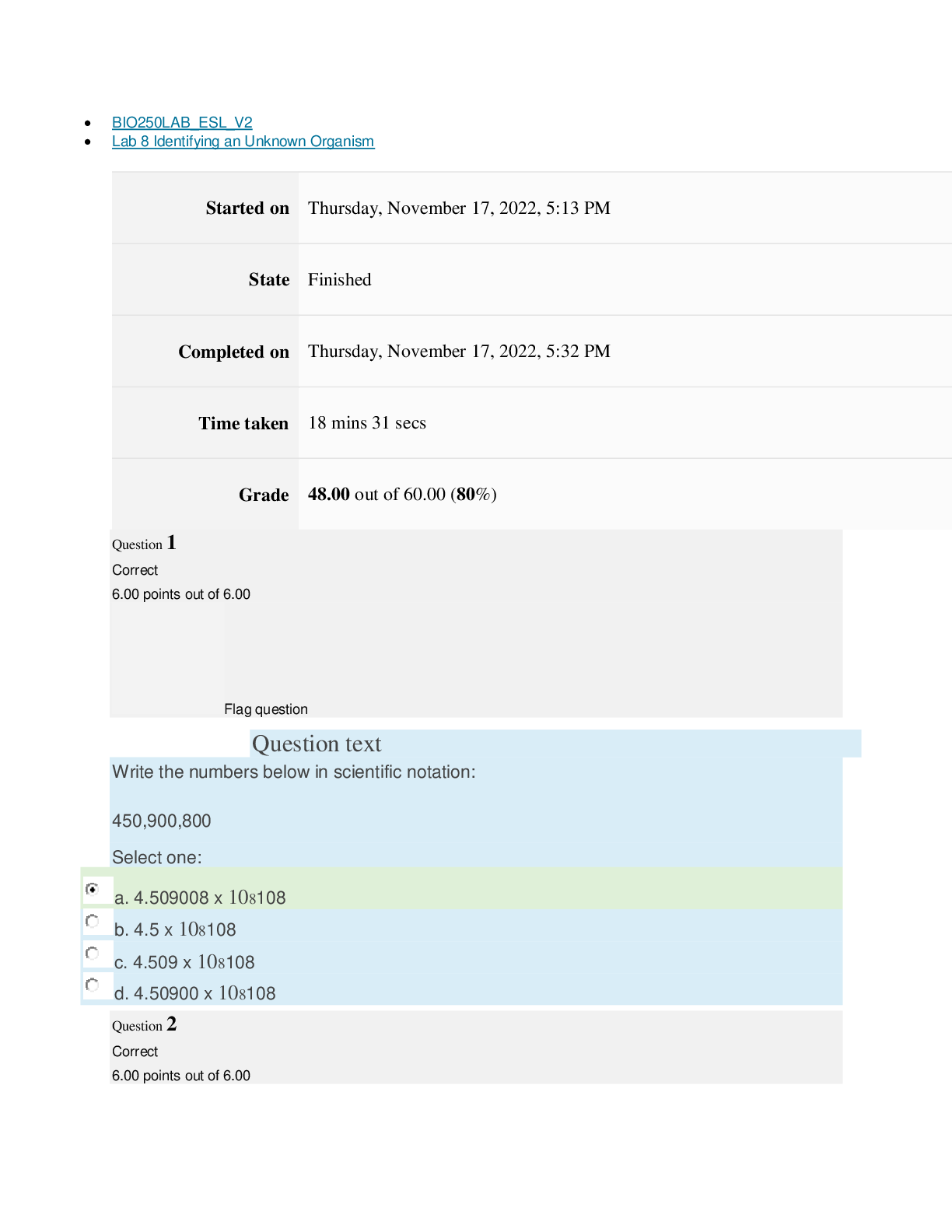
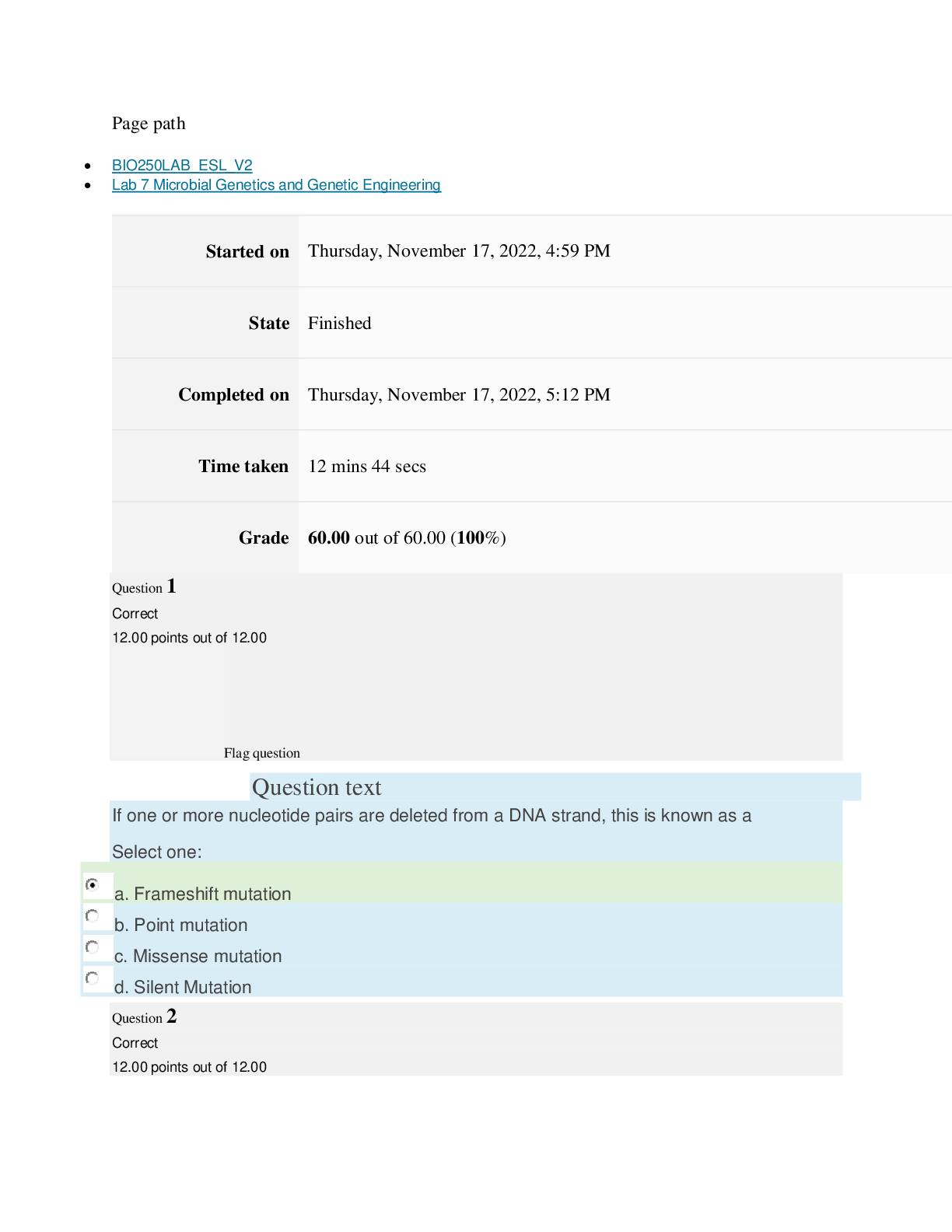
Anatomy and Physiology - A&P > LAB QUIZ > BIO210L Lab 5 Tissues and Skin[ALL ANSWERS 100% CORRECT] PRE-LAB Q&A (All)
BIO210L Lab 5 Tissues and Skin[ALL ANSWERS 100% CORRECT] PRE-LAB Q&A
Document Content and Description Below
Last updated: 3 years ago
Preview 1 out of 11 pages
Instant download

Buy this Document to get the Full Access Instantly
Provided by Students Who Aced it
We Verify Document Content to Gurantee Accuracy
Also available in bundle (1)
Click Below to Access Bundle(s)
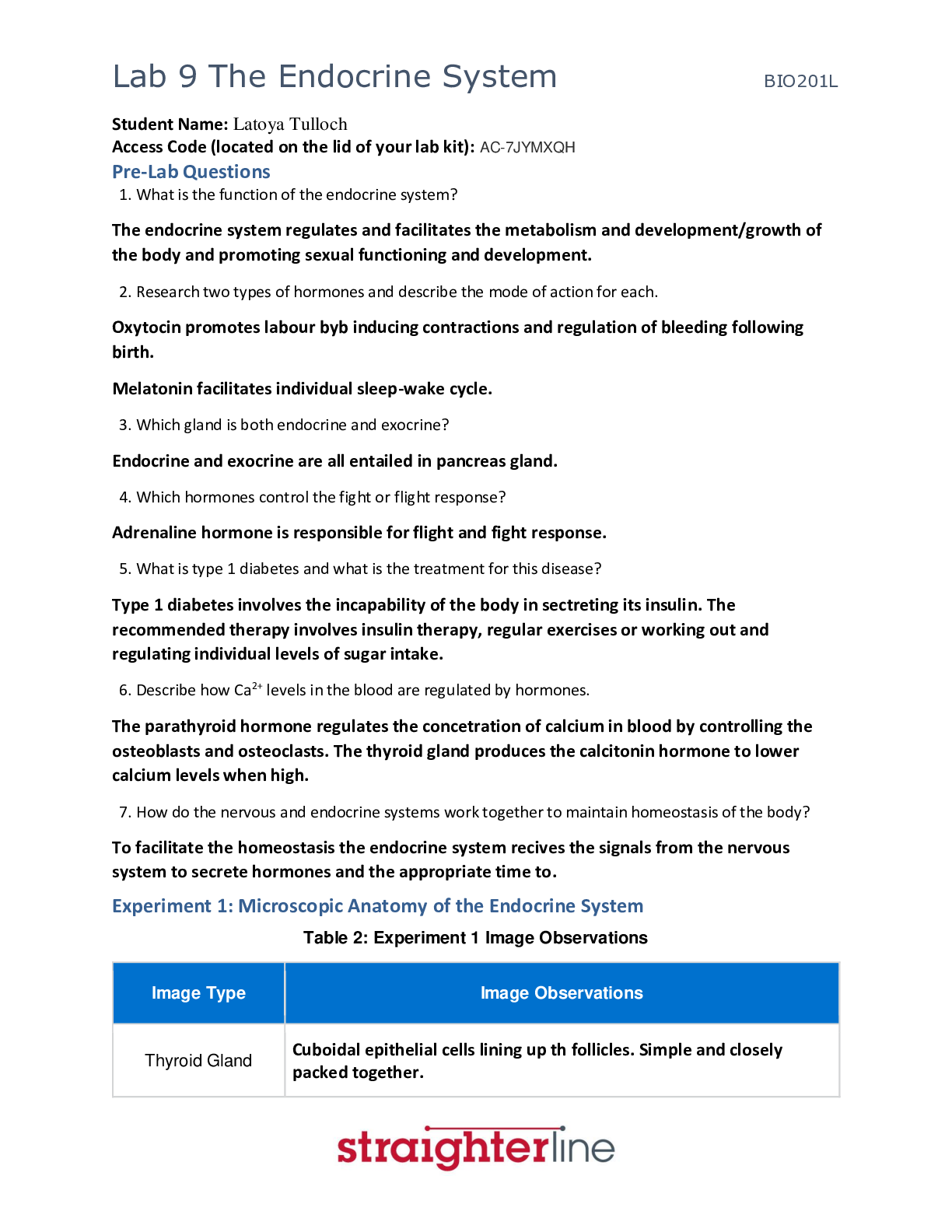
ANATOMY & PHYSIOLOGY 1 BUNDLED BIO201 PRE-LAB Q&A [QUESTIONS AND ANSWERS,, LATEST WITH VERIFIED SOLUTIONS]
Lab 1 Introduction to Science Lab 2 Cell Structure and Function Lab 3 Mitosis and Meiosis Lab 4 Diffusion and Osmosis Lab 5 Tissues and Skin Lab 6 The Skeletal System Lab 7 The Muscular System...
By QuizMaster82 3 years ago
$25
9
Reviews( 0 )
Document information
Connected school, study & course
About the document
Uploaded On
Dec 04, 2022
Number of pages
11
Written in
All

Additional information
This document has been written for:
Uploaded
Dec 04, 2022
Downloads
0
Views
270
Topic Tags
Recommended For You
Get more on LAB QUIZ »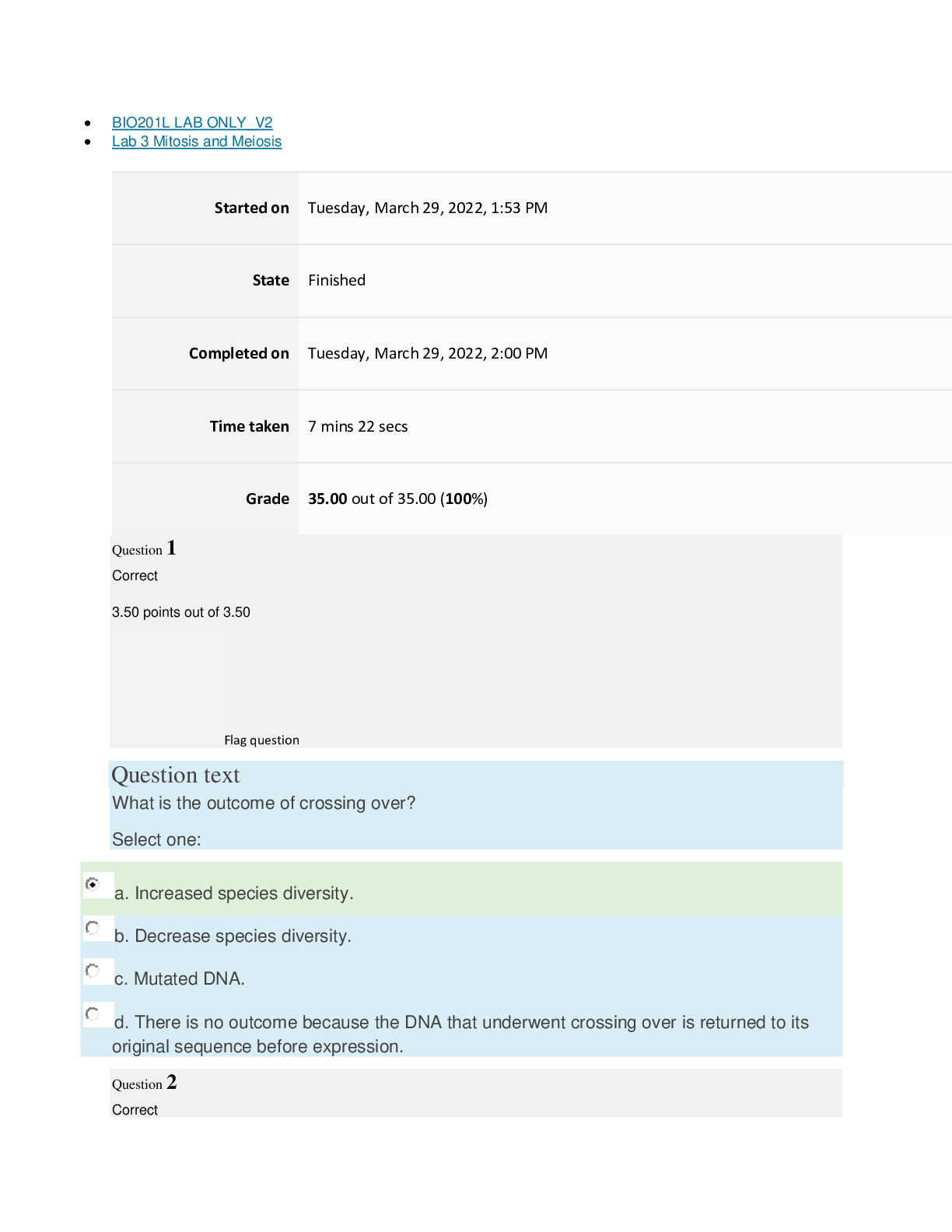
BIO201L Lab 3 Mitosis and Meiosis QUIZ[ALL ANSWERS 100% CORREC...
BIO201L Lab 2 Cell Structure and Function QUIZ[ALL ANSWERS 100...


Test Bank for Fundamentals of Anatomy & Physiology, 11th Editi...
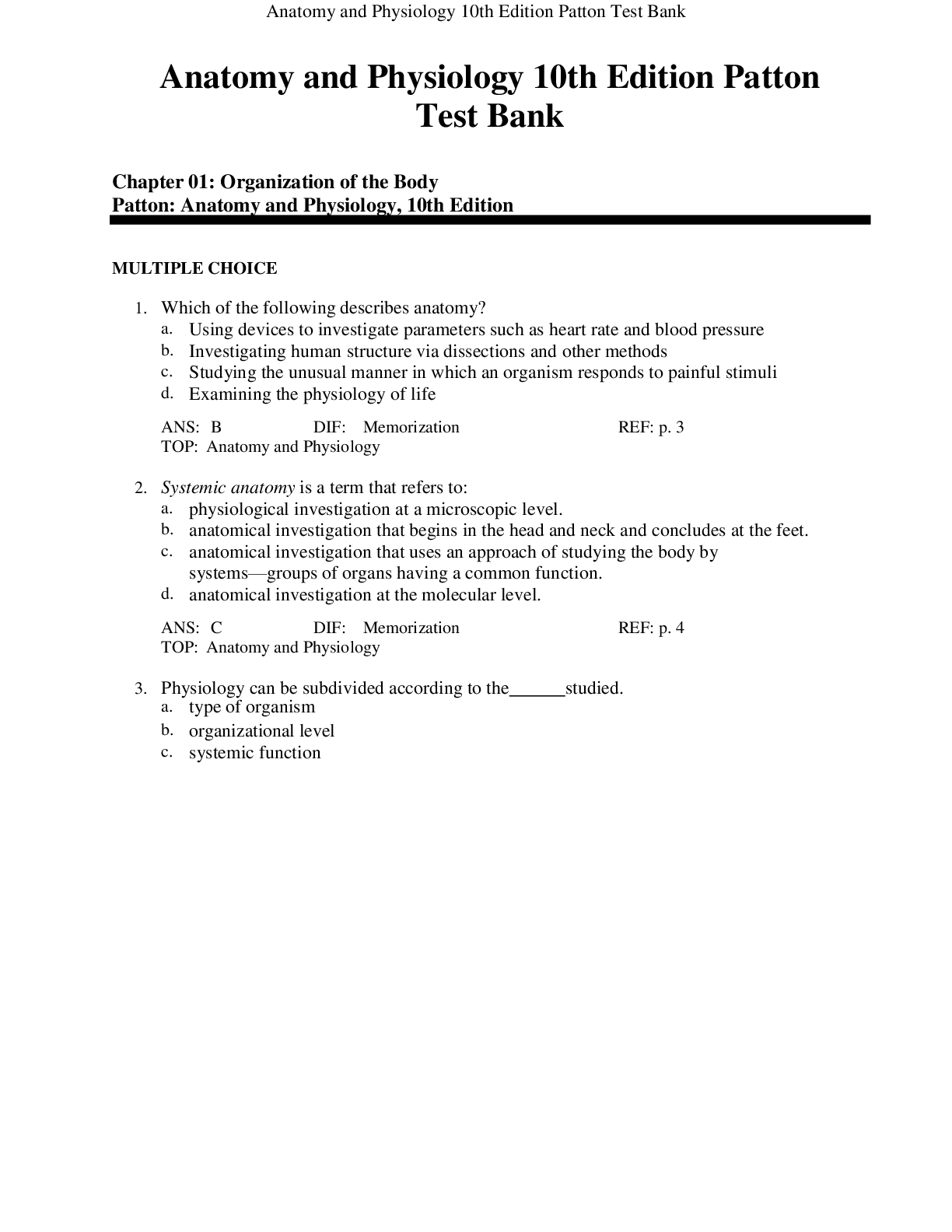
Anatomy and Physiology 10th Edition By Kevin Patton (Test Bank...
.png)
Anatomy and Physiology From Science to Life, 3e Gail Jenkins,...
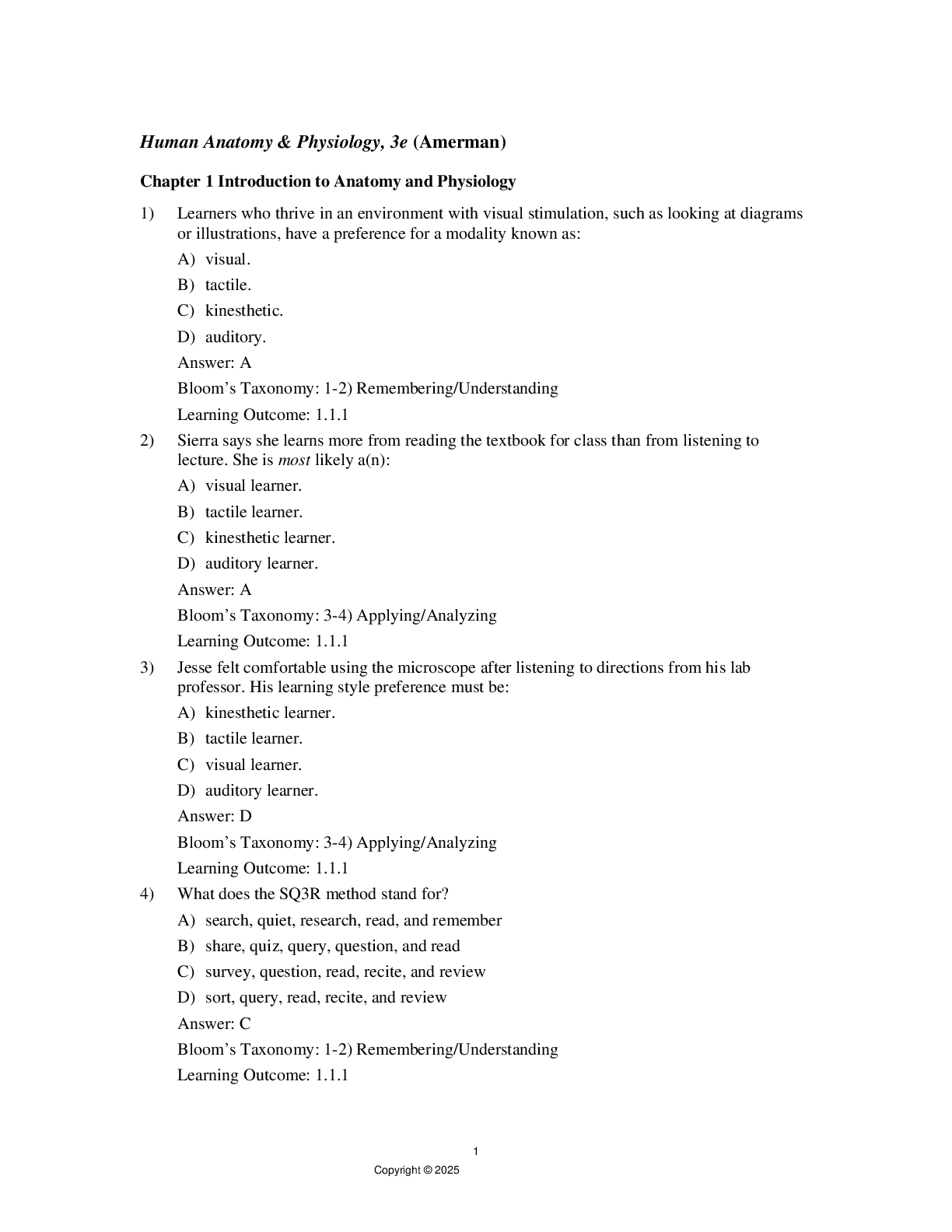
Test Bank for Human Anatomy & Physiology, 3rd Edition by Erin...
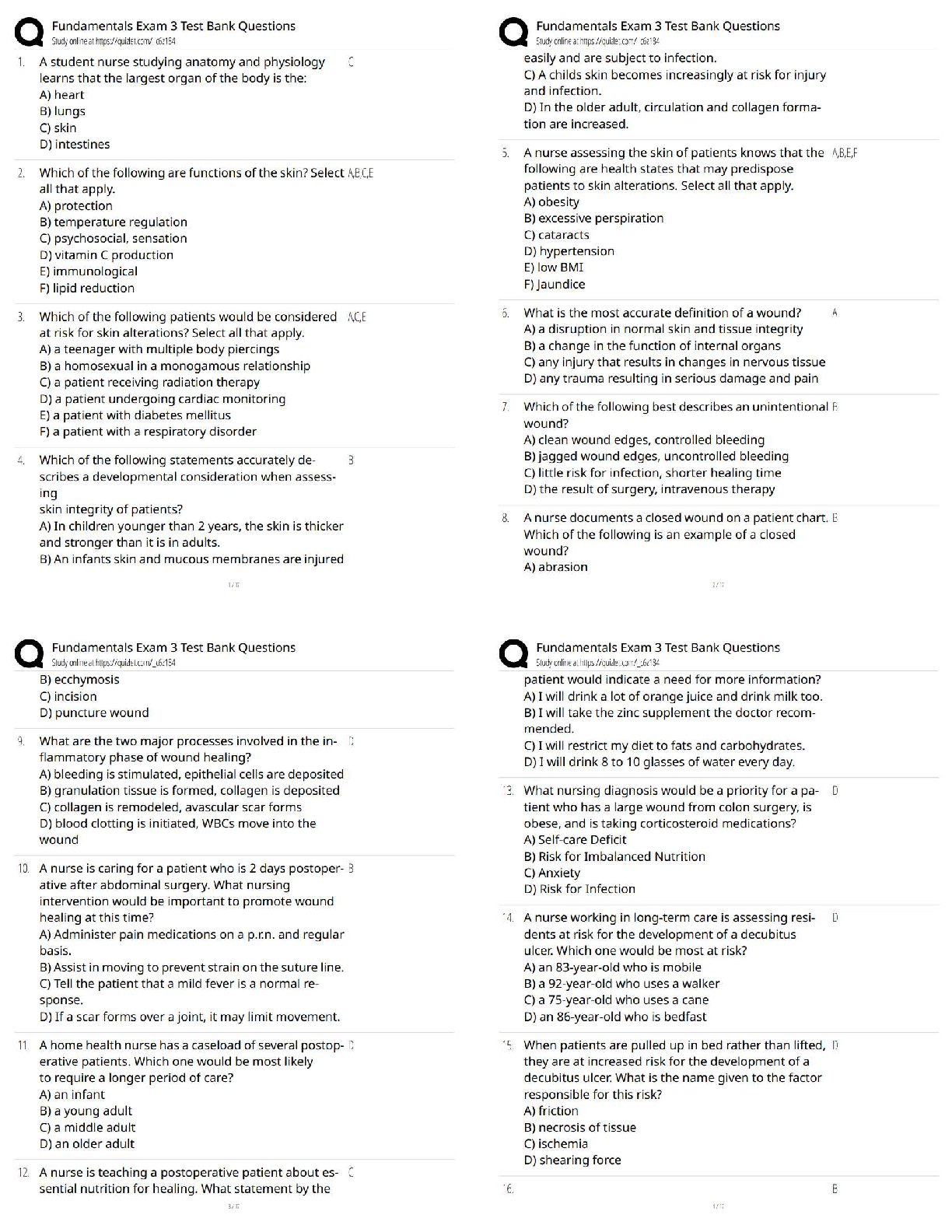

NEWEST 2023 | Straighterline | LAB QUIZZES 1-9, BIO201/Anatomy...