Business > QUESTIONS & ANSWERS > WGU Data Driven Decision Making - C207 Exam Questions with Correct Answers, Graded A+ (All)
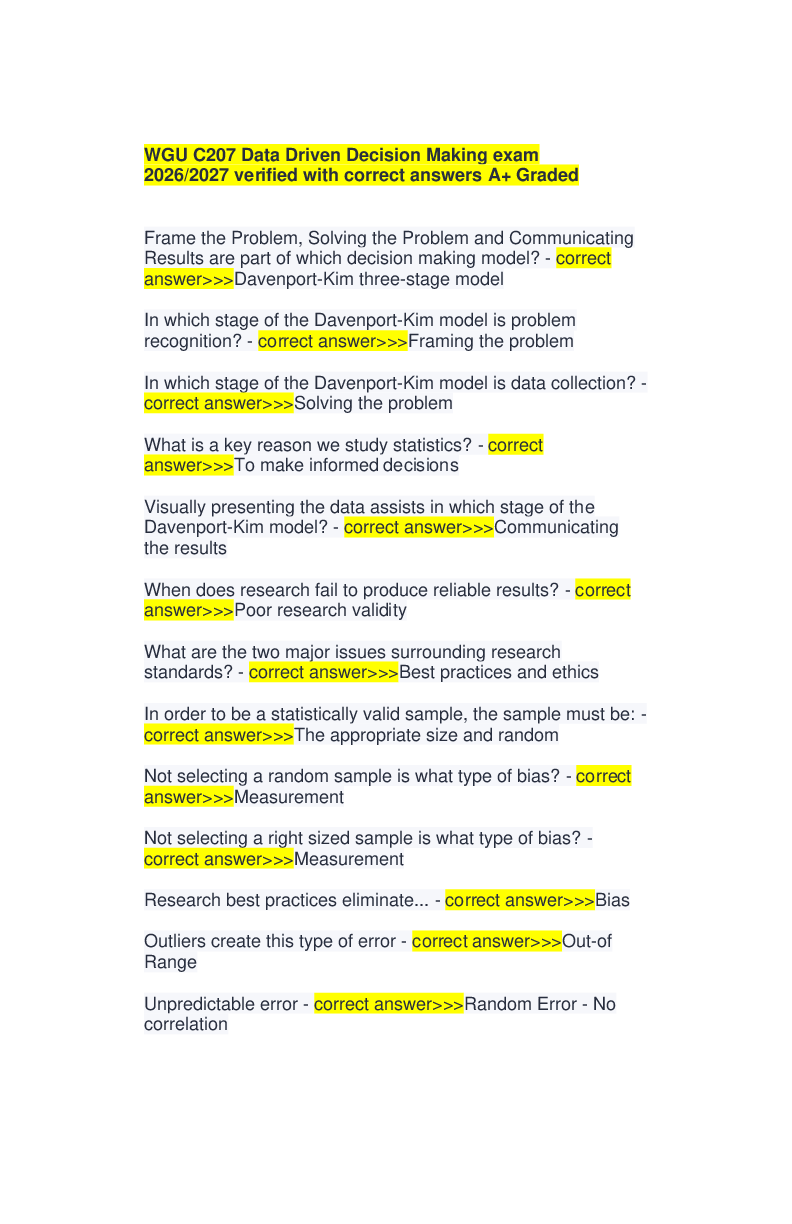
WGU Data Driven Decision Making - C207 Exam Questions with Correct Answers, Graded A+
Document Content and Description Below
Last updated: 3 years ago
Preview 1 out of 11 pages
Instant download

Buy this Document to get the Full Access Instantly
Provided by Students Who Aced it
We Verify Document Content to Gurantee Accuracy
Reviews( 0 )
Document information
Connected school, study & course
About the document
Uploaded On
Dec 08, 2022
Number of pages
11
Written in
All

Additional information
This document has been written for:
Uploaded
Dec 08, 2022
Downloads
0
Views
179
Document Keyword Tags
Recommended For You
Get more on QUESTIONS & ANSWERS »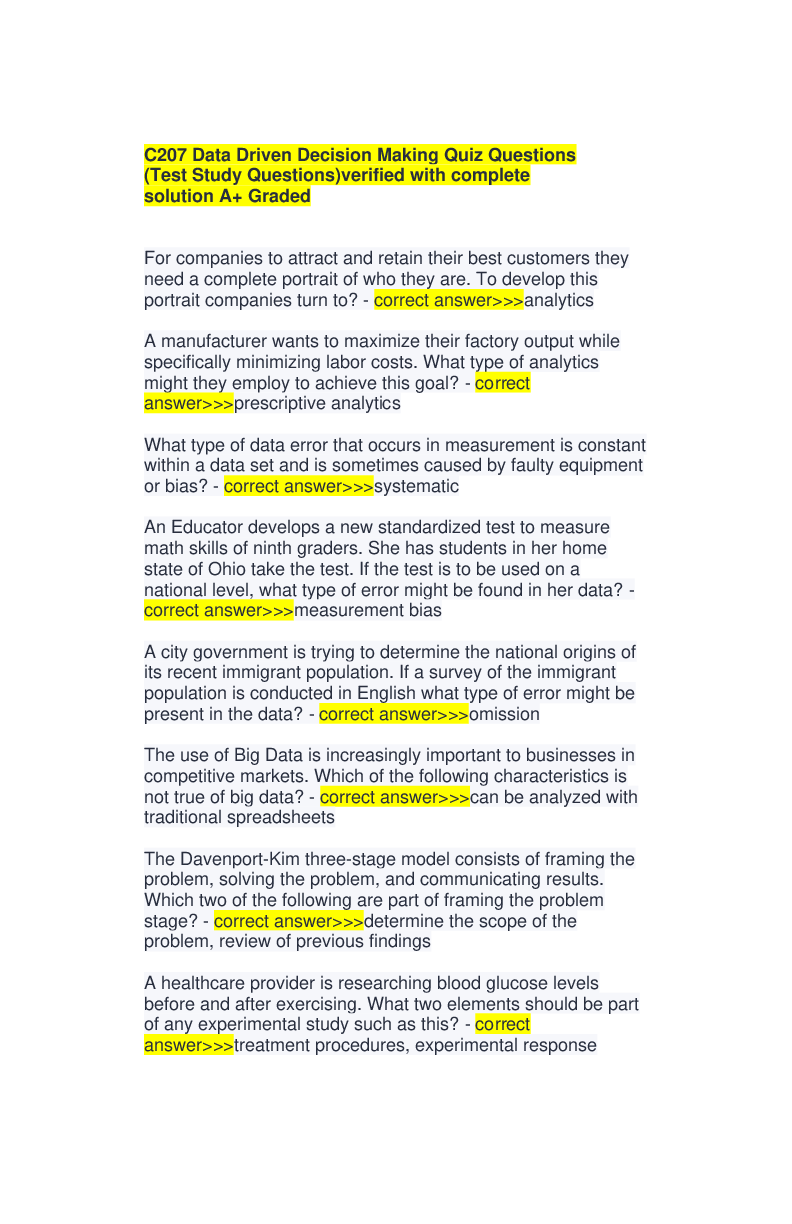

C207_TaskI.docx Data Driven Decision Making C207 Western...

C207___Task_2.docx C207 Data-Driven Decision Making C207 C...

Data Driven Decisions Making Task 2.docx C207 Data-Drive...
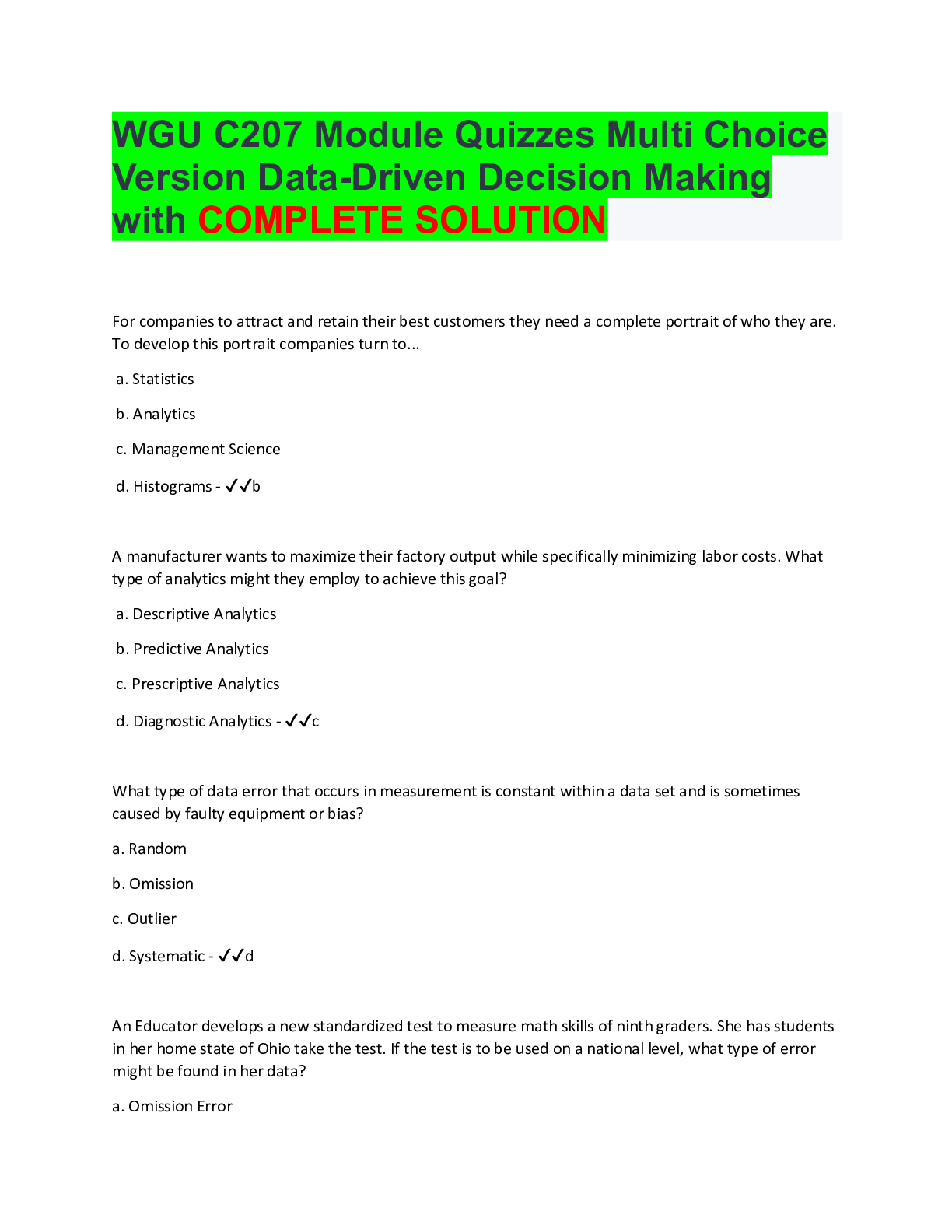
WGU C207 Module Quizzes Multi Choice Version Data-Driven Decis...
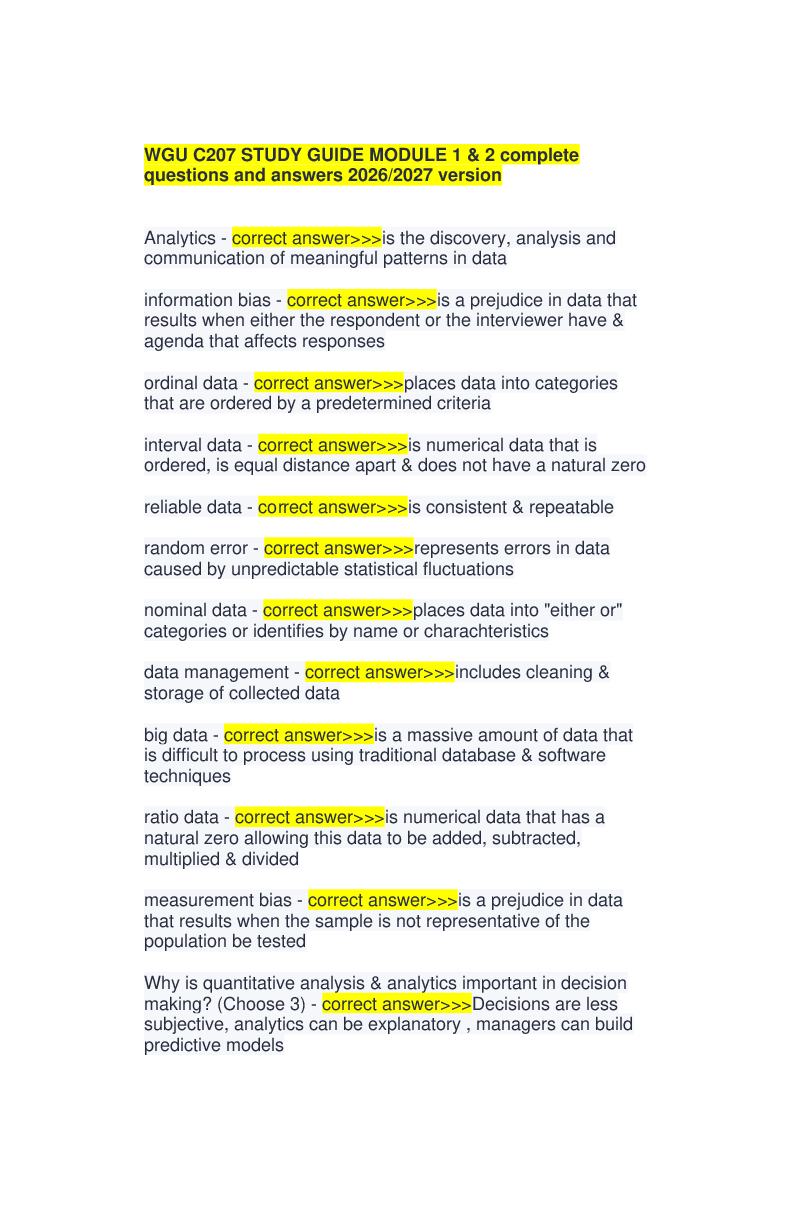
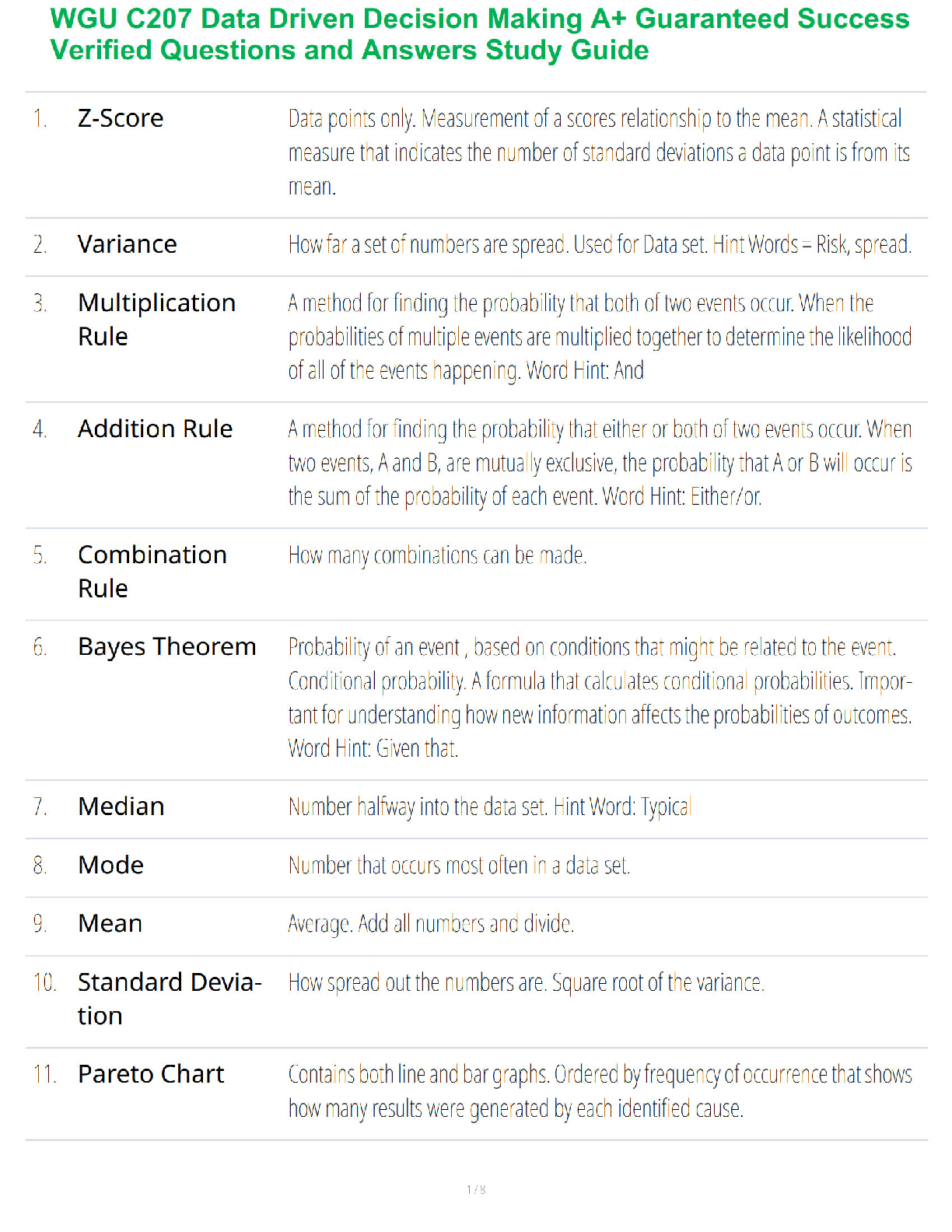
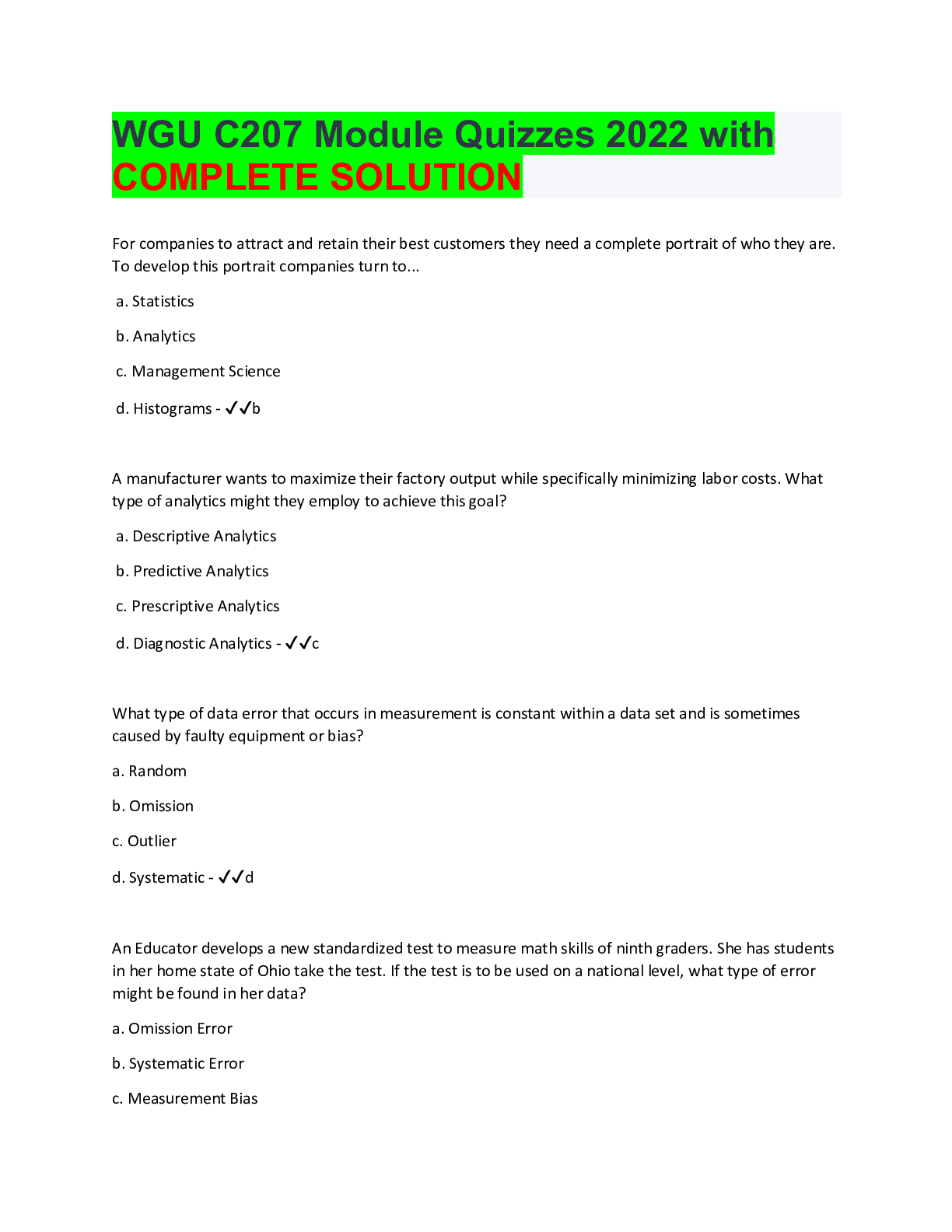
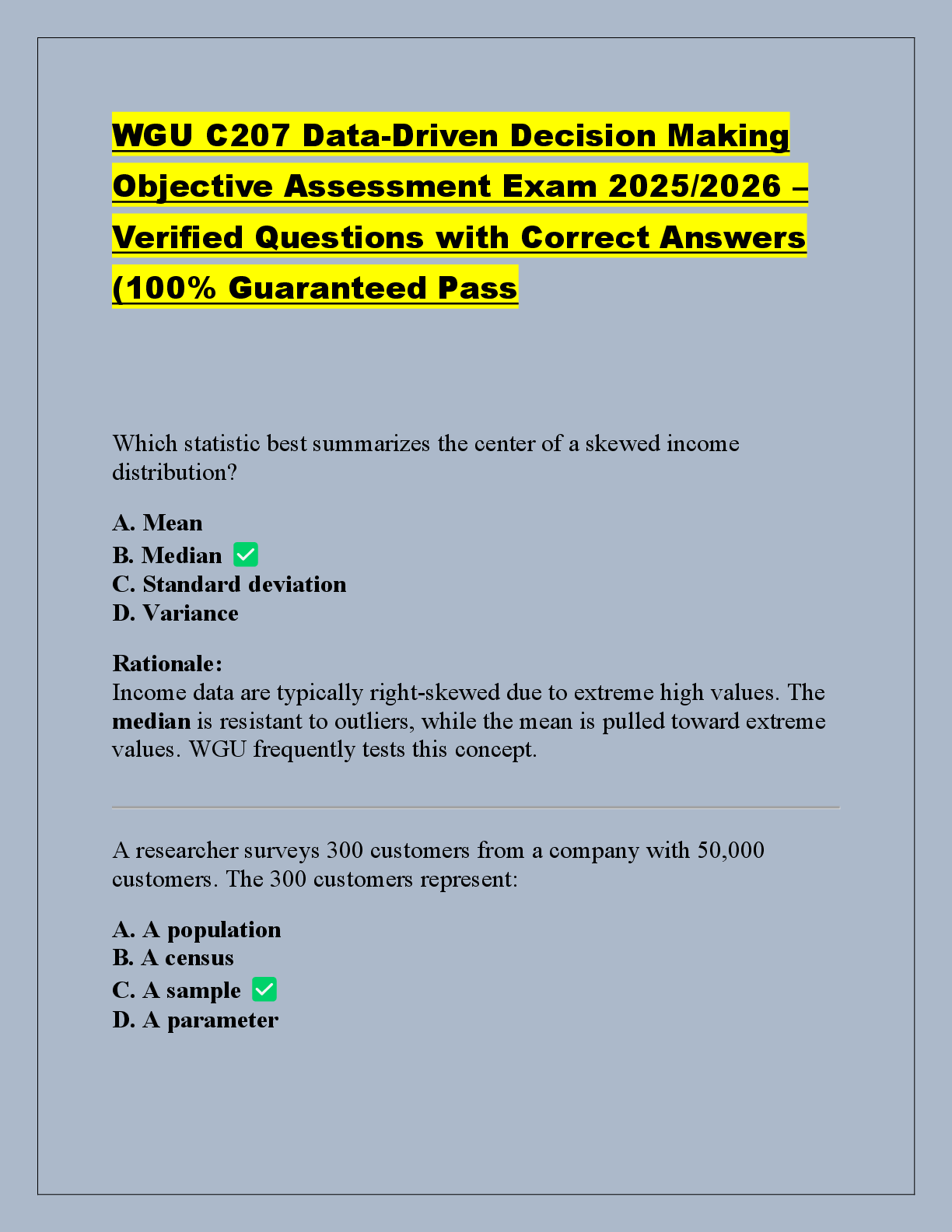
WGU C207 DATA-DRIVEN DECISION MAKING OBJECTIVE ASSESSMENT DETA...
WGU C207 Module Quizzes Multi Choice Version Data-Driven Decis...
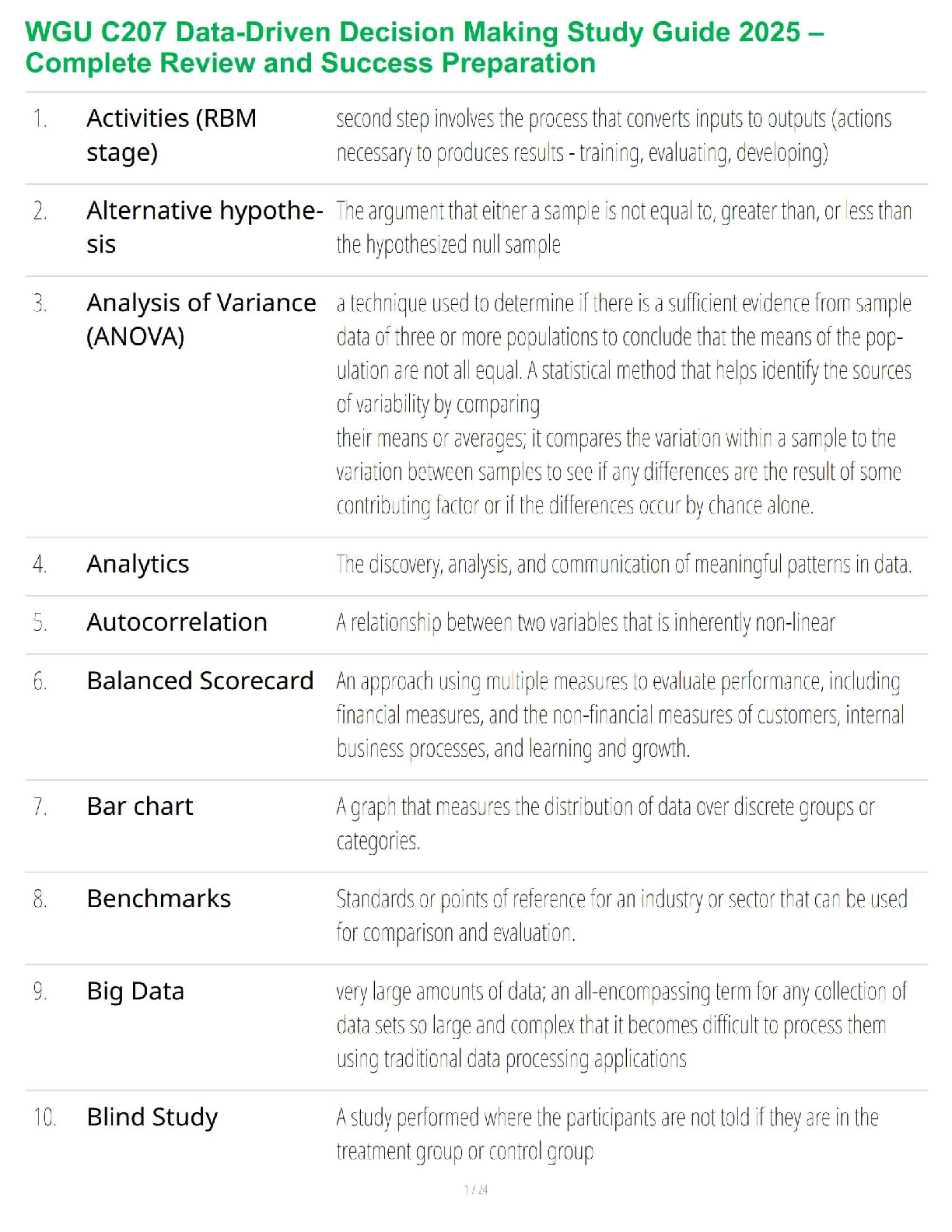
WGU C207 Data-Driven Decision Making Study Guide 2025 – Comple...

.png)
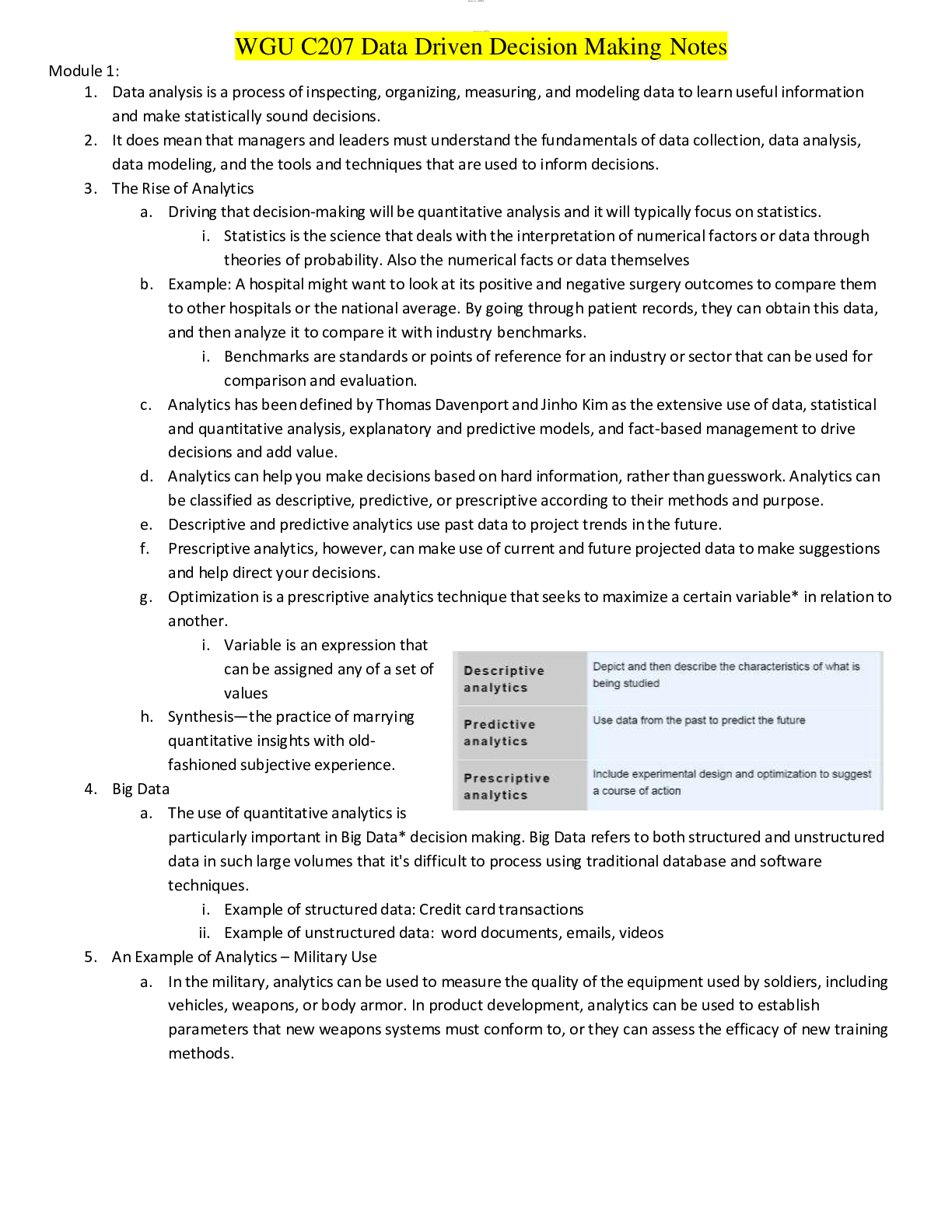
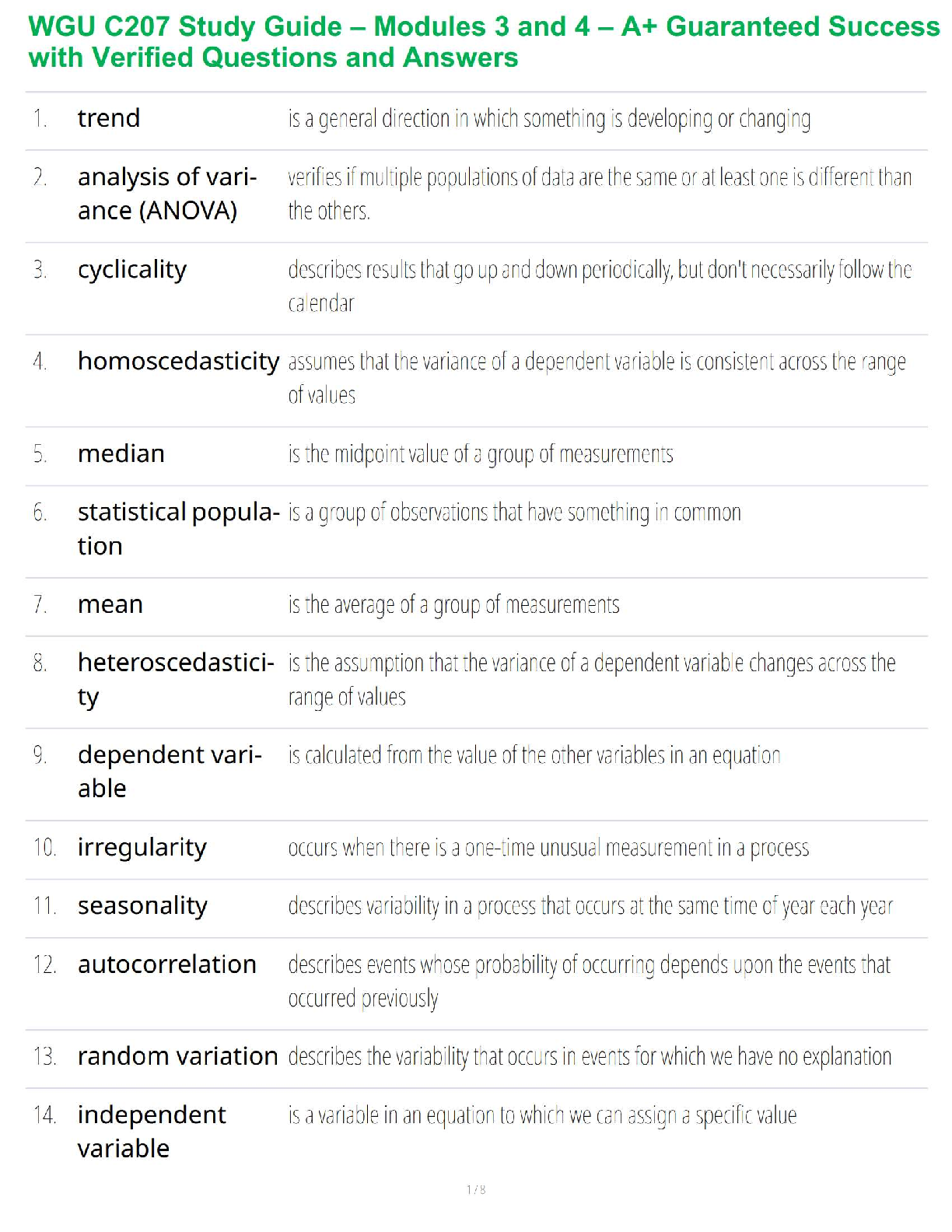
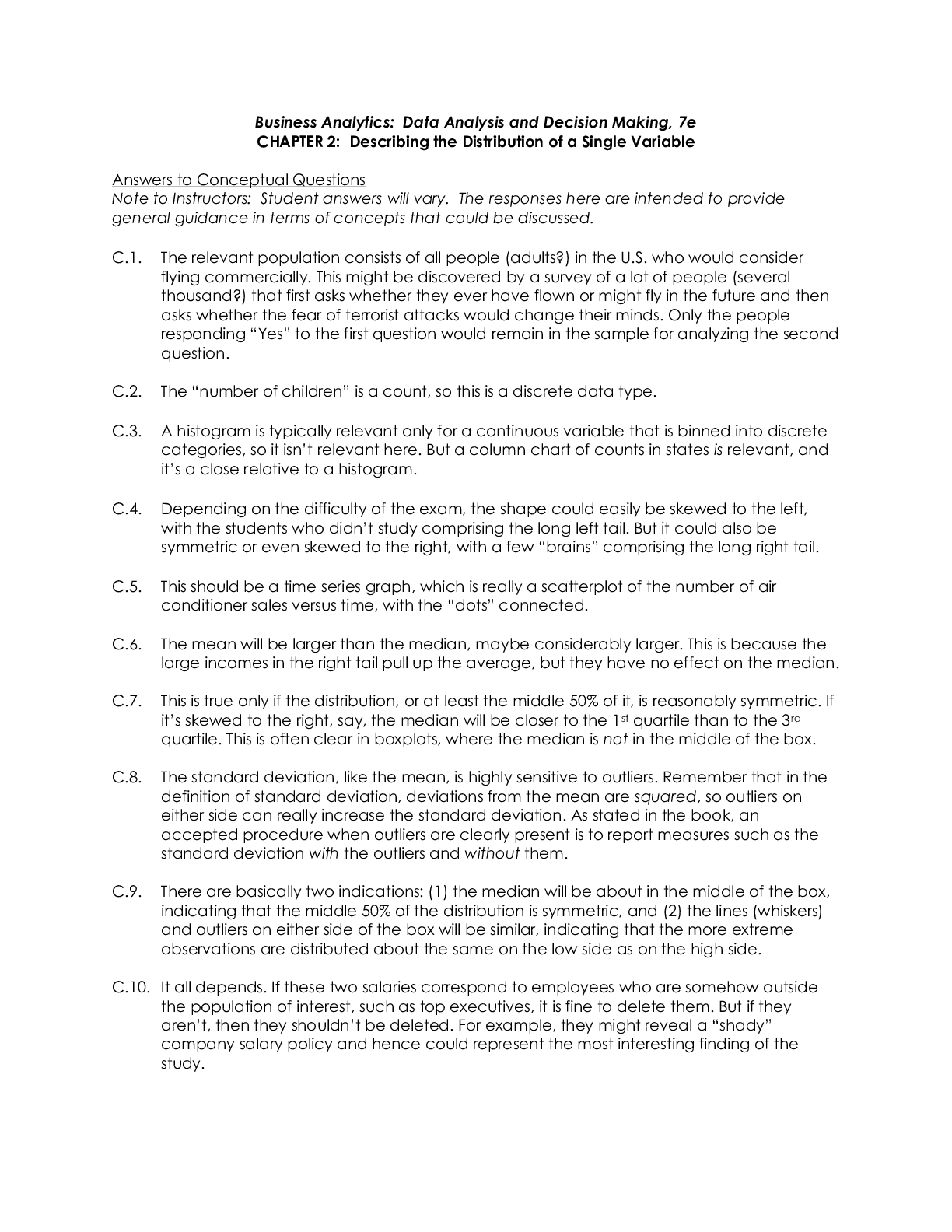
Business Analytics Data Analysis & Decision Making, 7e Christi...
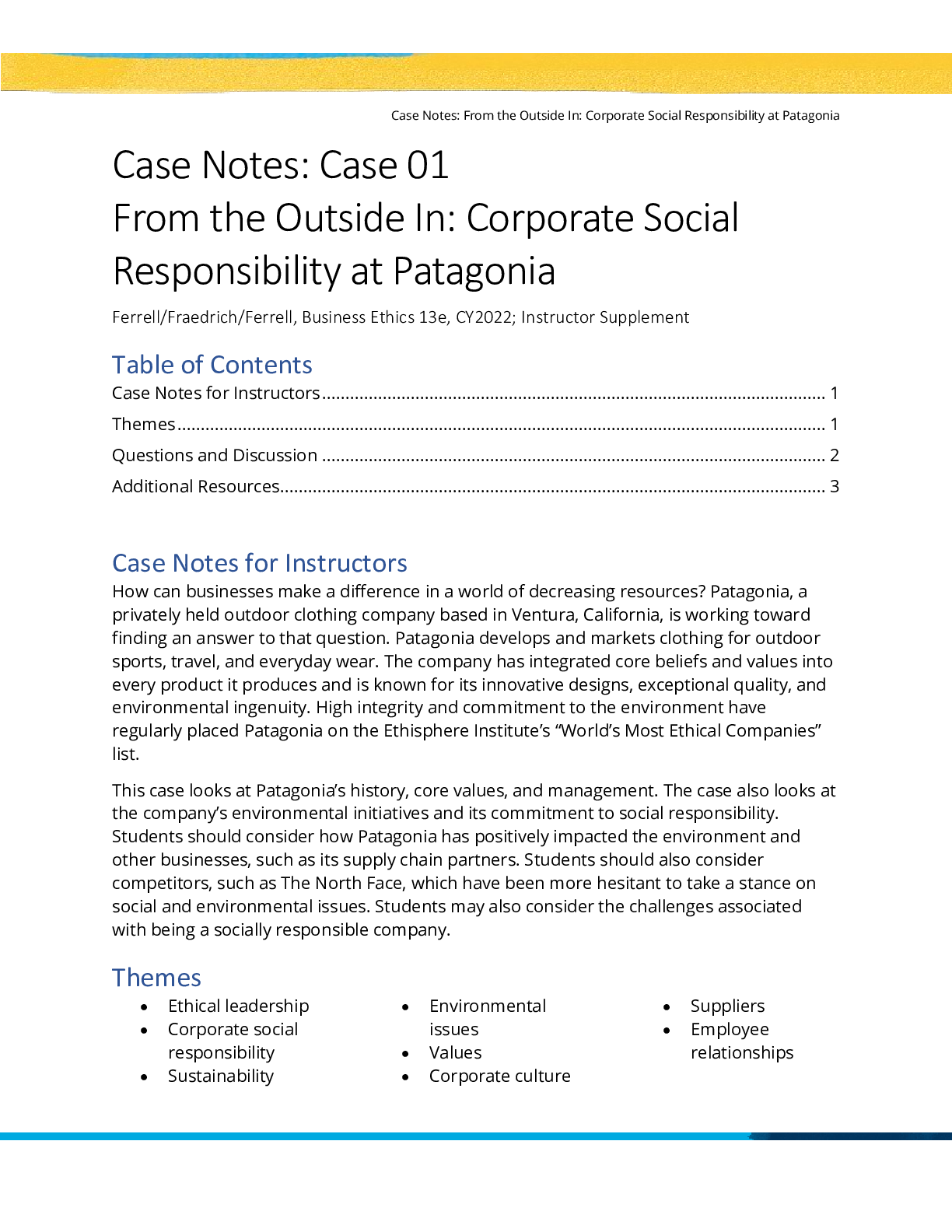
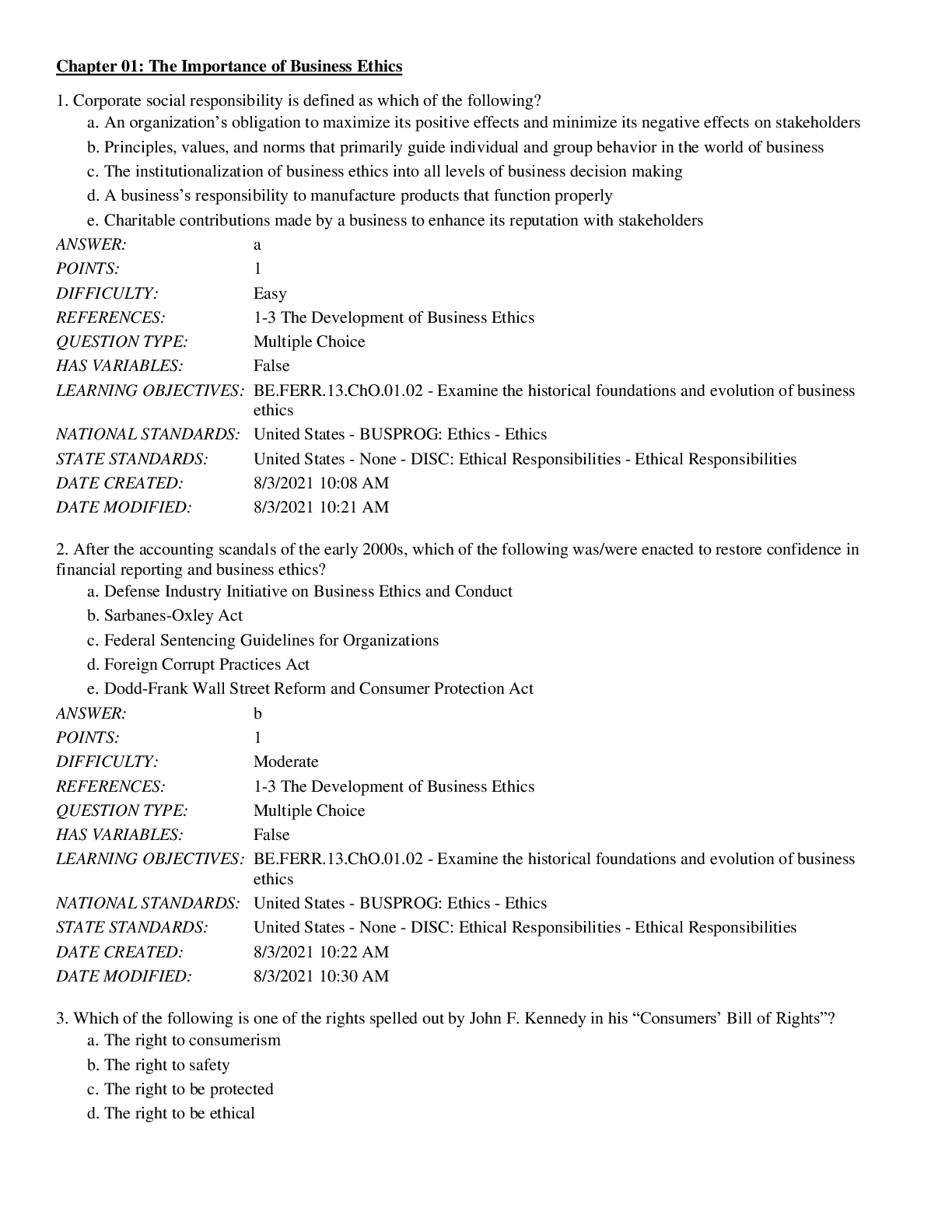
Business Ethics Ethical Decision Making and Cases, 13e Ferrel...


 Answered 2023.png)