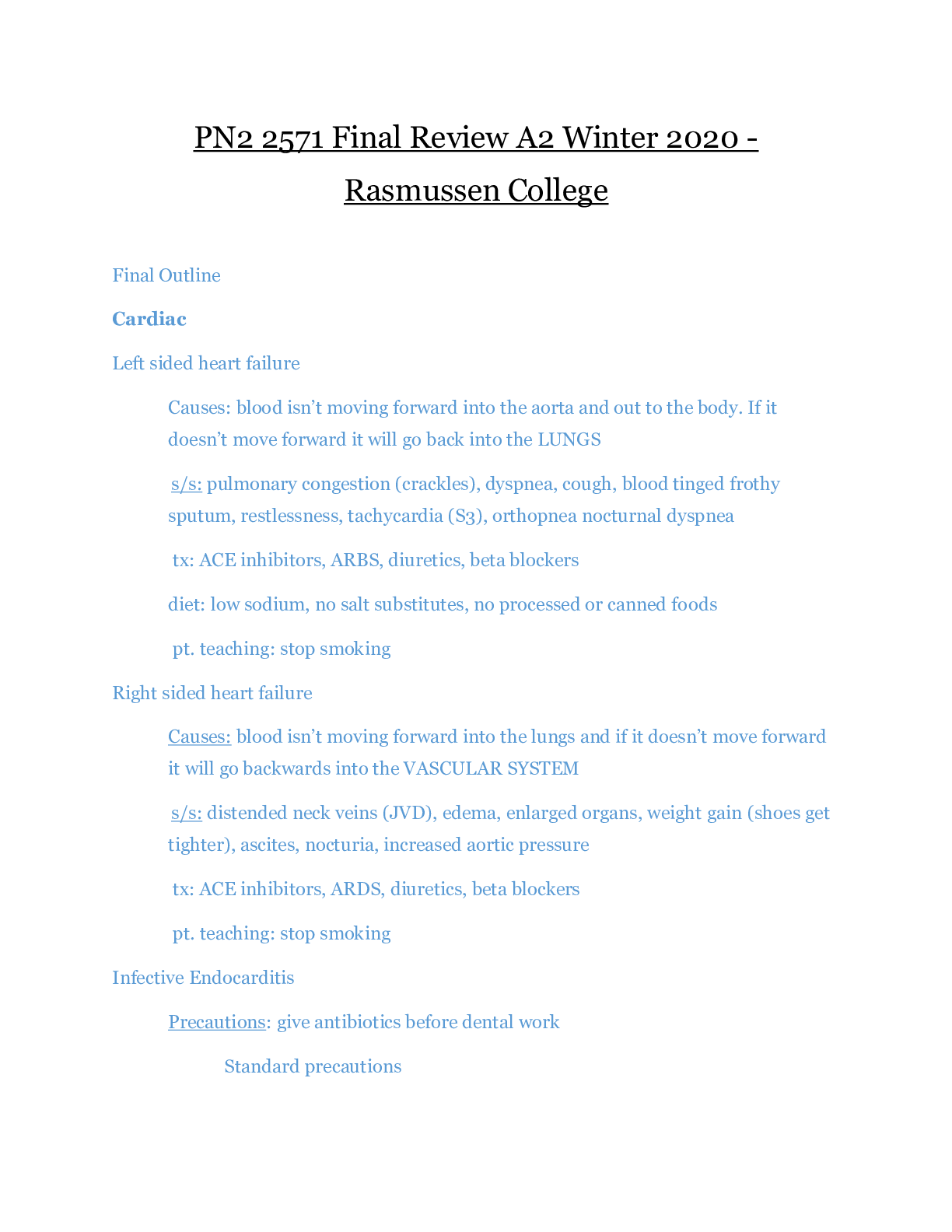
PN2 2571 Final Review A2 Winter 2020 - Rasmussen College
Final Outline
Cardiac
Left sided heart failure
Causes: blood isn’t moving forward into the aorta and out to the body. If it doesn’t move forward it will go b
...
PN2 2571 Final Review A2 Winter 2020 - Rasmussen College
Final Outline
Cardiac
Left sided heart failure
Causes: blood isn’t moving forward into the aorta and out to the body. If it doesn’t move forward it will go back into the LUNGS
s/s: pulmonary congestion (crackles), dyspnea, cough, blood tinged frothy sputum, restlessness, tachycardia (S3), orthopnea nocturnal dyspnea
tx: ACE inhibitors, ARBS, diuretics, beta blockers
diet: low sodium, no salt substitutes, no processed or canned foods
pt. teaching: stop smoking
Right sided heart failure
Causes: blood isn’t moving forward into the lungs and if it doesn’t move forward it will go backwards into the VASCULAR SYSTEM
s/s: distended neck veins (JVD), edema, enlarged organs, weight gain (shoes get tighter), ascites, nocturia, increased aortic pressure
tx: ACE inhibitors, ARDS, diuretics, beta blockers
pt. teaching: stop smoking
Infective Endocarditis
Precautions: give antibiotics before dental work
Standard precautions
Diagnosing: blood test for bacteria, CBC for anemia, and an echocardiogram
Pericarditis
s/s: characterized by pain in the precordial area (over the heart and lower thorax) which is aggravated by breathing and twisting movements
non pharmalogical pain interventions: give a pillow to splint their breathing
where to hear a rub: pericardium (over the heart and lower thorax) left sternal border
meds for: antibiotics and anti-inflammatory drugs
HTN
s/s: HEADACHE, angina, dyspnea, palpitations, dizzy, fatigue
what is essential HTN: primary hypertension and the cause is unknown
Pulse Pressure
How to figure it out: subtracting diastolic blood pressure from systolic blood pressure
Systolic – diastolic
Vascular
Aneurysms
S/s: hypotension, tachycardia, pallor, cool and clammy skin, and abdominal/back pain
what not to do: do not palpate the abdomen – risk for rupture
causes: hypertension and smoking
risk factors: smoking, high blood pressure
DVT
Pt. goals: oxygen saturation at 98%
non pharmalogical pain interventions: elevation, elastic supports, warm soaks, -
-
-
-
-
-
-
-
-
-
-
-
-
-
-
-
-
-
-
-
-
-
-
-
-
-
-
-
-
-
-
-
-
-
--
-
-
-
-
-
-
-
Pneumococcal pneumonia – s/s: fever, chills, chest pain when breathing, SOB, cough, blood stained or rusty sputum (phlegm), drowsiness (excessive sleepiness), confusion
COPD
s/s: persistent dyspnea on exertion and reduced airflow, wheezing, chronic cough, barrel chest
Nsg interventions: fowlers or orthopneic position, small frequent meals, don’t exceed 3L/min of oxygen, increase fluid intake, avoid irritants, avoid extreme hot/cold
Gerd
s/s:
what to assess:
Peptic Ulcers
Medications for, know the classes and actions of the meds
- Ranitidine: H2 antagonist that reduces acid in the stomach
- Famotidine: H2 antagonist that blocks the action of histamine and reduces production of acid- promotes healing of ulcers and pain
- Sucralfate: forms a barrier over wound so acid can’t get on
- Omeprazole: proton pump inhibitor that decreases acid secretion
s/s: burning pain on the mid epigastric area/back & heartburn
diet: Avoid extreme temperatures, spicy foods, and acidic foods
pt. teaching: decrease stress and bad eating habits (fast food), stop smoking
complications of:
-Gastric ulcer: laboring person, malnourished, pain is half an hour to an hour AFTER MEALS, FOOD DOES NOT HELP – but vomiting does
-Duodenal ulcer: executives, well-nourished, night time pain is common 2-3 hours after eating. BLOOD IN STOOL. Cold drinks and eating helps.
Inflammation
Rheumatoid Arthritis
S/s: morning stiffness, pain at rest and with movement, joint pain/swelling, lack of function, warmth, erythema, boutonniere deformity
Treatment: NSAIDS, corticosteroids (exacerbations), DMARDS, antibiotics (infection)
what to avoid: alcohol
[Show More]