Physics > QUESTIONS & ANSWERS > AQA A-level PHYSICS 7408/1 Paper 1 Question Paper + Mark scheme (Merged) Grade A+ (All)
AQA A-level PHYSICS 7408/1 Paper 1 Question Paper + Mark scheme (Merged) Grade A+
Document Content and Description Below
Last updated: 3 years ago
Preview 1 out of 65 pages
Instant download
.png)
Buy this Document to get the Full Access Instantly
Provided by Students Who Aced it
We Verify Document Content to Gurantee Accuracy
Reviews( 0 )
Document information
Connected school, study & course
About the document
Uploaded On
Dec 11, 2022
Number of pages
65
Written in
All

Additional information
This document has been written for:
Uploaded
Dec 11, 2022
Downloads
0
Views
178
Topic Tags
Related Subjects & Courses
Explore similar study resources and related concepts.
Recommended For You
Get more on QUESTIONS & ANSWERS ».png)
AQA A-level PHYSICS 7408/3BE Paper 3 Section B Electronics Que...
.png)
AQA A-level PHYSICS 7408/3BE Paper 3 Section B Electronics Que...
.png)
AQA A-level PHYSICS 7408/3BC Paper 3 Section B Engineering phy...
.png)
AQA A-level PHYSICS 7408/3BB Paper 3 Section B Medical physics...

AQA A-LEVEL PHYSICS 7408/1 Paper 1 Mark scheme June 2022
.png)
.png)

AQA A-level PHYSICS 7408/1 Paper 1 Mark scheme June 2021 Versi...
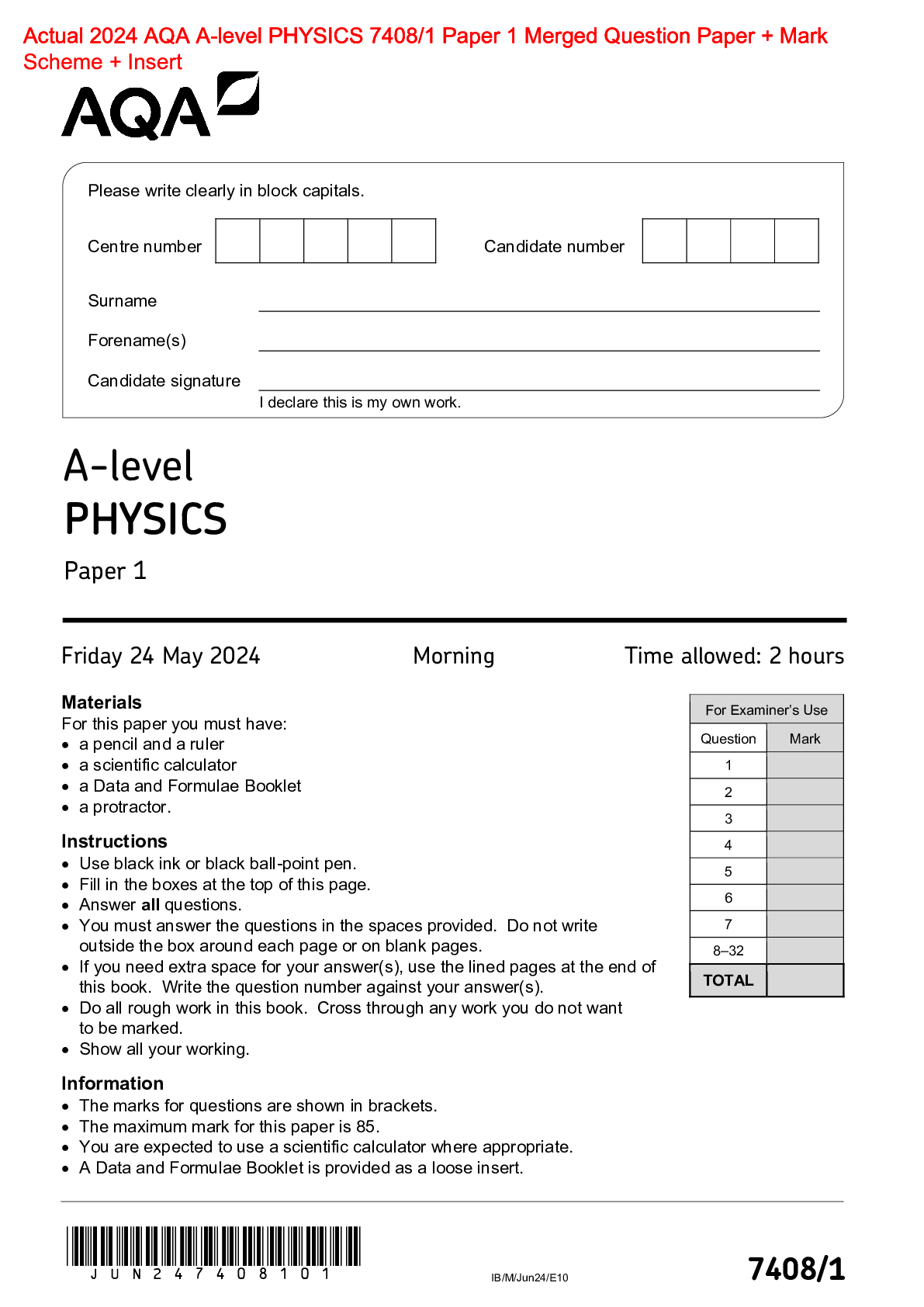
Actual 2024 AQA A-level PHYSICS 7408/1 Paper 1 Merged Question...
Official June 2024 AQA A-level PHYSICS 7408/1 Paper 1 Merged Q...
AQA A-level PHYSICS 7408/3A Paper 3 Section A Mark scheme June...

AQA A-LEVEL PHYSICS 7408/3A Paper 3 Section A Mark scheme June...
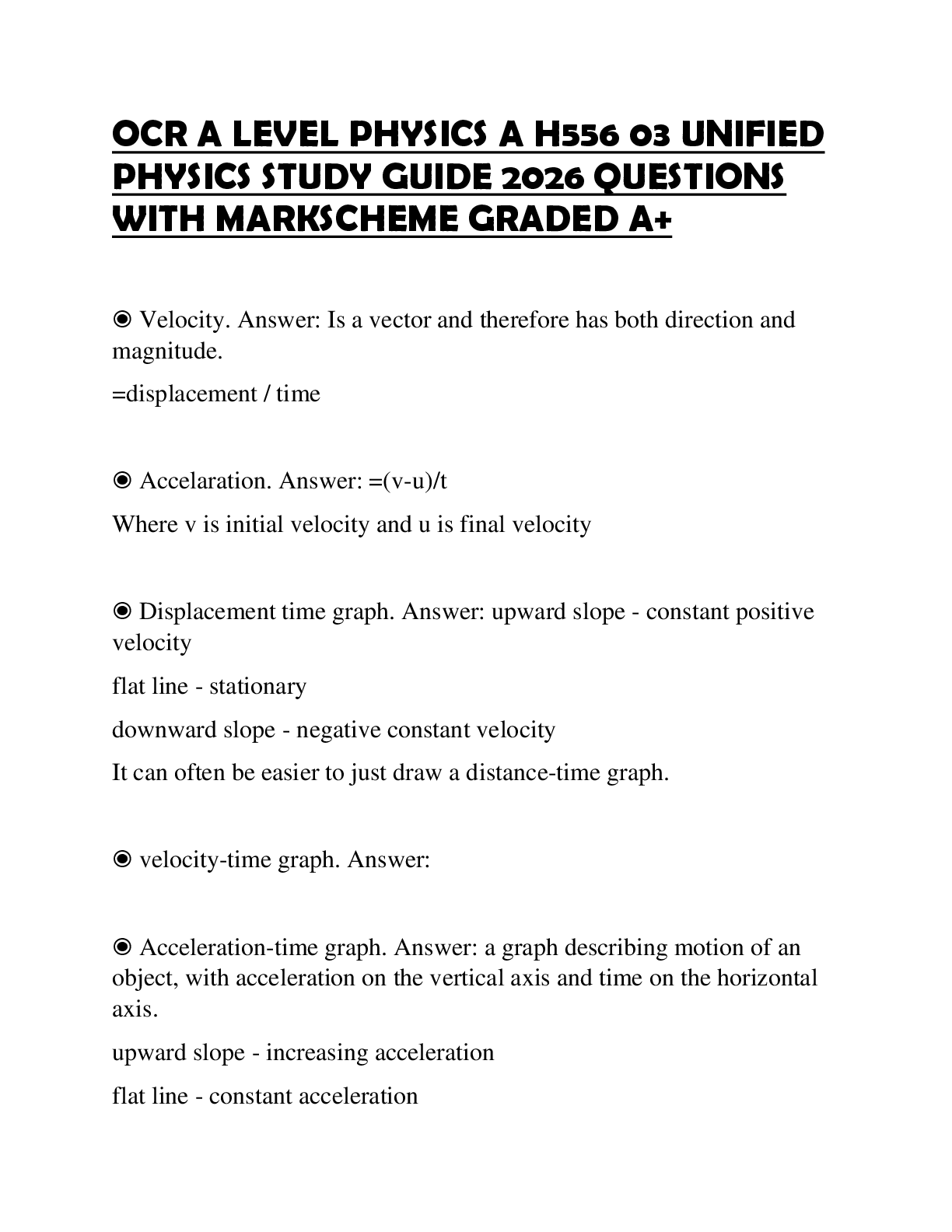
Test Bank for Physics for Scientists and Engineers A Strategic...

Plasma Physics, 2e by Richard Fitzpatrick (Solutions Manual)

College Physics, 3e Roger Freedman, Todd Ruskell, Philip Keste...

A Concise Introduction to Thermodynamics for Physicists, 1e by...




.png)
.png)
![Preview of Chapter 1.Perspectives of Pediatric Nursing[100% CORRECT ANSWERS AND EXPLANATIONS].](https://scholarfriends.com/storage/DD1 (1).png)
.png)

