NURSING > QUESTIONS & ANSWERS > Nursing 140 - Exam 2 Study Guide Latest Solved Update 2022-2023 (All)
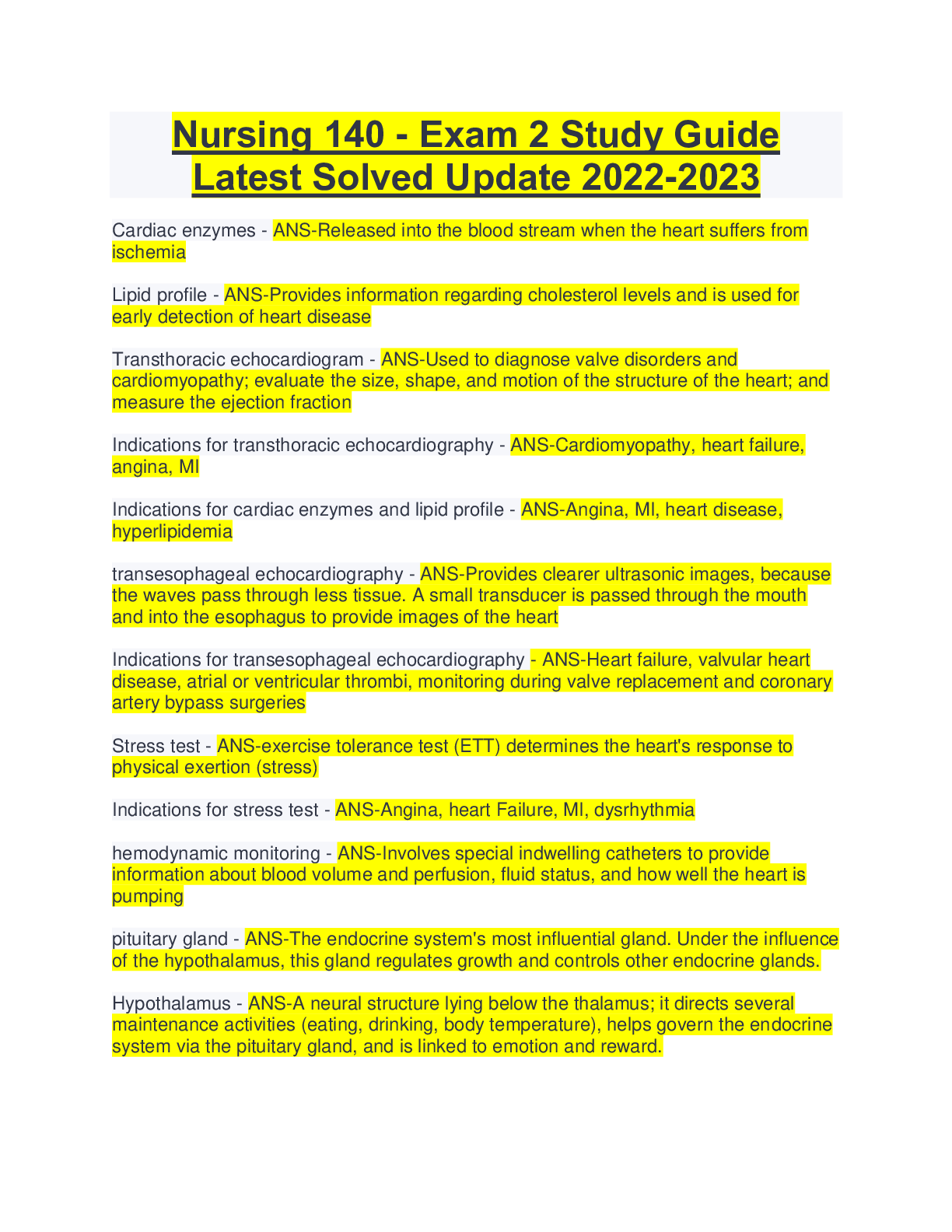
Nursing 140 - Exam 2 Study Guide Latest Solved Update 2022-2023
Document Content and Description Below
Last updated: 3 years ago
Preview 1 out of 25 pages
Instant download
Buy this Document to get the Full Access Instantly
Provided by Students Who Aced it
We Verify Document Content to Gurantee Accuracy
Reviews( 0 )
Document information
Connected school, study & course
About the document
Uploaded On
Dec 13, 2022
Number of pages
25
Written in
All

Additional information
This document has been written for:
Uploaded
Dec 13, 2022
Downloads
0
Views
81
Topic Tags
Related Subjects & Courses
Explore similar study resources and related concepts.
Recommended For You
Get more on QUESTIONS & ANSWERS »
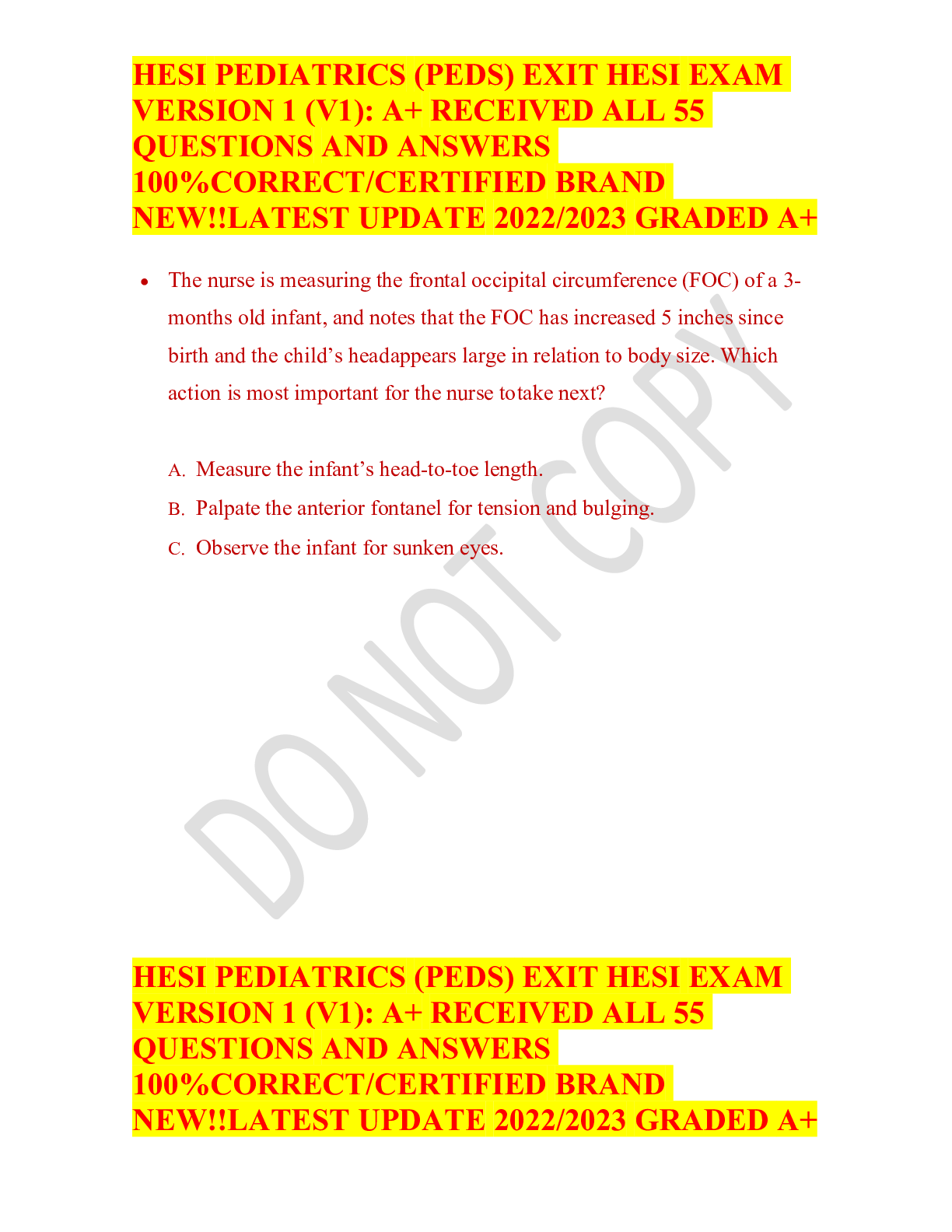
HESI PEDIATRICS (PEDS) EXIT HESI EXAM VERSION 1 (V1): A+ RECEI...
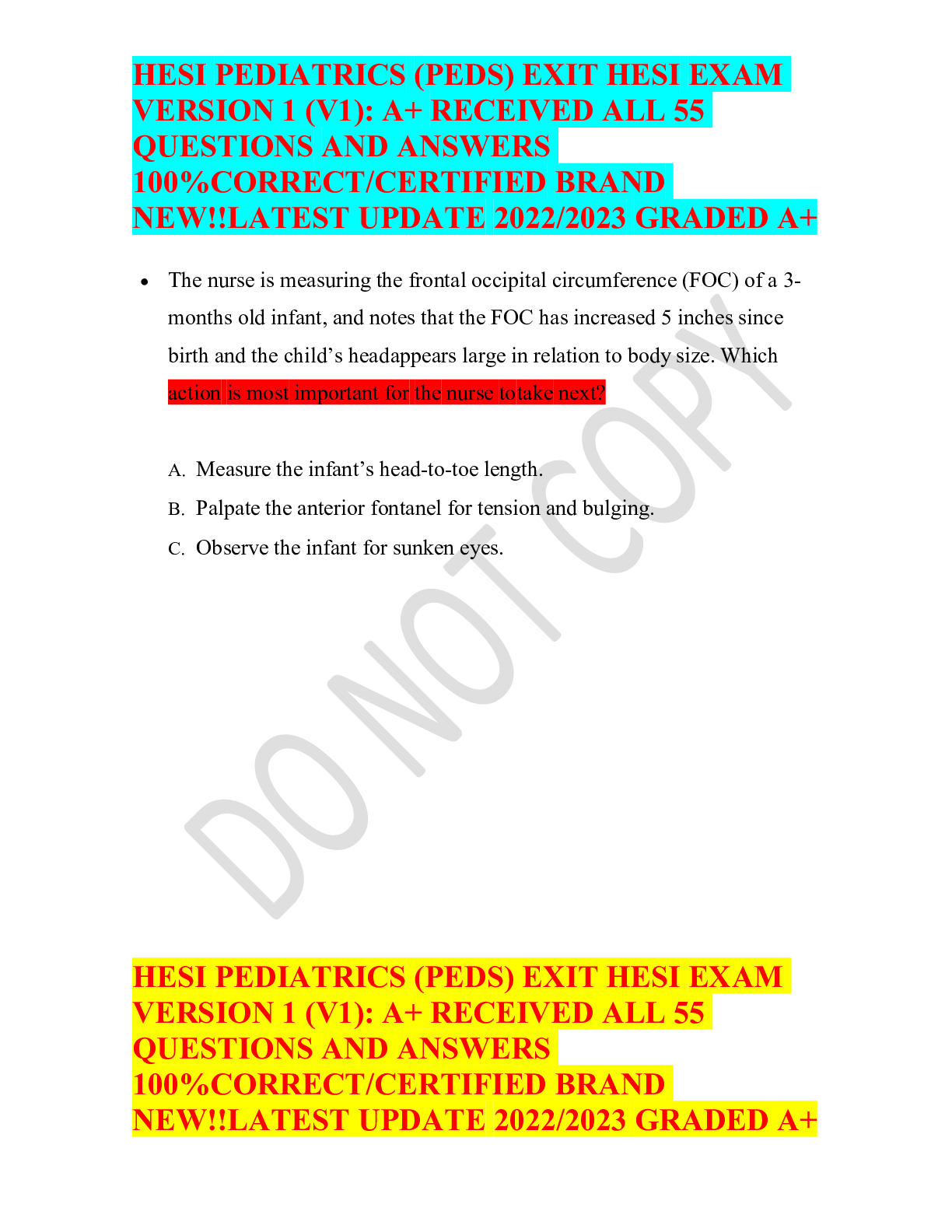
HESI PEDIATRICS (PEDS) EXIT HESI EXAM VERSION 1 (V1): A+ RECEI...
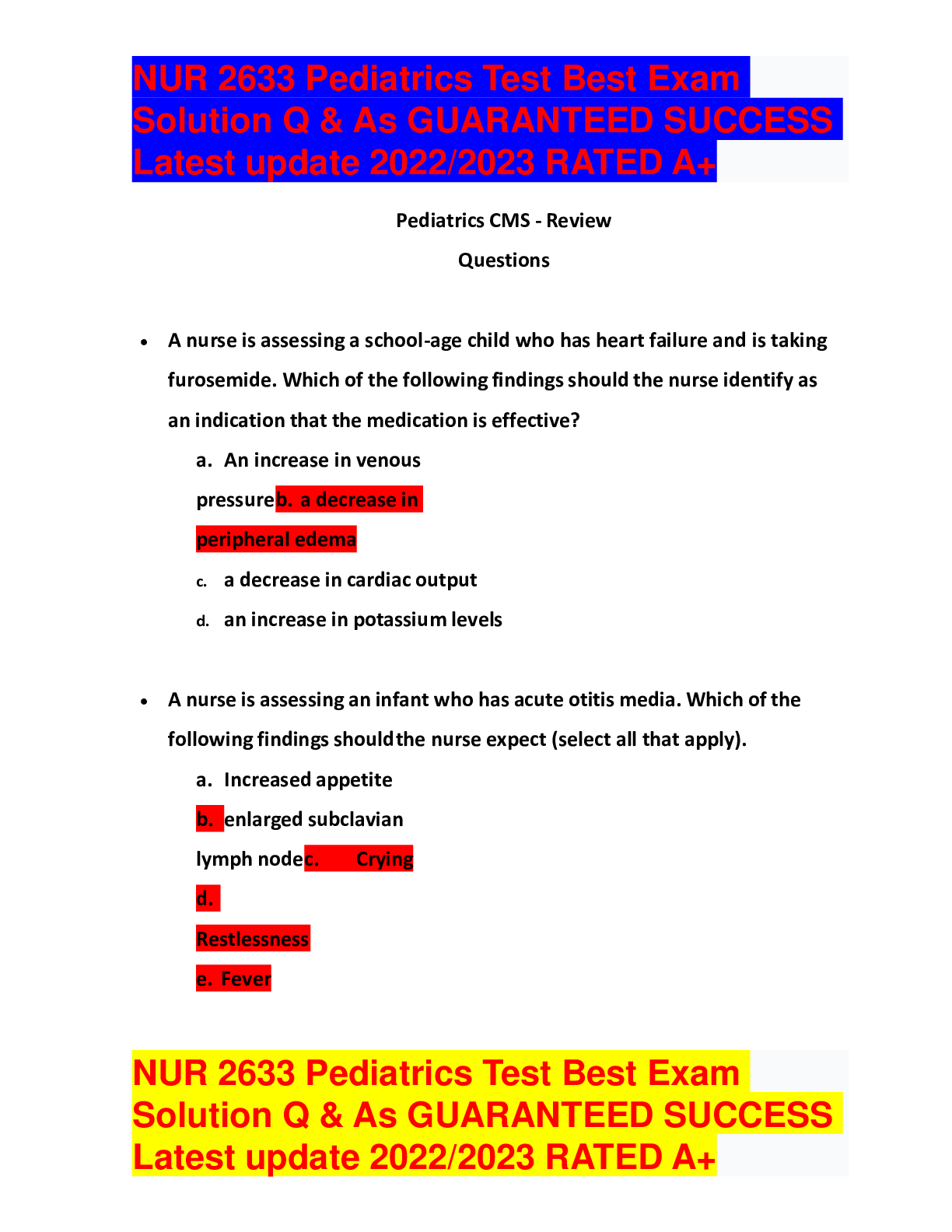
NUR 2633 Pediatrics Test Best Exam Solution Q & As GUARANTEED...
FULL - Elaborated Test Bank for Essentials of Pediatric Nursin...

Test Bank for Understanding Medical-Surgical Nursing 5th Editi...
Test Bank For Pediatric Nursing- A Case-Based Approach 1st Edi...
Edelman: Health Promotion Throughout the Life Span, 8th Editio...

NURSING FUNDAMENTAL NCLEX-PN HESI Comp A Exam Questions and An...
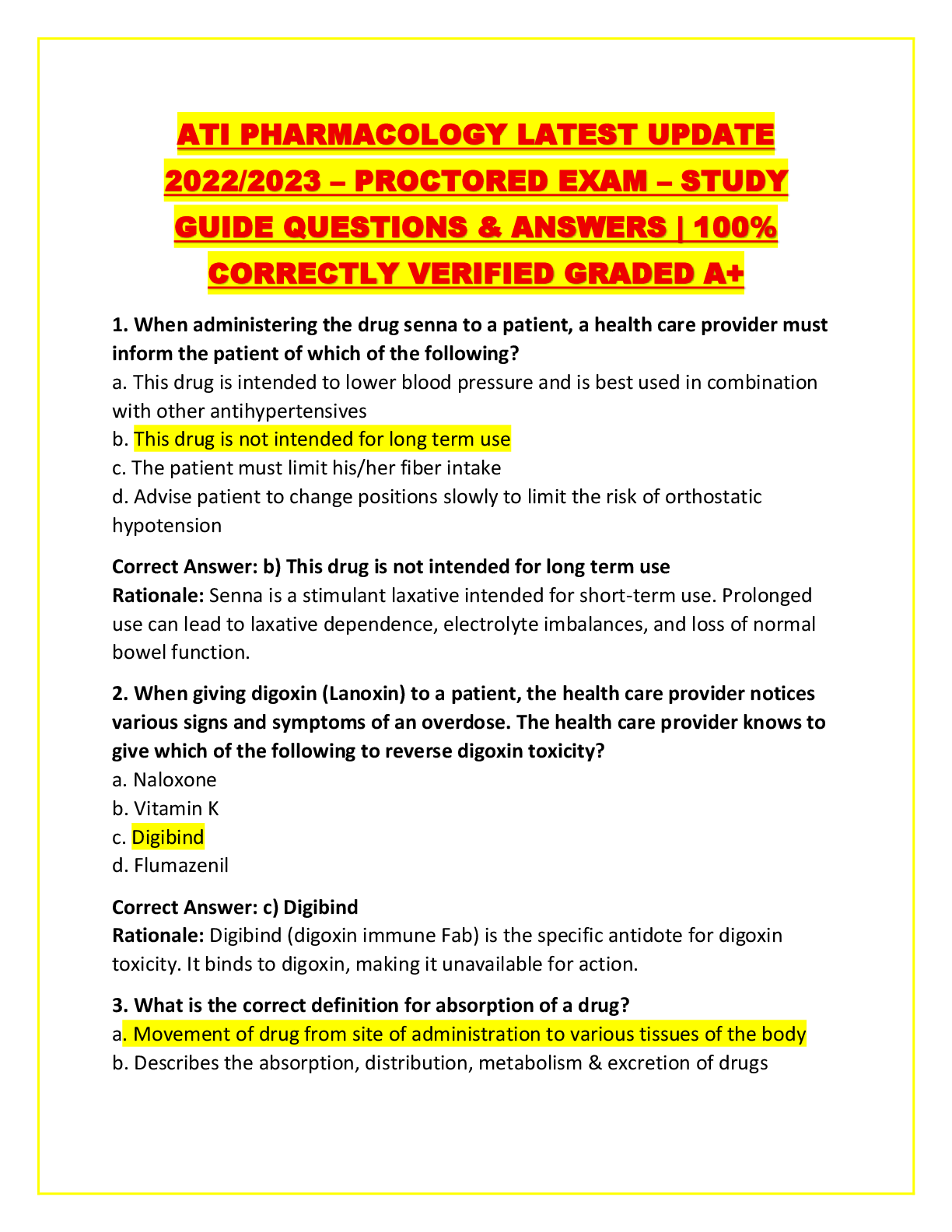
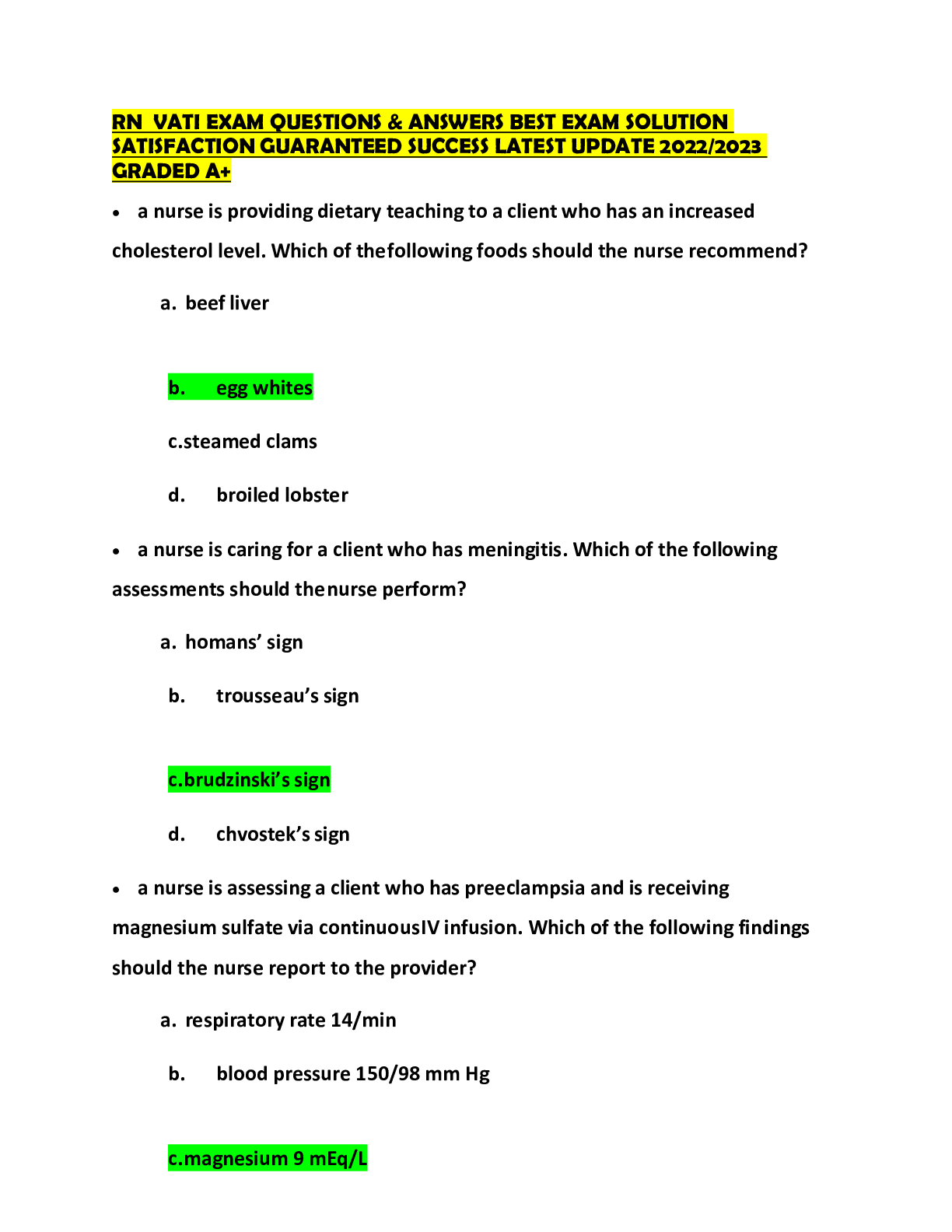
RN VATI EXAM QUESTIONS & ANSWERS BEST EXAM SOLUTION SATISFACT...
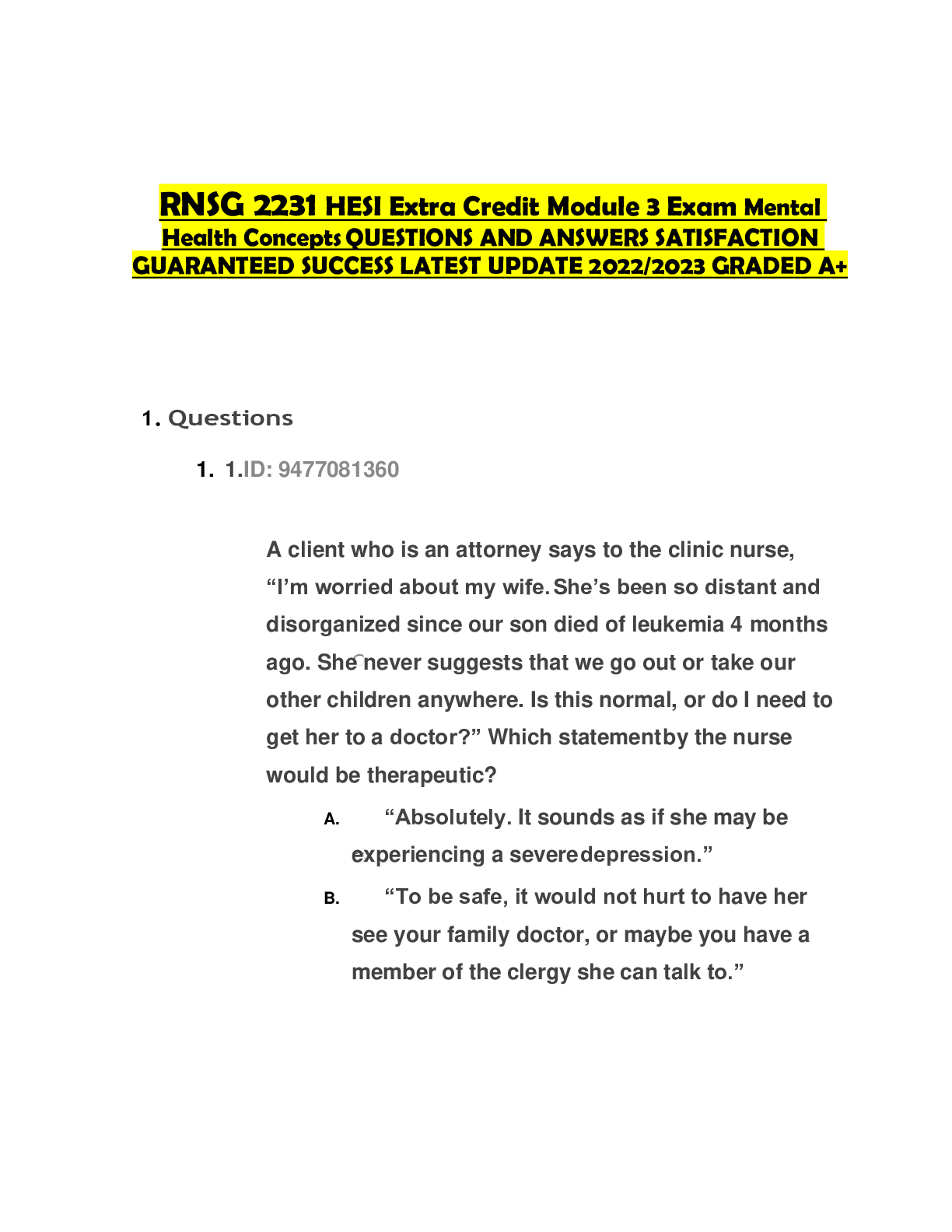
RNSG 2231 HESI Extra Credit Module 3 Exam Mental Health Concep...
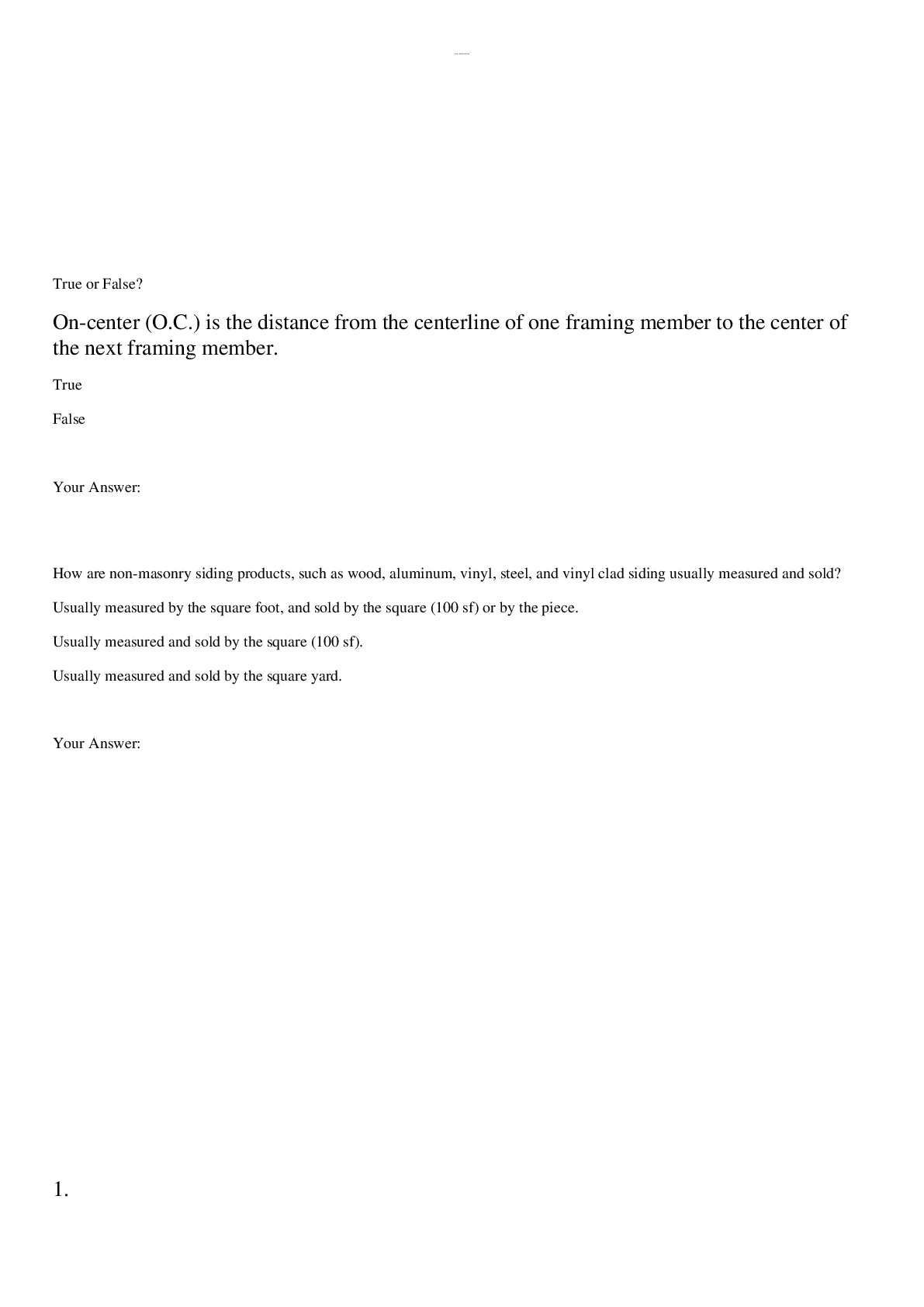
State Farm Estimates Review Practice Exercise Answer Key New U...
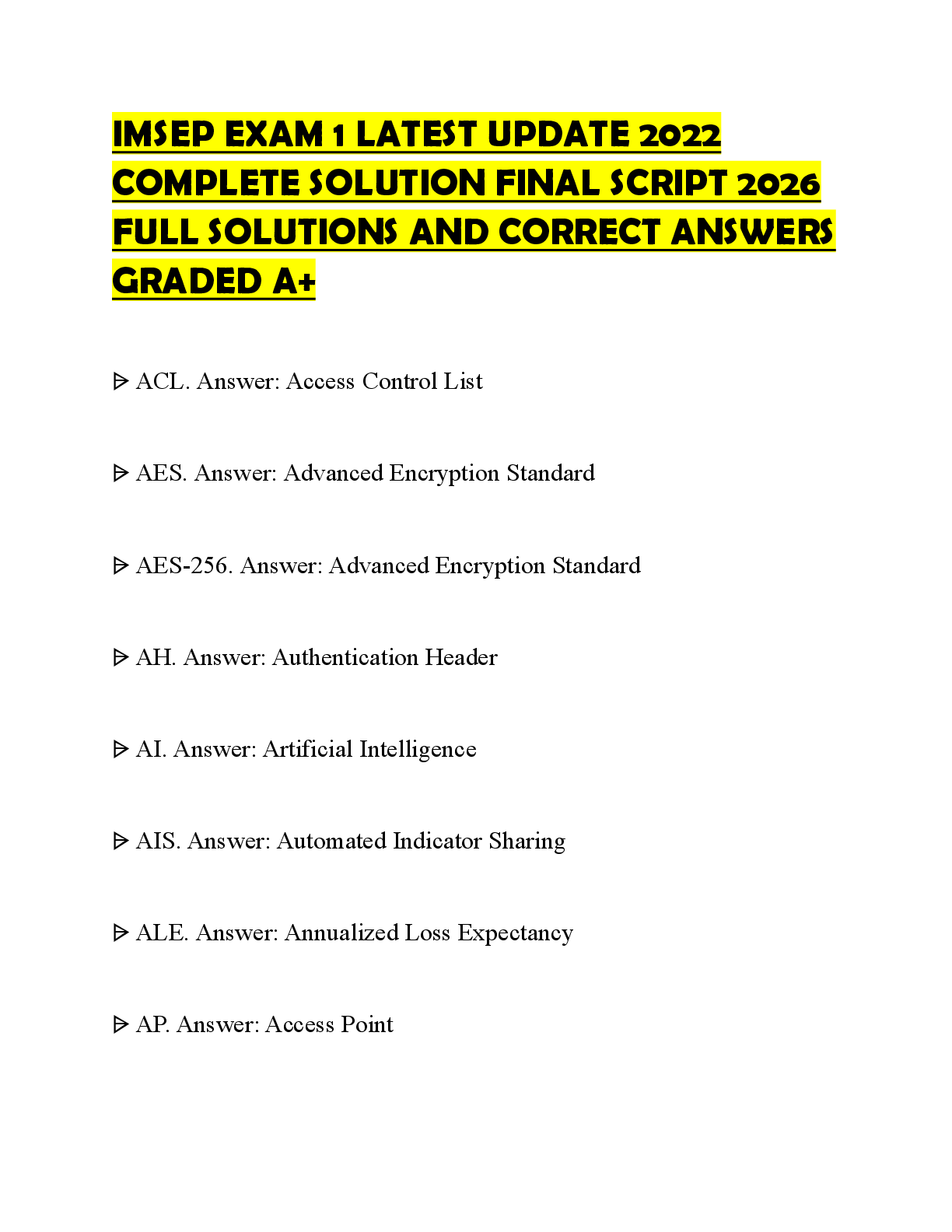

.png)



.png)