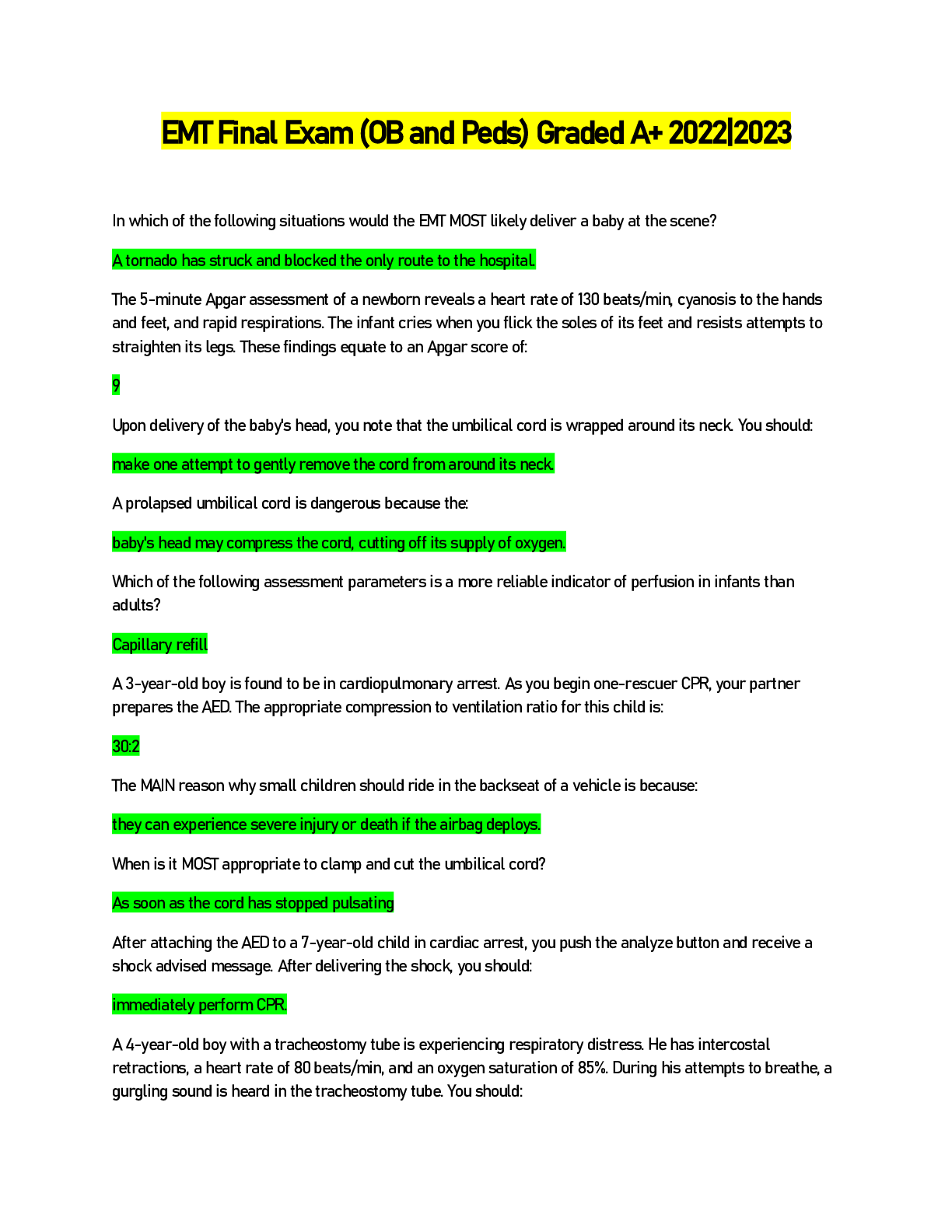
NURSING > QUESTIONS & ANSWERS > EMT Final Exam (OB and Peds) Graded A+ 2022|2023 (All)
EMT Final Exam (OB and Peds) Graded A+ 2022|2023
Document Content and Description Below
Last updated: 3 years ago
Preview 1 out of 10 pages
Instant download
Buy this Document to get the Full Access Instantly
Provided by Students Who Aced it
We Verify Document Content to Gurantee Accuracy
Reviews( 0 )
Document information
Connected school, study & course
About the document
Uploaded On
Dec 13, 2022
Number of pages
10
Written in
All

Additional information
This document has been written for:
Uploaded
Dec 13, 2022
Downloads
0
Views
230
Topic Tags
Recommended For You
Get more on QUESTIONS & ANSWERS »
![Preview of [eBook] [PDF] Clinical Nursing Calculations 3rd Edition By Susan Sienkiewicz, Sandra Meg](https://browseimages.nyc3.digitaloceanspaces.com/paper-images/2025/Jul/04/4jF14r9I2025-07-04-05-586867ec3011731.png)
[eBook] [PDF] Clinical Nursing Calculations 3rd Edition By S...
NRNP 6635 FINAL EXAM QUESTIONS AND ANSWERS 2023! Rated A + Ans...
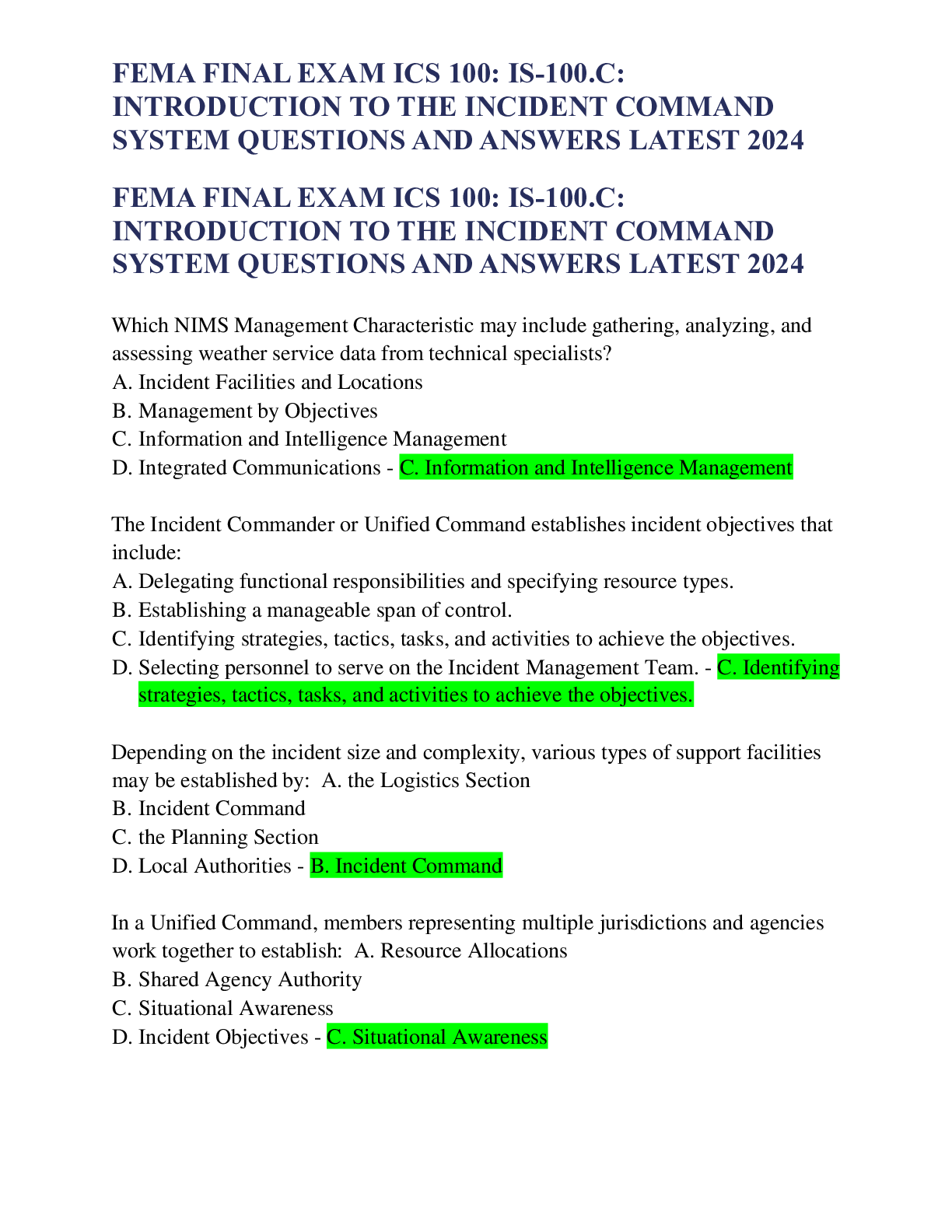
FEMA FINAL EXAM ICS 100: IS-100.C: INTRODUCTION TO THE INCIDEN...
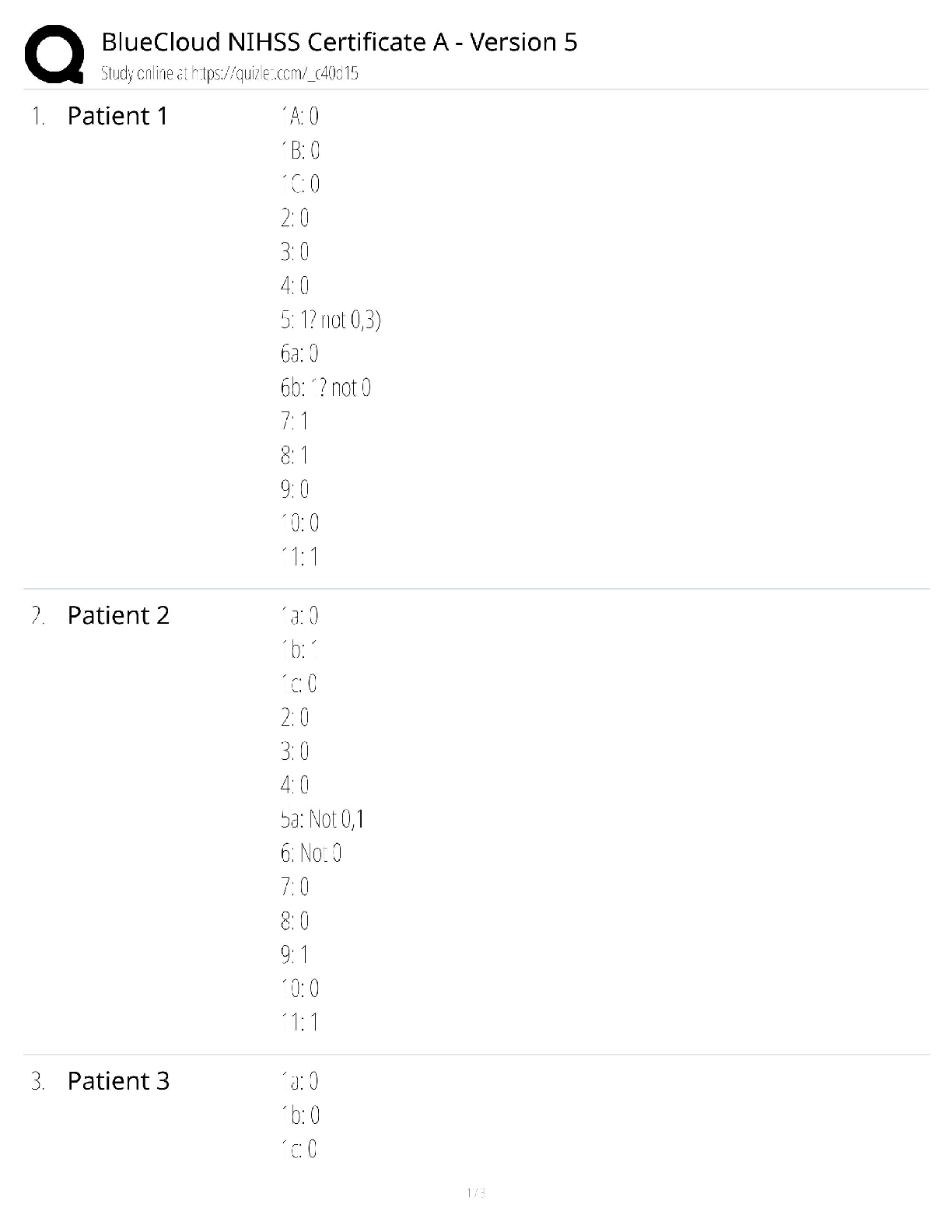
Blue Cloud NIHSS Certificate A (v5) Stroke Scale Certificatio...
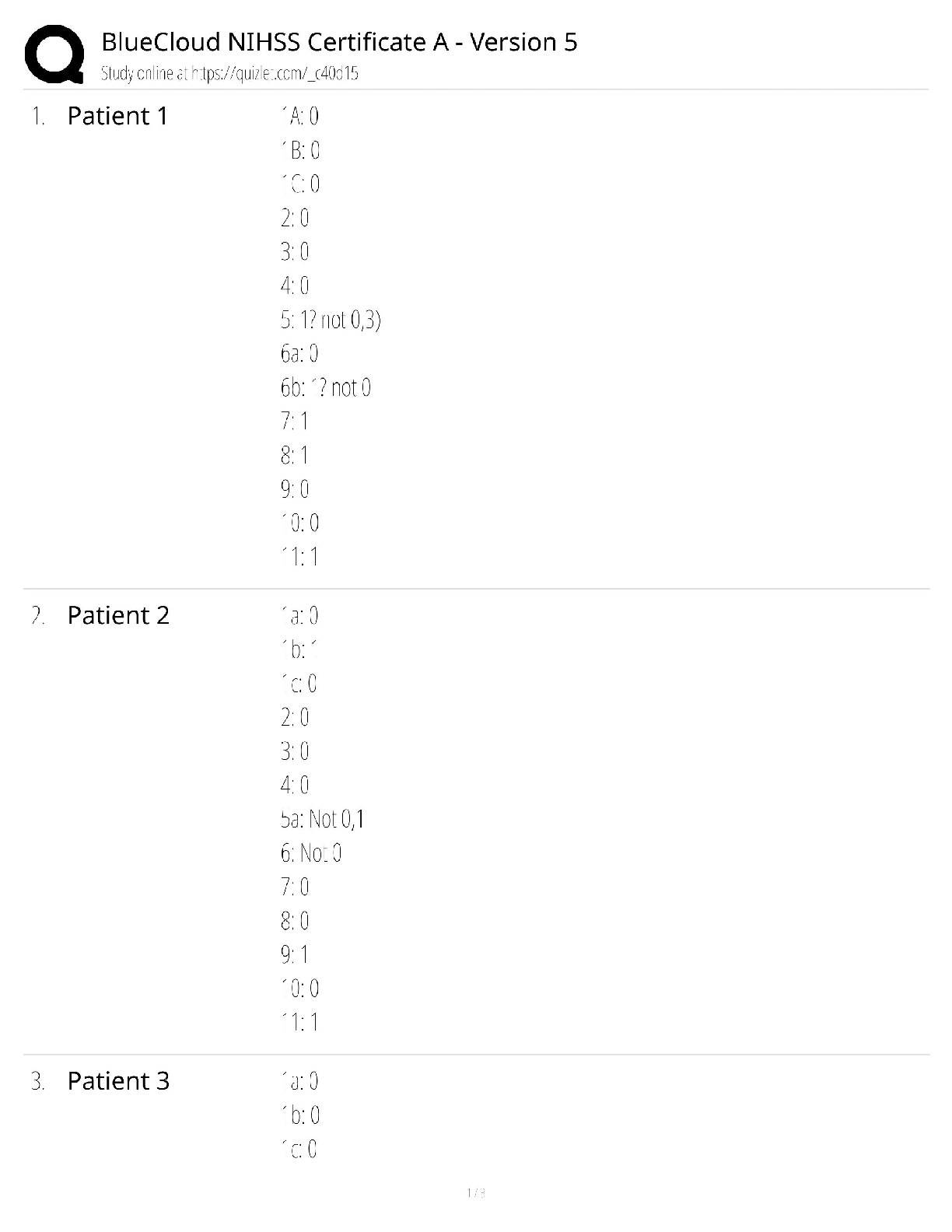


 Answered 2023.png)