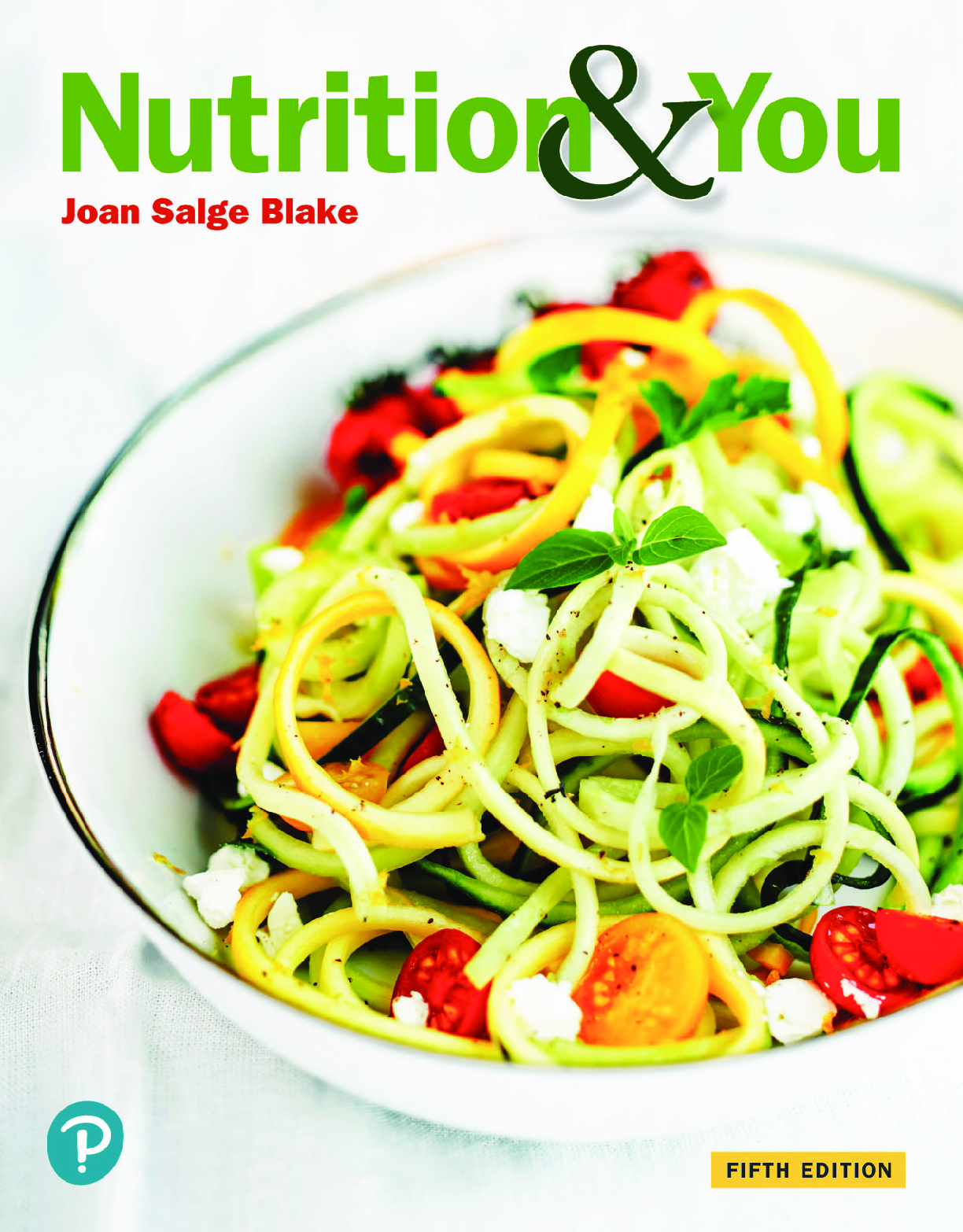
Nutrition & You
Brief Contents
Contents
Special Features
About the Author
Why I Wrote Nutrition & You
New to This Edition
Chapter-by-Chapter Updates
Other Key Features
Digital Learning Products
Instructional Re
...
Nutrition & You
Brief Contents
Contents
Special Features
About the Author
Why I Wrote Nutrition & You
New to This Edition
Chapter-by-Chapter Updates
Other Key Features
Digital Learning Products
Instructional Resources for Nutrition & You (Download Only)
Reviewers
1 What Is Nutrition?
Learning Outcomes
What Drives Our Food Choices?
We Need to Eat and Drink to Live
We Choose Foods for Many Other Reasons
Taste and Culture
Social Reasons and Trends
Cost, Time, and Convenience
Self-Assessment Do Outside Factors Influence Your Food Choices?
Answers
Habits and Emotions
Self-Assessment What Does the Health of Your Family Tree Look Like?
What Is Nutrition And Why Is Good Nutrition So Important?
What Are the Essential Nutrients and Why Do You Need Them?
Carbohydrates, Fats, and Proteins Provide Energy
You Can Calculate the Amount of Energy a Food Provides
Vitamins and Minerals Are Essential for Metabolism
Water Is Vital for Many Processes in Your Body
How Should You Get These Important Nutrients?
The Best Way to Meet Your Nutrient Needs Is with a Well-Balanced Diet
You Can Meet Some Nutrient Needs with a Supplement
How Does The Average American Diet Stack Up?
The Quality of the American Diet
Rates of Overweight and Obesity in Americans
Improving Americans’ Diets Is One Goal of Healthy People 2020
What’s the Real Deal When It Comes to Nutrition Research and Advice?
Sound Nutrition Research Begins with the Scientific Method
Research Studies and Experiments Confirm Hypotheses
Observational Research
Experimental Research
You Can Trust the Advice of Nutrition Experts
You Can Obtain Accurate Nutrition Information on the Internet
Who Runs and Pays for the Site?
What Is the Source of Information?
How Do You Know if the Information Is Accurate?
Is the Information Reviewed by Experts?
How Current Is the Information?
What Is the Site’s Policy about Linking to Other Sites?
How Does the Site Collect and Handle Personal Information? Is the Site Secure?
Can You Communicate with the Owner of the Website?
Is It Safe to Link to Twitter or Facebook Through a Website?
1 Visual Chapter Summary
LO 1.1 Multiple Factors Influence Food Choices
LO 1.2 Nutrition Is the Science of Food
LO 1.3 There Are Six Categories of Nutrients
LO 1.4 A Well-Balanced Diet Will Provide the Nutrients Your Body Needs
LO 1.5 The American Diet Doesn’t Stack Up
LO 1.6 Nutrition Is a Science and New Discoveries Are Continually Being Made
Terms to Know
Check Your Understanding
Answers
Web Resources
Answers to True or False?
2 Tools for Healthy Eating
Learning Outcomes
What Is Healthy Eating and What Tools Can Help?
What Are the Dietary Reference Intakes?
DRIs Tell You How Much of Each Nutrient You Need
DRIs Encompass Several Reference Values
How to Use the DRIs
What Are the Dietary Guidelines for Americans?
What Are MyPlate and ChooseMyPlate.gov?
MyPlate and ChooseMyPlate.gov Emphasize Changes in Diet, Eating Behaviors, and Physical Activity
Self-Assessment Does Your Diet Have Proportionality?
Answers
How to Use MyPlate and ChooseMyPlate.gov
What Is a Food Label and Why Is It Important?
The Food Label Tells You What’s in the Package
The Food Label Can Help You Make Healthy Food Choices
On the Label: The New Nutrition Facts Panel
On the Label: The Daily Values
On the Label: Label Claims
Nutrient Content Claims
Health Claims
Structure/Function Claims
Functional Foods: What Role Do They Play in Your Diet?
Are There Concerns Associated with Consuming Functional Foods?
How to Use Functional Foods
2 Visual Chapter Summary
LO 2.1 Healthful Eating Is Based on Key Principles
LO 2.2 The Dietary Reference Intakes Are Reference Values for Each Nutrient
LO 2.3 The Dietary Guidelines for Americans Are Recommendations to Lower Risk of Disease
LO 2.4 MyPlate Is a Food Guidance System
LO 2.5 Food Labels Provide Nutrient Content Information
LO 2.6 Functional Foods Have Additional Health Benefits
Terms to Know
Check Your Understanding
Answers
Web Resources
Answers to True or False?
3 The Basics of Digestion
Learning Outcomes
What Is Digestion and Why Is It Important?
Digestion Occurs in the GI Tract
Digestion Is Mechanical and Chemical
What Are the Organs of the GI Tract and Why Are They Important?
Digestion Begins in the Mouth
The Stomach Stores, Mixes, and Prepares Food for Digestion
Most Digestion and Absorption Occurs in the Small Intestine
The Large Intestine Eliminates Waste and Absorbs Water and Some Nutrients
The Liver, Gallbladder, and Pancreas Are Accessory Organs
How Do Hormones, Enzymes, and Bile Aid Digestion?
Hormones Regulate Digestion
Enzymes Drive the Process of Digestion
Bile Helps Digest Fat
How Are Digested Nutrients Absorbed?
Digested Nutrients Are Absorbed by Three Methods
What Happens to Nutrients After They Are Absorbed?
The Circulatory System Distributes Nutrients through Your Blood
The Lymphatic System Distributes Some Nutrients through Your Lymph Vessels
Your Body Can Store Some Surplus Nutrients
The Excretory System Passes Waste Out of the Body
What Other Body Systems Affect Your Use of Nutrients?
The Nervous System Stimulates Your Appetite
The Endocrine System Releases Hormones That Help Regulate the Use of Absorbed Nutrients
What Are Some Common Digestive Disorders?
Disorders of the Mouth and Throat
Gingivitis and Periodontal Disease
Swallowing Problems
Esophageal Problems
Disorders of the Stomach
Gallbladder Disease
Disorders of the Intestines
Flatulence
Constipation and Diarrhea
Hemorrhoids
More Serious Intestinal Disorders
Irritable Bowel Syndrome (IBS)
Celiac Disease
Crohn’s Disease
Colon Cancer
3 Visual Chapter Summary
LO 3.1 Digestion Breaks Down Foods for Absorption
LO 3.2 The Organs of the GI Tract and Their Accessory Organs Are Involved in Digestion
LO 3.3 Hormones Regulate Digestion, Enzymes Chemically Digest Food, and Bile Aids in Fat Digestion
LO 3.4 Nutrients Are Absorbed through the Small Intestine
LO 3.5 Nutrients Are Transported through the Circulatory and Lymphatic Systems
LO 3.6 Other Body Systems Help You Use Digested Nutrients
LO 3.7 There Are Many Digestive Disorders
Terms to Know
Check Your Understanding
Answers
Web Resources
Answers to True or False?
4 Carbohydrates: Sugars, Starches, and Fiber
Learning Outcomes
What Are Carbohydrates and Why Do You Need Them?
Simple Carbohydrates Contain One or Two Sugar Units
Polysaccharides Are Complex Carbohydrates
Starch Is the Storage Form in Plants
Fiber Is Important
Glycogen Is the Storage Form in Animals
What Happens to the Carbohydrates You Eat?
You Digest Carbohydrates in Your Mouth and Intestines
What Is Lactose Malabsorption and Lactose Intolerance?
How Does Your Body Use Carbohydrates?
Insulin Regulates Glucose in Your Blood
Carbohydrates Fuel Your Body between Meals and Help Spare Protein for Other Uses
Carbohydrates Fuel Your Body during Fasting and Prevent Ketosis
How Much Carbohydrate Do You Need and What Are the Best Food Sources?
You Need a Minimum Amount of Carbohydrates Daily
The Best Carbohydrates Are Found in These Foods
Whole Grains Can Help Meet Starch and Fiber Needs
Fruits and Vegetables Provide Simple Sugars, Starch, and Fiber
Legumes, Nuts, and Seeds Are Excellent Sources of Carbohydrates and Fiber
Low-Fat and Fat-Free Dairy Products Provide Some Simple Sugars
Packaged Foods Can Also Provide Carbohydrates
What’s the Difference between Natural and Added Sugars?
Foods with Natural Sugars Usually Contain More Nutrients for Fewer Calories
Processed Foods and Sweets Often Contain Added Sugars
Are Added Sugars Bad for You?
Finding the Added Sugars in Your Foods
How Much Added Sugar Is Too Much?
Why Is Diabetes a Growing Epidemic?
What Are the Forms of Diabetes?
Type 1 Diabetes Is an Autoimmune Disease
Type 2 Diabetes Is More Common
What Effects Does Diabetes Have on Your Body?
Self-Assessment
Are You at Risk for Type 2 Diabetes?
How Is Diabetes Treated and Controlled?
Why Is Diabetes Called an Epidemic?
Can Type 2 Diabetes Be Prevented?
What Is Prediabetes?
What Are Sugar Substitutes and What Forms Can They Take?
Polyols Are Sugar Alcohols
Saccharin Is the Oldest Sugar Substitute
Aspartame Is Derived from Amino Acids
Neotame Is Also Made from Amino Acids
Acesulfame-K Contains Potassium
Sucralose Is Made from Sucrose
Rebaudioside A Is Derived from the Stevia Plant
Monk Fruit Is Another Sugar Substitute
Advantame Is a Newer Sugar Substitute
Why Is Fiber so Important?
Fiber Helps Prevent Constipation and Diverticulosis
Fiber Helps Prevent Obesity
Fiber Helps Prevent Heart Disease, Diabetes, and Cancer
Too Much Fiber Can Cause Health Problems
4 Visual Chapter Summary
LO 4.1 Carbohydrates Are Energy-Containing Nutrients
LO 4.2 Carbohydrates Are Digested in Your Mouth and Intestines
LO 4.3 Hormones Help the Body Regulate Glucose
LO 4.4 You Need to Consume Carbohydrates Daily
LO 4.5 There Is a Difference between Natural and Added Sugars
LO 4.6 Diabetes Is Considered an Epidemic
LO 4.7 There Are Many Forms of Sugar Substitutes
LO 4.8 Fiber Has Many Health Benefits
Terms to Know
Check Your Understanding
Answers
Web Resources
Answers to True or False?
5 Fats, Oils, and Other Lipids
Learning Outcomes
What Are Fats and Why Do You Need Them?
Fats Serve Multiple Functions in Foods and in Your Body
Fatty Acids Are Found in Triglycerides and Phospholipids
Triglycerides Contain Three Fatty Acid Chains
Phospholipids Contain Phosphate
Sterols Have a Unique Ring Structure
What Happens to the Fat You Eat?
You Digest Most Fat in Your Stomach and Small Intestine
Lipoproteins Transport Fat through the Lymph and Blood
How Does Your Body Use Fat and Cholesterol?
Fat Provides Energy
Fat Helps You Absorb Certain Compounds and Insulates the Body
Essential Fatty Acids Help Keep Cells Healthy
Cholesterol Has Many Important Roles
How Much Fat Do You Need Each Day?
You Need to Consume a Specific Percentage of Your Daily Calories from Fat
You Need to Consume a Specific Amount of Essential Fatty Acids Daily
Minimize Saturated and Trans Fats in Your Diet
The Impact of Cholesterol in Your Diet
Self-Assessment
How Much Fat Is in Your Diet?
What Are the Best Food Sources of Fats?
What Are Fat Substitutes and How Can They Be Part of a Healthy Diet?
Fat Substitutes Can Be Carbohydrate, Protein, or Fat Based
Reduced-Fat Products Aren’t Calorie Free
What Is Heart Disease and What Increases Your Risk?
Heart Disease Begins with Buildup in the Arteries
What Are the Risk Factors for Heart Disease?
Risk Factors You Can’t Control
Risk Factors You Can Control
Other Potential Risk Factors
What Can You Do to Maintain Healthy Blood Cholesterol Levels to Reduce Your Risk of Heart Disease?
Minimize Saturated Fats, Trans Fats, and Cholesterol in Your Diet
Include Fish in Your Weekly Choices
Eat Plenty of Plant Foods
Routinely Select Foods Rich in Antioxidants and Phytochemicals
Strive for Plenty of Exercise and Manage Your Weight
A Word about Alcohol
The Whole Is Greater Than the Sum of Its Parts
5 Visual Chapter Summary
LO 5.1 Describe the three classifications of lipids and explain the differences in the structure of triglycerides, phospholipids, and cholesterol.
LO 5.2 Describe how fat is digested, absorbed, and transported in the body.
LO 5.3 Describe the functions of fat in the body.
LO 5.4 Define the dietary recommendations for total fat, the essential fatty acids, saturated fat, cholesterol, and trans fat.
LO 5.5 Identify the major food sources of the different types of fats, including the essential fatty acids, saturated fats, and trans fats.
LO 5.6 Compare the different fat substitutes currently used in food products.
LO 5.7 Describe the development of atherosclerosis, including its role in the risk of heart disease.
LO 5.8 Explain the dietary changes you can make to maintain healthy blood cholesterol levels and reduce your risk of heart disease.
Terms to Know
Check Your Understanding
Answers
Web Resources
Answers to True or False?
6 Proteins and Amino Acids
Learning Outcomes
What Are Proteins and Why Are They Important?
The Building Blocks of Proteins Are Amino Acids
Anatomy of an Amino Acid
Peptide Bonds and Side Chains Determine a Protein’s Shape and Function
Essential, Nonessential, and Conditionally Essential Amino Acids
Denaturation of Proteins Changes Their Shape
What Happens to the Protein You Eat?
You Digest and Absorb Dietary Proteins in Your Stomach and Small Intestine
Your Body Degrades and Synthesizes Proteins
DNA Directs the Synthesis of New Proteins
How Does Your Body Use Proteins?
Proteins Provide Structural and Mechanical Support and Help Maintain Body Tissues
Proteins Build Most Enzymes and Many Hormones
Proteins Help Maintain Fluid Balance
Proteins Help Maintain Acid-Base Balance
Proteins Transport Substances Throughout the Body
Proteins Contribute to a Healthy Immune System
Proteins Can Provide Energy
Protein Improves Satiety and Appetite Control
How Much Protein Do You Need?
Healthy Adults Should Be in Nitrogen Balance
Not All Protein Is Created Equal
Digestibility
Amino Acid Profile
Protein Scoring
You Can Determine Your Personal Protein Needs
What Are the Best Food Sources of Protein?
Self-Assessment Do You Have a Protein-Friendly Diet?
Answers
What Happens If You Eat Too Much or Too Little Protein?
Eating Too Much Protein Can Be Unhealthy
Eating Too Little Protein Can Lead to Poor Health and Malnutrition
Protein-Energy Malnutrition
Kwashiorkor
Marasmus and Marasmic Kwashiorkor
How Do Vegetarians Meet Their Protein Needs?
The Potential Benefits and Risks of a Vegetarian Diet
How You Can Be a Healthy Vegetarian
Athletes Can Follow a Vegetarian Diet
6 Visual Chapter Summary
LO 6.1 Proteins Are Made of Amino Acids
LO 6.2 Your Body Digests, Absorbs, and Synthesizes Protein
LO 6.3 Protein Plays Many Roles in Your Body
LO 6.4 Protein Needs Are Determined by Nitrogen Balance in Your Body
LO 6.5 Protein Is Found in Many Foods
LO 6.6 Too Much or Too Little Protein Is Linked to Health Problems
LO 6.7 Vegetarian Diets Can Reduce the Risk of Certain Chronic Diseases and Conditions
Terms to Know
Check Your Understanding
Answers
Web Resources
Answers to True or False?
7 Vitamins
Learning Outcomes
What Are Vitamins?
Vitamins Are Either Fat Soluble or Water Soluble
Some Vitamins Function as Antioxidants
Vitamins Differ in Bioavailability
Vitamins Can Be Destroyed by Air, Water, or Heat
Don’t Expose Your Produce to Air
A Little Water Is Enough
Reduce Cooking Time
Keep Your Food Cool
Overconsumption of Some Vitamins Can Be Toxic
Provitamins Can Be Converted to Vitamins by the Body
Self-Assessment Are You Getting Enough Fat-Soluble Vitamins in Your Diet?
Answers
The Storage of Fat-Soluble Vitamins
Self-Assessment Are You Getting Enough Water-Soluble Vitamins in Your Diet?
Answers
The Roles of the Water-Soluble B Vitamins and Vitamin C
Are There Other Important Vitamin-Like Nutrients?
Choline Is an Essential Nutrient
Carnitine, Lipoic Acid, and Inositol Are Vitamin-Like Substances
How Should You Get Your Vitamins?
Foods Are Still the Best Way to Meet Your Vitamin Needs
Fortified Foods Can Provide Additional Nutrients, but at a Price
Vitamin Supplements Are Not a Substitute for Healthy Eating
Who’s Minding the Vitamin Store?
What’s a Consumer to Do?
7 Visual Chapter Summary
LO 7.1 Vitamins Are Essential Nutrients Needed by Your Body to Grow, Reproduce, and Maintain Good Health
LO 7.2 Fat-Soluble Vitamins Are Stored in the Liver as Well as in Fat and Muscle Tissues
LO 7.3 Vitamin A
LO 7.4 Vitamin E
LO 7.5 Vitamin K
LO 7.6 Vitamin D
LO 7.7 Water-Soluble Vitamins Act as Coenzymes in Metabolic Processes
LO 7.8 Thiamin
LO 7.9 Riboflavin
LO 7.10 Niacin
LO 7.11 Vitamin B6
LO 7.12 Folate
LO 7.13 Vitamin B12
LO 7.14 Vitamin C
LO 7.15 Pantothenic Acid and Biotin
LO 7.16 Other Vitamin-Like Compounds Are Not Essential
LO 7.17 Fortified Foods and Supplements Can Provide Vitamins
Terms to Know
Check Your Understanding
Answers
Web Resources
Answers to True or False?
8 Minerals and Water
Learning Outcomes
Why Is Water So Important?
Water Is the Universal Solvent
Water Is a Transport Medium
Water Helps Maintain Body Temperature
Water Is a Lubricant and a Protective Cushion
What Is Water Balance and How Do You Maintain It?
You Take in Water through Beverages and Food
You Lose Water through Your Kidneys, Large Intestine, Lungs, and Skin
Losing Too Much Water Can Cause Dehydration
Your Thirst Mechanism Signals Dehydration
Other Ways to Tell If You Are Dehydrated
Consuming Too Much Water Can Cause Hyponatremia
Self-Assessment Do You Consume Enough Water?
Answers
How Much Water Do You Need and What Are the Best Sources?
What Are Minerals and Why Do You Need Them?
Bioavailability Affects Mineral Absorption
You Need Major Minerals in Larger Amounts
The Trace Minerals Are Needed in Small Amounts
Overconsumption of Minerals Can Be Toxic
Other Minerals: Arsenic, Boron, Nickel, Silicon, and Vanadium
8 Visual Chapter Summary
LO 8.1 Water Is an Important Nutrient in the Diet
LO 8.2 Water Balance Is Maintained through the Food and Beverages You Consume and the Amount You Excrete
LO 8.3 You Need to Consume Water Daily to Meet Your Needs
LO 8.4 Minerals Are Essential Micronutrients That Play Many Roles in the Body
LO 8.5 Sodium
LO 8.6 Potassium
LO 8.7 Calcium
LO 8.8 Phosphorus
LO 8.9 Magnesium
LO 8.10 Chloride
LO 8.11 Sulfur
LO 8.12 Iron
LO 8.13 Copper
LO 8.14 Zinc
LO 8.15 Selenium
LO 8.16 Fluoride
LO 8.17 Chromium
LO 8.18 Iodine
LO 8.19 Manganese
LO 8.20 Molybdenum
Terms to Know
Check Your Understanding
Answers
Web Resources
Answers to True or False?
9 Alcohol
Learning Outcomes
What Is Alcohol and How Is It Made?
Why Do People Drink Alcohol?
People Drink to Relax, Celebrate, and Socialize
Moderate Alcohol Consumption May Have Health Benefits
What Happens to Alcohol in the Body?
You Absorb Alcohol in Your Stomach and Small Intestine
You Metabolize Alcohol Primarily in Your Liver
Alcohol Circulates in Your Blood
The Effects of Alcohol on Your Brain
Women Are More Susceptible to the Effects of Alcohol Than Men
How Can Alcohol Be Harmful?
Alcohol Can Disrupt Sleep and Cause Hangovers
Alcohol Can Interact with Hormones
Alcohol May Lead to Overnutrition and Malnutrition
Alcohol Can Harm Your Digestive Organs, Heart, and Liver
Alcohol Can Put a Healthy Pregnancy at Risk
What Is Alcohol Use Disorder?
Binge Drinking, Drinking and Driving, and Underage Drinking Are Harmful
Binge Drinking
Self-Assessment Red Flags for Misusing Alcohol
Answers
Drinking and Driving
Underage Drinking
How to Get Help for AUD
Some People Should Avoid Consuming Alcohol
9 Visual Chapter Summary
LO 9.1 Alcohol Is a Nonessential Nutrient That Is Made through Fermentation or Distillation
LO 9.2 People Drink Alcohol for Many Reasons
LO 9.3 Your Body Works to Metabolize Alcohol as Soon as You Drink It
LO 9.4 Alcohol Can Have Short-Term and Long-Term Effects on the Body and Brain
LO 9.5 Alcohol Use Disorder Can Negatively Affect One’s Life and Health
Terms to Know
Check Your Understanding
Answers
Web Resources
Answers to True or False?
10 Weight Management and Energy Balance
Learning Outcomes
What Is a Healthy Weight and Why Is Maintaining It Important?
How Do You Know If You’re at a Healthy Weight?
BMI Measurements Can Provide a General Guideline
Measure Your Body Fat and Its Location
What Is Energy Balance and What Determines Energy Needs?
Energy Balance Is Calories In versus Calories Out
Energy Needs Are Different for Everyone
Your BMR Is the Minimum Amount of Energy You Need to Function
Self-Assessment What’s Your Estimated Energy Requirement (EER)?
The Thermic Effect of Food Is the Energy Your Body Needs to Process Food
Physical Activity Increases Your Energy Expenditure
Calculating Your Energy Needs
Energy Imbalances Over Time Can Lead to Changes in Body Weight
Reducing Calories Can Lead to Weight Loss
Excess Calories Can Lead to Weight Gain
What Factors Are Likely to Affect Body Weight?
Hunger and Appetite Affect What You Eat
Physiological Mechanisms Help Regulate Hunger
Genetics Partially Determine Body Weight
Environmental Factors Can Increase Appetite and Decrease Physical Activity
We Eat Out More and Cook Less
We Eat More (and More)
We Sit More and Move Less
How Can You Lose Weight Healthfully?
Eat Smart, Because Calories Count
Eat More Vegetables, Fruit, and Fiber
Include Some Protein and Fat in Your Meals
Use MyPlate as a Weight-Loss Guide
Move to Lose
Break Bad Habits
Dealing with Extreme Obesity
A Very Low-Calorie Diet
Medication
Surgery
The Bottom Line
How Can You Maintain Weight Loss?
How Can You Gain Weight Healthfully?
What Is Disordered Eating and What Are the Warning Signs?
No Single Factor Causes Eating Disorders
Sociocultural Factors
Genetic Factors
Environmental Factors
Psychological Factors
Anorexia Nervosa Results from Severe Calorie Deficit
Bulimia Nervosa Involves Cycles of Binge Eating and Purging
Binge Eating Disorder Involves Binge Episodes Without Compensation
Other Disordered Eating Behaviors Can Be Harmful
There Are Some Common Signs of Disordered Eating
What Can You Do If You Suspect a Friend Has an Eating Disorder?
Self-Assessment Are You at Risk for an Eating Disorder?
Answers
Eating Disorders Can Be Treated
10 Visual Chapter Summary
LO 10.1 A Healthy Body Weight Is Healthy for You
LO 10.2 Your BMI Can Help You Determine If You Are at a Healthy Weight
LO 10.3 Energy Balance Is Achieved When Energy (Calories) In Equals Energy (Calories) Out
LO 10.4 Many Factors Affect Your Body Weight
LO 10.5 Losing Weight Healthfully Involves Diet, Physical Activity, and Behavior Modification
LO 10.6 Maintaining Weight Loss Involves a Lifetime of Healthy Habits
LO 10.7 Consuming a Healthy Diet Is Important When Trying to Gain Weight
LO 10.8 Disordered Eating Describes a Variety of Unhealthy Eating Patterns
Terms to Know
Check Your Understanding
Answers
Web Resources
Answers to True or False?
11 Nutrition and Fitness
Learning Outcomes
What Is Physical Fitness and Why Is It Important?
Physical Fitness Has Five Basic Components
Physical Fitness Provides Numerous Benefits
What Does a Physical Fitness Program Look Like?
Cardiorespiratory Exercise Can Improve Cardiorespiratory Endurance and Body Composition
Strength Training Can Improve Muscle Strength, Muscle Endurance, and Body Composition
Stretching Can Improve Flexibility
The FITT Principle Can Help You Design a Fitness Program
The Progressive Overload Principle Can Help Improve Fitness over Time
How Are Carbohydrate, Fat, and Protein Used During Exercise?
Carbohydrate Is the Primary Energy Source during High-Intensity Exercise
Intensity Affects How Much Glucose and Glycogen You Use
Duration Affects How Much Glucose and Glycogen You Use
Conditioning Affects How Much Glucose and Glycogen You Use
How Much Carbohydrate Do I Need for Exercise?
Fat Is the Primary Energy Source during Low-Intensity Exercise
Intensity, Duration, and Training Affect How Much Fat You Use
How Much Fat Do I Need for Exercise?
Protein Is Primarily Needed to Build and Repair Muscle
The Body Can Use Protein for Energy
How Much Protein Do I Need for Exercise?
Total Calorie Needs Depend on the Type and Schedule of Exercise
How Does the Timing of Meals Affect Fitness and Athletic Performance?
Optimal Foods before Exercise
Optimal Foods during Exercise
Optimal Foods after Exercise
What Vitamins and Minerals Are Important for Fitness?
Antioxidants Can Help Protect Cells from Damage Caused by Exercise
Adequate Levels of Vitamin D Are Important for Optimal Athletic Performance
Some Minerals Can Be of Concern in Highly Active People
Iron
Calcium
Magnesium
Vitamin and Mineral Supplements Are Generally Not Necessary
How Does Fluid Intake Affect Fitness?
Fluid and Electrolyte Balance and Body Temperature Are Affected by Exercise
You Need Fluids before, during, and after Exercise
Some Beverages Are Better than Others
Consuming Too Little or Too Much Fluid Can Be Harmful
Self-Assessment Calculating Your Fluid Needs for Endurance Exercise
Can Dietary Supplements Contribute to Fitness?
Dietary Supplements and Ergogenic Aids May Improve Performance, but Can Have Side Effects
Self-Assessment Are You Meeting Your Fitness Recommendations and Eating for Exercise?
Answers
Creatine
Caffeine
Anabolic Steroids
Growth Hormone
Erythropoietin and Blood Doping
Sports Bars, Shakes, and Meal Replacers May Provide Benefits
11 Visual Chapter Summary
LO 11.1 Physical Fitness Includes Five Components for Health
LO 11.2 A Successful Physical Fitness Program Uses FITT Principles
LO 11.3 Carbohydrate, Fat, and Protein Fuel Exercise
LO 11.4 The Timing of Meals Affects Fitness Performance
LO 11.5 Vitamins and Minerals Assist in Energy Metabolism
LO 11.6 Fluid Intake Affects Fitness and Performance
LO 11.7 Some Dietary Supplements Can Contribute to Fitness
Terms to Know
Check Your Understanding
Answers
Web Resources
Answers to True or False?
12 Consumerism and Sustainability: Food from Farm to Table
Learning Outcomes
How Do Advertising and Marketing Influence Your Food Choices?
Where Does Your Food Come From?
Food Comes from Farms, Not Stores
Challenges of Farming
The Role of Agribusiness
Crops Grown for Food
Animals Raised for Food
Exporting Foods: The Good and Bad News
Food Production Outside the United States
Importing Foods: The Good and Bad News
What Is a Sustainable Food System?
Sustainable Food Systems Are Environmentally Friendly, Economically Viable, and Socially Equitable
Concerns about Energy Use
Concerns about the Use of Soil
Concerns about Water Use
The Most Sustainable Foods Are Locally Grown, Whole (Not Processed), and Plant Based
Reducing Food Waste Is Part of Sustainability
Self-Assessment How Sustainable Is Your Food Shopping?
How Do We Balance the World Population’s Need for Food with Sustainability?
Costs and Benefits of Using Hormones in Our Food Supply
Costs and Benefits of Using Antibiotics in Our Food Supply
Costs and Benefits of Using Pesticides in Our Food Supply
Types of Pesticides
Risks and Regulation of Pesticides
Alternatives to Pesticides
What Are the Risks and Benefits of Using Biotechnology in Agriculture?
Genetic Engineering
Concerns and Regulations Associated with GE Foods
How Does Food Policy Affect the Foods Available to You to Buy and Consume?
Food Policy Can Help Encourage Food Producers to Create Healthier Products
Food Policy Can Lead to Relabeling and Reformulating without Providing a Healthier Food Product
What Are the Politics of the Food Industry?
Government Programs Are Food Consumers
Food Lobbyists Exert Influence
How Do You Know How Foods Were Produced?
Label Terms Provide Information about How Foods Were Produced
Understand the Meaning of the Term Organic
12 Visual Chapter Summary
LO 12.1 Food Advertising and Marketing Affects Your Food Choices
LO 12.2 Whole Foods and Ingredients Used to Make Processed Foods Come from Farms
LO 12.3 Sustainable Food Systems Are Environmentally Friendly, Economically Sound, and Socially Equitable
LO 12.4 Food Additives, Chemical Enhancers, and Pesticides Play a Role in Food Production and Safety
LO 12.5 Biotechnology Is Used to Alter the Genetic Makeup of Plants
LO 12.6 Food Policy Affects the Foods That Are Available to You to Buy and Consume
LO 12.7 Label Terms Can Help You Know How Food Was Produced
Terms to Know
Check Your Understanding
Answers
Web Resources
Answers to True or False?
13 Food Safety and Technology
Learning Outcomes
What Causes Foodborne Illness?
Foodborne Illnesses Are Often Caused by Pathogens
Viruses
Bacteria
Parasites
Prions
Chemical Agents and Toxins Can Also Cause Illness
Some People Are at Higher Risk for Foodborne Illness
What Can You Do to Prevent Foodborne Illness?
Clean Your Hands and Produce
Separate Meat and Non-Meat Foods to Combat Cross-Contamination
Cook Foods Thoroughly
Chill Foods at a Low Enough Temperature
Self-Assessment How Do Your Food-Safety Habits Stack Up?
Answers
Who Protects Your Food and How Do They Do It?
Several Government Agencies Police the Food Supply
Food Manufacturers Use Preservation Techniques to Destroy Contaminants
Irradiation
Product Dating Can Help You Determine Peak Quality
What Are Food Additives and How Are They Used?
Preservatives Prevent Spoilage and Increase Shelf Life
Some Additives Enhance Texture and Consistency
Some Additives Improve Nutrient Content
Color and Flavor Enhancers Improve the Appeal of Foods
MSG Is a Common Flavor Enhancer
Food Additives Are Closely Regulated by the FDA
Some Food Additives Are Unintentional
What Are Toxins and Chemical Agents?
Toxins Occur Naturally
Marine Toxins
Toxins in Other Foods
Contamination Is Sometimes Due to Pollution
What Is Bioterrorism and How Can You Protect Yourself?
13 Visual Chapter Summary
LO 13.1 Pathogens Are the Primary Cause of Foodborne Illness
LO 13.2 Practicing the Core Four Can Prevent Foodborne Illness
LO 13.3 Many Agencies Work Together to Keep Food Safe
LO 13.4 Food Additives Can Help Keep Your Foods Safe and Healthy
LO 13.5 Toxins and Chemical Agents Can Contaminate Foods
LO 13.6 Food and Water Supplies Are Potential Targets for Bioterrorism
Terms to Know
Check Your Understanding
Answers
Web Resources
Answers to True or False?
14 Life Cycle Nutrition: Pregnancy through Infancy
Learning Outcomes
What Nutrients and Behaviors Are Important Before Attempting a Healthy Pregnancy?
A Man’s Diet and Lifestyle Affect the Health of His Sperm
Women Need to Adopt a Healthy Lifestyle before Conception
Attain a Healthy Weight
Consume Adequate Folic Acid
Moderate Fish and Caffeine Consumption
Avoid Cigarettes and Other Toxic Substances
Self-Assessment Are You Ready for a Healthy Pregnancy?
For Both Men and Women
Additional Questions for Women Only
Answers
What Nutrients and Behaviors Are Important in the First Trimester?
During the First Trimester, the Fertilized Egg Develops into a Fetus
“Morning Sickness” and Cravings Are Common
Adequate Weight Gain Supports the Baby’s Growth
The Need for Certain Nutrients Increases
Pregnancy Increases the Risk for Foodborne Illness
Pregnant Women Should Avoid Many Other Substances
The Importance of Critical Periods
What Nutrients and Behaviors Are Important in the Second Trimester?
Pregnant Women Need to Consume Adequate Calories, Carbohydrate, and Protein to Support Growth
Exercise Is Important for Pregnant Women
Potential Complications: Gestational Diabetes and Hypertension
What Nutrients and Behaviors Are Important in the Third Trimester?
What Special Concerns Might Younger or Older Mothers-to-Be Face?
What Is Breast-Feeding and Why Is It Beneficial?
Breast-Feeding Provides Physical, Emotional, and Financial Benefits for Mothers
Breast-Feeding Helps with Pregnancy Recovery and Reduces the Risk of Some Chronic Diseases
Breast Milk Is Less Expensive and More Convenient than Formula
Breast-Feeding Promotes Bonding
Breast-Feeding Provides Nutritional and Health Benefits for Infants
Breast Milk Is Best for an Infant’s Unique Nutritional Needs
Breast-Feeding Protects Against Infections, Allergies, and Chronic Diseases and May Enhance Brain Development
What Are the Best Dietary and Lifestyle Habits for a Breast-Feeding Mother?
When Is Infant Formula a Healthy Alternative to Breast Milk?
Some Women May Not Be Able to Breast-Feed
Formula Can Be a Healthy Alternative to Breast-Feeding
What Are the Nutrient Needs of an Infant and Why Are They So High?
Infants Grow at an Accelerated Rate
Monitoring Infant Growth
Infants Have Higher Nutrient Needs
When Are Solid Foods Safe to Feed a Baby?
Solid Foods May Be Introduced Once Certain Milestones Are Met
Solid Foods Should Be Introduced Gradually
Some Foods Are Dangerous and Should Be Avoided
Food Allergies
Food Contamination
Putting It All Together
14 Visual Chapter Summary
LO 14.1 Nutrient Intake and Healthy Behaviors Impact Fertility
LO 14.2 Specific Nutrients and Behaviors Are Important during the First Trimester
LO 14.3 Additional Carbohydrates and Protein Are Important during the Second Trimester
LO 14.4 Healthy Eating Behaviors and Weight Gain Are Important Considerations during the Third Trimester
LO 14.5 Younger and Older Mothers-to-Be Face Special Challenges
LO 14.6 Breast-Feeding Benefits Both Mother and Child
LO 14.7 Breast-Feeding Mothers Have Increased Nutrient Needs
LO 14.8 Formula Can Be a Healthy Alternative to Breast Milk
LO 14.9 Infants Have Specific Nutrient Needs
LO 14.10 Solid Foods Should Be Introduced Gradually after Certain Milestones Are Reached
Terms to Know
Check Your Understanding
Answers
Web Resources
Answers to True or False?
15 Life Cycle Nutrition: Toddlers through the Later Years
Learning Outcomes
What Are the Issues Associated with Feeding Young Children?
Young Children Need to Eat Frequent, Small Meals with Nutrient-Rich Foods
Young Children Have Special Nutrient Needs
Picky Eating and Food Jags Are Common in Small Children
Raising a Vegetarian Child
What Are the Nutritional Needs and Issues of School-Aged Children?
High Obesity Rates in School-Aged Children
Children Are Overeating
Children Are Not Getting Enough Physical Activity
Obesity Contributes to Type 2 Diabetes
Daily Food Plans for Kids Help Guide Food Choices
The Importance of Breakfast
School Meals Contribute to a Child’s Nutritional Status
What Are the Nutritional Needs and Issues of Adolescents?
Peer Pressure and Other Factors Influence Teen Eating Behaviors
Adolescents Need Calcium and Vitamin D for Bone Growth
Teenage Girls Need More Iron
Adolescents: At Risk for Disordered Eating
What Are the Nutritional Needs of Older Adults?
Older Adults Need Fewer Calories, Not Less Nutrition
Older Adults Need Adequate Fiber and Fluid
Older Adults Should Monitor Their Micronutrients
What Additional Challenges Do Older Adults Face?
Eating Right for Health and to Prevent and Manage Chronic Disease
Heart Disease and Stroke
Type 2 Diabetes
Hypertension
Arthritis
Alzheimer’s Disease
Cancer
Carcinogens Are Thought to Cause Most Cancers
Fighting Cancer with a Knife and Fork
Economic and Emotional Conditions Can Affect Nutritional Health
Food Insecurity
Self-Assessment Are You at Nutritional Risk?
Answers
Depression and Grief
Alcohol Abuse
Staying Physically Active
15 Visual Chapter Summary
LO 15.1 The Needs of Toddlers and Preschoolers Are Met with Small, Nutrient-Dense Meals
LO 15.2 The Nutritional Needs of School-Aged Children Can Be Guided by MyPlate
LO 15.3 Nutritional Needs of Adolescents Are Based on Hormonal and Physical Changes
LO 15.4 Nutrient Needs Change along with the Physical and Cognitive Changes That Are Part of the Aging Process
LO 15.5 Physical, Socioeconomic, and Psychological Issues Can Affect the Nutritional Health of Older Adults
Terms to Know
Check Your Understanding
Answers
Web Resources
Answers to True or False?
16 Hunger at Home and Abroad
Learning Outcomes
What Are Food Insecurity, Food Security, and Hunger?
Many People Experience Food Insecurity in the United States and Worldwide
What Causes Food Insecurity in the United States?
Poverty Is often the Cause of Food Insecurity in the United States
Self-Assessment Which Is Cheaper: Fast Food or a Homemade Lunch?
Health Problems Contribute to Food Insecurity among Americans
Self-Assessment Are You at Risk for Food Insecurity?
Answers
What Causes Food Insecurity and Poverty around the Globe?
Discrimination and Inequality Promote Poverty
Political Sanctions, Armed Conflict, and Corruption
Crop Failure, Natural Disasters, and Wasteful Agricultural Practices
Population Overgrowth
Who Is at Increased Risk for Undernutrition?
What Are the Effects of Chronic Malnutrition?
Children Suffer Impaired Growth and Development
Impaired Immunity Can Result in Disease
Infant and Child Mortality Rates Increase
What Can Be Done to Reduce Food Insecurity?
Better Land Management and Proper Sanitation
Fortification of Foods
Education Is Key
You Can Help Reduce Food Insecurity
16 Visual Chapter Summary
LO 16.1 Chronic Hunger Is Prevalent throughout the World
LO 16.2 Food Insecurity in the United States Is Often Related to Poverty and Health Problems
LO 16.3 Worldwide Food Insecurity Has Multiple Causes
LO 16.4 Pregnant and Lactating Women, Children, the Ill, and Older Adults Are at the Highest Risk for Undernutrition
LO 16.5 Chronic Malnutrition Damages Your Health
LO 16.6 Providing Greater Food Resources Can Reduce Hunger
Terms to Know
Check Your Understanding
Answers
Web Resources
Answers to True or False?
Appendices
Appendix A Calculations and Conversions
Calculation and Conversion Aids
Commonly Used Metric Units
Conversion Factors
International Units
Retinol Activity Equivalents
Folate
Niacin
Length: U.S. and Metric Equivalents
Weights and Measures
Food Measurement Equivalencies from U.S. to Metric
Capacity
Weight
U.S. Food Measurement Equivalents
Volumes and Capacities
Energy Units
Temperature Standards
Temperature Scales
To Convert Fahrenheit to Celsius
To Convert Celsius to Fahrenheit
Appendix B Organizations and Resources
Glossary
References
Index
A
B
C
D
E
F
G
H
I
J
K
L
M
N
O
P
Q
R
S
T
U
V
W
X
Y
Z
Credits
Photo Credits
Frontmatter
Chapter 1
Chapter 2
Chapter 3
Chapter 4
Chapter 5
Chapter 6
Chapter 7
Chapter 8
Chapter 9
Chapter 10
Chapter 11
Chapter 12
Chapter 13
Chapter 14
Chapter 15
Chapter 16
Backmatter
Cover
Text Credits
Frontmatter
Chapter 1
Chapter 2
Chapter 4
Chapter 5
Chapter 6
Chapter 7
Chapter 8
Chapter 9
Chapter 10
Chapter 11
Chapter 12
Chapter 13
Chapter 14
Chapter 15
Chapter 16
[Show More]






 Gary Donell, Clarence Byrd, Ida Chen.png)
 Gary Donell, Clarence Byrd, Ida Chen.png)