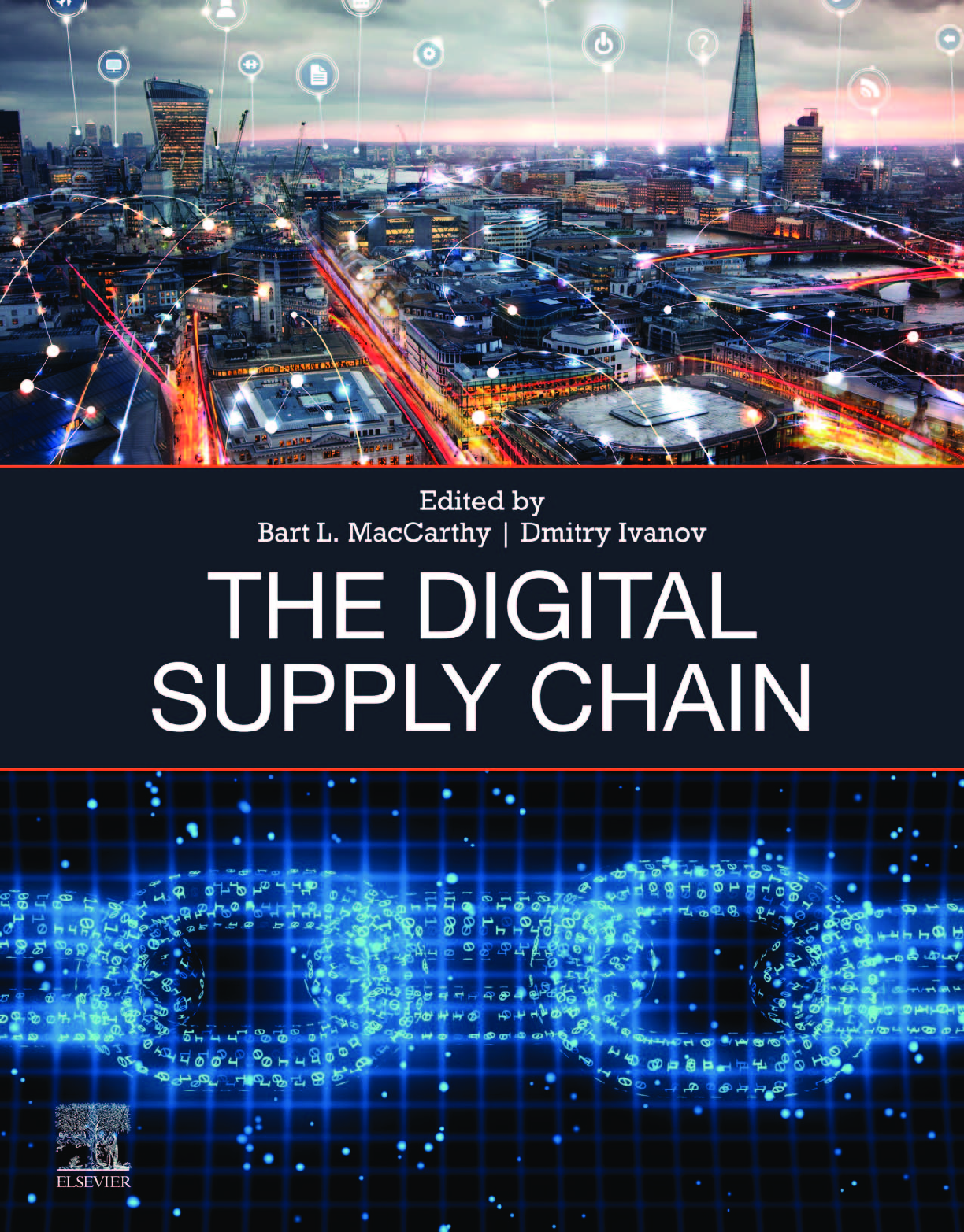
Cover image
Title page
Table of Contents
Copyright
Contributors
Preface
Part I. Introduction
Chapter 1. The Digital Supply Chain—emergence, concepts, definitions, and technologies
1. A transformative decade
2. E
...
Cover image
Title page
Table of Contents
Copyright
Contributors
Preface
Part I. Introduction
Chapter 1. The Digital Supply Chain—emergence, concepts, definitions, and technologies
1. A transformative decade
2. Emergence of the Digital Supply Chain
3. Building blocks for the Digital Supply Chain
4. Defining the Digital Supply Chain
5. Many opportunities, many challenges
6. Outline of book contents
Part II. Digital building blocks and enabling technologies
Chapter 2. Digital Manufacturing: the evolution of traditional manufacturing toward an automated and interoperable Smart Manufacturing Ecosystem
1. Introduction—the evolution of production paradigms
2. Interoperability and automation
3. Interoperable Digital Twins and predictive maintenance in modern manufacturing
4. Digitalization and smart factories: trends and future challenges
5. Conclusions
Glossary of acronyms
Chapter 3. Smart warehouses—a sociotechnical perspective
1. The digital supply chain transforms the requirements for warehousing
2. Warehouse management
3. Smart warehouses: enabling technologies
4. Order-picking in the smart warehouse
5. Smart warehouses are sociotechnical systems
6. Conclusions
Chapter 4. The Internet of Things—an emerging paradigm to support the digitalization of future supply chains
1. Introduction
2. The basic concepts of IoT
3. Supply chain management, novel digital technologies, and IoT
4. IoT applications in OM and SCM
5. Future challenges for IoT in the supply chain
6. Perspectives on IoT adoption and implementation in supply chains
7. Conclusions, limitations, and future research
Appendix A
Chapter 5. The cloud, platforms, and digital twins—Enablers of the digital supply chain
1. Introduction
2. Perspectives on cloud-based systems
3. Platform technologies
4. Digital twins
5. Conclusions
Chapter 6. Algorithms, Analytics, and Artificial Intelligence: harnessing data to make supply chain decisions
1. Introduction
2. Current and prevalent algorithms and AI techniques
3. Current AI and algorithmic applications with the most impact
4. Potential techniques and emerging areas of application for AI and algorithms
5. Conclusion and perspectives
Chapter 7. The impact of digitalization on contemporary and future logistics
1. Introduction
2. Digitalization in logistics and supply chain management
3. Cloud-based systems
4. Emerging technologies
5. Concluding observations and future prospects
Chapter 8. Blockchain technologies in the digital supply chain
1. Introduction
2. Functionality of blockchain
3. Blockchain in the academic supply chain literature
4. Industrial applications of blockchain
5. Conclusion and further research
Part III. Managing the Digital Supply Chain
Chapter 9. Digital architectures: frameworks for supply chain data and information governance
1. Introduction
2. Data as a resource—the need for data quality
3. Data and information architectures
4. Data sharing agreements
5. Data attributes, sharing, and access control
6. Actors, roles, and relationships in data sharing
7. Conclusions
Chapter 10. Supply chain traceability systems—robust approaches for the digital age
1. Introduction
2. Visibility, transparency, and traceability
3. Motivations for traceability and transparency
4. Information requirements for traceability systems
5. Enabling technologies
6. Challenges
7. An illustrative case: the wood supply chain
8. Conclusion
Chapter 11. Digital purchasing and procurement systems: evolution and current state
1. Introduction—the rise of digital procurement systems
2. The development of digital procurement systems
3. Research perspectives on digitalization of procurement
4. Hitachi case study
5. Looking ahead: the future of digital procurement systems
6. Conclusions
Chapter 12. Measuring and managing digital supply chain performance
1. Introduction
2. A framework for performance management in digital supply chains
3. Case studies
4. Impact of emerging technologies on performance measurement and management
5. Conclusions
Chapter 13. The art of cyber security in the age of the digital supply chain: detecting and defending against vulnerabilities in your supply chain
1. Introduction
2. Governments, consultancies, and industry approaches
3. Research on supply chain cyber security
4. Research frontiers
5. Conclusions
Part IV. Digital Supply Chain — sectoral cases
Chapter 14. Digital retail—key trends and developments
1. Introduction
2. The reshaping of the retail value chain
3. Platform-based retail ecosystems—the cases of Alibaba and Amazon
4. Discussion
5. Conclusions
Chapter 15. Digitalization in the textiles and clothing sector
1. Introduction
2. Digital clothing design and sample development
3. Digitalization of clothing supply and manufacturing networks
4. Digitalization of clothing distribution and retail formats
5. Digitally enabled clothing circularity
6. Conclusions
Chapter 16. Digitalization in production and warehousing in food supply chains
1. Introduction
2. DigiMat—an innovation project between a food supply chain and academia
3. Characteristics of food supply chains
4. Introduction to cases
5. Conclusions and future research perspective
Chapter 17. Automotive supply chain digitalization: lessons and perspectives
1. Introduction
2. Overview of SC digitalization in the automotive sector
3. Lessons from the SC digitalization of a car manufacturer
4. Conclusions
Chapter 18. Digitalization of the international shipping and maritime logistics industry: a case study of TradeLens
1. Introduction
2. Methodology
3. Digitalization in the maritime industry
4. TradeLens: a blockchain-enabled digital solution in the shipping industry
5. Impact of shipping industry digitalization on the shipping ecosystem
6. Discussion and conclusion
Chapter 19. How can SMEs participate successfully in Industry 4.0 ecosystems?
1. Introduction
2. Supply chain technology solution provision in Industry 4.0
3. Methodology
4. Starting collaboration—an Open Innovation approach for Industry 4.0 technology solution provision in supply chains
5. Reshaping linear supply chains to become innovation ecosystems
6. Expanding relationships—a Social Exchange view in innovation ecosystems for Industry 4.0 technology solution provision
7. From supply chains to a platform-driven ecosystem structure
8. Maturing technologies—a Boundary-Spanning perspective for Industry 4.0 platforms
9. A conceptual model for Industry 4.0 technology solution provision
10. Conclusions
Part V. Research frontiers in the Digital Supply Chain
Chapter 20. Network science for the supply chain: theory, methods, and empirical results
1. Introduction
2. An outline of supply network analysis
3. Data sources for supply network analysis
4. Network basics
5. Structure of supply networks: theory, methods, and empirical results
6. Effects of network structure on performance
7. Conclusions
Chapter 21. Deployment considerations for implementing blockchain technology in the pharmaceutical industry
1. Introduction
2. Blockchain overview
3. Supply chain benefits of blockchain
4. Pharmaceutical industry applications
5. Pharmaceutical blockchain reference model
6. Scaling issue analysis
7. Research areas for implementation feasibility
8. Summary and conclusions
Chapter 22. Digital supply chain surveillance: concepts, challenges, and frameworks
1. Introduction
2. SDAR—surveillance, detection, action, response
3. Supply chain surveillance activities
4. The role of AI in DSCS
5. Challenges in the application of DSCS—an illustrative example
6. Conclusions
Chapter 23. Sustainability and the digital supply chain
1. Introduction
2. The emergence of a digital supply chain
3. Sustainability in the digital supply chain
4. Building a sustainable digital supply chain
5. Driving down urban emissions—the case of the Electric Vehicle (EV) supply chain
6. Global food supply chains—the case of the beef supply chain
7. Implications for theory, practice, and policy
8. Conclusions and research agenda
Chapter 24. Reconceptualizing supply chain strategy for the digital era: achieving digital ambidexterity through dynamic capabilities
1. Introduction
2. Literature review
3. Conceptual framework and system of relationships
4. Building digital supply chain capabilities (DSCCs)
5. Theoretical implications—achieving digital ambidexterity
6. Managerial implications
7. Conclusions and further research
Index
[Show More]

![Preview of eBook [PDF] Community Property in California 8th Edition By Grace Ganz Blumberg](https://browseimages.nyc3.digitaloceanspaces.com/paper-images/2024/Sep/03/TqdVCGns2024-09-03-09-1166d6a895183aa.png)


![Preview of eBook [PDF] Modern Management and Leadership Best Practice Essentials with CISOCSO Applica](https://browseimages.nyc3.digitaloceanspaces.com/paper-images/2026/04/29/19KJhm1q2026-04-29-01-3169f1ddfd15d7c.png)
![Preview of eBook [PDF] MGMT 13 Principles of Management By Chuck Williams](https://browseimages.nyc3.digitaloceanspaces.com/paper-images/2026/04/29/krnwjxeF2026-04-29-08-2269f195869827c.png)
, 1e by Richard Busulwa.png)


.png)