Pharmacology > QUESTIONS & ANSWERS > NUR-641E Advanced Pathophysiology and Pharmacology for the Nurse Educator with complete solution lat (All)
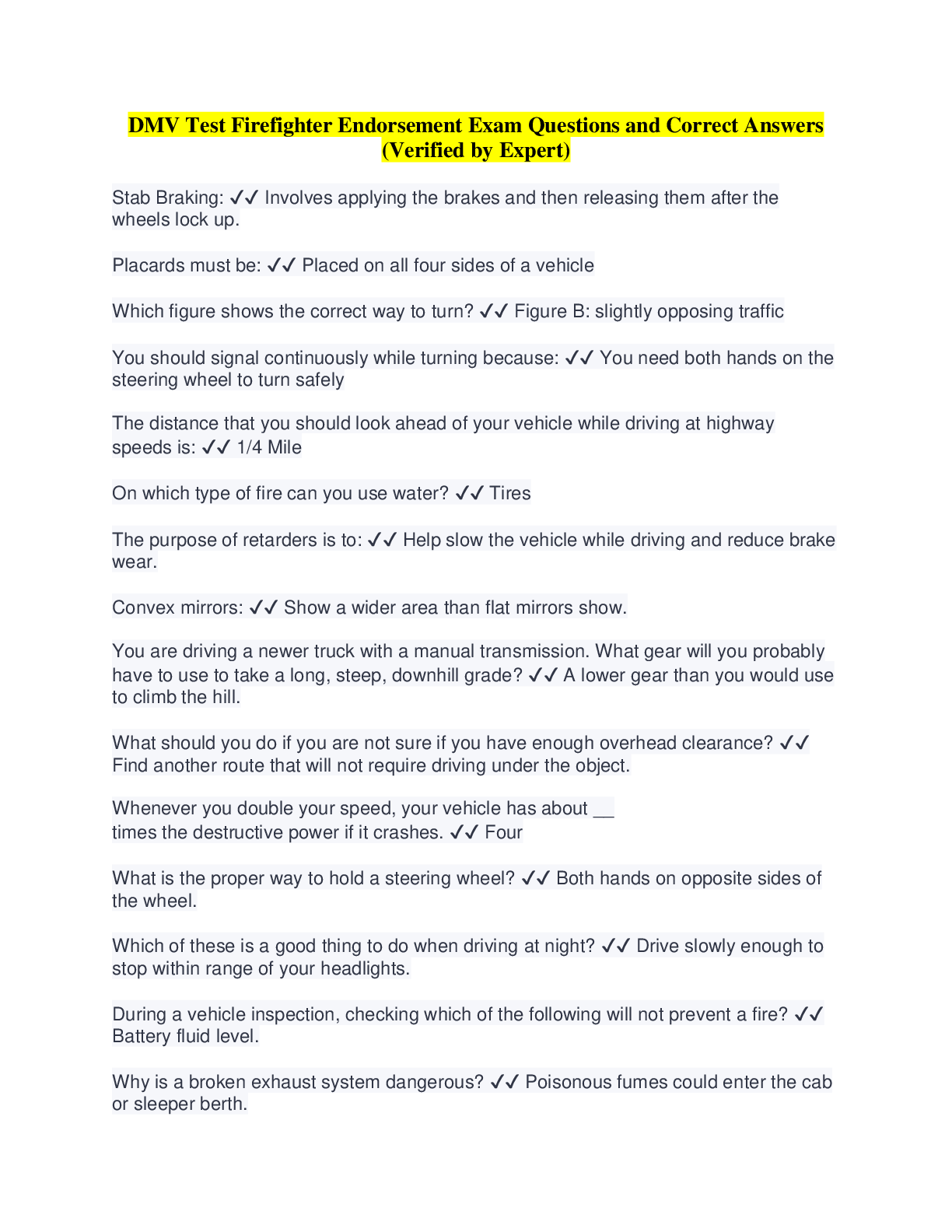
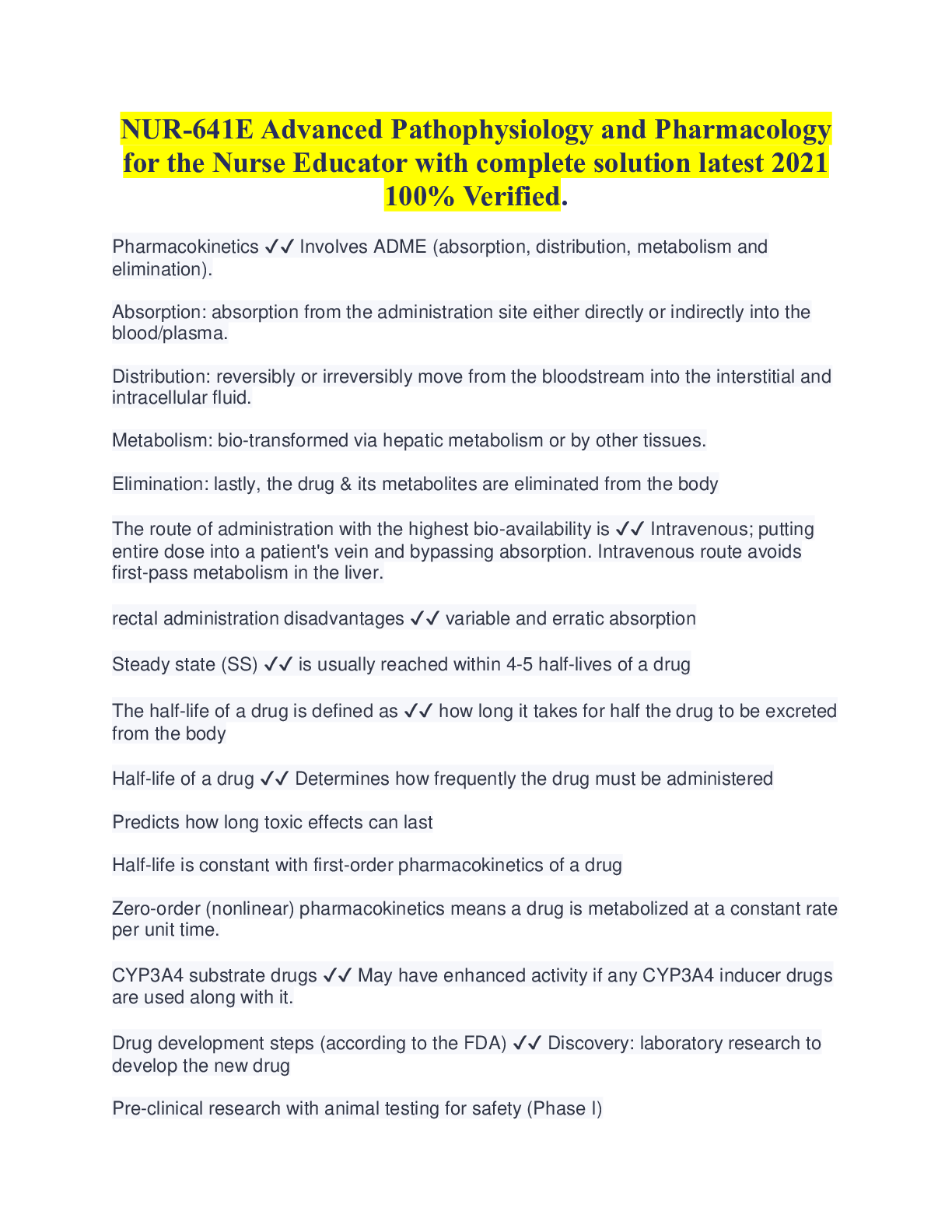
NUR-641E Advanced Pathophysiology and Pharmacology for the Nurse Educator with complete solution latest 2021 100% Verified.
Document Content and Description Below
Last updated: 3 years ago
Preview 1 out of 17 pages
Instant download
Buy this Document to get the Full Access Instantly
Provided by Students Who Aced it
We Verify Document Content to Gurantee Accuracy
Reviews( 0 )
Document information
Connected school, study & course
About the document
Uploaded On
Dec 28, 2022
Number of pages
17
Written in
All

Additional information
This document has been written for:
Uploaded
Dec 28, 2022
Downloads
0
Views
193
Topic Tags
Recommended For You
Get more on QUESTIONS & ANSWERS »

NUR2474 / NUR 2474 Exam 1 {Modules 1-3} | Latest 2021 / 2022 |...
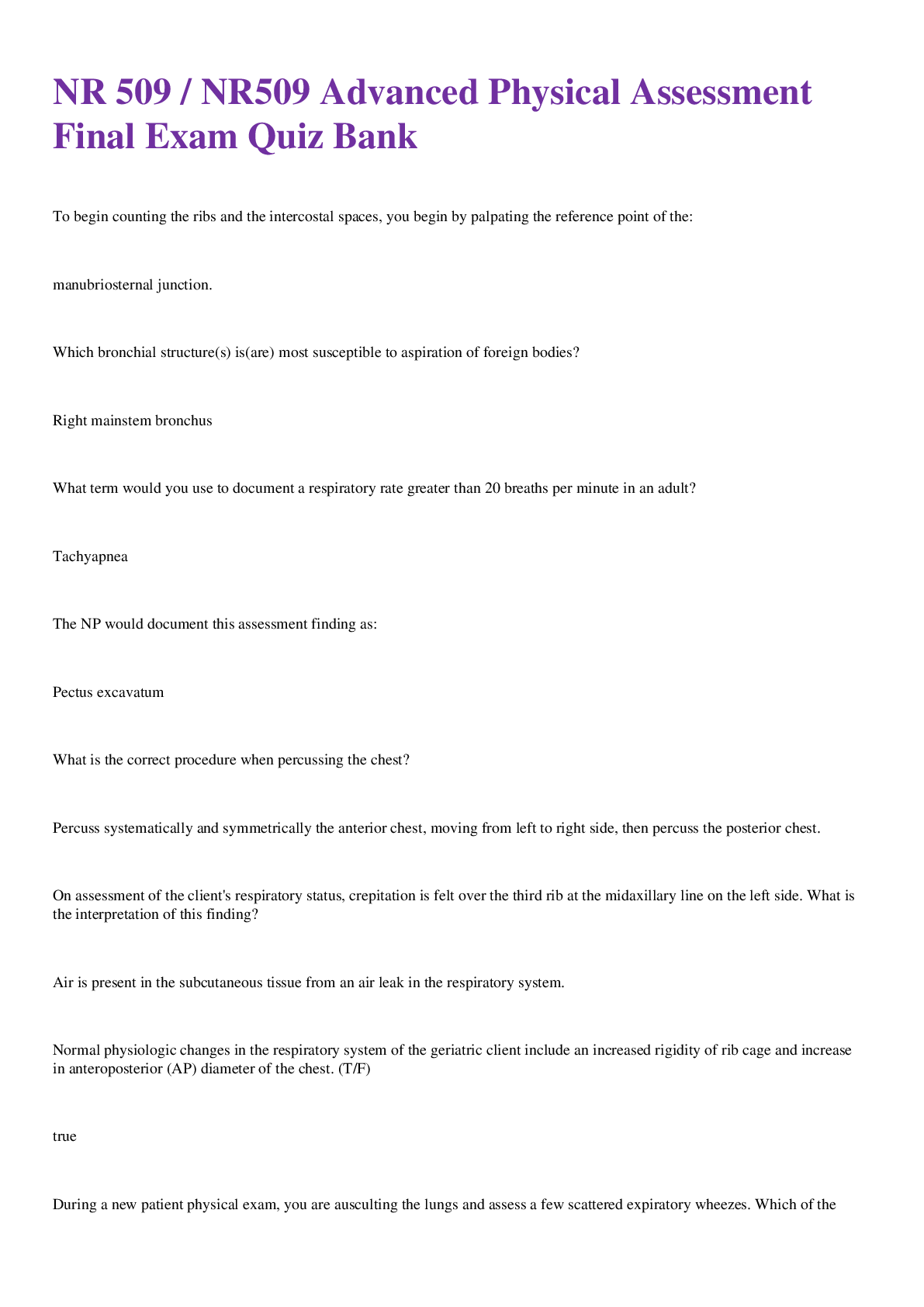
NR 509 / NR509 Advanced Physical Assessment Final Exam Quiz Ba...

NUR2474 / NUR 2474 Pharmacology for Professional Nursing Final...

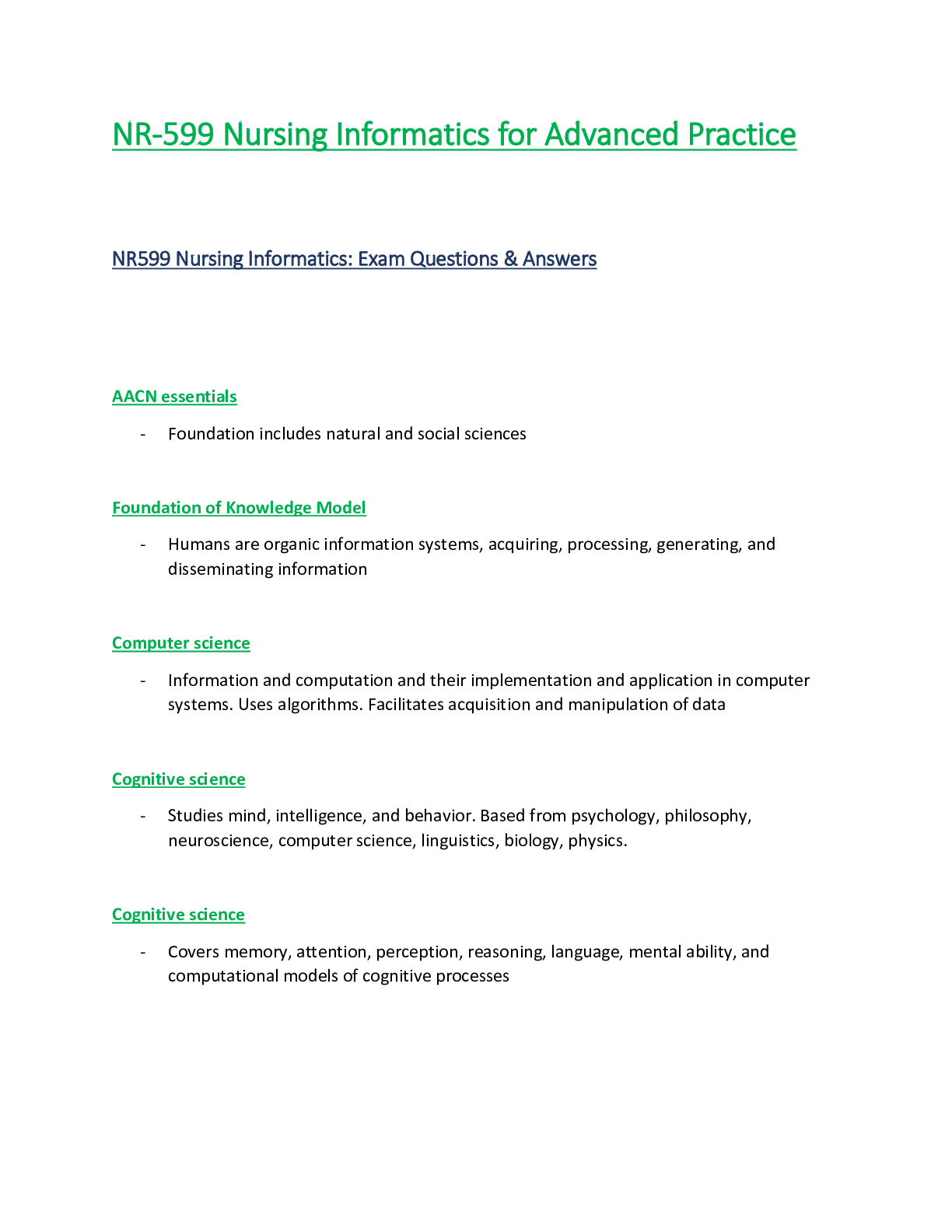
NR599 / NR-599 Exam Q & A (Latest 2021 /2022): Nursing Informa...
 F21.png)
NR599 / NR-599 Midterm Exam (Latest 2021 /2022): Nursing Infor...

NR599 / NR-599 Final Exam (Latest 2021 /2022): Nursing Informa...

NUR 2407 / NUR2407 Pharmacology Exam 2 Review | Latest 2021 /...

ATI Fundamentals Proctored Exam |Questions and Answers with Ra...
.png)
ATI MATERNAL NEWBORN Proctored Exam Latest 2021/2022. VERIFIED...
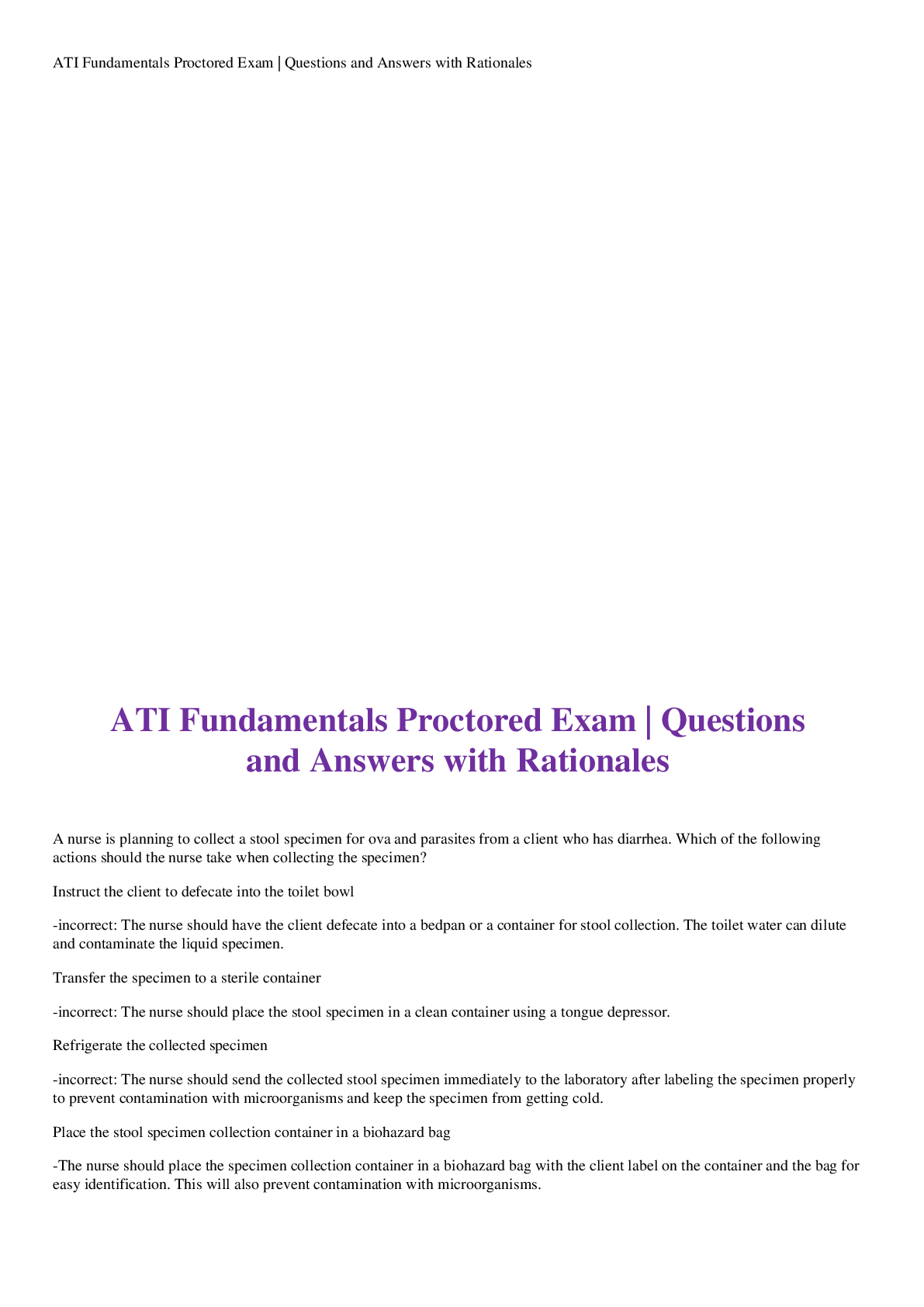
ATI Fundamentals Proctored Exam | Questions and Answers with R...
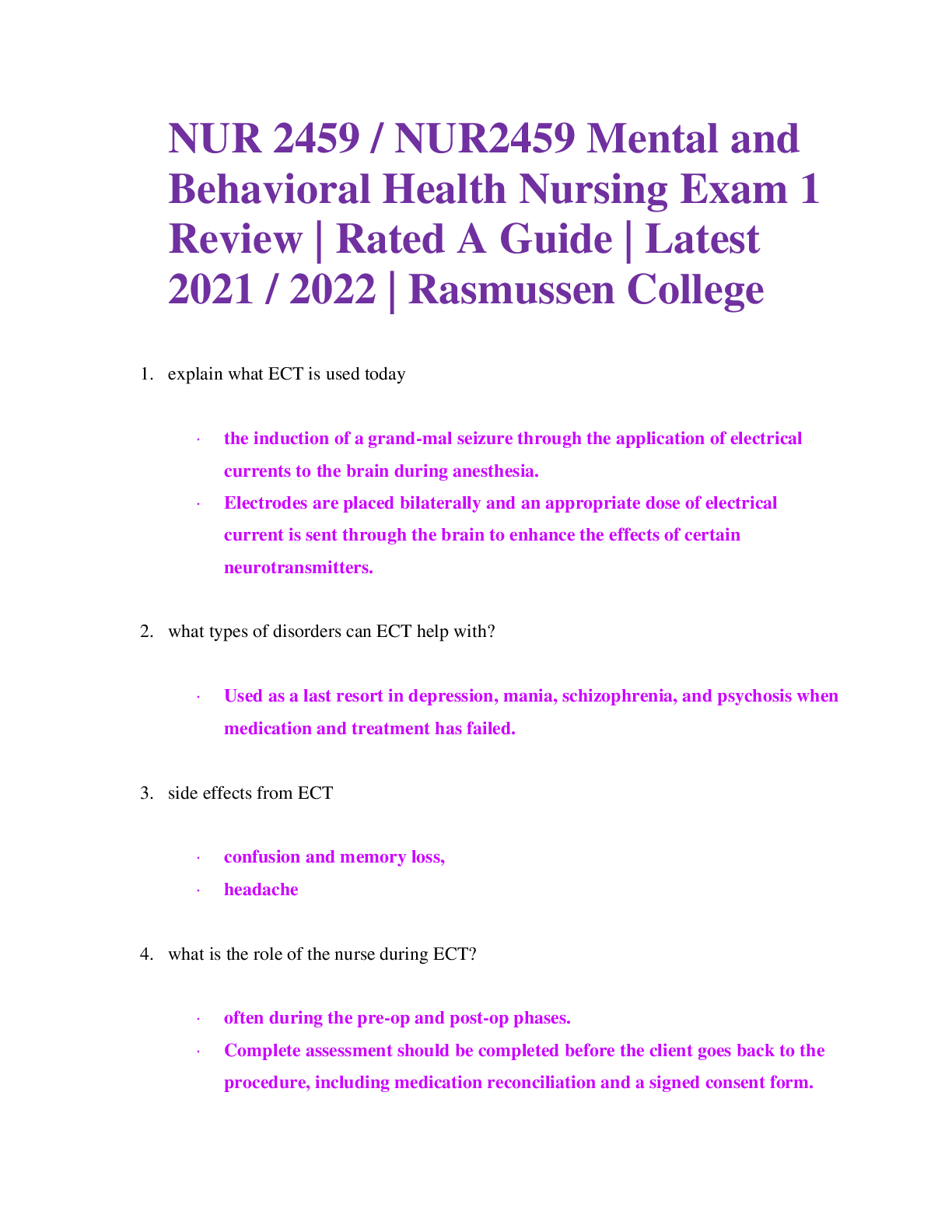
NUR 2459 / NUR2459 Mental and Behavioral Health Nursing Exam 1...

NUR2755 / NUR 2755 Multidimensional Care IV Exam 1 Review | Ra...

NUR2755 / NUR 2755 Multidimensional Care IV Exam 1 Review | Ra...

NR599 / NR 599 Nursing Informatics for Advanced Practice - Co...

POS 486 FINAL EXAM_ POS486 Final Exam Questions and Answers(Gr...

Ati rn pediatric proctored exam 7 versions latest 2021/2022 a...
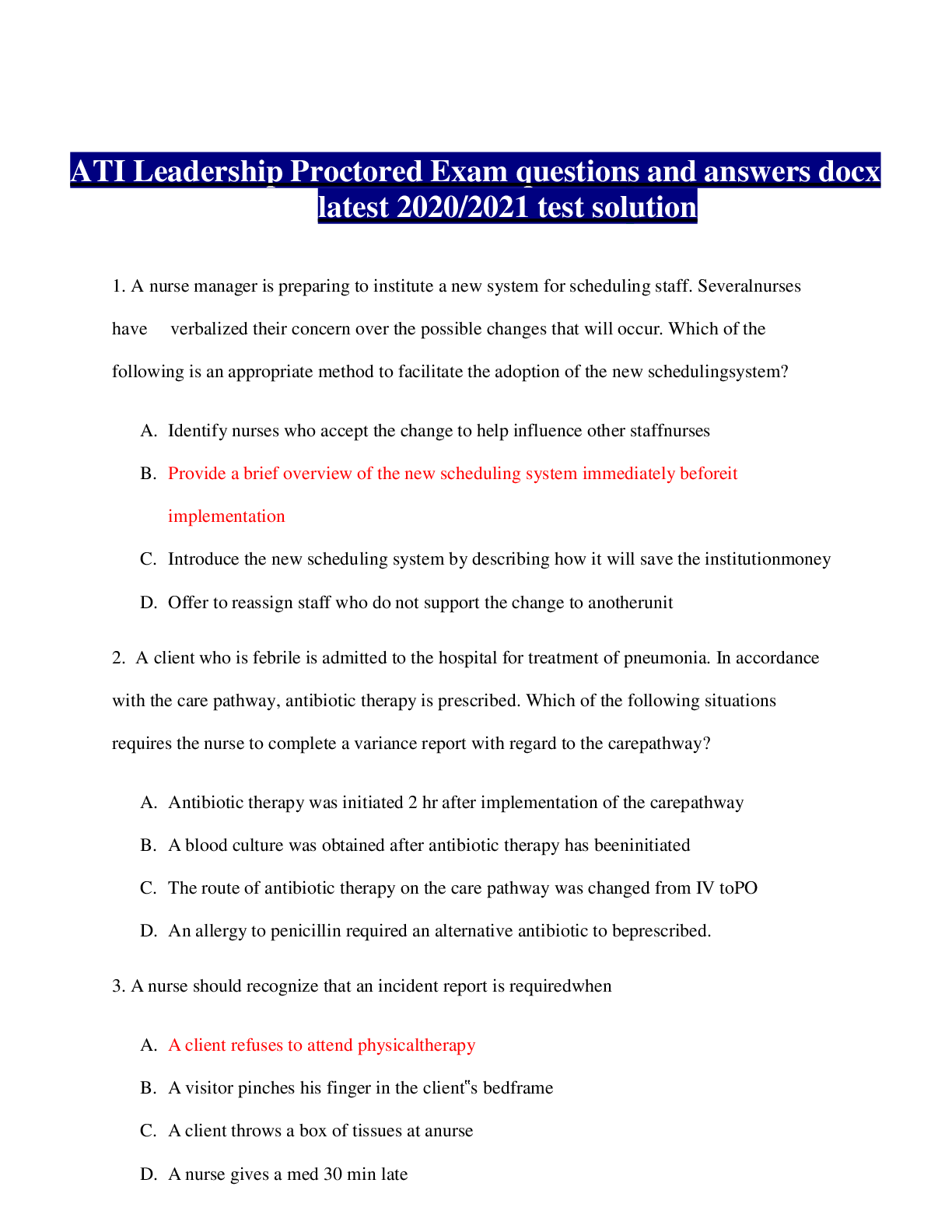
ATI Leadership Proctored Exam questions and answers latest 202...



 Answered 2023.png)