Biology > QUESTIONS & ANSWERS > BIO 210 - FINAL EXAM REVIEW with complete solution (All)
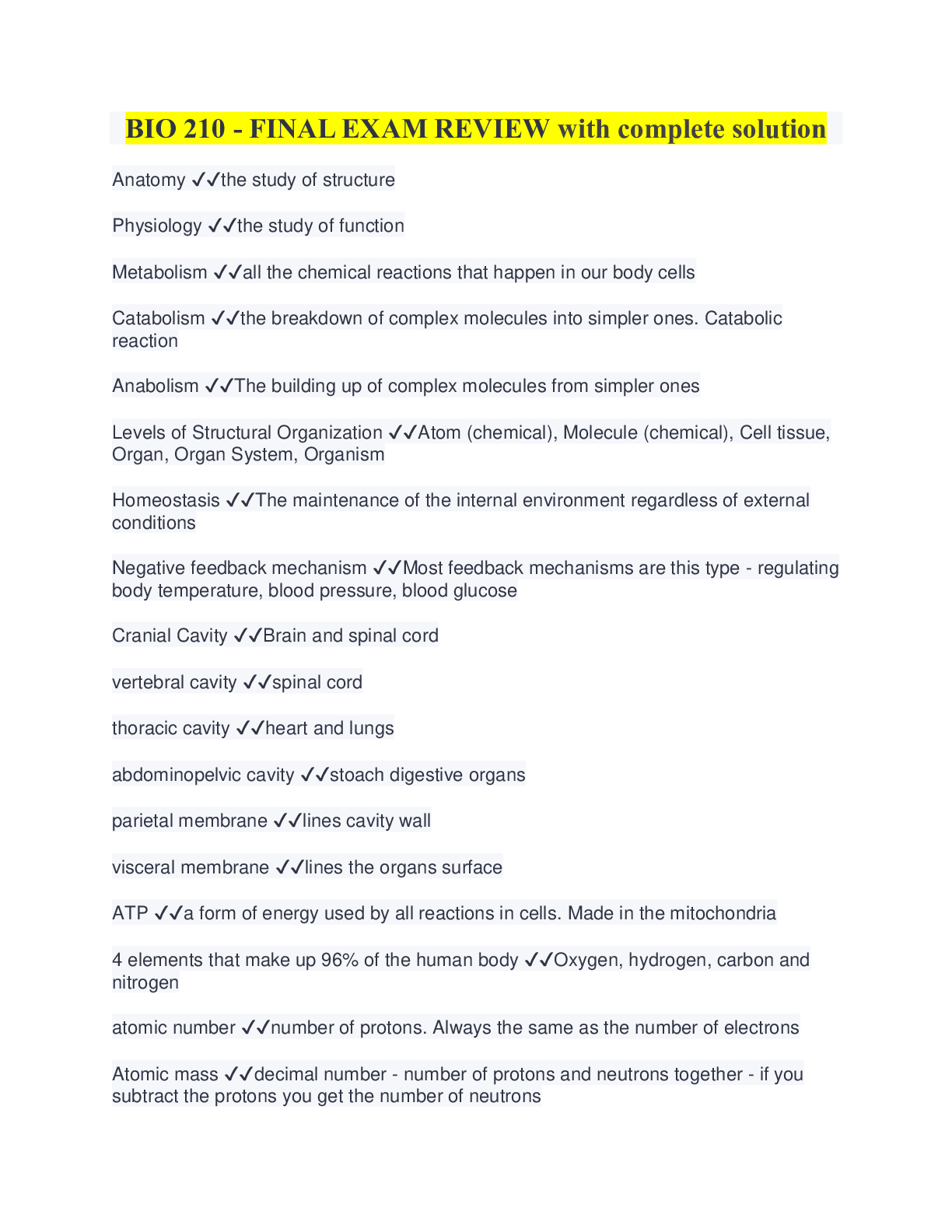
BIO 210 - FINAL EXAM REVIEW with complete solution
Document Content and Description Below
Last updated: 3 years ago
Preview 1 out of 10 pages
Instant download
Buy this Document to get the Full Access Instantly
Provided by Students Who Aced it
We Verify Document Content to Gurantee Accuracy
Reviews( 0 )
Document information
Connected school, study & course
About the document
Uploaded On
Dec 31, 2022
Number of pages
10
Written in
All

Additional information
This document has been written for:
Uploaded
Dec 31, 2022
Downloads
0
Views
335
Topic Tags
Recommended For You
Get more on QUESTIONS & ANSWERS »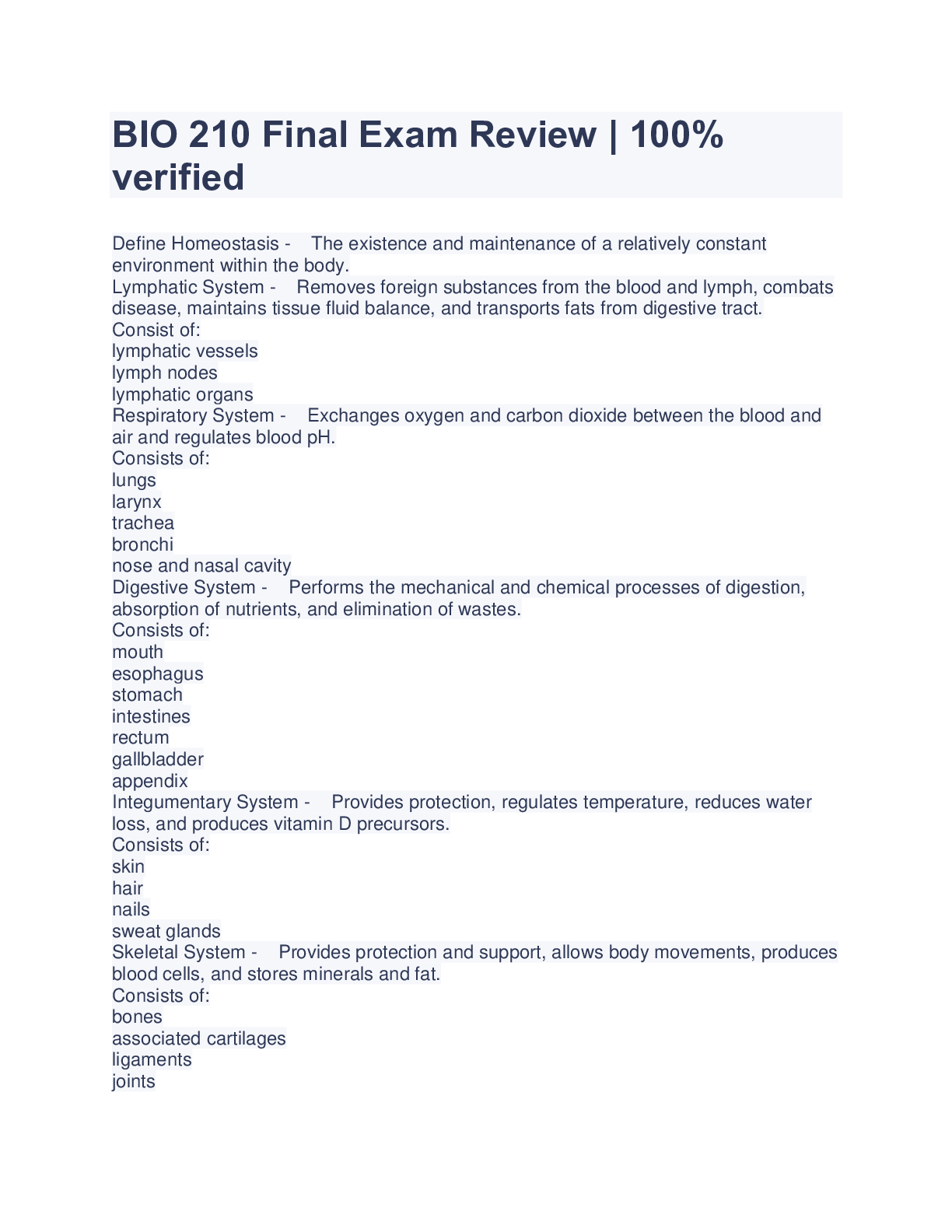
BIO 210 Final Exam Review/Questions & Answers/ A+Guide/Updated
BIO 210 Lec Exam 1 (GRADED A) Questions and Answers- Greenvill...
BIO 210 - Nervous System - Lab Quiz #5 questions and answers 1...
BIO 210 Lec Exam 2 Questions and Answers- Greenville Technical...
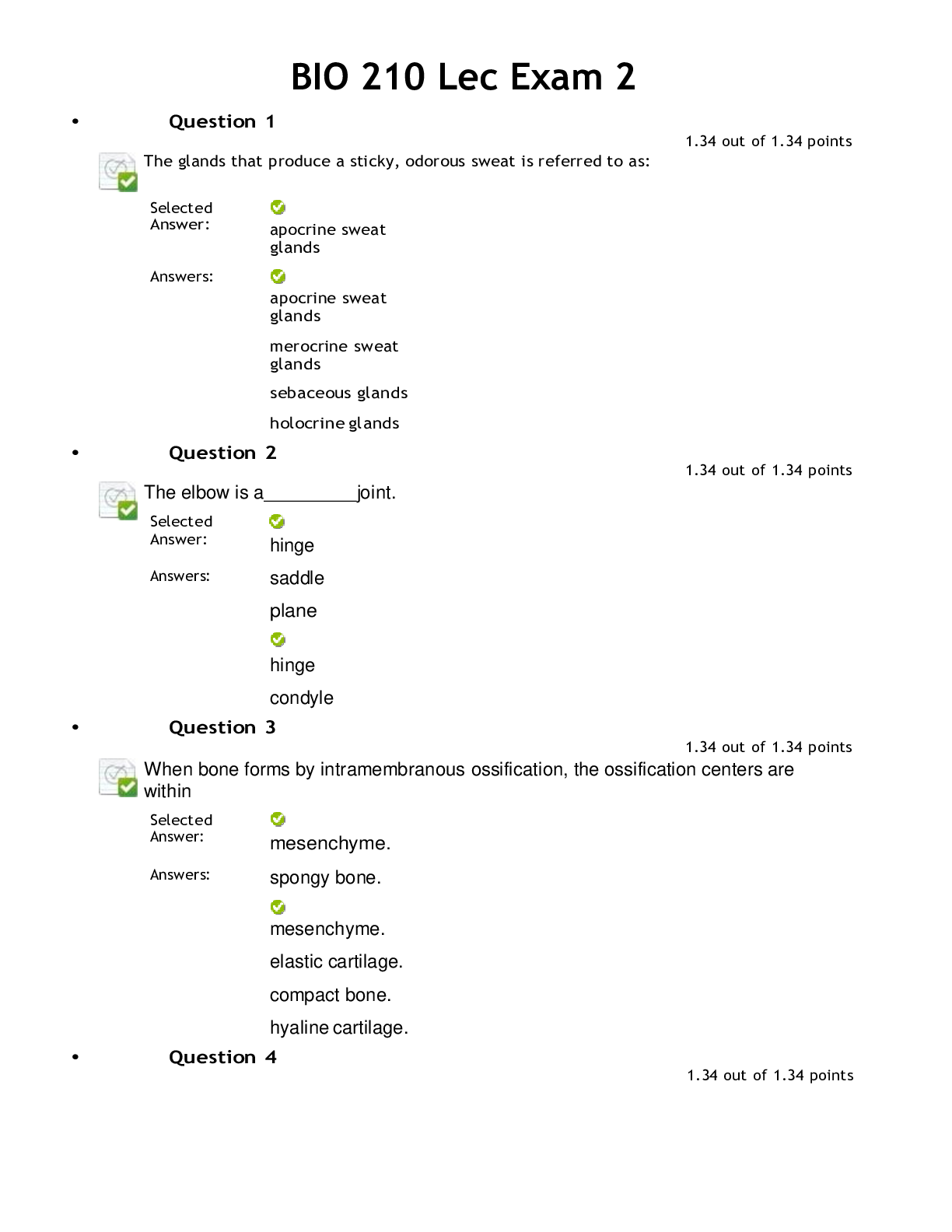
BIO 210 Lec Exam 2 (GRADED A) Questions and Answers- Greenvill...
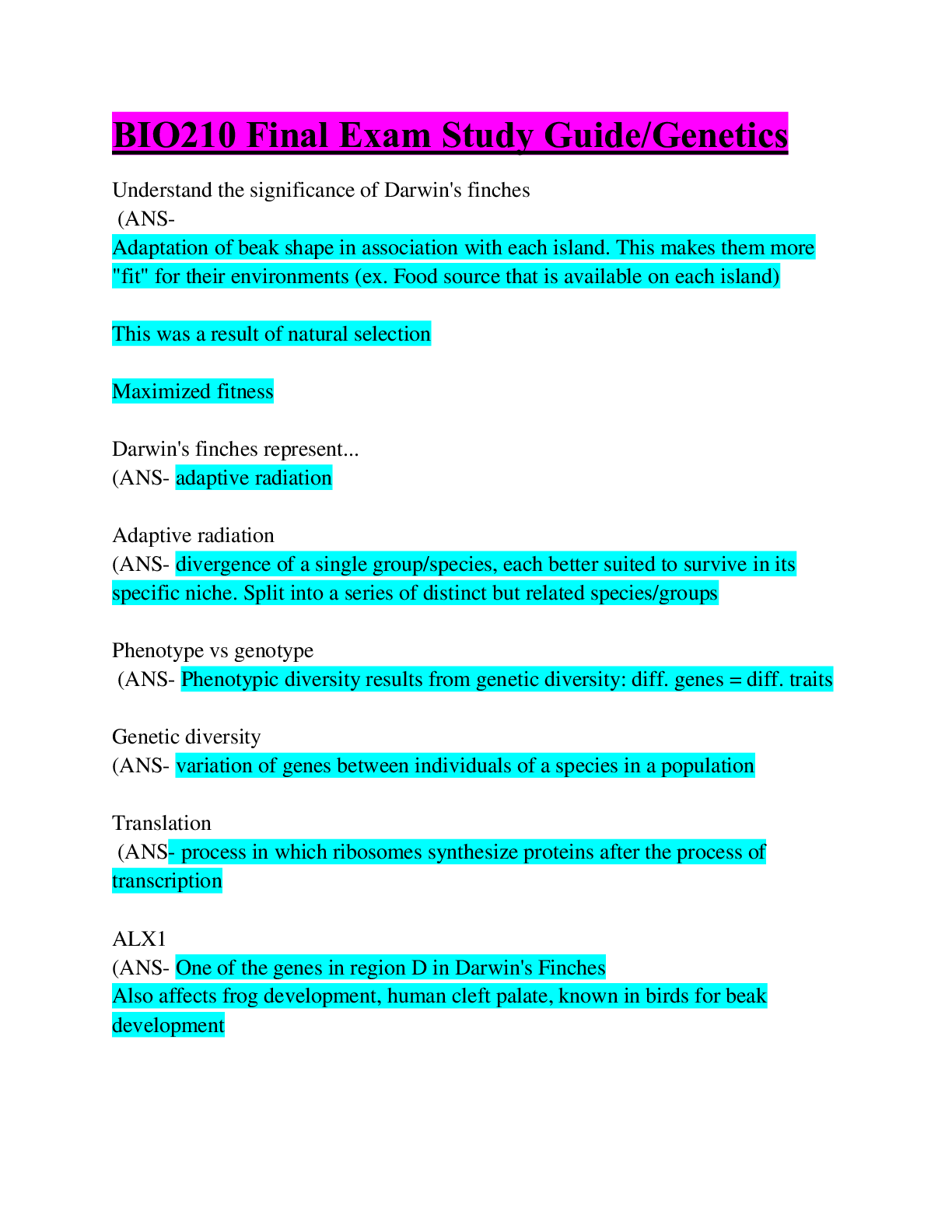
BIO210 Final Exam Study Guide/Genetics/ Updated Solution
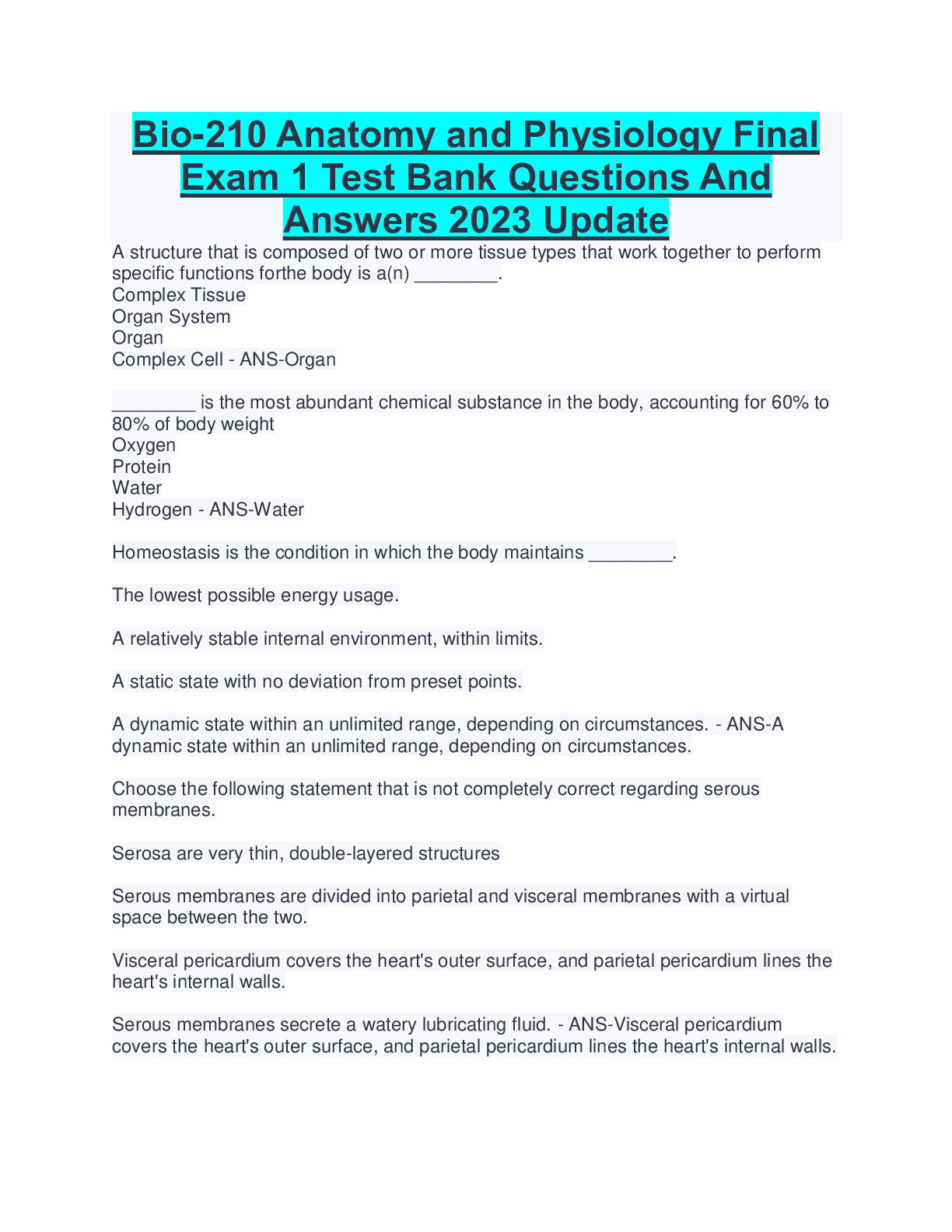
Bio-210 Anatomy and Physiology Final Exam 1 Test Bank Questio...

Bio-210 Anatomy and Physiology Final Exam 2 Test Bank Q&A 202...
Bio-210 Anatomy and Physiology Final Exam 1 Test Bank Questio...

2024SU BIO 210 W02 Anatomy & Physiology I Chapter 11 Practice...
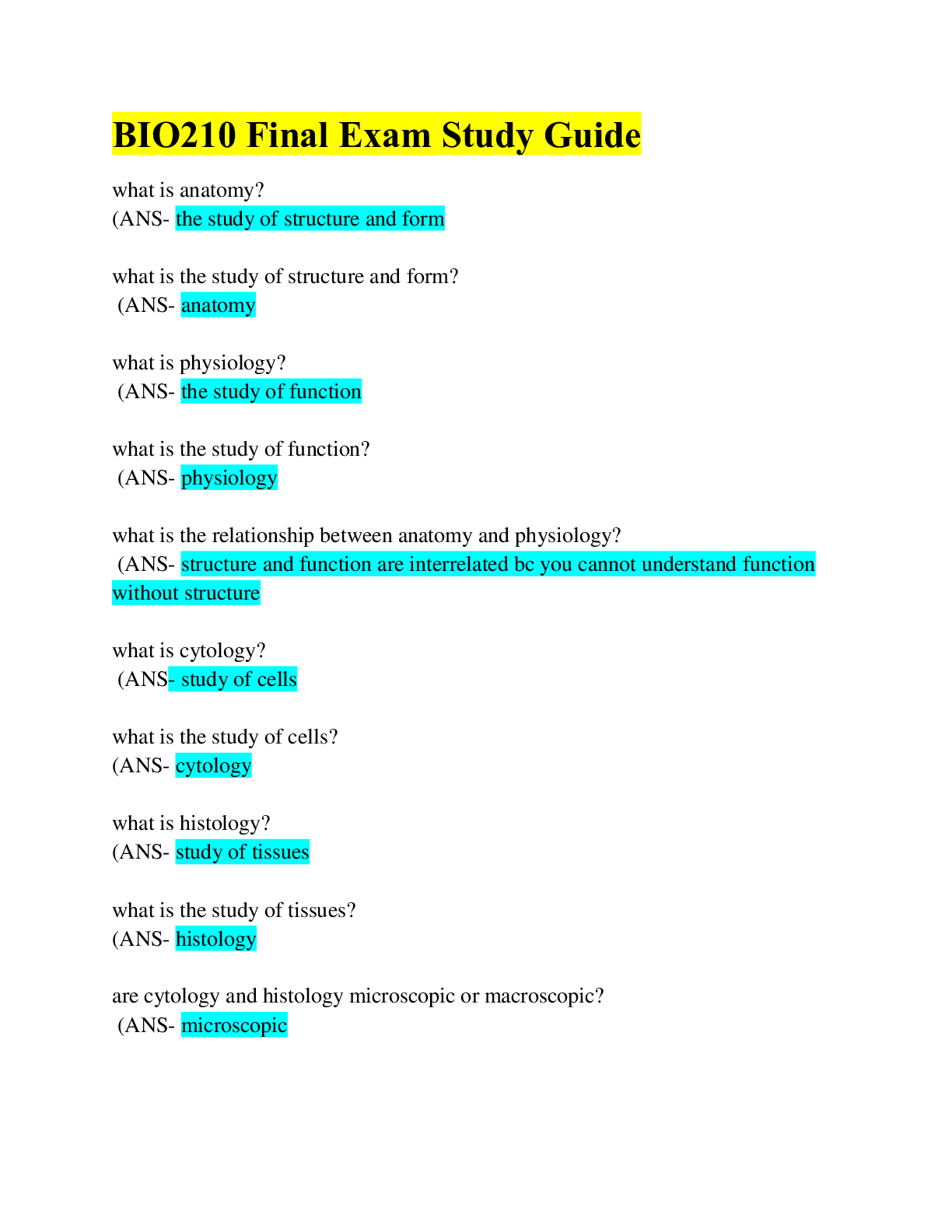
BIO210 Final Exam Study Guide/A&P 1/Questions & Answers/ 100%V...
Bio-210 Anatomy and Physiology Final Exam 2 Test Bank Q&A 202...
![Preview of BIO210L Lab 9 The Endocrine System[ALREADY PASSED]](https://scholarfriends.com/storage/LAB 9 QUIZ.png)
![Preview of BIO210L Lab 6 The Skeletal System[ALL ANSWERS 100% CORRECT] PRE-LAB Q&A](https://scholarfriends.com/storage/new lab worksheet 6.png)
BIO210L Lab 6 The Skeletal System[ALL ANSWERS 100% CORRECT] PR...
![Preview of BIO210L Lab 5 Tissues and Skin[ALL ANSWERS 100% CORRECT] PRE-LAB Q&A](https://scholarfriends.com/storage/new lab worksheet 5.png)
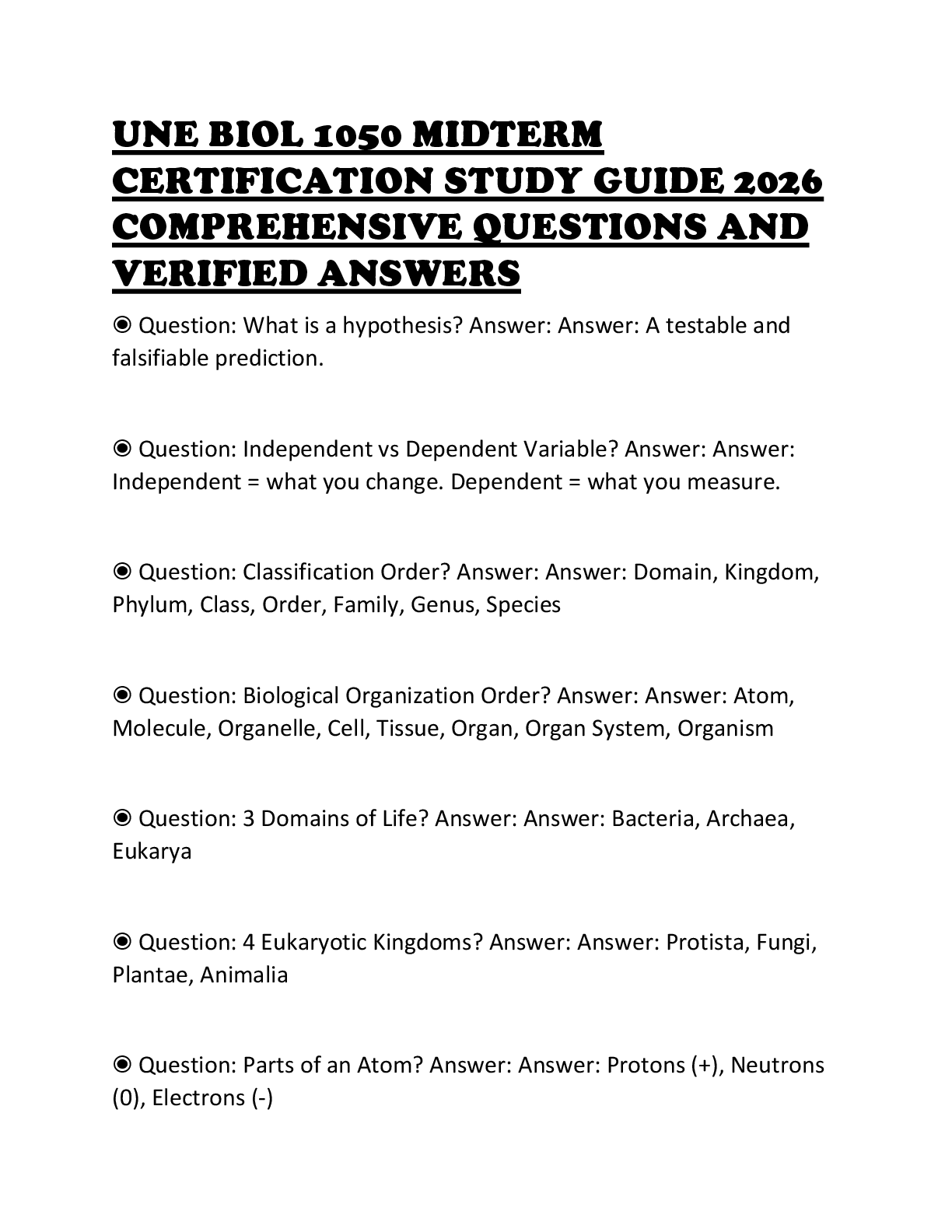


 Answered 2023.png)