Anatomy > QUESTIONS & ANSWERS > Topic 16: Functional Organization of the Endocrine System. Questions and answers. Latest update (All)
Topic 16: Functional Organization of the Endocrine System. Questions and answers. Latest update
Document Content and Description Below
Last updated: 3 years ago
Preview 1 out of 10 pages
Instant download

Buy this Document to get the Full Access Instantly
Provided by Students Who Aced it
We Verify Document Content to Gurantee Accuracy
Also available in bundle (1)
Click Below to Access Bundle(s)

All Anatomy and physiology topic questions with answers. Topics 1-17. 100% Accurate, latest updates
All Anatomy and physiology topic questions with answers. Topics 1-17. 100% Accurate, latest updates
By A grade master 3 years ago
$20
18
Reviews( 0 )
Document information
Connected school, study & course
About the document
Uploaded On
Jan 04, 2023
Number of pages
10
Written in
All

Additional information
This document has been written for:
Uploaded
Jan 04, 2023
Downloads
0
Views
345
Topic Tags
Recommended For You
Get more on QUESTIONS & ANSWERS »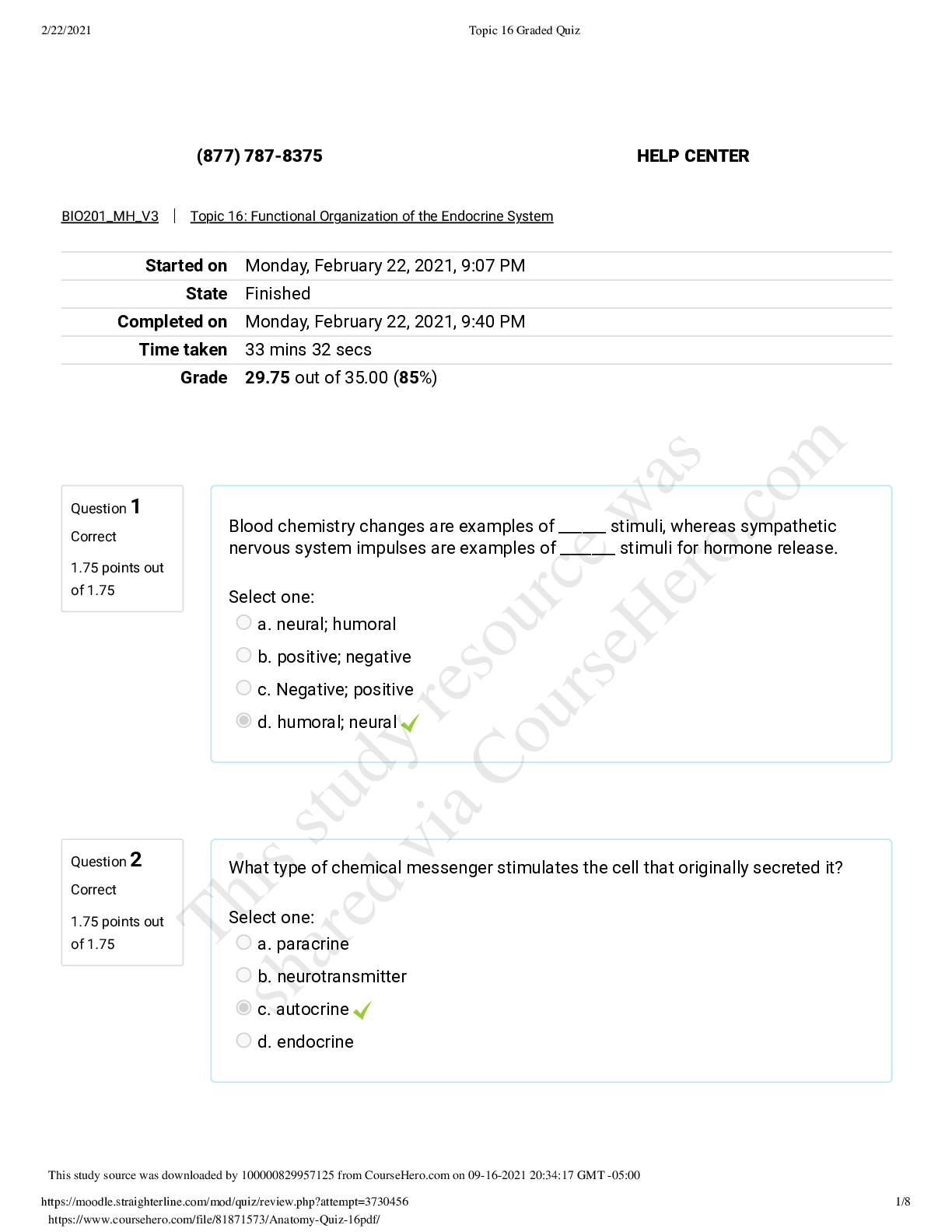
BIO201_MH_V3 Topic 16: Functional Organization of the Endocr...

BIO201_MH_V3 Topic 16: Functional Organization of the Endocr...

BIO201 Topic 16: Functional Organization of the Endocrine Syst...

BIO201 Topic 16: Functional Organization of the Endocrine Syst...

BIO201 Topic 16: Functional Organization of the Endocrine Syst...
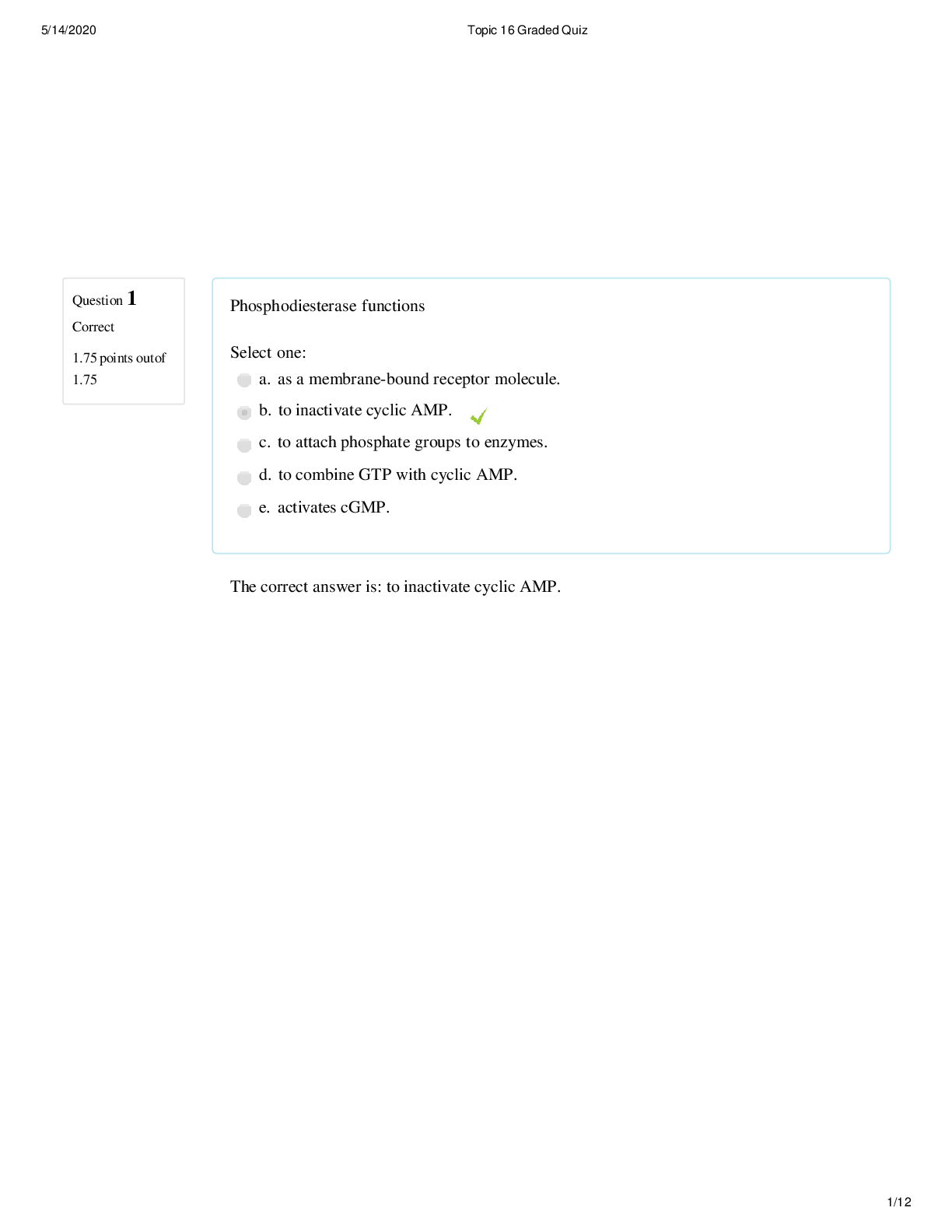
University of Maryland, College ParkBIO 201Topic 16 Graded Qui...
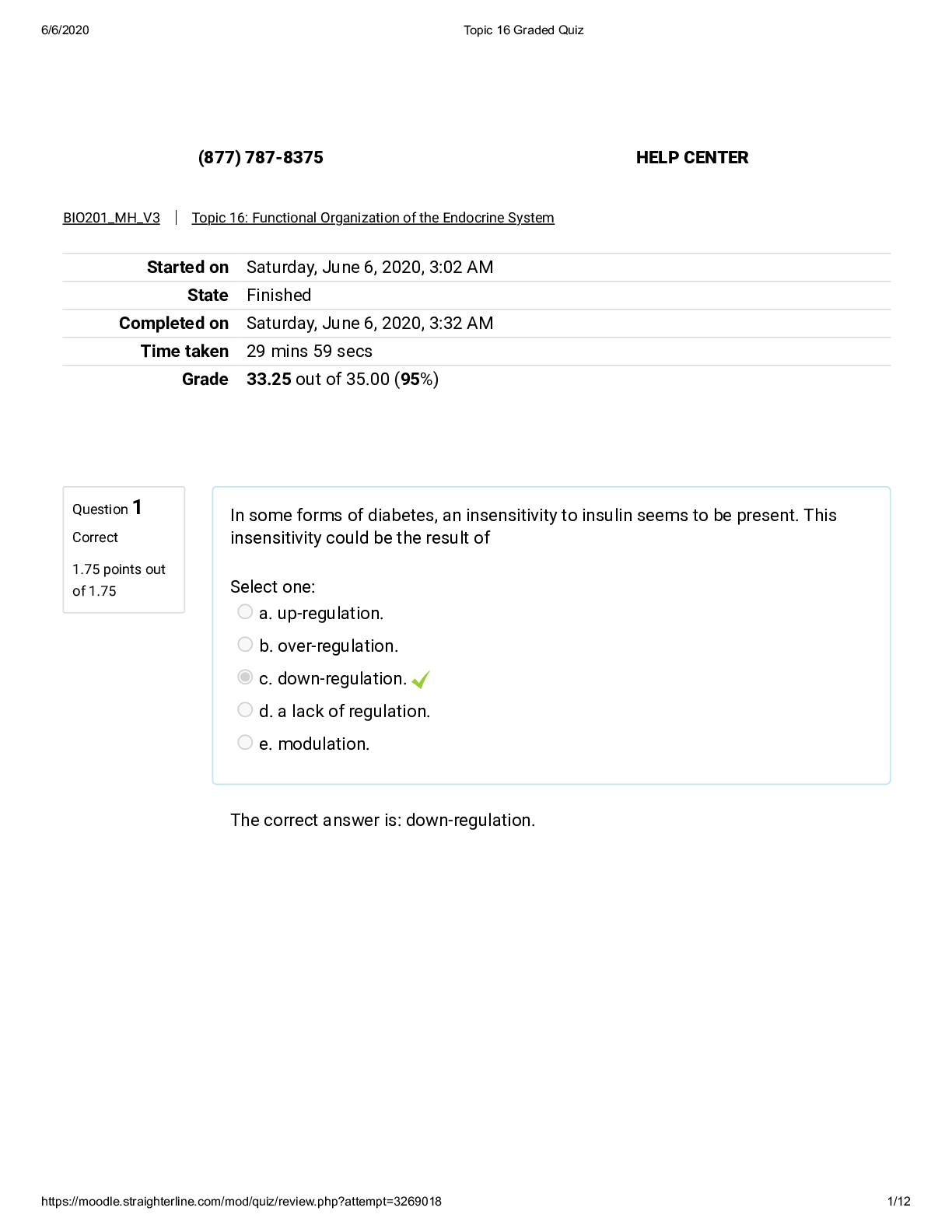
Open Uni.BIO 201A and P Topic 16 Graded Quiz ALREADY GRADED
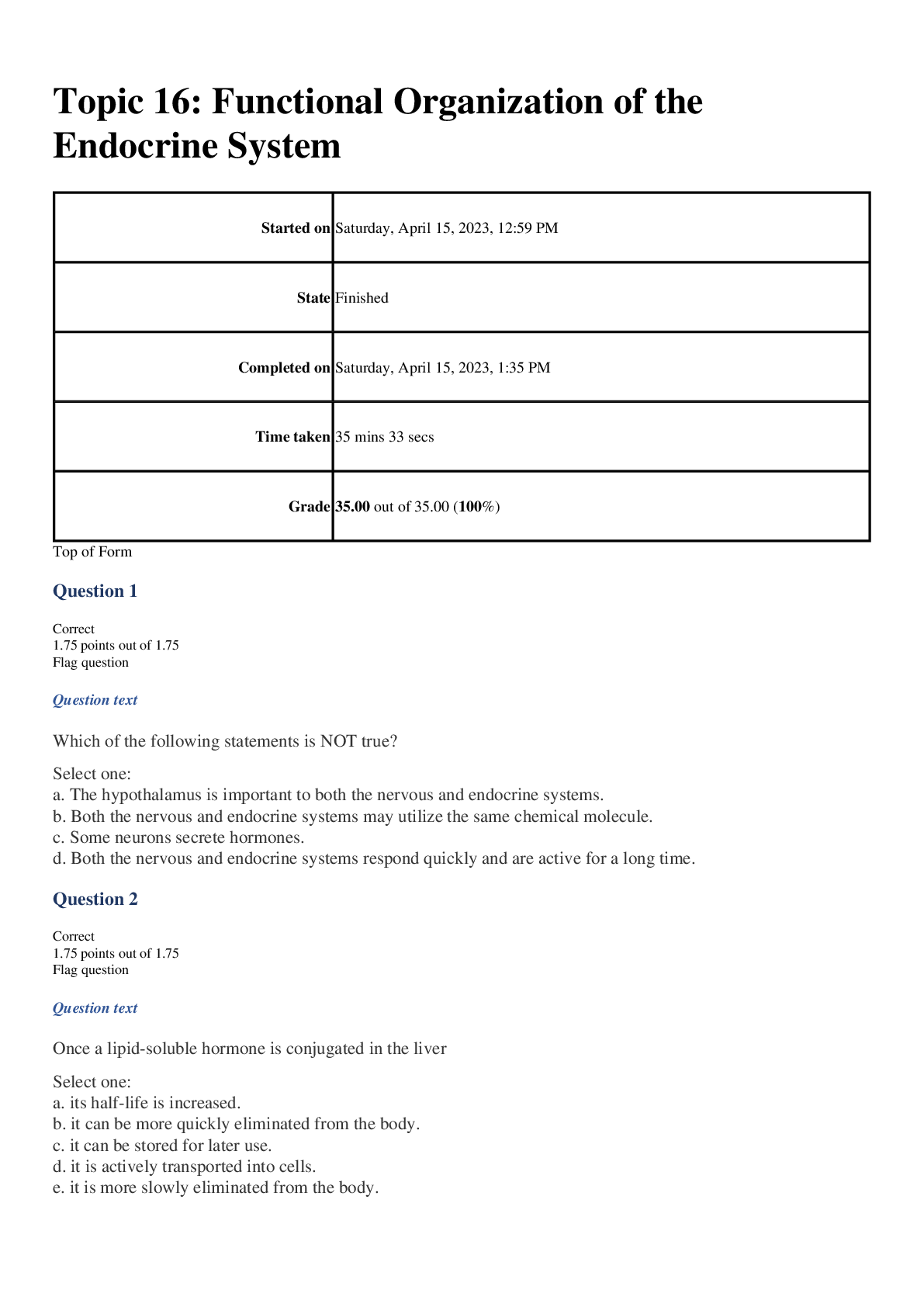
Topic 16: Functional Organization of the Endocrine System • BI...
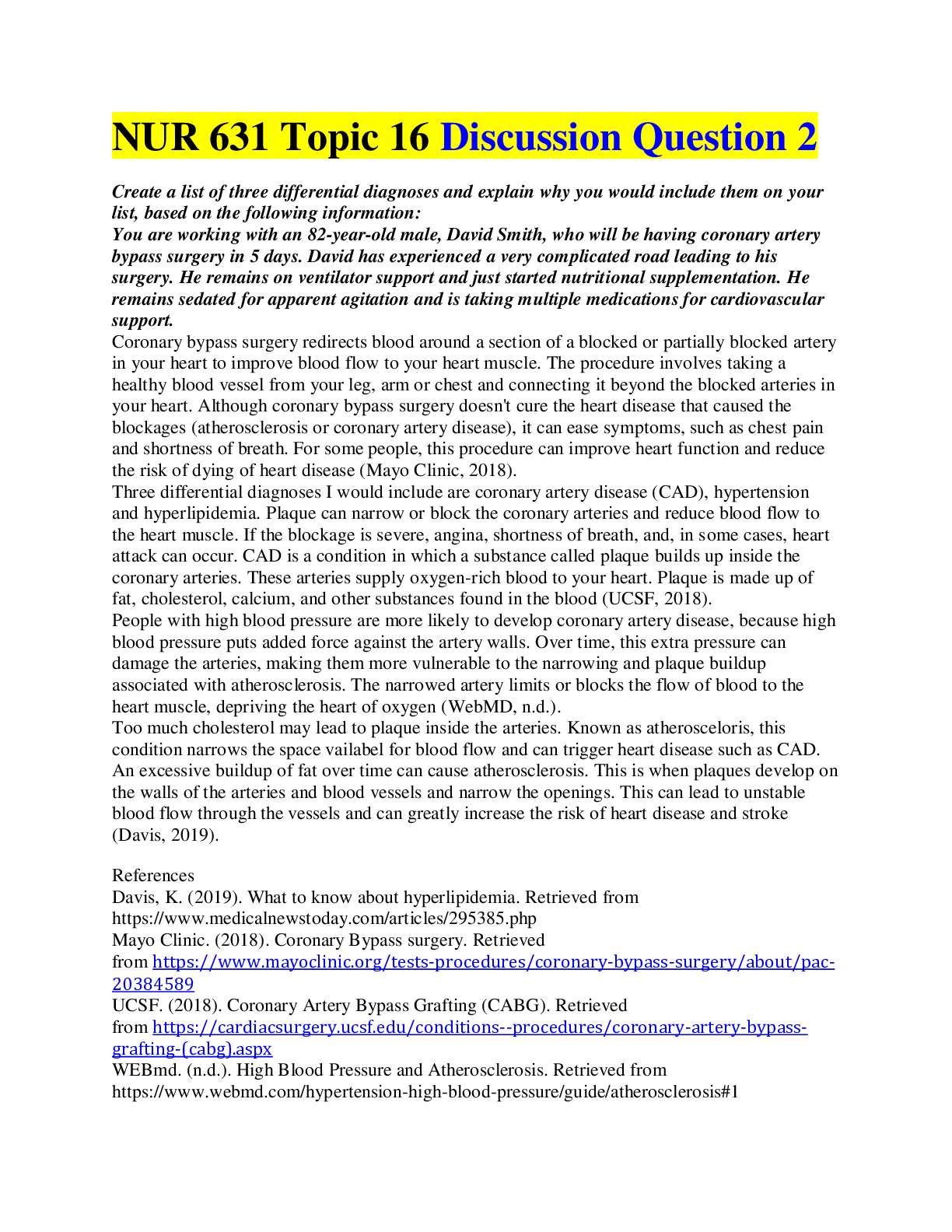
NUR 631 Topic 16 Discussion Question 2/COMPLETE SOLUTION/RATED...

NUR 631 Topic 16 Discussion Question 1/COMPLETE SOLUTION/RATED...

NUR 631 Topic 16 Discussion Question 1/Advanced Physiology And...

Clinical Kinesiology and Anatomy, 7th Edition by Lynn Lippert...
TEST BANK for Fundamentals of Anatomy and Physiology by Freder...
TEST BANK for Essentials of Human Anatomy and Physiology 10th...


 (1).png)