NR 327 STUDY GUIDE EXAM 2 OB MATERNAL -Miriana
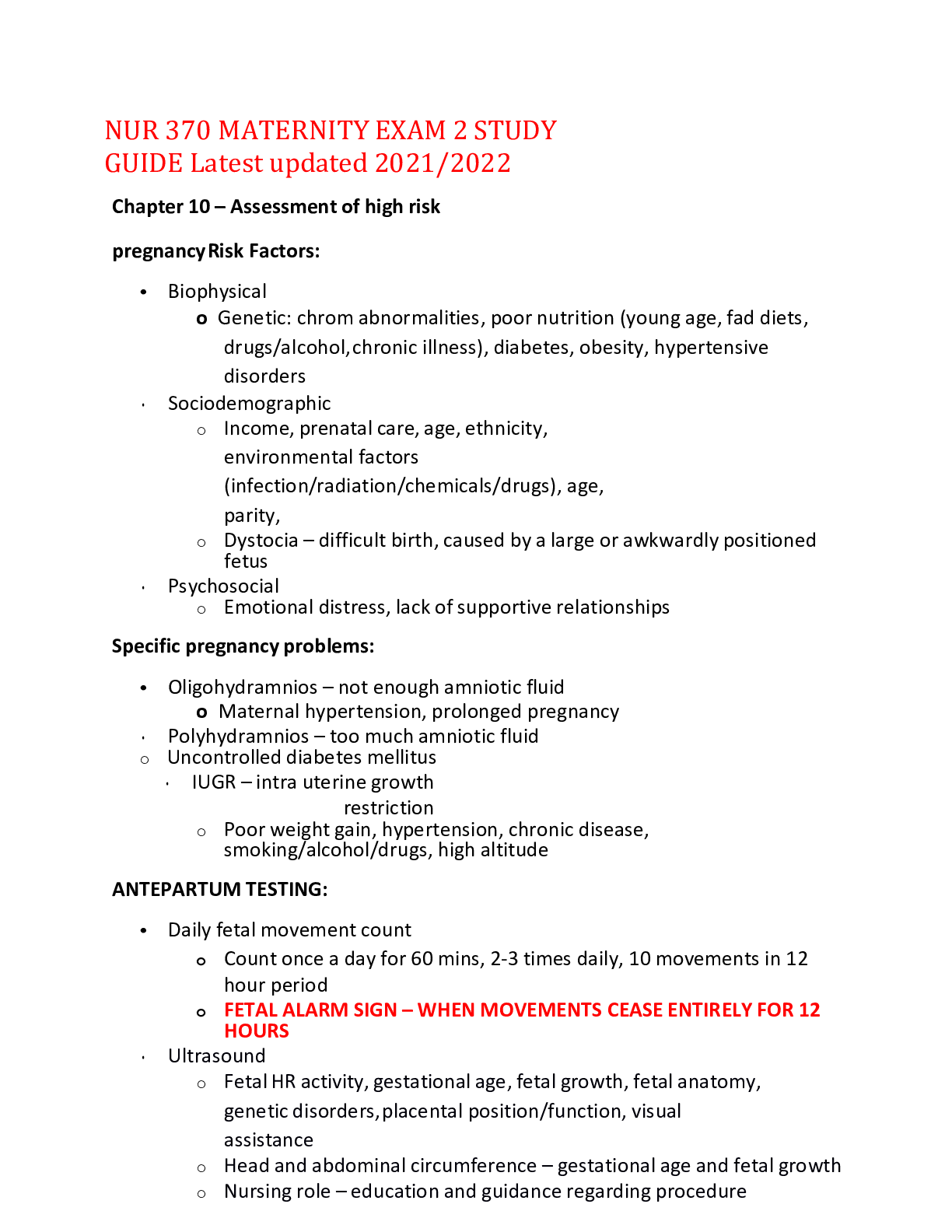
Chapter 17: Postpartum Adaptations and nursing Care
Chapter 22: Infant Feeding
Chapter 25: Family planning
Quiz #3
Chapter 19: Normal Newborn-Processes of adaptatio
...
NR 327 STUDY GUIDE EXAM 2 OB MATERNAL -Miriana
Chapter 17: Postpartum Adaptations and nursing Care
Chapter 22: Infant Feeding
Chapter 25: Family planning
Quiz #3
Chapter 19: Normal Newborn-Processes of adaptation
Chapter 20: Assessment of the normal newborn
Chapter 21: Care of the normal newborn
Quiz #4
Chapter 10: Complications of Pregnancy
Chapter 16: Intrapartum Complications
Chapter 18: Postpartum Maternal Complications
Quiz #5
Exam 2 Thursday December 6th
FOCUS ON
1. Newborn assessment
2. Postpartum assessment
3. Postpartum hemorrhage
4. Preeclampsia
5. Placental previa
6. Placental abruptio
7. Preterm labor
8. Hydatidiform mole
8. Medications on your clinical list
Chapter 17: Postpartum Adaptations and nursing Care
Chapter 22: Infant Feeding
Chapter 25: Family planning
Quiz #3
• 4th stage of labor/Postpartum period/Puerperium
• First 6 weeks after birth of infant
o -Return of reproductive organs to normal nonpregnant state
• Physiological maternal changes
o Uterine involution
Starts right after delivery of placenta
Changes of reproductive organs, particularly the uterus that returns to non-pregnant size and condition
• Involves three processes
o 1. Contraction of muscle fibers
o 2. Catabolism: the process of converting cells into simpler compounds
o 3. Regeneration of the uterine epithelium
Sub-involution: when uterus does not return to non-pregnant state,
o lochia flow, cervical involution,
o Decrease in vaginal distention
o alteration in ovarian function and menstruation
o Cardiovascular, urinary tract, breast and GI tract changes
Afterpains: intermittent uterine contractions, source of discomfort for many women, the discomfort is more acute for multiparas because repeated stretching of muscle fibers leads to muscle tone loss that causes repeated contraction and relaxation of the uterus.
• Greatest risks during postpartum period: hemorrhage, shock, and infection.
• Oxytocin
o Administer postpartum to improve the quality of uterine contractions. A firm and contracted uterus prevents excessive bleeding and hemorrhage
• After delivery of the placenta, hormones decrease resulting in decreased blood glucose, estrogen and progesterone
o Decreased estrogen causes breast engorgement, diaphoresis, and diuresis
o Decreased vaginal lubrication
Assessment
• Monitor vital signs, uterine firmness and its location in relation to the umbilicus, uterine position in relation to the midline of the abdomen, and amount of vaginal bleeding
• BP and pulse assessed every 15 mins for the first 2 hours after birth
• Temperature every 4 hours for first 8 hours after birth and then at least every 8 hours
Postpartum Assessment
• Breasts
• Uterus (fundal height, uterine placement, and consistency
• Bowel and GI function
• Bladder function
• Lochia (color, odor, consistency, and amount (COCA))
• Episiotomy (edema, ecchymosis, approximation)
Vital signs to include pain assessment and teaching needs
RH Negative mothers
• Rho(D) immune globulin is administered within 72 hours to women who are Rh-negative and gave birth to infants who are Rh-positive to prevent sensitization in future pregnancies.
Kleihauer-betke test
• Determines amount of fetal blood in maternal circulation if large fetomaternal transfusion suspected. If 15 ml or more of fetal blood detected, mom can get increased Rho(D) immune dose
Thermoregulation
• Postpartum chill occurs in first 2 hours puerperium
o Uncontrollable shaking chill following birth
o Nervous system response, vasomotor changes, a shift in fluids, and/or work of labor
o Normal unless along with elevated temperature
Interventions:
Provide warm blankets and fluids
Assure client that chills are self-limiting
Fundus
Physical changes include involution of the uterus
Uterus decreases in size from 1 kg to 60 to 80 g at 6 weeks with fundal height into pelvis
at one fingerbreadth per day
• At end of 3rd stage of labor, uterus palpable at midline and 2 cm below to halfway between umbilicus and symphysis pubis.
• 1 hr after, fundus rise to level of umbilicus
• Every 24 hour, fundus should descend 1-2 cm. halfway between the symphysis pubis and umbilicus by 6th postpartum day
• After 2 weeks, uterus should lie within true pelvis and should not be palpable
Assessment
Assess fundal height, uterine placement, and uterine consistency at least every 8
Hr after recovery period ended
Cup one hand just above symphysis pubis to support lower segment of
uterus and palpate abdomen to locate fundus with other hand
Document fundal height
Midline or displaced
If displaced, due to full bladder
Firm or boggy (not firm)
If boggy, lightly massage the fundus in a circular motion
Patient-Centered Care
• Administer oxytocics (oxytocin, methylergonovine and carboprost) IM or IV after placenta to promote uterine contractions and to prevent hemorrhage
• Encourage emptying of bladder every 2 to 3 hours to prevent possible uterine displacement and atony
Lochia
Post-birth uterine discharge that contains blood, mucus, and uterine tissue
Rubra: bright red color, dark red or brown color, blood consistency, fleshy odor, can
contain small clots, transient
flow increases during breastfeeding and upon rising, lasts 1-3 days after delivery
Serosa: pinkish brown color and serosanguinous consistency. Lasts from day 4 to day 10
after delivery
Alba: yellowish white creamy color, fleshy odor, lasts from day 11 up to 4 to 8 weeks
Postpartum
Rub for 3 days, sir has six alibis and on
Rubra (3 days), serosa (6 days), alba
Assessment
Lochia amount assessed by pad
Scant: less than 2.5 cm
Moderate: more than 10 cm
Heavy: one pad saturated within 2 hours
Excessive blood loss: one pad every 15 mins or less
Lochia trickles from vaginal opening and steadily during uterine contractions
Abnormal lochia manifestations: excessive spurting of bright red blood from vagina
possibly indicating a cervical or vaginal tear
-foul odor
Cervix, vagina, and perineum
• Physical changes:
o cervix: Shortens, gradually OS closing
o Vagina distended returns to prepregnancy size with reappearance of rugae and thickening of vaginal mucosa.
o Dyspareunia: discomfort during intercourse
o Soft tissues of perineum can be erythematous and edematous
o Episiotomy: check for approximation, drainage, quantity, and quality
Bright red trickle of blood from the episiotomy site in the early postpartum period is a normal finding
Client should clean her perineal area from front to back
Blot dry not wipe
Provide comfort measures:
Apply ice packs to the client’s perineum for first 24-48 hours to reduce edema
Encourage sitz baths at temperature of 38 degrees Celsius to 40
Apply topical anesthetics to the clients perineal area as needed or witch hazel
compresses to rectal area for hemorrhoids
Breasts:
Secretion of colostrum 2-3 days
Redness and tenderness of breast
Cracked nipples and indications of mastitis
Cardiovascular system and fluid and hematologic status
Blood loss during childbirth (average blood loss is 500 ml in an uncomplicated vaginal
delivery and 1000 ml for a cesarean birth)
hypovolemic shock does not occur in response to normal blood loss of labor and birth
physical changes in blood values, coagulation factors and puerperium
increased HCT and HGB values present immediately after delivery
Vital signs
Blood pressure is unchanged with uncomplicated pregnancy
Possible orthostatic hypotension within first 48 hours
Elevation of pulse, stroke volume, cardiac output for first hour postpartum then gradually decreases
Elevation of temperature to 38 degrees celsius resulting from dehydration after labor during the first 24 hour may occur but should return to normal after 24 hour postpartum.
Urinary system
Loss of bladder elasticity and tone or loss of bladder sensation resulting from trauma, medications, or anesthesia
o Distended bladder as a result of urinary retention can cause uterine atony and displacement to one side, usually to the right. Ability of uterus to contract is also lessened
o Assess client’s bladder elimination pattern, voiding every 2-3 hr
Excessive urine diuresis 1500 to 3000 ml/day is normal within first 2-3 days
• Assess for evidence of a distended bladder
o Fundal height above umbilicus
o Fundus displaced from midline over to side
o Bladder bulges above symphysis pubis
o Excessive lochia
o Tenderness over bladder area
o Frequent voiding of less than 150 ml of urine is indicative of urinary retention with overflow
Musculoskeletal system
• Feet may remain permanently increased in size
• Rectus abdominis muscles of abdomen and pubococcygeal muscle tone are restored following placental expulsion and return to prepregnant state within 2-6 weeks postpartum
o Teach client postpartum strengthening exercises, advising her to start with simple exercises and then gradually progressing to more strenuous ones
o If C section, restrain abdominal exercises until 4 weeks
Immune system
Rubella status: client titer 1:8
Do not get pregnant for one month following immunization
Review hepatitis B status
If newborn infected with HEP B, receive hep B vaccine and hep B immune
globulin within 12 hour of birth
Review Rh status
All Rh negative mothers who have newborns who are RH positive must be given
rhogamadminisitered IM within 72 hour of the newborn being born to suppress
antibody formation in mother
Test client after 3 months of receiving rubella and rhogam to determine if immunity to
rubella has developed
Review varicella status if client has no immunity varicella vaccine is given before
discharge
should not get pregnant for one month following immunization
second dose of vaccine given at 4-8 weeks
Review tetanus diphtheria acellular pertussis vaccine status- the vaccine is
recommended for women who have not previously received the vaccine. Administer
prior to discharge or as soon as possible in the postpartum period
Weight loss:
4.5 to 5.8 kg is lost during childbirth
Greatest loss during first 3 months
Assessing the uterine fundus
The uterus can continue to contract only if it is free of intrauterine clots
To expel the clots, the nurse should massage the fundus until firm and
then support the lower uterine segment
oxytocin is used to prevent postpartum hemorrhage
Psychosocial adaptations
RUBIN:post partum:
Taking in phase: the mother is focused on her own need for fluid, food,
and sleep. Major task for mom is to integrate her birth experience into
reality. Lasts 1-2 days
Taking-Hold Phase: Managing her own body functions and assumes
responsibility for her own care. Mother may verbalize anxiety about her
competence as a mother
-Good time for nurse to teach
Letting-Go Phase: Couple must give up their role as a childless couple
and acknowledge the loss of their more carefree lifestyle. In addition, some mothers and fathers are disappointed in the size, gender, and characteristics of the infant who does not match up with the fantasy baby of pregnant
Maternal Role Attainment
Mother achieves confidence in her ability to care for her infant and
becomes comfortable with her identity as a mother
Anticipatory stage, formal stage, informal stage, personal stage END POINT: becoming a mother
Postpartum blues: begins in first week and usually lasts from a few days to up to 2 weeks. Characterized by insomnia, irritability, fatigue, tearfulness and mood instability and anxiety
Engrossment: the developing bond between a father and newborn. Characterized by intense interest in how the infant looks and responds, along with a desire to touch and hold the baby.
Interventions:
Mother the mother
Provide ample fluids and favorite foods
Monitor and Protect
Remind her of the need to void and assist her to ambulate
Assist the parents in unwrapping the baby to inspect
Position the infant in an en-face position: face to face, eye to eye
Model behaviors
Hold infant close, make eye contact with the infant and speak in high pitched
soothing tones
Point out the characteristics of the infant in a positive way
Infants must be fed every 2-4 hours, and will not sleep through the night for 12-16
weeks
In class notes:
Chapter 17
Reproductive system:
Uterine involution
Contraction of muscle fibers
Regeneration of uterine epithelium
Breast feeding can be used as a birth control
Uterine descent:
Immediately after delivery
Every 24 hours descends 1 cm, if breast feeding, oxytocin released
naturally
by day 10 not palpable
Afterpains: intermittent uterine contractions
Loss of muscle tone
Overdistention
Breastfeeding
Overstretching causes more pain
Nursing: use analgesics for pain (motrin because of anti-
inflammatory response, encourage early ambulation but
Monitor for weakness and dizziness first
-use of narcotic results in constipation
Cervix:
At one week cervix is firm and external os 1 cm and slit-like
Vagina
Mucosa atrophic until estrogen production is reestablished
6-10 weeks for vaginal epithelium to be restored
Perineum-REEDA
Episiotomy heals in about 2-3 weeks
Lacerations- same healing time but may have less discomfort
Cardiovascular system
Elimination from placenta
More blood back in circulation
Increased blood flow from release of pressure on vena cava
Mobilization of body fluids from pregnancy= needs to get out!
Diuresis: peeing a lot
150 ml of urine every void
Diaphoresis
Decrease swelling, first ice to decrease swelling then heat to promote circulation
Blood values: WBC up to 30,000
Hgb/Hct return to normal 4-6 weeks after delivery
Coagulation factors remain high for several days to several weeks
Encourage movement
GI system
Mom gets hungry and thirsty, constipation is common problem = increase grains fiber, water, increase ambulation to increase peristalsis
Urinary system
Kidneys return to normal function within 4 weeks post birth
Musculoskeletal
Abdominal wall weakens and muscle tone weakens, muscle separates
Takes 4-6 weeks to come together
Increases risk for umbilical hernia
Nursing intervention: avoid extension in beginning
Integumentary
Significantly reduced or disappear
Neuro
Anesthesia and or analgesia may produce temporary changes
Prevention of injury is a priority
Carefully assess headaches
Immune:
Rubella
1:8 or less is not immune
Give them after pregnancy
Cannot get pregnant for one month
Safe for nursing mothers
Flu-like symptoms may occur
Varicella (chicken pox)
Live vaccine, do not give in pregnancy
If mom is not immune, she needs it
Tdap
Highly recommended in 3rd trimester
Immune to whooping cough (pertussis)
Vital Signs
In first 24 hours: Temperature up to 100.4 may occur from dehydration
BP: stable
Hypovolemia: indicates postpartum hemorrhage
Hypervolemia: preeclampsia and HTN
Pulse: 50-70 bradycardia is normal
Tachycardia not normal and can indicate hemorrhage
Respirations: 12-20
Skin: pink and appropriate for ethnicity
Not cool and clammy
Location of uterus and if firm is highest priority
Every 15 mins
Look at color
Rubra is 1-3 days
Serosa 4-11
Alba 11 on
RUB SEROSA ALL one four eleven
Assess perineum
Breasts, uterus, bowel, bladder, lochia, episiotomy/laceration/incision, thrombus/thromboembolism/thrombophlebitis, emotions, Rhogam/Rubella as indicated
Do heart and lungs auscultate, then auscultate bowels and then BUBBLE
Breasts:
Look for symmetry, consistency and nipple condition
Full, soft, engorged
Nipple condition: inverted, everted, flat, compressed or retractable
Assess how they breastfeed
Mastitis occurs 2 weeks after
Express colostrum-- like milking a cow
Uterus
Firm, boggy?
We want it firm at all times
If uterus is boggy, support lower uterine segment and massage
If uterus above umbilicus, this indicates bladder distention
So have patient void or catheterize her
If soft, uncontracted when massage stops
Support lower uterine segment, massage until firm and express any clots
If bladder no distended, may indicate clots
C-section we still palpate the uterus, just be a little more gently
Bowel
Have you had a bowel movement
Hypoactive, hyperactive, normoactive bowel sounds in all four quadrants
We don’t want them bearing down
Bladder
If patient urinating, still push on bladder to make sure all emptied
Void within 6-8 hours
Lochia
Assess if bleeding too much
Episiotomy/laceration/incision
Ice on for 20 min and 20 min off
Lidocaine numbing spray
Positioning-donuts
Perineal hygiene, clean front to back
After 48 hours we do heat
Sitz bath promotes healing by increasing circulation by vasodilation, check
heart rate to check
Tolerance
Witch hazel pads cold
Laceration degrees= higher degree is more painful
Episiotomy: healthcare provider makes the incision, could be midline or can go into the
Labia
Lacerations- 1st to 4th degree
Incisions: if obese, the C section incision can cause dehiscence
T3: thrombus, thromboembolism, thrombophlebitis
C-sections
Complete previa
Active genital herpies
Placental abruption
Baby too big
Failure to progress/dilate
Contraindications: baby is dead there is no rush
Homan’s sign: on exam positive homans = positive DVT
Emotions
Have you ever felt like hurting your baby
Post partum blues
Only normal for first 2 weeks
Then becomes post partum depression
Interventions: support mom, answer Q, reassurance,
Taking in phase
Wants to talk about pregnancy
Provide care, review
Taking hold phase
Dependent/independent phase, starts day 2-3
Mom focusing on baby care, asking Qs, how do I change the baby
How do I feed the baby, she wants to take care but she doesn’t know
How, so she is trying to learn
Baby blues may occur
Give community resources
Assess emotional status
Letting go phase
Interdependent phase
Assess her progress, how is she moving alone
Weight baby, weight mom, offer support
Rhogam and Rubella
When to call health care provider
(typically missed on CMS)
Fever, S/s breast infecton, pain should not worsens, persistent abdominal tenderness, pelvic fullness or pressure, persistent perineal pain, s/s UTI, abnormal change in lochia, S/S thrombi, S/S infection of incision
For lochia: cant skip a step and can’t revert back to a step
Rubra: Day 1-4 Bright red, fresh blood.
Serosa: Day 4-10: Pink to brown
Alba: Day 11-21: yellow to white.
Soaking a pad in 1 hour or less is concerning. If fundus is soft, massage. If uterus is firm, its coming from some sortof internal or external source.
Care management
Handwashing
Prevention of excess bleeding
Maintenance of uterine tone
If not breast feeding: tight supportive bra
No hot showers because it promotes stimulation
11/27/18
Baby stomach is size of marble.
They Only need 2-3 tbsp of colostrum
Transitional milk-pale yellow white lasts up to 10 days
Chapter 22: INFANT FEEDING
• CALORIES: Full term newborn needs 100 to 110 kcal/kg of body weight each day
• FLUID:
o 40-60 ml/kg for the first 2 days of life
o 100-150 ml/kg by the end of the first week
• Changes in milk composition
o Colostrum: 7-10 days after birth
A thick yellow substance
Higher in protein, fat soluble vitamins, and minerals than mature milk
Colostrum helps establish the normal flora in the intestines
o Baby stomach is size of marble.
o They Only need 2-3 tbsp of colostrum
o Transitional milk-pale yellow white lasts up to 10 days
Benefits to breastfeeding for the infant
o Allergies less likely to develop
o Immunity prevents infections
o Lower incidence of diabetes, SIDs,
o Easily digested
o Less likely to result in overfeeding
o Constipation less likely: breast milk has a laxative effect to it
Benefits to breastfeeding for the mother
o Oxytocin release enhances uterine involution
o Less blood loss
o Resumption of ovulation is delayed
o Decrease risk of cancer
o Skin to skin
o Convenient
o Economical: free
o Infant is less likely to be ill
Formulas
Modify cow’s milk to compare with breast milk
Reduce protein content remove saturated fat
Formulas for infants with special needs
Soy/protein hydrolysate, protein hydrolysate
Normal Breastfeeding
• breast changes during pregnancy
o Suckling of the infant transmits signal
• milk production
• hormonal changes at birth
o prolactin: initiates milk production
o oxytocin: helps with milk ejection
• preparation of breasts
Types of nipples:
Everted nipples: IDEAL
Flat nipples
Inverted nipple
Nursing care for breastfeeding
• position of mother’s hands: C-cup
• remove baby from nipple by putting finger in mouth to break the seal
• Ideally, every 2-3 hours should feed. Go from the start time to start time.
• Mom should not feel pain, shouldn’t feel pinching.
• Have mom rub breast milk on nipple
• Evaluate feeding based on wet diapers
• Football positioning is good for mom’s with C-section
• Baby has to have majority of areola on mouth
Infant problems
• Sleepy: wake them up by unswaddling them
• nipple confusion
• suckling problems
• infant complications
• jaundice
• prematurity
• illness and congenital defects
Cabbage leaves
Common breastfeeding concerns: Maternal Concerns
• contraindicated medications: anticonvulsants
• working moms that don’t know their rights
Interventions to assist with breastfeeding
-pumps
-breast milk storage
-shells
-shields
-SNS
-seek assistance from a lactation consultant
Chapter 25: Family Planning/Birth Control
Nonhormonal Methods
Natural Family Planning
Diaphragm: ATI LIKES IT
Cervical Cap: must be fitted, can stay in place for 6 hours after 6
Empty bladder prior
Male/Female Condom: only birth control that protects against STDs
Intrauterine Device: copper IUD- 10 years, periguard, have to check for monthly string
Male/Female Sterilization: have to get vasectomy, but first has to ejaculate 20 times or more prior. All semen has to leave scrotal sac.
Essure: a device for female sterilization. It is a metal coil which when placed into each fallopian tube induces fibrosis and blockage
Hormonal Methods
Intrauterine Device
Oral Contraception: places patients at increased risk for MI
Contraindicated in smokers, overweight, gall bladder, HTN, h/o DVTs, estrogen associated cancers
Progesterone: makes you hungry
Provera: makes you hungry & make sure intaking calcium
Plan B taken 120 hours after sex
Injectable/Implantable Contraception
Emergency Contraception
Let’s say shortest cycle is 26 days: subtract 18 days, get day 8th
Longest cycle is 30 days: 30-11 get 19
FERTILE PERIOD IS 8-19
Chapter 19 Neonatal Transition
Done at 1 minute and 5 minutes
When 5 minutes is less than 7, then they do the 10 minute one
APGAR SCORE (0, 1 or 2)
Heart rate
Respiratory Rate
Muscle Tone
Reflex irritability
Color
Rita has red toe color
0-absent
Normal heart rate: 110-160
Respiratory rate
Acrocyanosis: normal for 24 hours
Initiation for Respirations
Chemical factors:
Decreased oxygen and increased carbon dioxide
Thermal factors:
Cool environment
Mechanical factors
Chest compression via vagina squeezing chest wall to push fluid out of alveoli
C-section babies have wet lung sounds for first 24 hours of life
Sensory Factors
Handling, suctioning, lights/sounds/smell
If baby has meconium stained fluid then we don’t stimulate them to cry
Character of Newborns Respirations
• In first 30 mins (time of reactivity)
o May have tachypnea 60-70, some cyanosis and acrocyanosis, diaphragmatic
o shallowIrregular depth and rhythm (periodic breathing)
• Once established
o Normal rate (30-60), chest movement (always symmetric), breath sounds
o Babies are nose breathers so we suction their mouths before their nose M before N
Cardiovascular Adaptation
-At birth the ductus venosus, foramen ovale, and ductus arteriosus close and pulmonary
vessels dilate
Thermoregulation risks
-Little adipose tissue, blood vessel location, larger body surface to weight ratio, skin is
thin, methods of heat loss, non-shivering thermogenesis, brown fat, effects of cold
stress, neutral thermal environment, hyperthermia
-babies don’t shiver, if shivering, then hypoglycemic because its jittering
-Brown fat should be broken down in emergency
Methods of heat loss:
• Evaporation
• Conduction: by touch-stethoscope, hands, put barrier
• Convection: air currents remove heat from the baby
• Radiation: heat transferring from baby to something not in direct contact with the baby
Cold Stress
• Axillary temperature: 97.7-99.5
o Signs/symptoms
Restless/crying
Skin feels cool
• Acrocyanosis/mottling
o After 24 hours acrocyanosis is no longer normal
• Hypoglycemia: when cold, we utilize glucose
• Increased respirations: when cold, we use surfactant
o May go into respiratory distress
Hematologic Adaptation
Blood values: erythrocytes and hemoglobin 15-24, hematocrit 45-65%, leukocyte 9100-34,000 then decreases to 12,000 by day 5
Risk of clotting deficiency
Gastrointestinal system:
Digestion
Stools
First stool no matter what is known as meconium
Feeding behavior
Signs of risk for GI problem
GI responses to birth
• Stomach
• Cardiac sphincter
• Bowel sounds
• Meconium, transitional stools
• Digestion
o Simple carbs, fats, proteins,
o Need 120 kcal/day
Urinary:
Urinate approximately 6 – 8/day
92% of infants void in first 24 hours
Until 3 months old, newborn has limited ability to concentrate urine
Fluid overload can occur easily
Gastrointestinal system:
Meconium accumulates in the intestines throughout gestation
Meconium is green/black/ viscous/tar-like and is passed within the first 48 hours
Stool characteristics indicate functioning of the GI tract-formula stool, breastfeeding stool, transitional stool
Senses
Vision: distance from infant’s face to mothers while feeding
Vision
– Visual acuity is equal to the distance from the infant’s face to mother’s face while feeding
– Can distinguish patterns by as early as two weeks of age
– By 6 months infants have the visual acuity of adults
Hearing
– When amniotic fluid drains from the ears, can hear as well as an adult
– Startle Reflex – response to voices and sounds
Taste
– Can distinguish tastes based on facial reactions.
Touch
– Responsive to touch and needs for growth and development!
– Habituation – psychological and physiological phenomenon where an infant “nests” into his/her environment
Chapter 20: Assessment of the normal newborn
1. Breathing, heartrate, and thermoregulation
Thermoregulation: Take temperature soon after birth
Set warmer controls to regulate the amount of heat produced
Reassess every 30 mins until stable
2. Look for anomalies
3. Airway: respiratory rate, breath sounds, signs of respiratory distress, choanal atresia (blocking of nasal passage)
General assessment
Head: fontanels, caput succedaneum, cephalohematoma
Caput cuccedaneum: edema of the scalp
Seen at birth, gone in 12-18 hours
Cephalhematoma: accumulation of blood
Does not cross suture line, not seen at birth
Seen 1-2 days after birth and goes away 1-2 weeks
Later
IF blood, higher risk of jaundice
Sutures usually overriding
Assess fontanels with baby sitting up
Fontanels should be soft and flat
If bulging, then increased ICP
If sunken, then dehydration
Anterior fontanel: closes at 18 months
Posterior fontanel: few weeks to couple months
Face: eyes symmetrical and lined up
Eyes to ears: imaginary line straight across to top of ears, if not straight then down
Syndrome
Eyes: pearly gray
Conjunctiva: pink
Mouth: sucking rooting while you’re there
Palpate the tongue
Check for teeth
Check for epstein pearls: whitish-yellow cysts that form on the gums and roof of the
mouth in a newborn baby
Head: circumference
Neck and clavicles
Run fingers down trachea, palpate the clavicles looking for crepitus and
symmetry
Chest: rise and fall should be symmetrical
Nipples: 2 present
Abdomen: umbilical cord clamped or unclamped
Dry or wet
Do abdominal circumference for baseline
Anogenital
Extremities
Vertebral column
Reflexes: moro reflex, plantar grasp reflex, Babinski reflex, palmar grasp reflex, rooting reflex, tonic neck reflex, stoopling reflex, sucking reflex,
Measurements: weight, length, head, chest
Reproductive system
Female:
Increase in estrogen during pregnancy with decrease in estrogen after birth =
mucoid vaginal discharge and pseudomenstruation
External genitals – labia major and labia minor are edematous
Male:
Testes down to scrotum by birth
Deep rugae and pendulous scrotum
Breast tissue of both sexes – hyperestrogenism of pregnancy = swelling in breast tissue and “witches” milk
Integumentary:
Lanugo, vernix casseosa, milia (little white pimples on nose), erythema toxicum
Mongolian spots, telangiectatic nevi (Red spot in back of head), nevus flammeus
(strawberry birth mark)
Newborn Assessment Terms
AGA = 10 – 90%
SGA = < 10%
LGA = > 90%
IUGR
Preterm/Premature = < 34 weeks gestation
Late Preterm=34 to 36 6/7 weeks gestation
Term = 38 to 42 weeks gestation
Post Term (postdates) = > 42 weeks gestation
Postmature = > 42 weeks of gestation with evidence placental insufficiency.
Posture in newborn needs to be legs flexed and arms too, square window sign (if square window with wrist then baby is preterm) arm recoil, popliteal angle, scarf sign, heel to ear, plantar creases, breast bud measurement,
Chapter 21: care of the newborn
Early care medications
Vitamin K administration
Eye prophylaxis
Immunizations
Ongoing Assessments and Care
Assess every 8 hours
Provide skin care
Bathing
Cord care
Cleansing the diaper area
Feedings
Positionings
Protecting the infant
Sudden infant death syndrome
Crib
Sleeping
Sleep sack
Tummy time
Smoking
Newborn labs and screening tests
Bilirubin
Blood glucose
PKU
Critical congenital heart defect
Hearing screen
Pain in Neonates: Nonpharmacologic management
– Containment (swaddling)
– Nonnutritive sucking
– Distraction: visual, oral, auditory, tactile
– Sucrose: Sweet-Ease
Circumcision Care
Preop
Postop
Gomco
Vaseline
Gauze
Plastibell
Complications
Healing
Complications in Pregnancy
Gestational Hypertension
• BP elevation greater than 140/90 after 20 weeks of pregnancy (two times reported within 4-6 hours apart within a 1 week period)
• No proteinuria/trace proteinuria
• A working diagnosis- may progress to preeclampsia
• Returns to normal within 4-6 weeks postpartum
• Associated with placental abruption, kidney failure, hepatic rupture, preterm birth, and fetal and maternal death
Preeclampsia
Mild V. Severe
• Mild:
o episodes of transient headaches, only cure is to deliver the baby
o Monitor compliance
o Try to accelerate lung maturity
o Home care: maintain bedrest
o Encourage side lying position
o Avoid high sodium diet
o Increase water intake to 8 glasses/day
o Maintain quiet environment to reduce stimuli
o Maintain patent airway
o Urinalysis
Urine dipstick or a 24 hour urine protein
o Fetal assessment:
Fetal kick counts
2x/week for NST
o Diet:
o Protein and calories
o Increase fluids 48-96 oz
o 60-70 grams of protein
Severe preeclampsia
o BP 160/100
o Proteinuria 3+
o Bedrest
o Oliguria
o Cerebral or visual disturbances: HA or blurred vision
o Hyperreflexia which is positive ankle clonus
o Peripheral edema
o Hepatic dysfunction
o Epigastric pain
o Thrombocytopenia
Risk factors for preeclampsia/GH
o Younger than 20, older than 40
o Family hx of preeclampsia
o RH incompatibility
o Morbid obesity
o Diabetes
o Chronic HTN
o Multifetal gestation
Inpatient management of severe preeclampsia
o Assessment of patient:
o Daily weights (5 pounds in one day)
o Vital signs: BP to determine worsening condition
o Breath sounds: respiratory depression and risk for pulmonary edema
o DTR: loss of DTR, worsening headaches, epigastric pain, visual problems, n/v
o Bedrest with some bathroom privileges
o Antihypertensive medications: labetalol IV which can cause diuresis and nifedipine
o Anticonvulsant medications
o Magnesium sulfate: CNS depressant , antidote calcium gluconate
o If mag toxicity, will have diminished DTR (3-4), worsening pounding HA, visual disturbances, decrease oncotic pressure leads to leaky capillaries leading to edema
If given mag sulfate: 2 nurse check, lung assessment, DTR Q hour, give bolus of mag first, hand grasp QH, BP QH, LOC QH, urinary output because if holding on to magnesium then may have magnesium toxicity
CLONUS IS ALWAYS BAD
Oliguria means less than 500
H emolysis
E: elevated
Liver enzymes
L ow
Platelets
Hemolysis: resulting in anemia and jaundice
EL: elevated liver enzymes resuting in elevated ALT or AST, epigastric pain, and n/v.
LP: resulting in thrombocytopenia (platelets less than 100,000), abnormal bleeding and clotting time, bleeding gyms, petechiae, and possibly DIC
Chronic hypertension
o GH and chronic hypertension can occur at the same time
o BP is elevated even after pregnancy
o And BP has always been high before 20 weeks
Eclampsia
o When there is onset of seizure or coma
o Signs of eclampsia occurring are: HA, severe epigastric pain and hyperreflexia
Anticonvulsant:
o Magnesium sulfate
Antihypertensive Medication
o Methyldopa (Aldomet)
o Nifedipine (Procardia)
o Hydralazine
o Labetolol
o Metoprolol
o Avoid ACE inhibitor and Ang II receptor blocker (-PRIL ENDING)
o But you can use them postpartum
Antepartal hemorrhagic disorders
Early pregnancy bleeding
1. Abortion
2. Ectopic pregnancy
3. Gestation trophoblastic disease
Late pregnancy bleeding
1. Placenta previa
2. Placenta abruption
Abortion
o Termination before 20 weeks and the fetus is 500 grams
o Within a spontaneous abortion (there are types)
o Threatened
o Inevitable
o Complete
o Incomplete
o Reoccurring
o Spontaneous
RF for spontaneous:
chromosomal abnormalities, type 1 diabetes, older moms, advanced maternal age, maternal malnutrition, substance abuse
Assessment:
o Backache and abdominal tenderness
o Rupture of membranes, dilation of cervix
o Fever
o Signs and symptoms of hemorrhage such as hypotension and tachycardia
Therapeutic managements
Lab tests:
Hematocrit and hemoglobin low
WBC: high for suspected infection
Serum HCG to confirm pregnancy
Clotting factor monitored for DIC
o Ultrasound to determine if the fetus is fully gone
o Check if HCG levels are decreased
o Education- see a chromosomal specialist
o Dilation and curettage (D&C): to dilate and scrape the uterine walls to remove uterine contents for inevitable and incomplete abortions
o Dilation and evacuation (D&E): to dilate and evacuate uterine contents after 16 weeks of gestation
o Prostaglandins and oxytocin to augment to induce uterine contractions to expel the products of conception
Nursing considerations:
o Use miscarriage term with patient not abortion
o Observe color and the amount of bleeding, counting pads
o Perform pregnancy test
o Maintain client on bedrest
o Assist with ultrasound
o Determine how much tissue has passed and save tissue for examination
o Medications:
o prostaglandin (dinoprostone)-administered into the amniotic sac or as a vaginal suppository
o oxytocin
o broad spectrum antibiotics only for septic abortion
o RHOGAM for suppression of immune system for clients who are RH negative
Discharge instructions
o Notify provider if heavy bright red bleeding elevated temperature, over 100.4, foul smelling vaginal discharge
o Small amount of discharge is normal for 1-2 weeks
o Refrain from tub baths, sex, placing anything inside the vagina for 2 weeks
o Avoid becoming pregnant for two months
Ectopic Pregnancy
o Pregnancy occurring anywhere outside the uterus (usually fallopian tube)
o Can cause infertility
o Second most frequent cause of bleeding in early pregnancy
RF
o STIs, tubal surgeries, IUD
Assessment
o Stabbing pain on one side in lower abdominal wall
o Missed period, positive preg test, vaginal spotting, cullen’s sign, low HCG levels
o Referred shoulder pain due to peritonitis
o Report of faintness and dizziness related to bleeding
o Delayed 1-2 weeks period
o Signs of hemorrhage and shock
o Lab tests: levels of progesterone and HCG elevated rules out ectopic pregnancy
Diagnostic and therapeutic procedures
o Transvaginal ultrasound showing no fetus in the uterus
o Salpingostomy
o Methotrexate: inhibits cell division and embryo enlargement, dissolving the pregnancy
Nursing action:
Replace fluid and electrolyte imbalance
Psychological support
Liver and renal function studies, type and RH, CBC
Client education:
If pt prescribed methotrexate: avoid alcohol and folic acid because it will become toxic
Protect yourself from the sun
Gestational trophoblastic disease (Hydatidiform mole, choriocarcinoma, and molar pregnancy)
o GTD is the proliferation and degeneration of trophoblastic villi in placenta becomes swollen fluid filled and takes the appearance of grape-like clusters
o Embryo fails to develop beyond a primitive stage, associated with cancer
o In complete mole, all genetic material is paternally derived
Ovum has no genetic material
Complete mole contains no fetus, placenta, amniotic membranes or fluid
There is no placenta to receive maternal blood, hemorrhage into the uterine activity occurs and vaginal bleeding happens
o Partial mole
Contains abnormal embryonic or fetal parts, an amniotic sac, and fetal blood, but congenital anomalies are present
Risk factors:
Low carotene or animal fat intake
Age- early teens or over age 40
Ovulation stimulation with clomiphene (clomid)
Assessment:
Seems normal pregnancy, but no baby only cysts
Hyperemesis gravidarum: excessive vomiting due to elevated HCG levels
Rapid uterine growth
Bleeding is dark brown resembling prune juice or bright red that is either scant or profuse and continues to
Sx of preeclampsia occur prior to 24 weeks of gestation
Lab tests: HCG persistently high with expected decline after weeks 10-12 pregnancy
Diagnostic and therapeutic procedures
o Ultrasound reveals a dense growth with characteristic vesicles but no fetus in utero
o Suction curettage is done to take everything out (the mole)
o Following mole evacuation, pelvic exam and US of abdomen
o Serum HCG after the molar pregnancy weekly for three weeks, then monthly for 6 months up to a year
Patient Centered Care:
Measure fundal height
Assess vaginal bleeding and discharge
Assess GI status and appetite
Monitor for s and sx of preeclampsia
Advise client to save clots and tissue for evaluation
Administer meds
o RHOGAM
o Chemo for choriocarcinoma
Avoid pregnancy for one year
Important: follow up with provider and use reliable contraception *
Placenta Previa
Implant in lower uterine segment
3 types
o Marginal: placenta is implanted in lower uterus but its lower border is greater than 3 cms from internal cervical os
o Partial: lower border of placenta is within 3 cm of internal cervical os but does not full cover it
o Total (the WORST): placenta completely covers cervical os
Risk factors:
Previous uterine scarring
Previous C section
Curratage
Endometritis
Multiple fetal gestation
Being older than 35
Assessment:
Painless bright red vaginal bleeding during 2nd and 3rd trimester
Uterus is soft, nontender with normal tone, fetus in breech, oblique or transverse position
Vital signs within normal limits
Decreased urinary output will be a better indicator of blood loss
Lab tests: HGB and HCT for blood loss assessment, CBC, blood type and RH, kleihauer-betke test (detects fetal blood in maternal circulation), coagulation profile
Diagnostic
Transabdominal or transvaginal ultrasound for placement of the placenta
Fetal monitoring for fetal well being
Patient centered care:
Look at the fundal height
Leopold maneuver
No vaginal exam
Assess for bleeding, leakage, or contractions
Administer IV fluids, blood products, and medications as prescribed
o Corticosteroids such as bethamethasone (celestone), promote fetal lung maturation if delivery is anticipated (cesarean birth)
o Have oxygen equipment available
Health promotion and disease prevention
Bed rest, nothing inserted vaginally
Placenta Abruption
Occurs after 20 weeks gestation, third trimester, results in death, leading cause of maternal death
Coagulation defect, such as DIC associated with it
placenta detaches from the fetus
o marginal: with external bleeding
o partial: with concealed bleeding
o complete: with concealed bleeding
Risk Factors
maternal hypertension
trauma
cocaine use
anything resulting in vasoconstriction
cigarette
premature rupture of membranes
multifetal pregnancy
Assessment
sudden onset of intense localized uterine pain with dark red vaginal bleeding
area of uterine tenderness may be localized or diffuse over uterus and boardlike
fetal distress
signs of hypovolemic shock
contractions with hypertonicity
Laboratory tests:
Hgb and Hct decreased
Coagulation factors decreased
Clotting defects (DIC)
Cross and type match
Kleihauer-betke
Diagnostics
BPP for fetal well being
Ultrasound for fetal well being and placenta
Nursing actions:
Leopold maneuver
Palpate for tenderness and tone
Assess FHR pattern
Administer IV fluids, blood products, and medications as prescribed,
Corticosteroids
Administer oxygen 8-10 L/min via face mask
Assess urinary output and monitor fluid balance
Hyperemesis Gravidarum
Too much vomiting bc of high HCG level
Results in 5 % weight loss
Causes fluid and electrolyte imbalance
Acetonuria and ketosis
Risk factor:
Younger than 20, obesity, first pregnancy, multifetal gestation, gestational
trophoblastic disease, hyperthyroidism, high levels of emotional stress
Patient centered care
Have client remain NPO for 24-48 hours
Assess turgor and mucous membranes
Give client IV fluids or LR for hydration
Urinalysis
Give B6
Electrolyte balance
Metoclopramide
Ondansetron
Corticosteroids
Cervical insufficiency
Incompetent Cervix
Premature dilation of cervix
Cerclage cervix sutured
Collaborative care
o Antibiotics
o Rhogam if indicated
o Emotional support
Incompatibility between maternal and fetal blood
• Rh incompatibility
Risk factors
Pathophysiology
Fetal/neonatal implications
Prenatal assessment/management
Postpartum management
• ABO incompatibility
Diabetes in pregnancy
Impaired tolerance of glucose with first onset or recognition during pregnancy
70-110 ideal
DM may disappear after delivery
People can develop diabetes within 5 years of that pregnancy
Effects of GD
Spontaneous abortion
Infection
Hydramnios, which can cause overdistention of the uterus, PROM, preterm labor, and hemorrhage
Ketoacidosis
Hypoglycemia from overdosing in insulin
Hyperglycemia which can causes BIG BABIES
Risk Factors
Older than 25, family hx, previous delivery of stillborn or large baby, obesity
Assessment:
Hypoglycemia (nervousness, headache, irritability, hunger, blurred vision, tingling of mouth or extremities
Hyperglycemia: Thirst, nausea, abdominal pain, fruity breath, frequent urination, flushed dry skin)
Physical:
Hypoglycemia
Shaking
Clammy pale skin
Shallow respirations
Excessive weight gain during pregnancy
Lab test:
Routine urinalysis with glycosuria
Glucola screening test/1 hour glucose tolerance test (50 g oral glucose load, followed by plasma glucose analysis 1 hr later performed at 24-28 weeks of gestation) + test is 130-140 or greater
OGTT
Glucola screening test performed at 24-28 weeks
50g 1 hr. OGCT (>140mg/dL is positive for GD)
GDM diagnostic test
3-hour, 100g OGTT
fasting: ≤95mg/dL
1 hour: ≤180mg/dL
2 hour: ≤155mg/dL
3 hour: ≤140mg/dL
Presence of ketones in urine is tested to assess the severity of ketoacidosis
Diagnostic:
BPP
Amniocentesis with alpha fetoprotein
Nonstress test
Patient centered care:
Administer insulin
Most oral hypoglycemic agents are contraindicated for GD DM but there is limited use of glyburide at this time
Client education
Instruct client to perform daily kick counts
Educate client about diet and exercise
Instruct client about self admin of insulin
Preexisting diabetes mellitus
Maternal Effects
1st trimester SABs; fetal malformations
preeclampsia risk
UTIs
Ketoacidosis
Fetal Effects
Congenital malformation if glucose not controlled
Hydraminos
Macrosomia or SGA (due to vascular impairment)
IUGR
Neonatal Effects
Hypoglycemia
Hypocalcemia
Hyperbilirubinemia
Respiratory distress syndrome
History
Physical examination
Laboratory tests-renal function & glycemic control
Fetal surveillance
Therapeutic management-normal blood glucose levels, healthy baby, avoid impairment of blood vessels and major organs
Preconception care
Diet-registered dietician
Self-monitoring of blood glucose
Insulin therapy
First trimester
Second and third trimester
Labor
Postpartum
Timing of delivery
Cardiac diseases in pregnancy
Heart disease complicates about 1% of pregnancies.
It remains a significant cause of maternal mortality.
The two major categories of heart disease are rheumatic heart disease and congenital heart disease.
Peripartum Cardiomyopathy
Complicates less than 1% of pregnancy
Development of CHF in the last month of pregnancy or within the first 5 months postpartum with lack of another cause for CHF and absence of heart disease before the last month of pregnancy
Symptoms
Dyspnea
Edema
Weakness
Chest pain
Heart palpitations
Syncope with exertion
Therapeutic Management
Limit physical activity
Avoid excessive weight gain
Prevent anemia
Prevent infection
Ongoing assessment for CHF, pulmonary edema, cardiac dysrhythmias
Medical Management
Anticoagulants
Antidysrhythmics
Antibiotics
Sodium Restriction
Fluid Restriction
Diuretics
Intrapartum management
Minimize effects of labor on cardiovascular system
Intrapartum: careful management of IV fluids, position client on her side with head and shoulders elevated, administer oxygen, reduce pain, decrease anxiety
Drug therapy: Heparin= ok, Coumadin= no
Digoxin, adenosine, and calcium channel blockers are safe.
Antibiotic prophylaxis to prevent endocarditis
Vaginal delivery recommended
Postpartum monitoring: monitor for thromboembolism, cardiac decomposition, infection, hemorrhage, urine output
Cardiac Disease: Postpartum Management (Cont.)
Signs and symptoms of congestive heart failure include:
Cough (frequent, productive, hemoptysis)
Progressive dyspnea with exertion
Orthopnea
Pitting edema of legs and feet or generalized edema of face, hands, or sacral area
Heart palpitations
Progressive fatigue or syncope with exertion
Moist rales in lower lobes, indicating pulmonary edema
Anemia
Most common medical disorder of pregnancy
Iron deficiency
Folic acid deficiency
Sickle cell
Normal pregnancy changes may bring on more crisis
Thalassemia
1st & 3rd trimesters
Hgb <11 g/dl
2nd trimester
Hgb < 10.5 g/dl
Medical Conditions in Pregnancy
Asthma
Hypothyroidism
Risk for SAB, preterm birth, low birth weight, preeclampsia
Immune disorders
Systemic lupus erythematosus (SLE)
Antiphospholipid syndrome (APS)
Hasimoto’s thyroiditis
Rheumatoid arthritis
Neurologic disorders-
Seizure disorders
Bell’s palsy
Substance Abuse During Pregnancy
Infections
HIV/AIDS
TORCH
Beta strep
Chlamydia
Gonorrhea
Candida albicans
HIV/AIDs
RF
IV drug use
Multiple sex partners
Bisexuality
Maternal history of multiple STIs
Blood transfusion (rare occurrence)
Assessment:
Fatigue and influenza like symptoms
Objective date:
Diarrhea and weight loss
Lymphadenopathy and rash
Anemia
Laboratory tests
Informed consent prior to testing (testing begins with antibody screening test such as enzyme immunoassay, confirmation of positive results is confirmed by western blot test or immunofluorescence assay
Use rapid HIV antibody test (blood or urine sample for a client in labor
Screen client for STIs such as gonorrhea, chlamydia, syphilis, and hep B
Teamwork and Collaboration
Nursing care
Provide counseling prior to and after testing
Use standard precautions
Administer antiviral prophylaxis, triple drug antiviral, or highly active antiretroviral therapy (HAART)
Encourage vaccination against hep B, pneumococcal infection, H influenzae type B and viral influenza
Encourage condom use
Review plan for c section if maternal load of more than 1000 copies/ml
Infant should be bather after birth before remaining with mom
Medication
Retrovir (zidovudine)
Nucleoside reverse transcriptase inhibitor
Nursing considerations
Administer Retrovir at 14 weeks of gestation throughout preg before onset of labor
Admin Retrovir to the infant at delivery and for 6 weeks following birth
Client education
Instruct client not to breastfeed
Discuss HIV and safe sexual relations with the client
Refer client and infant to providers specializing in the care of clients who have HIV
TORCH INFECTIONS
Acronym for Toxoplasmosis, Other include hep a and b, syphilis, mumps, parvovirus b19, and varicella zoster, Rubella, Cytomegalovirus, and herpes
Subjective data
Toxoplasmosis: similar to influenza or lymphadenopathy
Malaise muscle aches
Rubella joint and muscle pain
Cytomegalovirus has asymptomatic or mono like manifestations
Laboratory tests
Obtain culture from women who have HSV or are at or near term
Diagnostic procedures:
TORCH screen is an immunologic survey
Prenatal screenings
Nursing care
o Handwashing, cook meat properly
o Avoid contact with contaminated cat litter
o Medications
Admin antibiotics
Treatment of toxoplasmosis includes sulfonamides or a combination of pyrithamine and sulfa (potentially harmful to the fetus)
o Don’t give rubella, avoid crowded areas, avoid young children
Group B strep
o Bacterial infection that can be passed
o RF: early onset of neonatal GBS, less than 20 years old, preterm delivery, low birth weight, use of intrauterine fetal monitoring, intrapartum maternal fever, PROM
o Objective data:
o Positive GBS may cause PROM, preterm labor and delivery, chorioamnionitis, infections of urinary, maternal sepsis
Lab tests: vaginal and rectal cultures performed at 36-37 weeks of gestation
Nursing care:
o Administer intrapartum antibiotic prophylaxis (IAP)
Medications
o Penicillin G or ampicillin is most commonly prescriped for GBS
o Bactericidal abx is used to destroy the GBS
Chlamydia
Asymptomatic
Multiple sex partners
Assessment:
Vaginal spotting, vulvar itching, postcoital bleeding and dysuria (COITUS -sheldon voice)
Objective data:
White water vaginal discharge
Lab tests
Endocervical culture
Teamwork and collab:
Identify and treat all sex partners
Administer erythromycin to all infants
Azithromycin and amoxicillin prescribed
Broad spectrum antibiotic
Bactericidal
Gonorrhea
Bacterial
Assessment:
Urethral discharge
Frequency
Painful urination
Lower abdominal pain
Dysmenorrhea
Yellow green discharge
If left untreated PID, heart disease, arthritis
Medications:
Ceftriaxone (Rocephin) and azithromycin
Bactericidal action
Broad spectrum
Candida
Fungal
RF: DM, oral contraceptives, recent antibiotic,
Assessment
Vulvar itching
Thick creamy white vaginal discharge
Vulvar redness
White patches on vaginal walls
Gray white patches on the tongue and gums (neonate)
Lab test:
Wet prep
Diagnostic procedures
Potassium hydroxide prep
Presence of hyphae and pseudohyphae indicate positive fiindings
Medications
Fluconazole (your vagina has the FLU)
OTV such as clotrimazole (monistat) are available to treat candidias
Client education
Avoid tight fitting clothing
Cotton underwear
Limit damp clothing
Increase yogurt
Void before sex and after sex
Avoid douching
[Show More]









.png)