NSG 6001 final test.2.
Maintenance of an Isometric ST-segment during exercise is the response of?
An abnormal heart
A normal heart (Maintenance of an Isometric ST-segment during exercise is the respons
...
NSG 6001 final test.2.
Maintenance of an Isometric ST-segment during exercise is the response of?
An abnormal heart
A normal heart (Maintenance of an Isometric ST-segment during exercise is the response of a normal heart. )
CAD
Hypo profusion
Question 2. Question : What is one of the common causes of a Saccular Abdominal Aneurysm?
Drugs: illicit and prescribed
Age
Trauma (One of the common causes of a saccular abdominal aneurysm is trauma.)
Poor kidney functioning
Question 3. Question : Your patient of 58 years of age has chronic hypertension. You follow the guidelines for management as described by the American Heart Association and now have your patient fully medicated and dosed with three separate antihypertensive medications without control of the blood pressure. What should be your next step in the management of this patient?
Increase exercise recommendations to include marathons
Add a fourth agent
Physician consult (As a nurse practitioner it is important to know when to seek consultation with a physician. The next step would be a physician consult after prescribing three antihypertensive agents.)
Continue to observe for an additional three months without any changes
Question 4. Question : The diagnostic accuracy of stress testing is decreased among women compared to men for what reasons?
Women cannot exercise as vigorously as men
Women typically have multiple vessel disease
Women having thinner ventricular and septal muscles
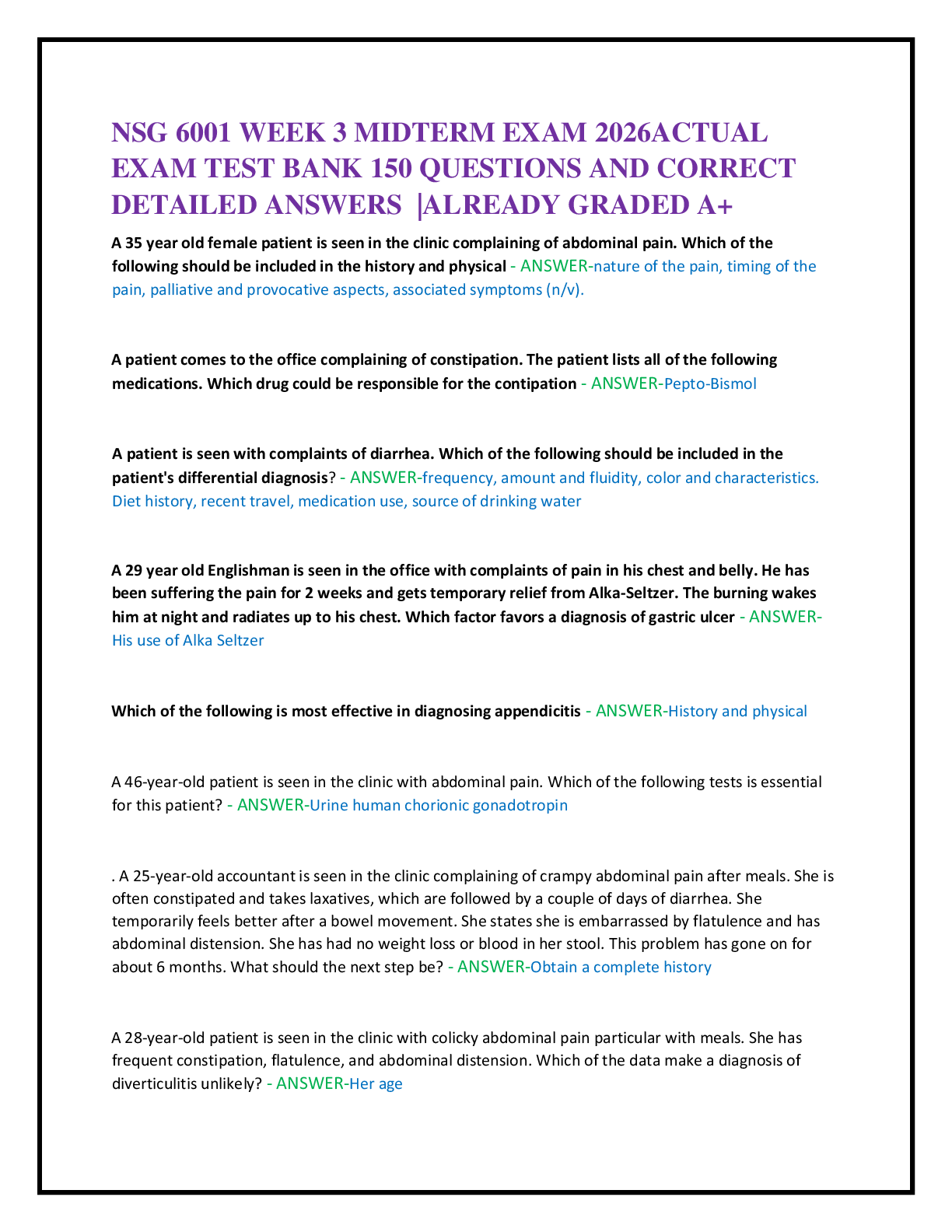
Women usually have single vessel or non-obstructive disease (The diagnostic accuracy of stress testing is decreased among women compared to men because women usually have single vessel or non-obstructive disease.)
Question 5. Question : Any patient presenting with symptomatic bradycardia should be referred to a cardiologist for management. Is this statement true or false?
False
True (This statement is true: any patient presenting with symptomatic bradycardia should be referred to a cardiologist for management.)
Question 6. Question : Chronic, non-communicable diseases account for disproportionate costs to the healthcare system. According to the World Health Organization, what percent of preventable deaths and disabilities occur in the Americas related to chronic non-communicable diseases?
80%-90%
60%-70% (According to the World Health Organization, 60%--7 0% of preventable deaths and disabilities occur in the Americas related to chronic non-communicable diseases.
)
10%-15%
35%-45%
Question 7. Question : On the echocardiography during the ETT you notice the following change: abnormal left ventricular ejection fraction. What do these changes suggest related to this patient?
Ischemia of the myocardium (Abnormal left ventricular ejection fraction suggests ischemia of the myocardium.)
Weak ventricular muscles
Rise in heart rate without evidence of ischemia
Non-ischemic changes of the baseline ECG
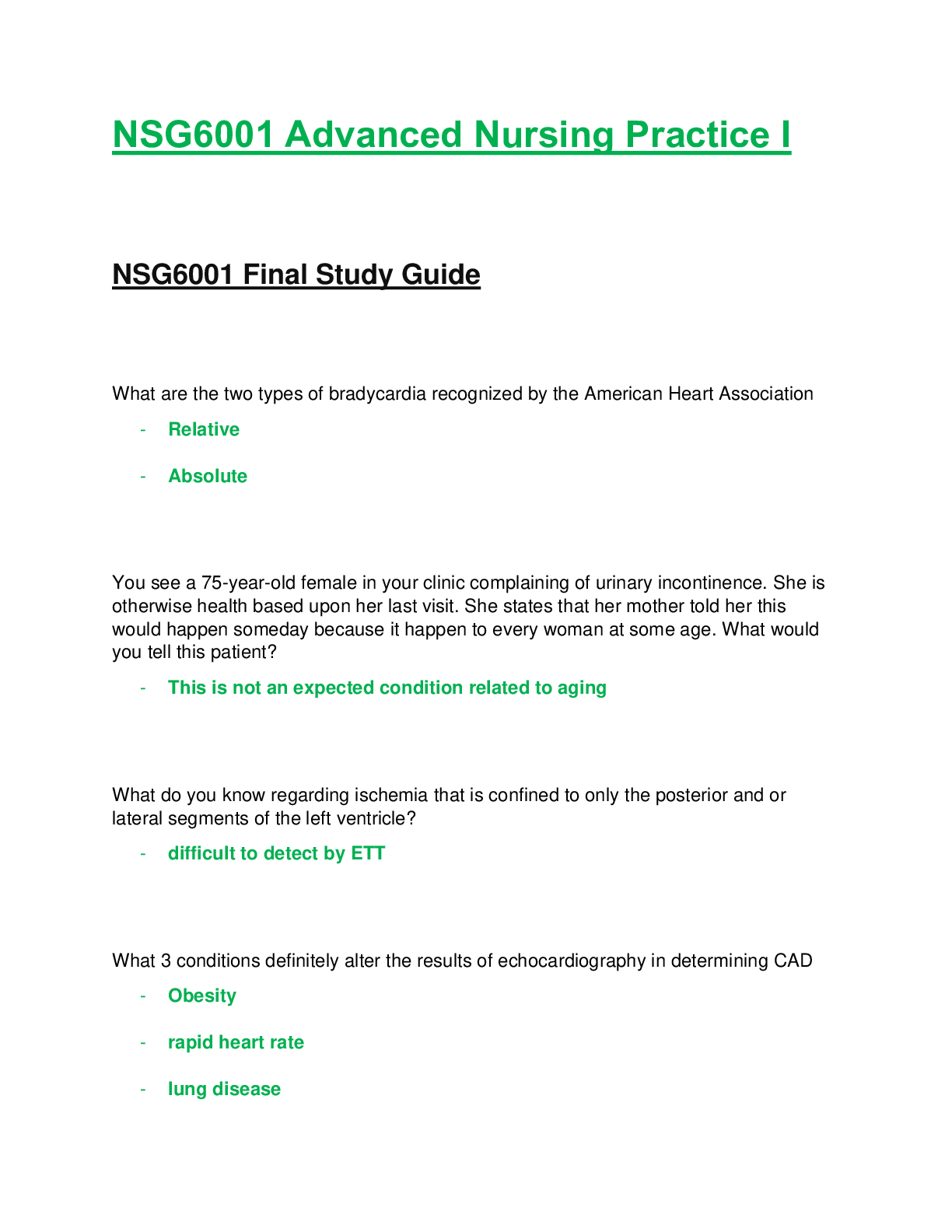
Question 8. Question : What are the two types of bradycardia recognized by the American Heart Association?
Relative and dynamic
Absolute and pending
Refractory and non-refractory
Relative and absolute (The two types of bradycardia recognized by the American Heart Association are relative and absolute.)
Question 9. Question : Aortic aneurysms are described based on their shape. Aneurysms may be fusiform or saccular. When an aneurysm forms as a weakness or bleb on one side of the aorta, it is described as what form of aneurysm?
Fusiform
Saccular (When an aneurysm forms as a weakness or bleb on one side of the aorta, it is described as saccular form of aneurysm.)
Question 10. Question : There is a wide range of antibiotic agents that can be selected to treat a urinary tract infection. Unfortunately, there is often failure of treatment noticed. From the list below, which would be considered a common reason for treatment failure in UTI?
Race or ethnicity of patient
Inadequate treatment duration (A common reason for treatment failure in UTI inadequate treatment duration.)
Therapeutic dosing of the antibiotic
Selecting the appropriate antibiotic the first time
Question 11. Question : You see a 60-year old African American male in your clinic with a recent diagnosis of hypertension. He asks you what he should restrict in his diet, and is particularly interested in limiting his sodium intake. What amount of sodium intake would you recommend on a daily basis for this patient?
3.0 g/day
No added table salt
2.3 g/day
1.5 g/day (The recommended daily intake is 1.5g per day.)
Question 12. Question : A 35 year old female arrives at your clinic. She has had diabetes and peripheral artery disease for the past 5 years. You decide to obtain an ETT. The insurance company argues that this is inappropriate. You justify the ETT because you are planning secondary strategies to prevent future heart disease. Where could one find the supporting data for these guidelines?
Medicaid guidelines
Medicare guidelines
Do not exist
Framingham risk score (These guidelines come from the Framingham risk score.)
Question 13. Question : A 65-year old white male arrives in your clinic with general complaints of slight abdominal discomfort. He has a known history of smoking two packs per day for 40 years and hypertension. He also has COPD and has been treated numerous times with oral steroids. You consider several optional diagnoses. Of the ones listed below, which should be included as a potential top suspect in your choice of diagnosis?
Appendicitis
Abdominal aortic aneurysm (Abdominal aortic aneurysm should be included as a potential top suspect in your choice of diagnosis.)
Chronic bowel obstruction
Meglacolon
Question 14. Question : Of the answers below, which would be included in defining a positive Exercise Echocardiogram?
Induced decrease in regional wall motion (Induced decrease in regional wall motion would be included in defining a positive exercise echocardiogram. Wall thickening would not traditionally occur in a positive test and hyperkinesis, not hypokinesis, generally occurs in a positive test.)
Regional hypokensis of ventricular muscles walls
Increase in wall thickening
Death two days after test
Question 15. Question : You receive a report back on the suspected abdominal aortic aneurysm for your patient. It confirms your suspicion of AAA. The report describes the aneurysm as a symmetric weakness of the entire circumference of the aorta. You know that this form of aneurysm is referred to as what kind of aneurysm?
Fusiform aneurysm (This form of aneurysm is referred to as a fusiform aneurysm.)
Saccular aneurysm
Thoracic aneurysm
Budging sac aneurysm
Question 16. Question : Ischemic changes on ECG during ETT is highly predictive of CAD. What is another important strong predictor of CAD that you might see during an ETT?
Rapid heart rate
Slow heart rate
Exercise-induced hypertension
Exercise-induced hypotension (Another important strong predictor of CAD that you might see during an ETT is exercise-induced hypotension. )
Question 17. Question : You tell a patient that he has a murmur. He says he has been told this before, but wonders what causes the unique sounds of a murmur. Which of the following would be your best option?
High pressures caused from HTN
There is no reason, it just happens
Turbulent flow of blood (The best answer is turbulent flow of blood.)
Almost always from a sclerotic valve
Question 18. Question : Your practice partner just ordered an exercise echocardiography 2DE for a patient with suspected cardiovascular risk. This patient has known resting wall motion abnormalities. Why would this not be the best test to assess this patient’s cardiac risk?
Sensitivity is decreased (This would not be the best test to assess this patient’s cardiac risk because sensitivity is decreased. )
Specificity is increased
Specificity is decreased
Sensitivity is increased
Question 19. Question : Overall, the risk for abdominal aortic aneurysm is greater among:
Whites (Overall, the risk for abdominal aortic aneurysm is greater among whites.)
Women
Asian Americans
African Americans
Question 20. Question : What are two of the most common forms of Exercise Stress Tests used today?
Bicycle and treadmill (Bicycle and treadmill are the two most common forms of exercise stress tests used today. )
Unicycle and Running in pace
Bicycle and rowing machine
Thallium and Dobutamine
Question 21. Question : You have confirmed that your patient does indeed have an abdominal aortic aneurysm. In teaching your patient about symptoms to report immediately to the vascular surgeon, you instruct the patient to report which of the following?
Visual disturbances
Newly diagnosed diabetes
Back pain or flank pain (In teaching your patient about symptoms to report immediately to the vascular surgeon, you instruct the patient to report back pain or flank pain.)
Headaches
Question 22. Question : Your patient is morbidly obese and cannot sit on a bicycle or walk a treadmill. She also has marked and severe emphysema. You need to make an assessment of the risk of significant CAD and your patient’s family says that their relative had their diagnosis based on an ultrasound echocardiography. What facts would influence your decision regarding the family request for echo assessment?
Sensitivity would be increased because of lung disease
Sensitivity would be reduced because of obesity and lung disease (Sensitivity would be reduced because of obesity and lung disease.)
Specificity would be increased because of obesity
Specificity would be reduced because of obesity and lung disease
Question 23. Question : Automaticity is a property common to all cardiac cells. Is this statement true or false?
True (This is a true statement: automaticity is a property common to all cardiac cells.)
False
Question 24. Question : You are considering adding an adjunctive form of testing to detect wall motion abnormalities during the ETT. You select Echocardiography as the added testing. You choose this test because you know that echocardiography does what when added to a standard ETT?
Enhances sensitivity while reducing specificity of CAD detection
You like pretty pictures of wall motion
Enhances sensitivity and specificity of CAD detection (You choose this test because you know that echocardiography enhances sensitivity and specificity of CAD detection.)
Enhances specificity while not changing sensitivity of detection for CAD
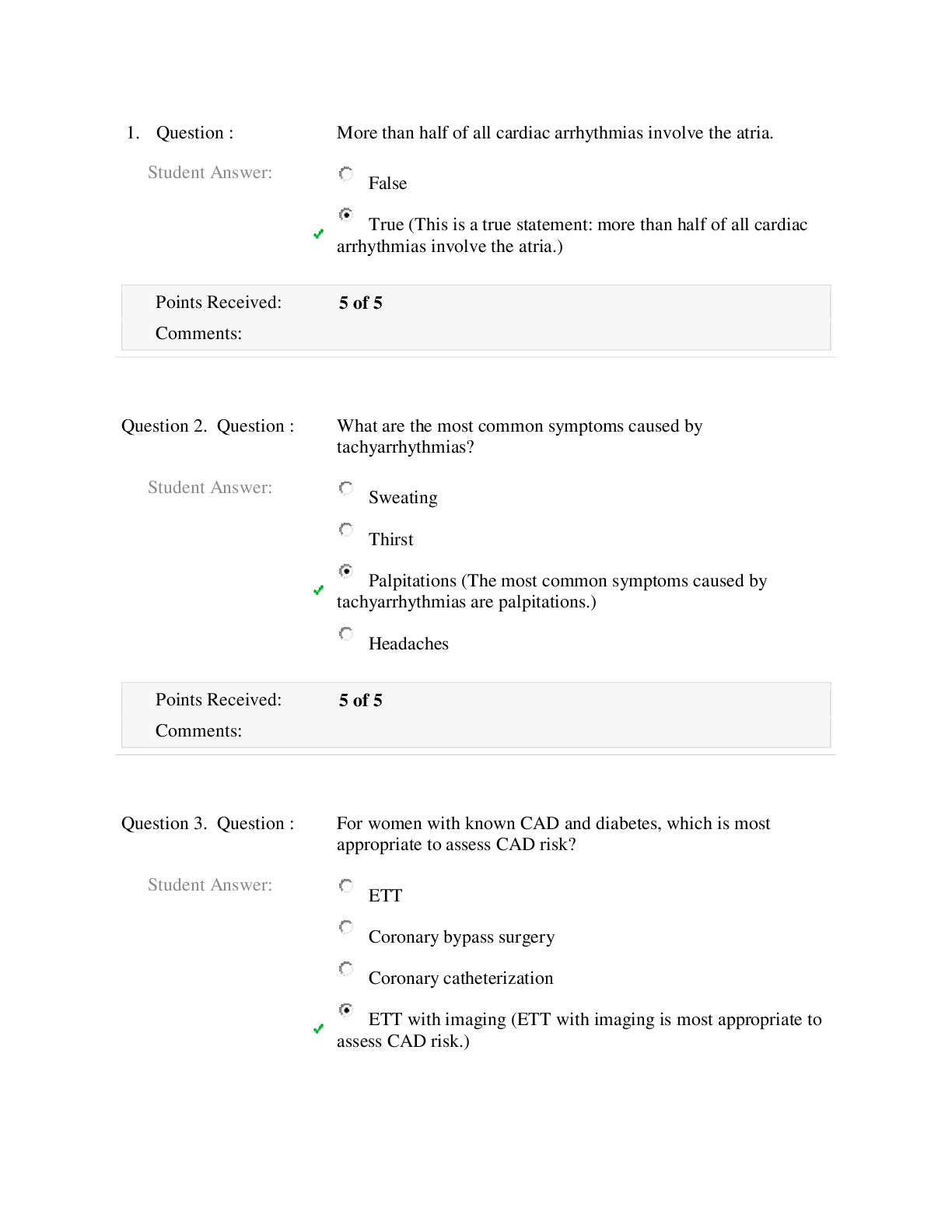
Question 25. Question : More than half of all cardiac arrhythmias involve the atria.
False
True (This is a true statement: more than half of all cardiac arrhythmias involve the atria.)
Question 26. Question : Medicaid is mandated to be provided by each state through federal codes. Each state must offer Medicaid exactly as the federal government prescribes. True or false?
False (Medicaid is mandated to be provided by each state, however, Mediciad is not required to be delivered by any certain formula. Each state has autonomy to deliver Mediciad services under its own guidelines, provided that each state meets the federal guidelines for Medicaid coverage. )
True
Question 27. Question : What three conditions definitely alter the results of echocardiography in determining CAD?
Diabetes, kidney disease and tooth decay
Obesity, slow heart rates and hypertension
Previous MI, hypotension and diabetes
Obesity, rapid heart rate and lung disease (Obesity, rapid heart rate and lung disease definitely alter the results of echocardiography in determining CAD.)
Question 28. Question : Your patient cannot sit on a bicycle and has difficulties walking a treadmill with limited capacity for exercising. Still, you know that the ETT is the preferred test for CAD. You consider adding a pharmacological agent to get to maximum heart rate. What agent would be the most commonly used agent to assist in an ETT?
Epinephrine
Dobutamine (The pharmacological agent most commonly used to assist in an ETT is dobutamine.)
Dopamine
Aspirin
Question 29. Question : By standard criteria, how is a positive stress test defined?
Development of a horizontal or down sloping ST-segment depression of 1mm (A positive stress test is defined as the development of a horizontal or down sloping ST-segment depression of 1mm. )
Down sloping of the ST-segment at the J point of the QRS
Development of a horizontal or down sloping ST-segment depression of 10mm
Upward sloping ST-segment measured at the J point of the QRS
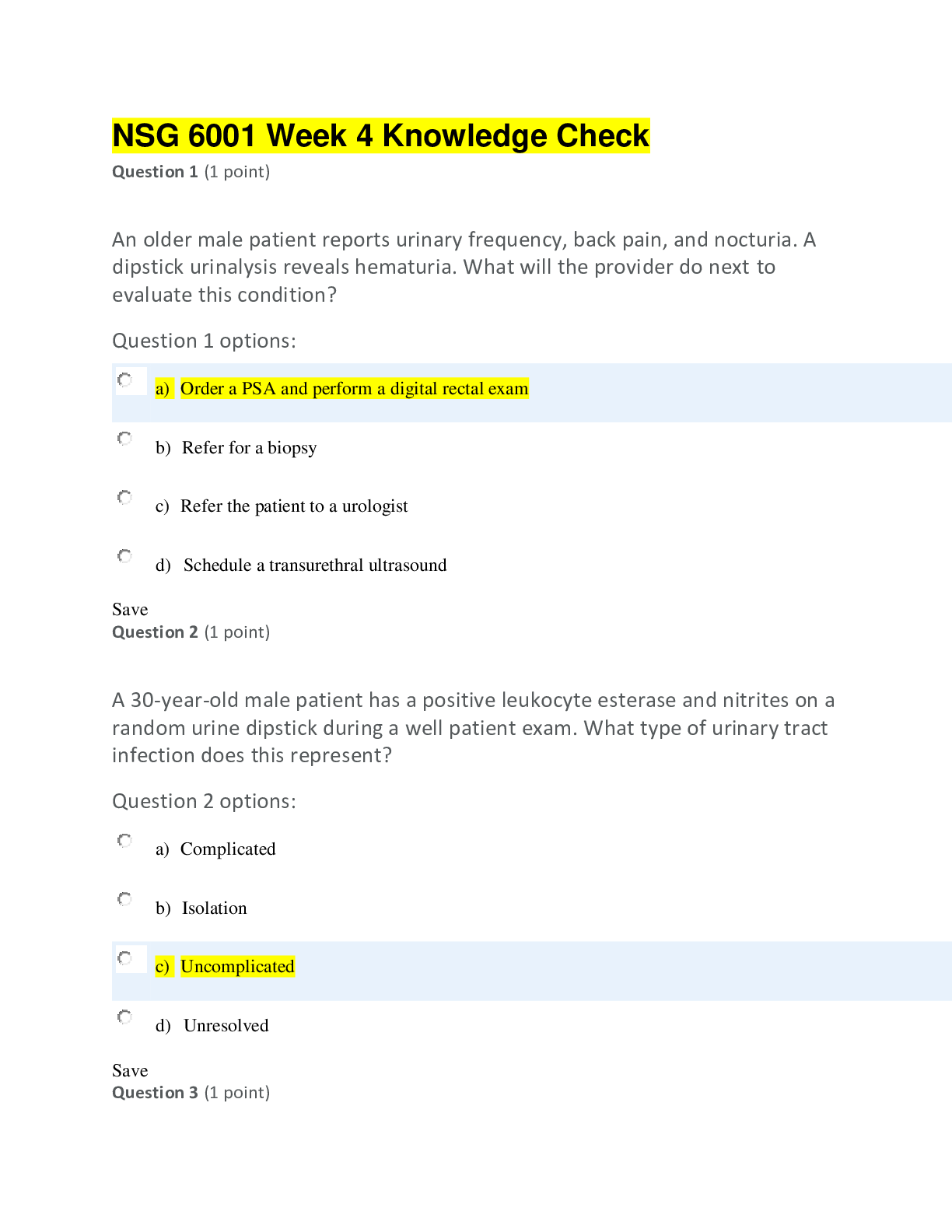
Question 30. Question : For an uncomplicated UTI you choose to order TMP-SMZ for your patient. What is the recommended duration of therapy that you should considered?
3 days (The recommended duration of therapy is 3 days.)
7-10 days
2 weeks
1 day
Question 31. Question : Your patient has a maximum age-predicted heart rate of 180. During the exercise, he reaches a heart rate of 140 and then states he can no longer exercise. You see no evidence of ischemia on the ECG. This would be diagnostic for what condition?
Diagnostic of laziness
Has no diagnostic value to rule out CAD (This scenario has no diagnostic value to rule out CAD.)
Predictive of no CAD
Diagnostic for impending Myocardial Infarction
Question 32. Question : Your patient asks you what causes a rupture of an abdominal aortic aneurysm. You know the answer is most often:
Work or marital stress
Trauma to the abdomen is most often the cause
Ulcerations that “chew” through the abdominal wall
Wall tension exceeds tensile strength of wall collagen (The cause of a rupture in an abdominal aortic aneurysm is when the wall tension exceeds the tensile strength of wall collagen.)
Question 33. Question : What criterion does the American Heart Association use to classify relative bradycardia?
Heart rate below 60 beats per minute
Heart rate above 60 beats per minute
Heart rate below 60 that does not support adequate cardiac output
Heart rate above 60 that does not support adequate cardiac output (The criterion the American Heart Association uses to classify relative bradycardia is a heart rate above 60 that does not support adequate cardiac output.)
Question 34. Question : Changes in Medicare are a method the government uses to make changes to reimbursement schedules for healthcare. Currently, Medicare reimburses nurse practitioners for all services, even those deemed to be exclusive to nursing?
False (Currently, Medicare does not reimburse nurse practitioners for all services, even those deemed to be exclusive to nursing. )
True
Question 35. Question : What is the leading cause of death for women in the United States?
Complications of childbirth
Lung cancer
Breast cancer
Heart disease (Heart disease is the leading cause of death for women in the United States.)
Question 36. Question : When there is a consequential loss of structural integrity of the abdominal aorta, the resulting issue is what condition?
Bloated stomach
Bleeding ulcers
Kidney failure
Abdominal aortic aneurysm (When there is a consequential loss of structural integrity of the abdominal aorta, the resulting issue is abdominal aortic aneurysm.)
Question 37. Question : Abdominal aortic aneurysms are often asymptomatic. What percent of AAA’s are discovered in asymptomatic patients?
75% (75% of abdominal aortic aneurysms are discovered in asymptomatic patients.)
40%
20%
10%
Question 38. Question : Narrowed coronary arteries or plague rupture within the arteries of the coronary system may directly cause which condition?
Venous Statis
Diabetes
Coronary artery disease (Narrowed coronary arteries, plague rupture, and sometimes even spasms of the coronary arteries are the three most common direct causes for the diagnosis of coronary artery disease. )
Hypertension
Question 39. Question : When a murmur is first heard, it is important to determine if it is due to a pathological condition or benign. For an experienced practitioner, it is always easy to determine the cause of a murmur merely by listening to the sound. Is this statement true or false?
True
False (This statement is false: for an experienced practitioner, it is always easy to determine the cause of a murmur merely by listening to the sound)
Question 40. Question : What purpose does the principle of fidelity serve in the provider/patient relationship?
Ensures that patients receive whatever they want
Ensures that providers honor their commitments to the patient (The principle of fidelity mandate assures that providers honor their commitments to the patient. )
Maintains costs in the healthcare arena
Obligates the provider to a one-on-one relationship with the individual
Question 41. Question : You see a 75-year old female in your clinic today complaining of urinary incontinence. She is otherwise healthy based upon her last visit. She states that her mother told her this would happen someday because it happens to every woman at some age. What would you tell this patient?
No need to worry. This is normal. Your mother was correct.
This is not an expected condition related to aging. (Urinary incontinence is not an expected condition related to aging.)
This happens to all women as they age
This happens to men as well and most women before your age.
Question 42. Question : Population disease management is a term used to describe:
Low specificity diseases states
Low prevalence specific diseases
High prevalence specific diseases (Population disease management is a term used to describe the high prevalence of specific diseases. )
High specificity disease states
Question 43. Question : What is considered the first-line initial approach to test for CAD?
Echocardiogram
EKG
Cardiac Catheterization
Exercise Stress Test (Exercise stress test is considered the first-line initial approach to test for CAD. )
Question 44. Question : Your 56-year old patient presents with bradycardia with a rate of 55 and first degree AV block. The patient is hemodynamically stable and is not experiencing any syncope or chest pain. History includes previous myocardial infarction. Home medications include beta blockers, daily aspirin. Lab work is non-significant for electrolyte imbalance. You decided to treat this patient for the arrhythmia to prevent future destabilization. From the choices below, which might be the appropriate first measure to consider?
Discontinue Beta Blocker and replace with another therapy if necessary (The appropriate first measure to consider is to discontinue the beta blocker and replace with another therapy if necessary.)
Add digitalis to control the heart rate
Consult cardiologist immediately for guidance
Atropine injections
Question 45. Question : We all know that collaboration is integral to becoming a successful nurse practitioner. Among collaborations, however, only one can be considered as the most important. While each example below is important, which is the most important collaboration? The one that occurs:
Between the patient and the nurse practitioner (The collaboration that is most important is the one that occurs between the patient and the nurse practitioner. )
Between the nurse practitioner and their physician mentor
Between two healthcare providers about a single patient
Between the patient and their family
Question 46. Question : Medicare hospital insurance (Part A) is funded through what system?
Federal income taxes
Interest from investments
Federal payroll taxes (Medicare Part A is funded through federal payroll taxes. )
State income taxes
Question 47. Question : BPH is not a risk factor for Prostate cancer. Is this statement true or false?
True (This is a true statement: BPH is not a risk factor for Prostate cancer.)
False
Question 48. Question : The leads on the ECG showing ischemic changes during or immediately after an ETT can correlate roughly to the culprit artery or arteries with significant CAD. Is this true or false?
False
True (This statement is true: the leads on the ECG showing ischemic changes during or immediately after an ETT can correlate roughly to the culprit artery or arteries with significant CAD. )
Question 49. Question : What do you know regarding ischemia that is confined to only the posterior and or lateral segments of the left ventricle?
Difficult to detect by ETT (Ischemia that is confined to only the posterior and or lateral segments of the left ventricle is difficult to detect by ETT, but that does not mean that ETT cannot detect ischemia limited to these functional areas of the heart. )
Requires both for detection of changes by ETT
ETT cannot be used for detection
Easier to detect by ETT
Question 50. Question : Your patient underwent an exercise stress test for CAD. There is significant elevation of the ST-segment. What do you need to know about these changes to manage your patient’s care?
These changes are predictive of myocardial infarction
These changes predict dire outcomes
These changes have minimal predictive value for CAD (Significant elevation of the ST-segment has minimal predictive value for CAD. )
This patient needs to see someone more experienced in treatment of CAD
Question 51. Question : A 55-year old man is referred to your clinic. He has been sedentary all of his life, is gaining weight and wishes to get into better physical shape. He has never had any chest pain or shortness of breath when walking or climbing a flight of stairs. Before recommending a vigorous exercise routine for this patient, you order what test?
Stool samples
Thyroid levels
CBC
ETT (Many patients have underlying CAD but remain asymptomatic. Before beginning any new vigorous activities after years of sedentary lifestyle, it is recommended that the patient obtains an ETT to rule out underlying CAD.)
Question 52. Question : As patients that entrust our care to another individual, we always expect honesty to avoid leading us down a deceptive pathway in our healthcare decisions. Adherence to which principle compels providers to be truthful?
Fidelity
Self-reflection
Finance
Veracity (Adherence to veracity compels providers to be truthful with patients. )
Question 53. Question : Of the following, which is the best answer when asked for an advantage of echocardiogram exercise testing over thallium stress testing?
Doesn’t matter because there are no advantages
Results are available more quickly (Echocardiogram exercise test results are available more quickly.)
Does not depend on operator experience
Costs are the same
Question 54. Question : Spread of genital herpes only occurs during the time period with active lesions. Is this statement true or false?
False (This is a false statement: spread of genital herpes only occurs during the time period with active lesions.)
True
Question 55. Question : Tachyarrhythmias cause a drop in commonly blood pressure, cardiac output, syncope, shortness of breath, and chest pain. What phenomenon most often occurs during these arrhythmias to cause these symptoms?
Shortened diastole (The phenomenon that most often occurs during these arrhythmias to cause these symptoms is shortened diastole related to the rapid heart rate. Typically, a shortened systolye would not cause as severe symptoms.)
Shortened systole
Lengthened diastole
Lengthened systole
Question 56. Question : Your patient has a maximum age-predicted heart rate of 180. During the exercise he reaches a heart rate of 140 and then states he can no longer exercise. You see evidence of ischemic changes on the ECG. This would be predictive of what condition?
Impending death
Stroke
Significant CAD (This scenario is predictive of significant CAD.)
Low risk of CAD
Question 57. Question : Your mentor says that you should be prepared to know how to determine the maximum heart rate for your patient during the ETT. How is the age-predicted maximum heart rate during an ETT determined?
220+age
65+age
120-age
220-age (The age-predicted maximum heart rate during an ETT determined by subtracting the patient’s age from 220 (220 – age). )
Question 58. Question : Specifically, when is an ETT considered to be negative?
Patient exercises to 20% maximum age-predicted heart rate without induced ischemia
Patient exercises until tired without evidence of induced ischemia
Patient exercises to 85% of age predicted maximum heart rate without evidence of induced ischemia (An ETT is considered to be negative when the patient exercises to 85% of age predicted maximum heart rate without evidence of induced ischemia. )
Patient has ST-segmental changes with down sloping of greater than 1 mm at 50% of age-predicted maximum heart rate
Question 59. Question : Your patient presents complaining of incontinence of urine. He states that this happens every time soon after he urinates. What type of incontinence is your patient experiencing?
Urge incontinence
Overflow incontinence (The correct answer is overflow incontinence.)
Mixed incontinence
Stress incontinence
Question 60. Question : In CAD, after both systolic and diastolic dysfunction have occurred, the typical pattern of chest pain and related EKG changes occur. During an EKG, you should expect to see ST-segment and T-wave changes that are central to demonstration of ischemia occurring relatively late in the ischemic cascade. Is this true or false?
True (This is a true statement. During an EKG, you should expect to see ST-segment and T-wave changes that are central to demonstration of ischemia occurring relatively late in the ischemic cascade. )
False
Question : What are the two main types of heart failure?
Left sided and main
End diastolic and pressure related
Systolic and diastolic (The two main types of heart failure are systolic and diastolic.)
Hopeless and severe
Question 2. Question : Maintenance of an Isometric ST-segment during exercise is the response of?
CAD
A normal heart (Maintenance of an Isometric ST-segment during exercise is the response of a normal heart. )
An abnormal heart
Hypo profusion
Question 3. Question : Your mentor says that you should be prepared to know how to determine the maximum heart rate for your patient during the ETT. How is the age-predicted maximum heart rate during an ETT determined?
120-age
220+age
65+age
220-age (The age-predicted maximum heart rate during an ETT determined by subtracting the patient’s age from 220 (220 – age). )
Question 4. Question : Your patient asks you what causes a rupture of an abdominal aortic aneurysm. You know the answer is most often:
Trauma to the abdomen is most often the cause
Work or marital stress
Wall tension exceeds tensile strength of wall collagen (The cause of a rupture in an abdominal aortic aneurysm is when the wall tension exceeds the tensile strength of wall collagen.)
Ulcerations that “chew” through the abdominal wall
Question 5. Question : After completion of the exercise stress test, you would measure the ST-segment depression after the J point of the QRS. The J point is located where in relation to the QRS?
Junction between QRS and ST segment (The J point is located at the junction between QRS and ST-segment.)
After the H point
Immediately after the P wave
Junction between P and R
Question 6. Question : Your preceptor decides to add Doppler Flow studies to the echocardiogram exercise test for a patient with a recent history of a holistic murmur best auscultated at the left steral boarder. The patient has no history of cardiac surgeries. He asks you what might be the main advantages of adding Doppler Flow for this particular patient. You know from your readings that there are several reasons to add Doppler Flow and below are listed more than one correct reason. Your best response for this specific case, however, would be that Doppler Flow studies would be of what additive value during the echocardiogram study?
Provides assessment of prosthetic valve function
Gives better screen shots of wall abnormalities
Detect and evaluate blood shunting from a septal defect (Your best response for this specific case, however, would be that Doppler Flow studies would detect and evaluate blood shunting from a septal defect.)
No advantage is seen for this patient
Question 7. Question : You receive a report back on the suspected abdominal aortic aneurysm for your patient. It confirms your suspicion of AAA. The report describes the aneurysm as a symmetric weakness of the entire circumference of the aorta. You know that this form of aneurysm is referred to as what kind of aneurysm?
Saccular aneurysm
Fusiform aneurysm (This form of aneurysm is referred to as a fusiform aneurysm.)
Budging sac aneurysm
Thoracic aneurysm
Question 8. Question : You see a 35-year old male in the office for the first time. He states that he has been diagnosed with recurrent urinary tract infections. You know that urinary tract infections are uncommon among men less than 50 years of age and are considered a complicated infection in this age group. On physical examination, the patient is circumcised, and he denies homosexual activities. What other assessment or history question might be most pertinent in managing this patient?
Cleanliness of anus after bowel movements
Participation in heterosexual anal intercourse (Participation in heterosexual anal intercourse is the correct answer.)
Alcohol consumption
Dietary habits
Question 9. Question : Your patient has an AAA that you have been watching. It is now progressed to greater than 4.0cm in size. What action should you consider at this juncture in patient management of this condition?
Diet changes
Surgical consult with vascular surgeon (The action you should consider at this juncture in patient management is a surgical consult with a vascular surgeon.)
Prescription for ulcers
Diuretic to lower fluid pressure
Question 10. Question : The goal of self-management is to specifically do what?
Engage government in greater involvement in patient care
Engage patients in their own care (The goal of self-management is to engage patients in their own care.)
Engage providers in patient care
Engage insurance providers in patient care
Question 11. Question : What are the two types of bradycardia recognized by the American Heart Association?
Relative and absolute (The two types of bradycardia recognized by the American Heart Association are relative and absolute.)
Absolute and pending
Refractory and non-refractory
Relative and dynamic
Question 12. Question : What criterion does the American Heart Association use to classify relative bradycardia?
Heart rate above 60 that does not support adequate cardiac output (The criterion the American Heart Association uses to classify relative bradycardia is a heart rate above 60 that does not support adequate cardiac output.)
Heart rate above 60 beats per minute
Heart rate below 60 that does not support adequate cardiac output
Heart rate below 60 beats per minute
Question 13. Question : A 47-year old female with general complaints of fatigue and shortness of breath shows up in your clinic as a referral from another nurse practitioner. Several blood tests and chest x-rays have been completed without any diagnosis or outstanding abnormalities. You decide to order an ETT despite the fact that the recent ECG does not show any abnormalities. From the answers below, which would be the best answer to support your decision?
Women present with the same pattern of CAD as do males
CAD in women is under diagnosed (You make this choice because you are aware that CAD in women is under diagnosed.)
To please the patient
You are out of other options
Question 14. Question : By standard criteria, how is a positive stress test defined?
Upward sloping ST-segment measured at the J point of the QRS
Development of a horizontal or down sloping ST-segment depression of 1mm (A positive stress test is defined as the development of a horizontal or down sloping ST-segment depression of 1mm. )
Development of a horizontal or down sloping ST-segment depression of 10mm
Down sloping of the ST-segment at the J point of the QRS
Question 15. Question : Your patient underwent an exercise stress test for CAD. There is significant elevation of the ST-segment. What do you need to know about these changes to manage your patient’s care?
These changes predict dire outcomes
This patient needs to see someone more experienced in treatment of CAD
These changes are predictive of myocardial infarction
These changes have minimal predictive value for CAD (Significant elevation of the ST-segment has minimal predictive value for CAD. )
Question 16. Question : Why would inability to exercise reduce the specificity of the routine ETT?
Produces QRS changes that cannot be interpreted
Will not produce any changes in ECG
Produces persistent ST-segmental changes and T-wave abnormalities (The inability to exercise reduces the specificity of the routine ETT because it produces persistent ST-segmental changes and T-wave abnormalities. )
Causes ST-segment changes and P-wave abnormalities
Question 17. Question : Of the following, which is the best answer when asked for an advantage of echocardiogram exercise testing over thallium stress testing?
Does not depend on operator experience
Results are available more quickly (Echocardiogram exercise test results are available more quickly.)
Costs are the same
Doesn’t matter because there are no advantages
Question 18. Question : The diagnostic accuracy of stress testing is decreased among women compared to men for what reasons?
Women usually have single vessel or non-obstructive disease (The diagnostic accuracy of stress testing is decreased among women compared to men because women usually have single vessel or non-obstructive disease.)
Women typically have multiple vessel disease
Women cannot exercise as vigorously as men
Women having thinner ventricular and septal muscles
Question 19. Question : When there is a consequential loss of structural integrity of the abdominal aorta, the resulting issue is what condition?
Abdominal aortic aneurysm (When there is a consequential loss of structural integrity of the abdominal aorta, the resulting issue is abdominal aortic aneurysm.)
Bloated stomach
Bleeding ulcers
Kidney failure
Question 20. Question : What are the most common symptoms caused by tachyarrhythmias?
Thirst
Palpitations (The most common symptoms caused by tachyarrhythmias are palpitations.)
Headaches
Sweating
Question 21. Question : Medicare hospital insurance (Part A) is funded through what system?
State income taxes
Interest from investments
Federal payroll taxes (Medicare Part A is funded through federal payroll taxes. )
Federal income taxes
Question 22. Question : Your 60-year old male patient arrives for his appointment. He complains of general malaise and fever over the past several days with low back pain. He also states that he is getting up at night more often to urinate and never feels his bladder is completely empty. What differential diagnosis should you consider in this patient?
Acute viral prostatitis
Acute bacterial prostatitis (Acute bacterial prostatitis is the correct answer.)
BPH only
Stomach virus
Question 23. Question : What do you know regarding ischemia that is confined to only the posterior and or lateral segments of the left ventricle?
ETT cannot be used for detection
Difficult to detect by ETT (Ischemia that is confined to only the posterior and or lateral segments of the left ventricle is difficult to detect by ETT, but that does not mean that ETT cannot detect ischemia limited to these functional areas of the heart. )
Easier to detect by ETT
Requires both for detection of changes by ETT
Question 24. Question : Your patient was recently treated for tachycardia and now has a normalized heart rate and rhythm. On examination, you notice a new S3 heart sound. What condition are you concerned with at this time based on this new finding?
Heart rupture
Myocardial infarction occurring
Impending heart failure (The condition you are concerned with based on this new finding is impending heart failure.)
Hypertension
Question 25. Question : Your patient is morbidly obese and cannot sit on a bicycle or walk a treadmill. She also has marked and severe emphysema. You need to make an assessment of the risk of significant CAD and your patient’s family says that their relative had their diagnosis based on an ultrasound echocardiography. What facts would influence your decision regarding the family request for echo assessment?
Sensitivity would be reduced because of obesity and lung disease (Sensitivity would be reduced because of obesity and lung disease.)
Specificity would be increased because of obesity
Sensitivity would be increased because of lung disease
Specificity would be reduced because of obesity and lung disease
Question 26. Question : What happens to coronary flow related to CAD?
Cerebral vascular infarction
Hyper profusion of the myocardium
Functional systolic pressures
Hypo profusion of the myocardium (Because of the restrictive flow of blook through the coronary ateries, hypo profusion of the myocardium results from coronary flow related to CAD which causes the presenting symptoms. )
Question 27. Question : The reason for the increase in chlamydia diagnosis is thought to be related to what event?
Increased sexual activities among all populations
Actual increases in remission of the infection between partners
Increased screening efforts (The increase in chlamydia diagnosis is thought to be related to increased screening efforts.)
Increased sexual activity among males
Question 28. Question : In a person with diagnosed abdominal aortic aneurysm, which symptoms might indicate impending rupture?
Headaches with pain radiating to the eyes
A deep boring pain that radiates to the legs (In a person with diagnosed abdominal aortic aneurysm, a deep boring pain that radiates to the legs might indicate impending rupture.)
Visual disturbances with halos around all lights
New chronic illness diagnosis such as diabetes
Question 29. Question : You see a 75-year old female in your clinic today complaining of urinary incontinence. She is otherwise healthy based upon her last visit. She states that her mother told her this would happen someday because it happens to every woman at some age. What would you tell this patient?
This is not an expected condition related to aging. (Urinary incontinence is not an expected condition related to aging.)
No need to worry. This is normal. Your mother was correct.
This happens to all women as they age
This happens to men as well and most women before your age.
Question 30. Question : Changes in Medicare are a method the government uses to make changes to reimbursement schedules for healthcare. Currently, Medicare reimburses nurse practitioners for all services, even those deemed to be exclusive to nursing?
False (Currently, Medicare does not reimburse nurse practitioners for all services, even those deemed to be exclusive to nursing. )
True
Question 31. Question : A 35 year old female arrives at your clinic. She has had diabetes and peripheral artery disease for the past 5 years. You decide to obtain an ETT. The insurance company argues that this is inappropriate. You justify the ETT because you are planning secondary strategies to prevent future heart disease. Where could one find the supporting data for these guidelines?
Framingham risk score (These guidelines come from the Framingham risk score.)
Medicare guidelines
Do not exist
Medicaid guidelines
Question 32. Question : What is considered the first-line initial approach to test for CAD?
Exercise Stress Test (Exercise stress test is considered the first-line initial approach to test for CAD. )
EKG
Cardiac Catheterization
Echocardiogram
Question 33. Question : The majority of all strokes are non-ischemic. Is this statement true or false?
True
False (This statement is false: the majority of all strokes are non-ischemic.)
Question 34. Question : BPH is not a risk factor for Prostate cancer. Is this statement true or false?
False
True (This is a true statement: BPH is not a risk factor for Prostate cancer.)
Question 35. Question : In women, you need to know the limitations of certain tests for CAD. For example, single-photon emissions CT imaging, while an acceptable test for most men and some women, is technically limited in women for two reasons. From the following, choose the best possible answer.
Multiple vessel disease and fat deposits
Smoking rates and lack of uptake of photons
Breasts and smaller coronary arteries (Single-photon emissions CT imaging is technically limited in women due to breasts and smaller coronary arteries.)
Breasts and fat deposits in abdomen
Question 36. Question : When a murmur is first heard, it is important to determine if it is due to a pathological condition or benign. For an experienced practitioner, it is always easy to determine the cause of a murmur merely by listening to the sound. Is this statement true or false?
False (This statement is false: for an experienced practitioner, it is always easy to determine the cause of a murmur merely by listening to the sound)
True
Question 37. Question : What sexually transmitted disease is most widespread in the USA today?
Syphilis
Gonorrhea
Chlamydia (The most widespread sexually transmitted disease in the USA today is chlamydia.)
HIV/AIDS
Question 38. Question : You are considering adding an adjunctive form of testing to detect wall motion abnormalities during the ETT. You select Echocardiography as the added testing. You choose this test because you know that echocardiography does what when added to a standard ETT?
Enhances specificity while not changing sensitivity of detection for CAD
You like pretty pictures of wall motion
Enhances sensitivity and specificity of CAD detection (You choose this test because you know that echocardiography enhances sensitivity and specificity of CAD detection.)
Enhances sensitivity while reducing specificity of CAD detection
Question 39. Question : You tell a patient that he has a murmur. He says he has been told this before, but wonders what causes the unique sounds of a murmur. Which of the following would be your best option?
There is no reason, it just happens
High pressures caused from HTN
Almost always from a sclerotic valve
Turbulent flow of blood (The best answer is turbulent flow of blood.)
Question 40. Question : Your patient has uncomplicated pyelonephritis. In deciding your recommended treatment, you consider the most common pathogenic reason for this diagnosis. What pathogen accounts for the majority of pyelonephritis?
E. Coli (E. Coli is the pathogen that accounts for the majority of pyelonephritis.)
Chlamydia
Mycoplasma Hominis
Gardnerella Vaginalis
Question 41. Question : What purpose does the principle of fidelity serve in the provider/patient relationship?
Maintains costs in the healthcare arena
Ensures that providers honor their commitments to the patient (The principle of fidelity mandate assures that providers honor their commitments to the patient. )
Ensures that patients receive whatever they want
Obligates the provider to a one-on-one relationship with the individual
Question 42. Question : Your 56-year old patient presents with bradycardia with a rate of 55 and first degree AV block. The patient is hemodynamically stable and is not experiencing any syncope or chest pain. History includes previous myocardial infarction. Home medications include beta blockers, daily aspirin. Lab work is non-significant for electrolyte imbalance. You decided to treat this patient for the arrhythmia to prevent future destabilization. From the choices below, which might be the appropriate first measure to consider?
Atropine injections
Add digitalis to control the heart rate
Discontinue Beta Blocker and replace with another therapy if necessary (The appropriate first measure to consider is to discontinue the beta blocker and replace with another therapy if necessary.)
Consult cardiologist immediately for guidance
Question 43. Question : What is the treatment of choice for uncomplicated community-acquired cystitis?
Amoxicillin
Penicillin
TMP-SMZ (TMP-SMZ is the treatment of choice for uncomplicated community-acquired cystitis.)
Any antibiotic will treat this diagnosis
Question 44. Question : What is the most common cause of systolic heart failure?
PAD
Atria arrhythmias
CAD (The most common cause of systolic heart failure is CAD.)
Diabetes
Question 45. Question : Chronic, non-communicable diseases account for disproportionate costs to the healthcare system. According to the World Health Organization, what percent of preventable deaths and disabilities occur in the Americas related to chronic non-communicable diseases?
35%-45%
60%-70% (According to the World Health Organization, 60%--7 0% of preventable deaths and disabilities occur in the Americas related to chronic non-communicable diseases.
)
80%-90%
10%-15%
Question 46. Question : Skin cancer is the most common malignant neoplasm in males in the US. What is the second leading cause of cancer deaths in men greater than 50 years of age?
Lupus
Lymphoma
Prostate cancer (The second leading cause of cancer deaths in men greater than 50 years of age is prostate cancer.)
Lung cancer
Question 47. Question : All patients, even is asymptomatic, require risk stratification according to the Farmingham risk score. At present, ACC/AHA guidelines, however, do not normally support stress tests for asymptomatic patients without addiitonal justification. From the list below, what could be used to justify a ETT in an asymptomatic patient?
A smoker of 3 weeks
A member of congress
Sedentary and wishes to begin aggressive exercise (Many patients have underlying CAD but remain asymptomatic. Before beginning any new vigorous activities after years of sedentary lifestyle, it is recommended to obtain a ETT to rule out underlying CAD.)
Developmentally challenged
Question 48. Question : Eligibility for Medicaid includes the following:
Everyone unemployed
Elderly, children and women living in poverty (Eligibility for Medicaid includes the elderly as well as children and women living in poverty. )
Very young and elderly only
Children and women regardless of income
Question 49. Question : What three conditions definitely alter the results of echocardiography in determining CAD?
Obesity, rapid heart rate and lung disease (Obesity, rapid heart rate and lung disease definitely alter the results of echocardiography in determining CAD.)
Obesity, slow heart rates and hypertension
Previous MI, hypotension and diabetes
Diabetes, kidney disease and tooth decay
Question 50. Question : We all know that collaboration is integral to becoming a successful nurse practitioner. Among collaborations, however, only one can be considered as the most important. While each example below is important, which is the most important collaboration? The one that occurs:
Between the patient and their family
Between the nurse practitioner and their physician mentor
Between the patient and the nurse practitioner (The collaboration that is most important is the one that occurs between the patient and the nurse practitioner. )
Between two healthcare providers about a single patient
Question 51. Question : Tachyarrhythmias cause a drop in commonly blood pressure, cardiac output, syncope, shortness of breath, and chest pain. What phenomenon most often occurs during these arrhythmias to cause these symptoms?
Shortened systole
Lengthened diastole
Lengthened systole
Shortened diastole (The phenomenon that most often occurs during these arrhythmias to cause these symptoms is shortened diastole related to the rapid heart rate. Typically, a shortened systolye would not cause as severe symptoms.)
Question 52. Question : Of the answers below, which would be included in defining a positive Exercise Echocardiogram?
Regional hypokensis of ventricular muscles walls
Induced decrease in regional wall motion (Induced decrease in regional wall motion would be included in defining a positive exercise echocardiogram. Wall thickening would not traditionally occur in a positive test and hyperkinesis, not hypokinesis, generally occurs in a positive test.)
Death two days after test
Increase in wall thickening
Question 53. Question : The sensitivity of a routine ETT is effort dependent. What physiological changes occur during effort in the routine ETT?
Decreased heart rate and increased systolic blood pressure
Increased coronary flow and increased systolic blood pressure (The physiological changes that occur during effort in the routine ETT are increased coronary flow and increased systolic blood pressure.)
Rapid heart rates and coronary artery narrowing
Decrease in coronary blood flow
Question 54. Question : For women with known CAD and diabetes, which is most appropriate to assess CAD risk?
Coronary bypass surgery
ETT with imaging (ETT with imaging is most appropriate to assess CAD risk.)
Coronary catheterization
ETT
Question 55. Question : On the echocardiography during the ETT you notice the following change: abnormal left ventricular ejection fraction. What do these changes suggest related to this patient?
Weak ventricular muscles
Non-ischemic changes of the baseline ECG
Ischemia of the myocardium (Abnormal left ventricular ejection fraction suggests ischemia of the myocardium.)
Rise in heart rate without evidence of ischemia
Question 56. Question : Your patient is newly diagnosed with persistent Atria Fibrillation. You consider electrocardioversion. Before undergoing this procedure you should order the following examination to assess thrombus risk.
Tranesophageal echocardiography (Before undergoing this procedure you should order tranesophageal echocardiography to assess thrombus risk.)
X-Ray of chest
Ultrasound of chest
CT Scan
Question 57. Question : Population disease management is a term used to describe:
High specificity disease states
Low specificity diseases states
High prevalence specific diseases (Population disease management is a term used to describe the high prevalence of specific diseases. )
Low prevalence specific diseases
Question 58. Question : At what point is elective repair of an abdominal aortic aneurysm (AAA) for a healthy patient considered appropriate?
1-2 cm diameter
Baseball size
5-6 cm diameter (The point when elective repair of an abdominal aortic aneurysm (AAA) for a healthy patient is considered appropriate is when the AAA reaches the size of 5—6 cm diameter.)
10-15 cm diameter
Question 59. Question : Your practice partner just ordered an exercise echocardiography 2DE for a patient with suspected cardiovascular risk. This patient has known resting wall motion abnormalities. Why would this not be the best test to assess this patient’s cardiac risk?
Specificity is decreased
Specificity is increased
Sensitivity is decreased (This would not be the best test to assess this patient’s cardiac risk because sensitivity is decreased. )
Sensitivity is increased
Question 60. Question : Medicare covers inpatient hospital services under which part of the Medicare insurance?
Part A (Medicare covers inpatient hospital services under Part A. )
Part D
Part B
Part C
[Show More]