NUR 6020 NEUROLOGICAL DISORDERS
Document Content and Description Below
NUR 6020 NEUROLOGICAL DISORDERS
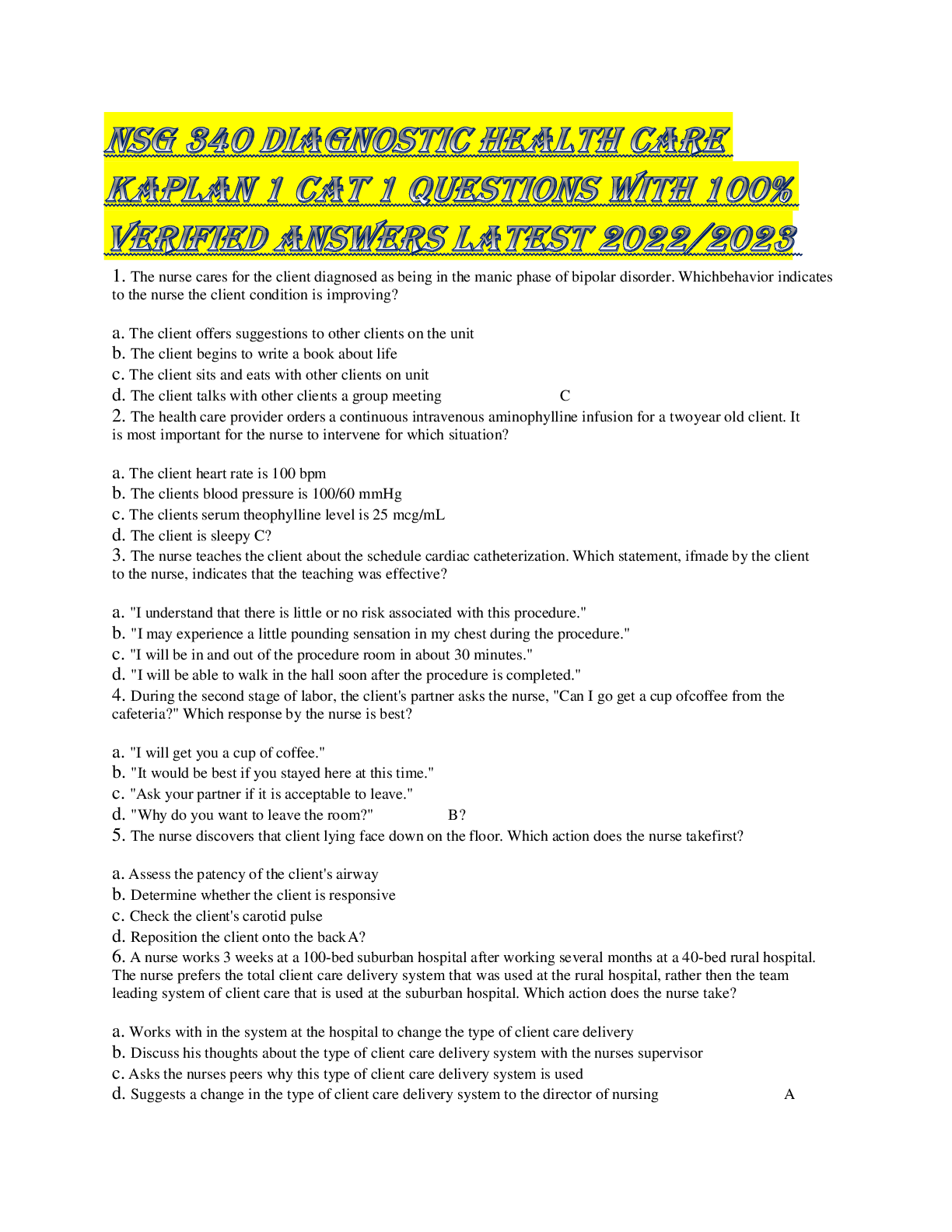
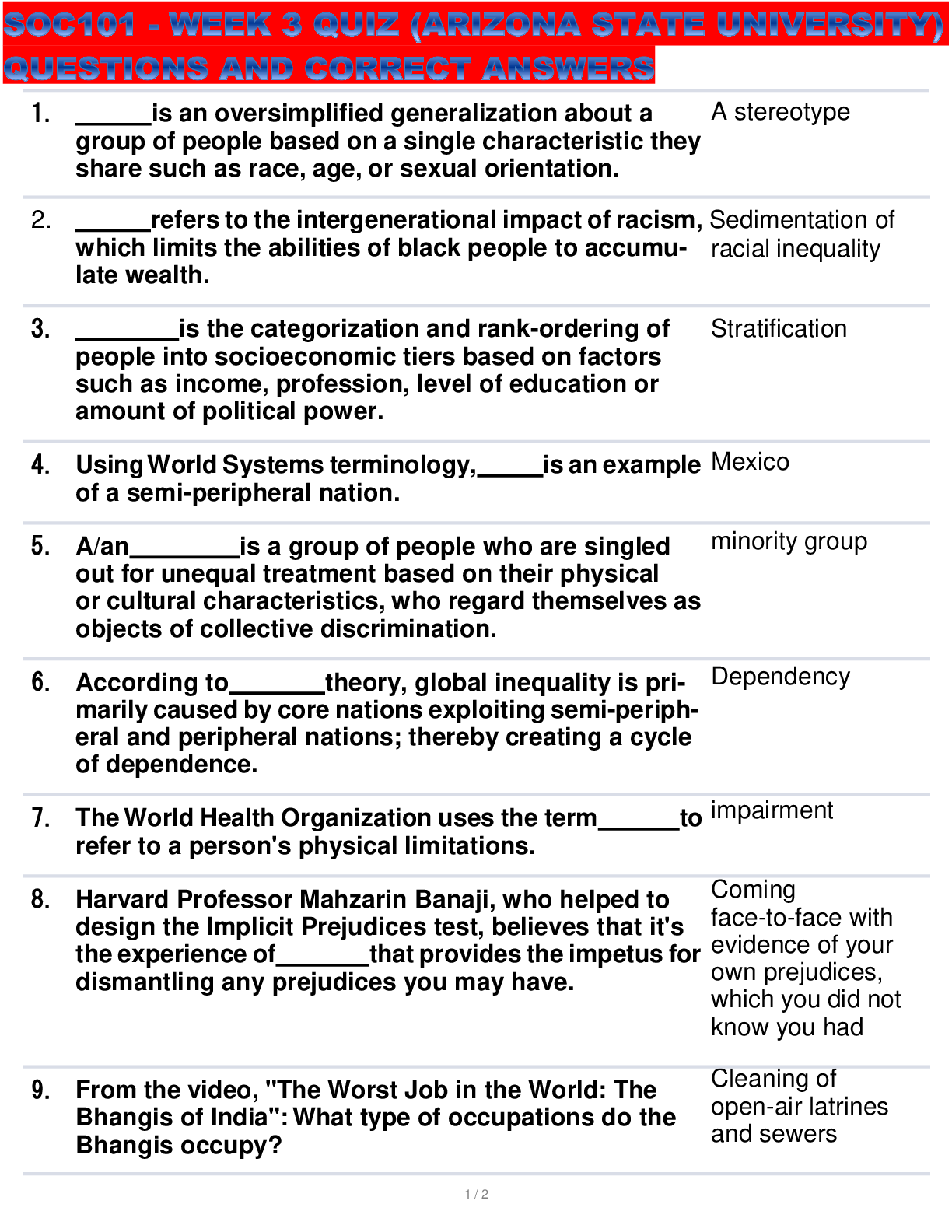
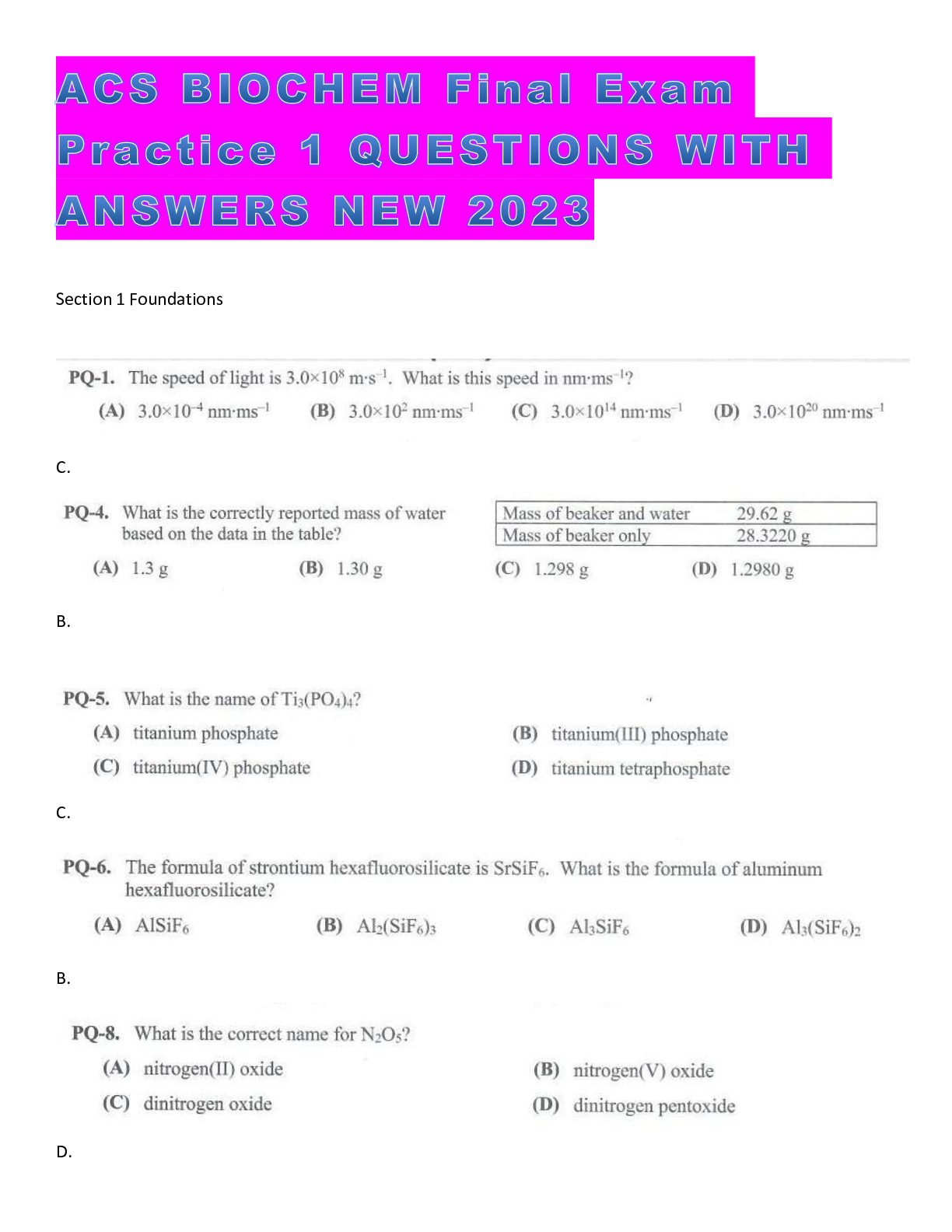
1. Bilateral weakness in cranial nerve V (CN V) would be suggestive of Bilateral hemispheric disease
2. When evaluating the six cardinal directions of gaze, a loss of conjugate movements
...
[Show More]
Last updated: 3 years ago
Preview 1 out of 18 pages
Instant download

Buy this Document to get the Full Access Instantly
Provided by Students Who Aced it
We Verify Document Content to Gurantee Accuracy
Reviews( 0 )
Document information
Connected school, study & course
About the document
Uploaded On
Jan 22, 2023
Number of pages
18
Written in
All

Additional information
This document has been written for:
Uploaded
Jan 22, 2023
Downloads
0
Views
162
Topic Tags
Recommended For You
Get more on EXAM »

$10.5
54 Pages
NSG_6020 FINAL EXAM GUIDE/ nsg 6020 Final exam review/ NURS 60...
$80
29 Pages
NR565 Week 8 Final Exam Complete with 100 Questions and 100% C...

$9
3 Pages
NR 661 Week 3 APEA Module: Endocrine / Disorders – APEA Practi...


$10
38 Pages
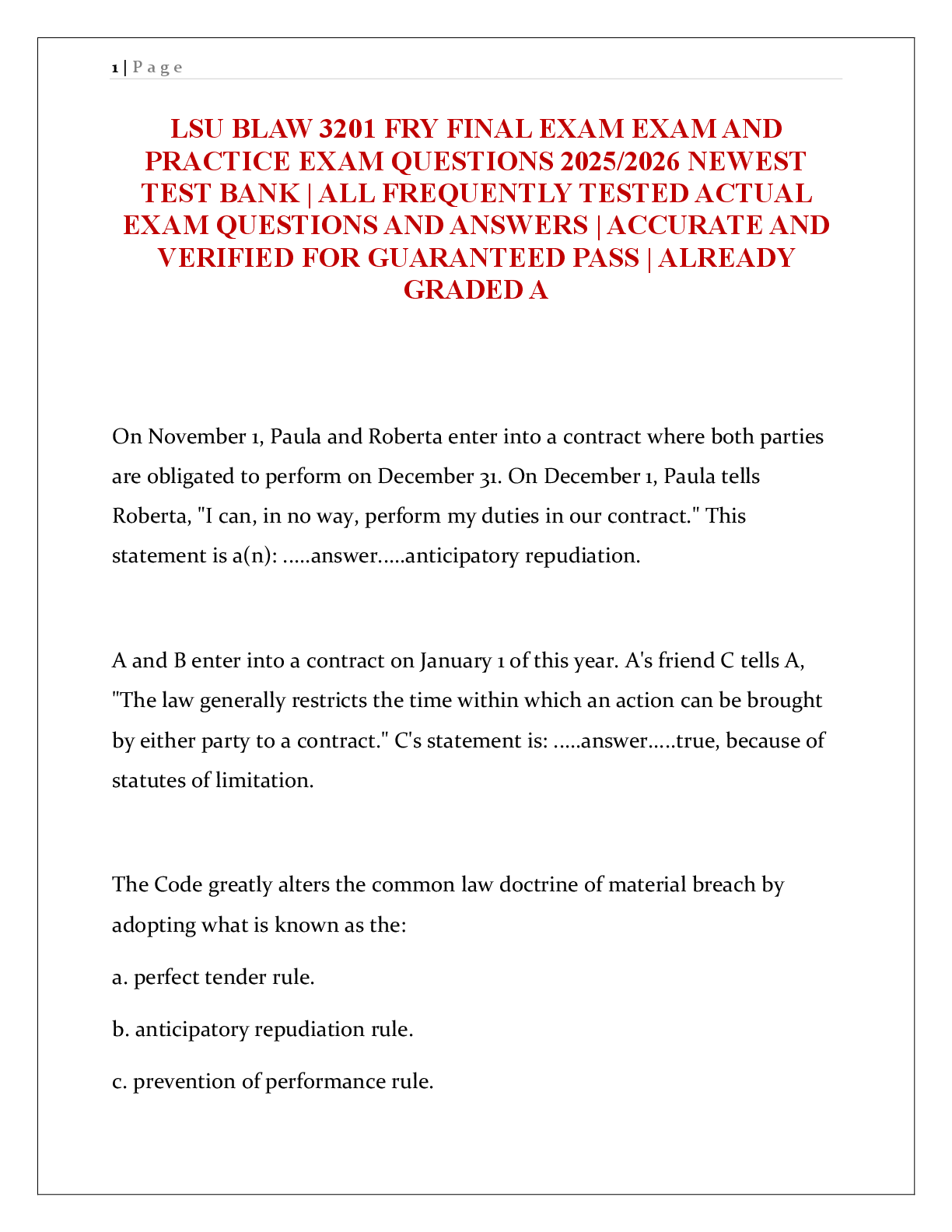
AGNP BOARD EXAM QUESTIONS Endocrinology Prescription | 89 Ques...

More related documents below