NFDN 2005: PEDIATRICS
Unit 1: Principles of Growth and Development in Children
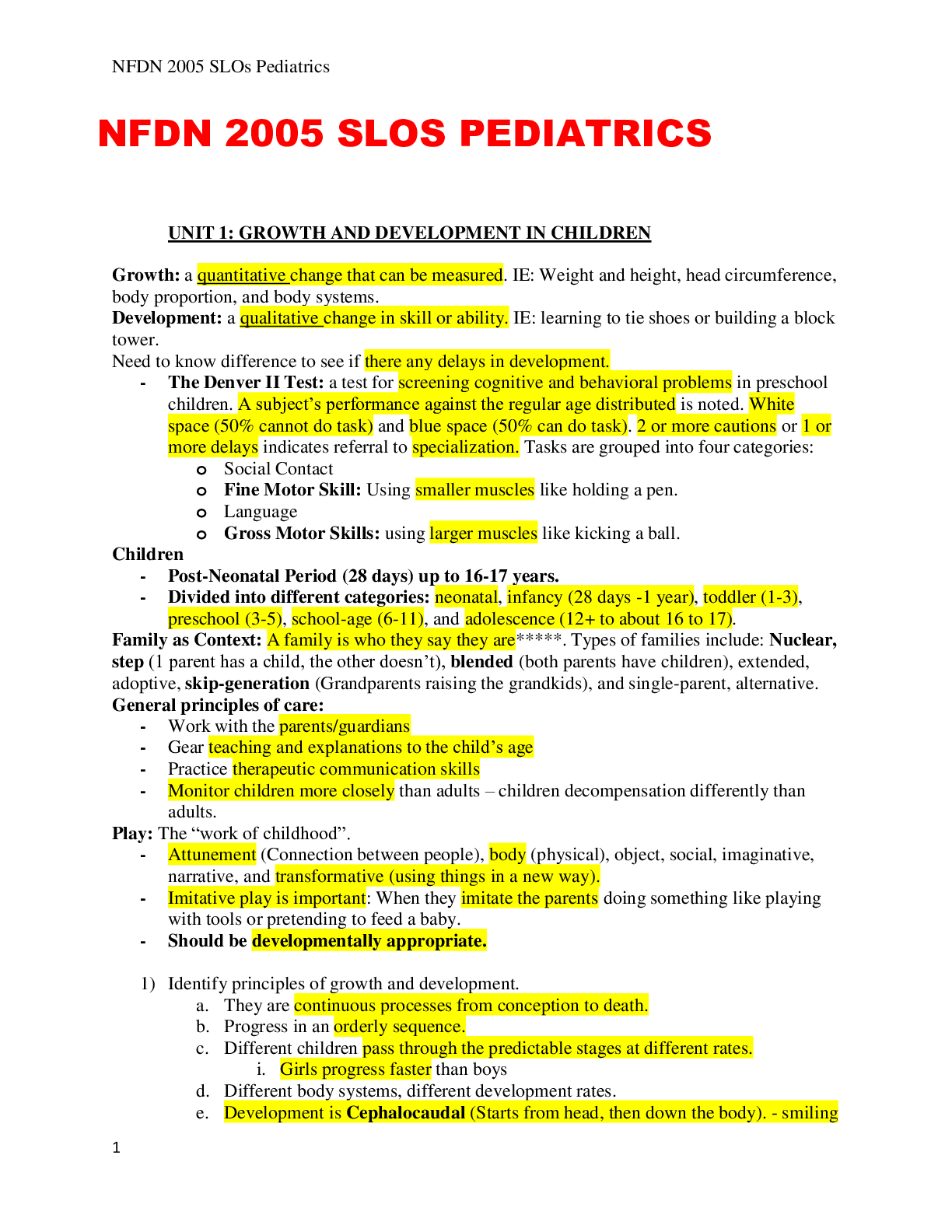
• A quantative change that can be measured
• Ex: Height, weight
What is development?
• A qualitative change in skill or ability
•
...
NFDN 2005: PEDIATRICS
Unit 1: Principles of Growth and Development in Children
• A quantative change that can be measured
• Ex: Height, weight
What is development?
• A qualitative change in skill or ability
• Not how many blocks can they stack, but can they stack blocks
• Ex: Standardized testing such as the Denver II test used
Denver II test
• Four categories
• A test for screening cognitive and behavioral problems in preschool children
• A subject’s performance against the regular age distribution is noted
Why do we want to know the difference between growth and development?
• We want to know what their developmental level is, or if they have a developmental delay
• Development follows a particular pattern
Growth and development
• Are continuous processes
• Progress in an orderly sequence
• Different children pass through the predictable staged at different rates
• Different body systems, different development rates
• Development is cephalocaudal (starts from the head, works its way down)
Cephalocaudal Gross to fine
Sensitive periods: Critical periods in development that cannot be missed
Factors that can affect growth and development of children
• Environment
o Socioeconomic level
o Parent-child relationship
o Ordinal position in the family
o Health
• Nutritional intake
• Prenatal health
• Genetics
o Influence the rate of both growth and development
• Gender
• Health
• Intelligence
• Temperament
o Reaction patterns
Activity levels
Rhythmicity (routines)
Approach (how they respond to new stimuli)
Adaptability (how they adapt to changes in routines)
Intensity of reactions
Distractibility (how well can they shift attention to something different)
Attention span and Persistence
Threshold of response (what’s needed to get them to respond)
Mood quality
o Categories of Temperament
The easy child
[Show More]