PHARMACOLOGY ATI RN PROCTORED EXAM
Document Content and Description Below
PHARMACOLOGY ATI RN PROCTORED EXAM
1. Nurse has just received a bag of packed red blood cells (RBCs) for a patient. What is the longest time the nurse can let the blood infuse?
a. 30 minutes
b. 2 hours
c. 4 hours
d.
...
[Show More]
Last updated: 3 years ago
Preview 1 out of 17 pages
Instant download

Buy this Document to get the Full Access Instantly
Provided by Students Who Aced it
We Verify Document Content to Gurantee Accuracy
Reviews( 0 )
Document information
Connected school, study & course
About the document
Uploaded On
Jan 25, 2023
Number of pages
17
Written in
All

Additional information
This document has been written for:
Uploaded
Jan 25, 2023
Downloads
0
Views
65
Topic Tags
Recommended For You
Get more on EXAM »
$12.5
26 Pages
Pharmacology ATI Proctored Exam Questions and Answers (Verifie...
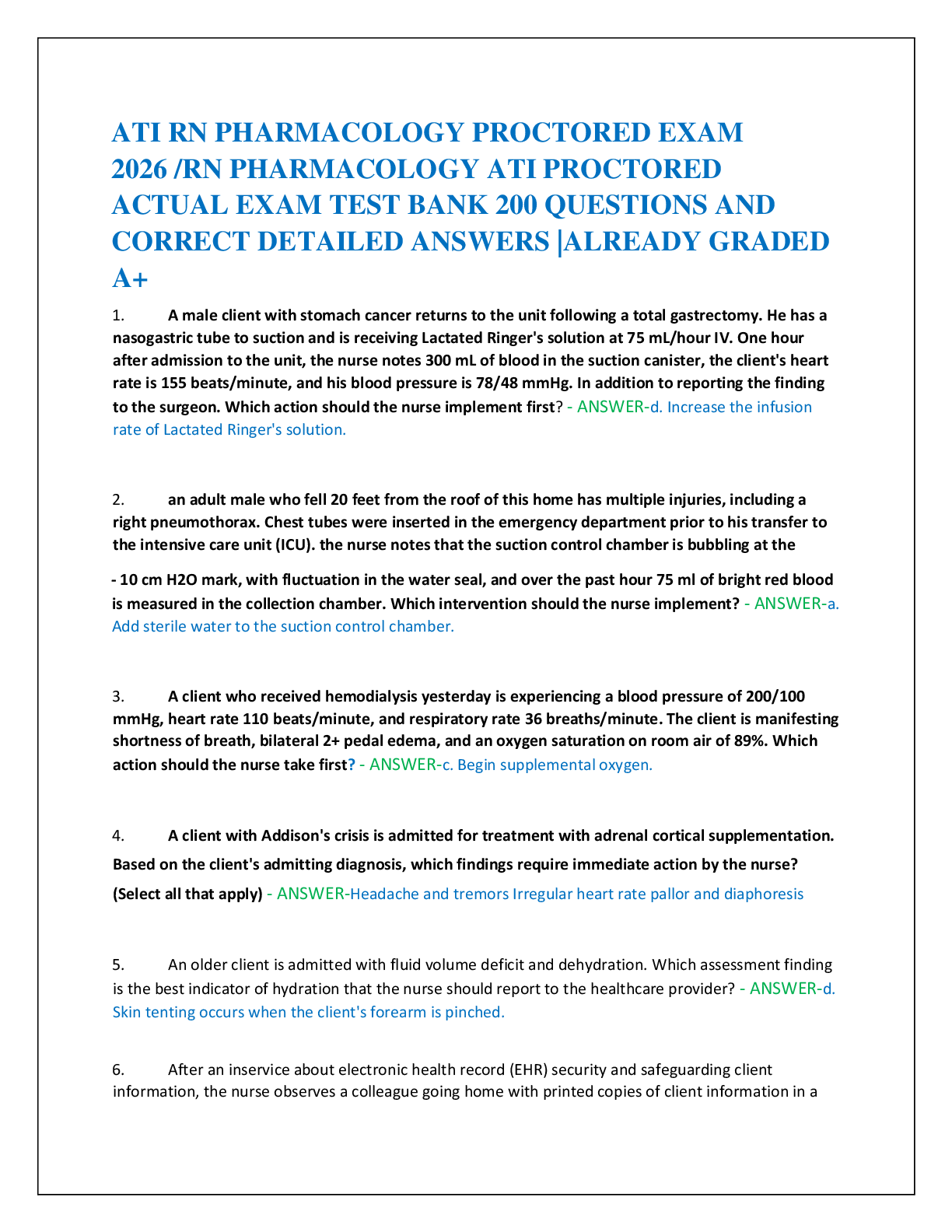
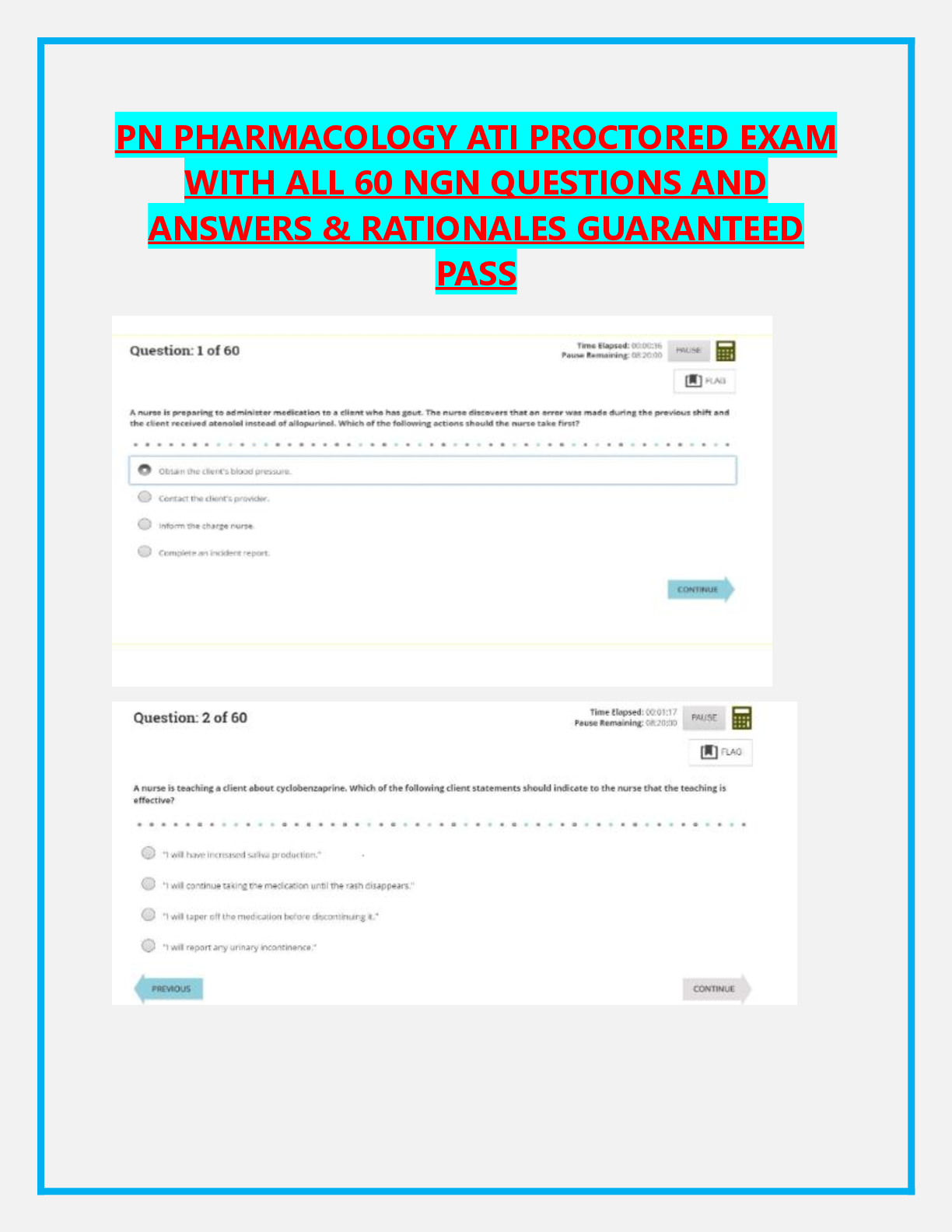
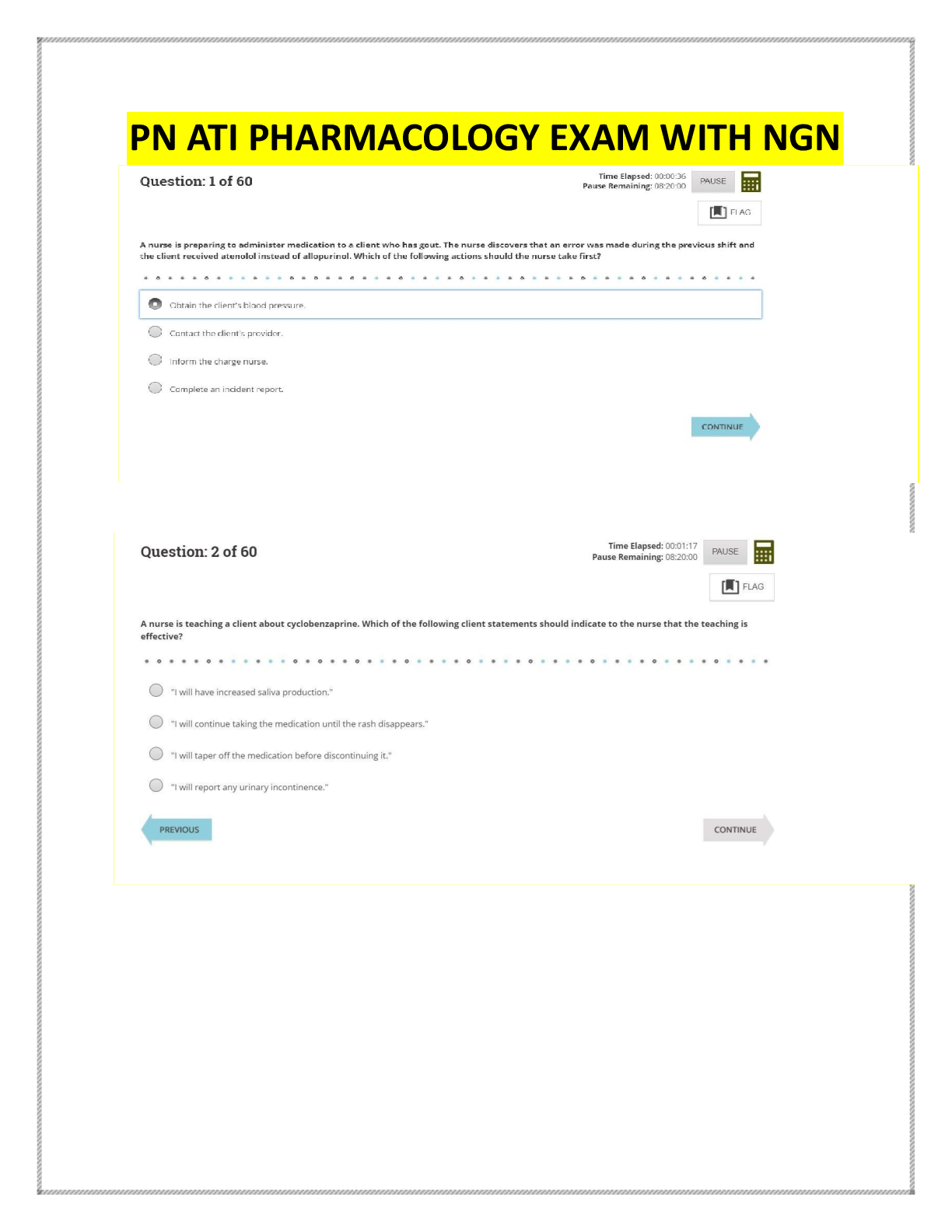
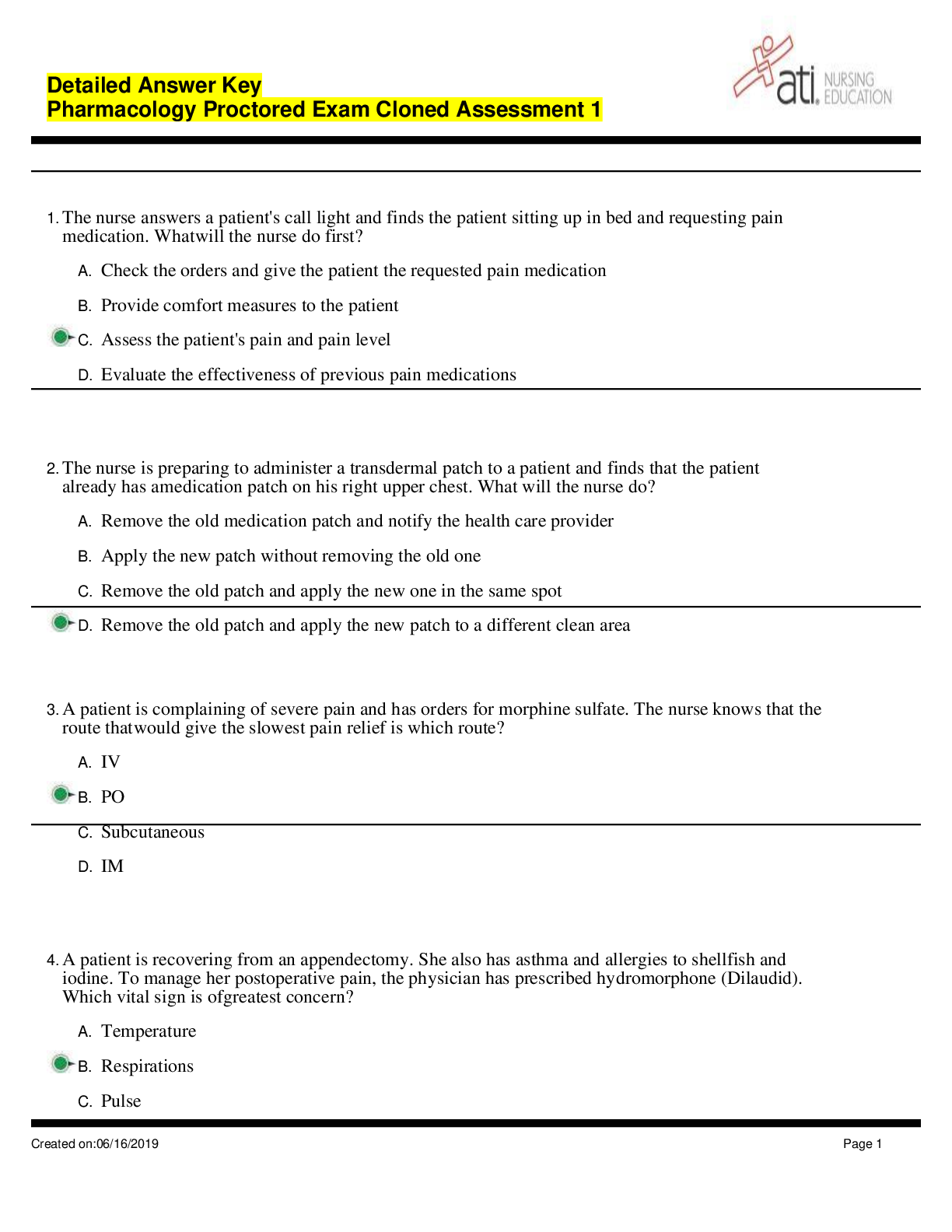
$14
63 Pages
Pharmacology ATI Proctored Exam Detailed Answer Key _Cloned_As...
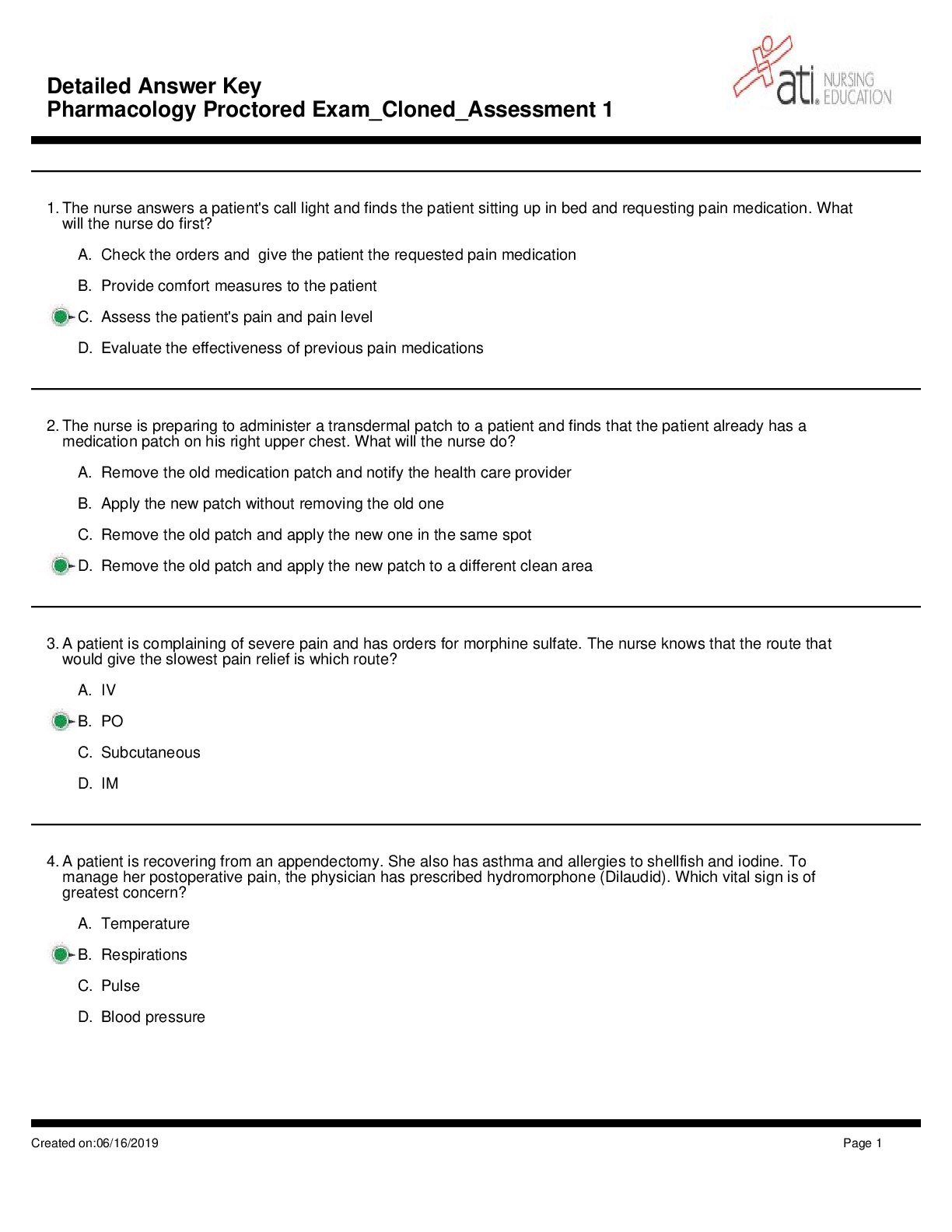
$16
33 Pages
Pharmacology ATI Proctored Exam Detailed Answer Key _Cloned_As...
$12
33 Pages
Pharmacology ATI Proctored Exam Assessment 1(Latest Fall 2021)...
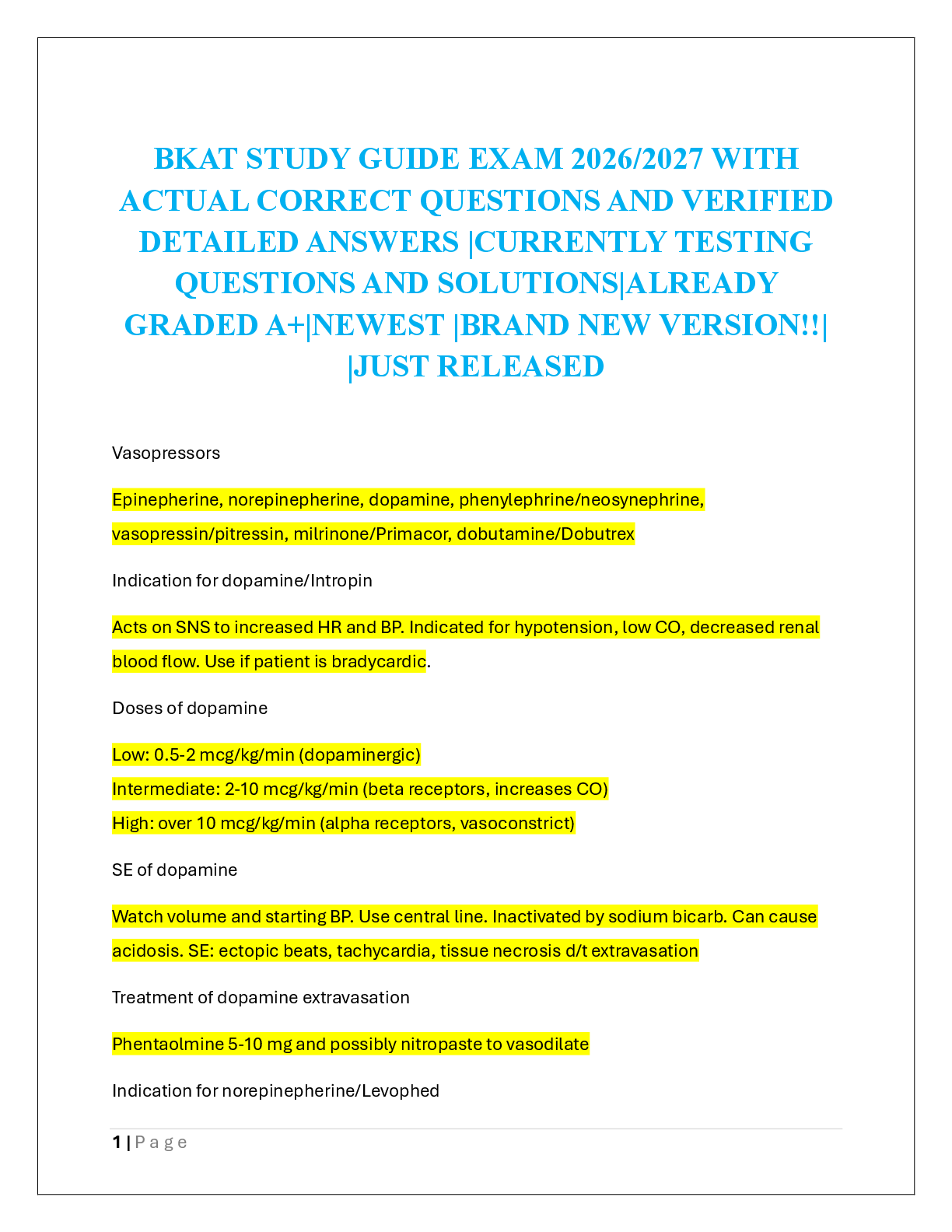
$16
276 Pages
Eat Right Prep Exam 2026/2027 Latest Update | Complete Study...
$22.5
307 Pages
TEST BANK for Davis Advantage for Psychiatric Mental Health Nu...
$17
588 Pages
Test Bank For Fundamentals of Nursing 11th Edition Potter Perr...
$16
496 Pages
TEST BANK for Essentials of Psychiatric Mental Health Nursing:...
$19
553 Pages
Essentials of Psychiatric Nursing 2nd Edition Boyd TEST BANK

$16
554 Pages
TEST BANK for Essentials of Psychiatric Nursing 2nd Edition by...
More related documents below