Bulbus cordis
(Ans- Smooth parts (outflow tract) of left and right ventricles
endocardial cushions
(Ans- Atrial septum, membranous interventricular septum; AV and semilunar valves
neural crest
left horn of t
...
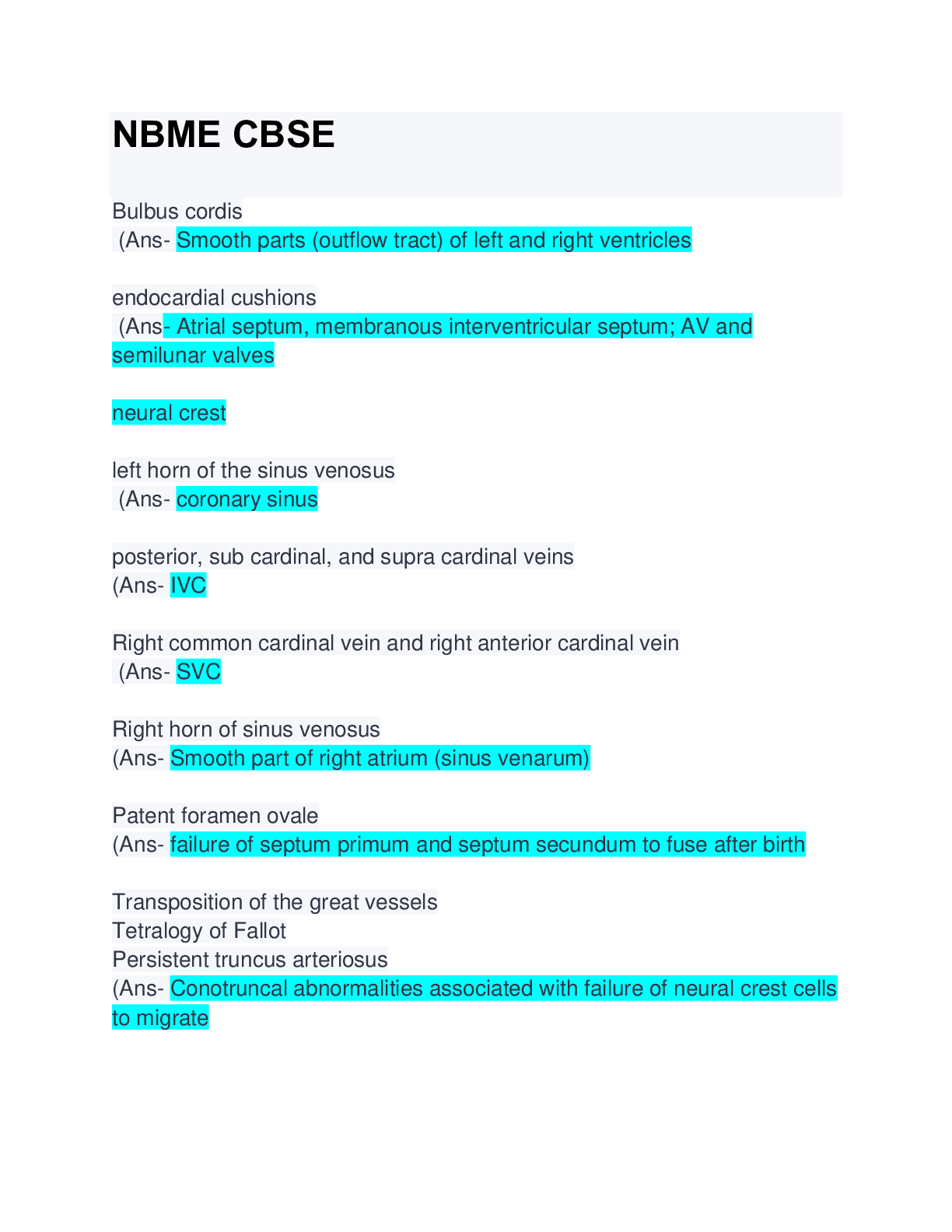
Bulbus cordis
(Ans- Smooth parts (outflow tract) of left and right ventricles
endocardial cushions
(Ans- Atrial septum, membranous interventricular septum; AV and semilunar valves
neural crest
left horn of the sinus venosus
(Ans- coronary sinus
posterior, sub cardinal, and supra cardinal veins
(Ans- IVC
Right common cardinal vein and right anterior cardinal vein
(Ans- SVC
Right horn of sinus venosus
(Ans- Smooth part of right atrium (sinus venarum)
Patent foramen ovale
(Ans- failure of septum primum and septum secundum to fuse after birth
Transposition of the great vessels
Tetralogy of Fallot
Persistent truncus arteriosus
(Ans- Conotruncal abnormalities associated with failure of neural crest cells to migrate
ductus venosus
(Ans- connects the umbilical vein to the inferior vena cava, bypassing the liver
becomes ligamentum venosum
phrenic nerve
(Ans- innervates the diaphragm and pericardium
S3 heart sound
(Ans- Increased ventricular filling pressure (e.g., mitral regurgitation, HF), common in dilated ventricles
normal in kids and pregnant women
S4 heart sound
(Ans- atrial kick late diastole, right before S1
best heard at apex in LLD position
High atrial pressure.
Stiff/hypertrophic ventricle (aortic stenosis, restrictive cardiomyopathy)
Always abnormal
atria contract
(Ans- a wave of JVP
c wave
(Ans- RV contraction (closed tricuspid valve bulging into atrium) wave of JVP
x descent
(Ans- JVP wave corresponding to downward displacement of closed tricuspid valve during rapid ventricular ejection phase
reduced or absent in tricuspid regurge
V wave
(Ans- JVP wave corresponding to inc'd RA pressure due to filling against closed tricuspid valve
y descent
(Ans- JVP wave corresponding to RA emptying into RV
absent in cardiac tamponade
plusus parvus et tardus
(Ans- pulses are weak with delayed peak
Aortic stenosis
PR interval
(Ans- 0.12-0.20 seconds
120 milliseconds
QT interval length
(Ans- 9 - 11 squares = .36 to .44 seconds
Hypokalemia
(Ans- U wave present on ECG
Mg sulfate
(Ans- for torsades de pointe, hypokalemia (can lengthen QT and cause torsades), and pre-eclampsia (prevent seizures)
[Show More]