NURSING > ATI Study Resources. > ATI 3.0 Maternal Newborn 1 Questions and Answers Graded A+ (All)
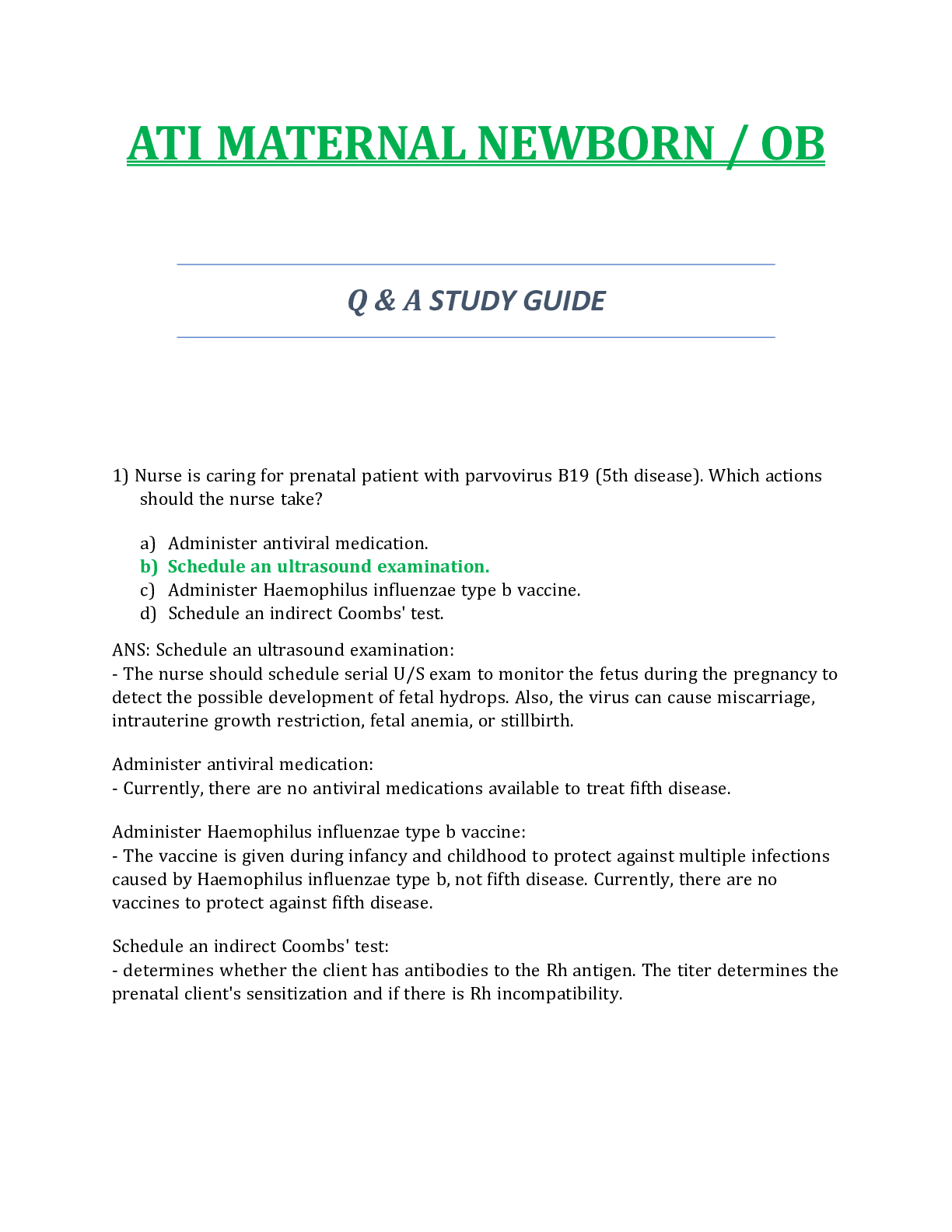
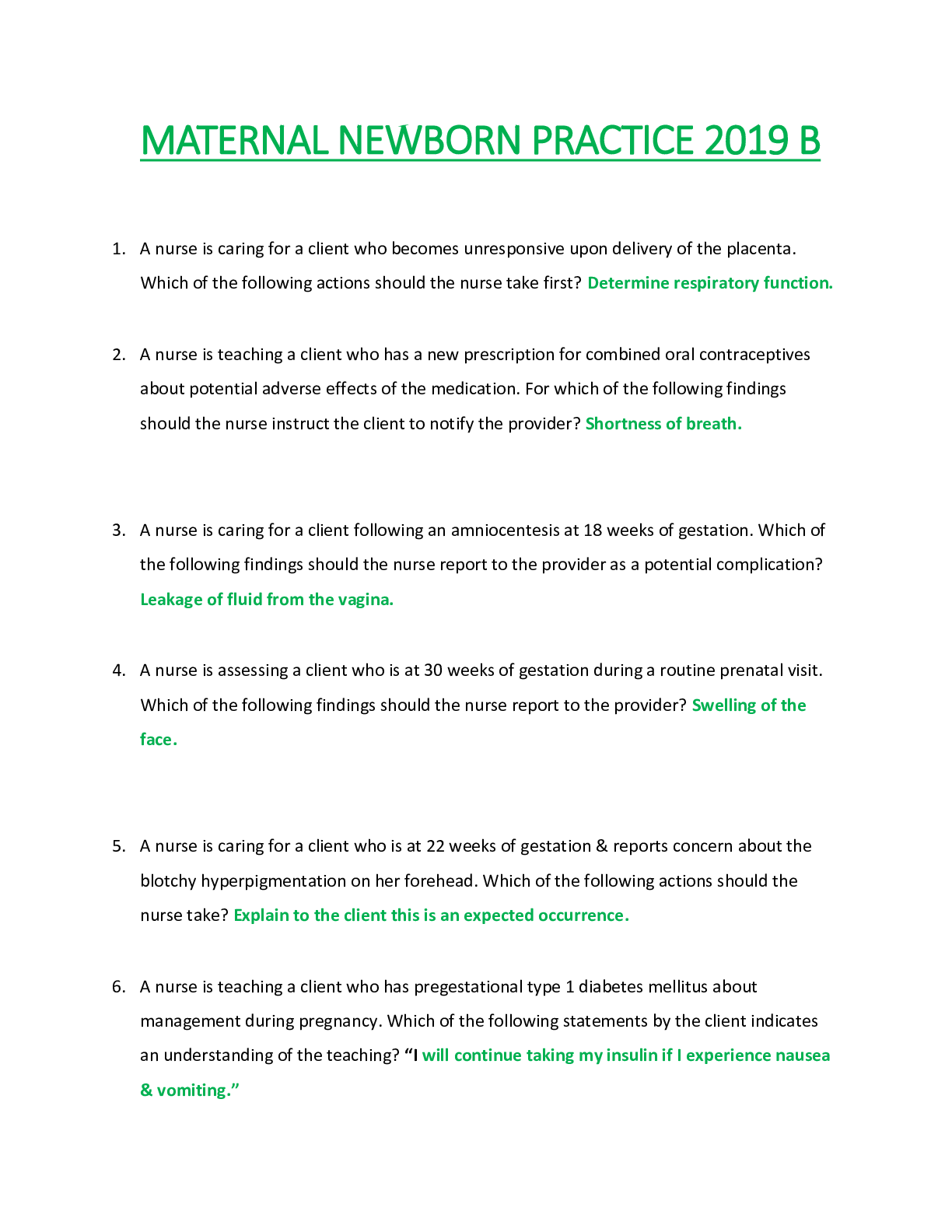
ATI 3.0 Maternal Newborn 1 Questions and Answers Graded A+
Document Content and Description Below
Last updated: 3 years ago
Preview 1 out of 12 pages
Instant download

Buy this Document to get the Full Access Instantly
Provided by Students Who Aced it
We Verify Document Content to Gurantee Accuracy
Also available in bundle (1)
Click Below to Access Bundle(s)

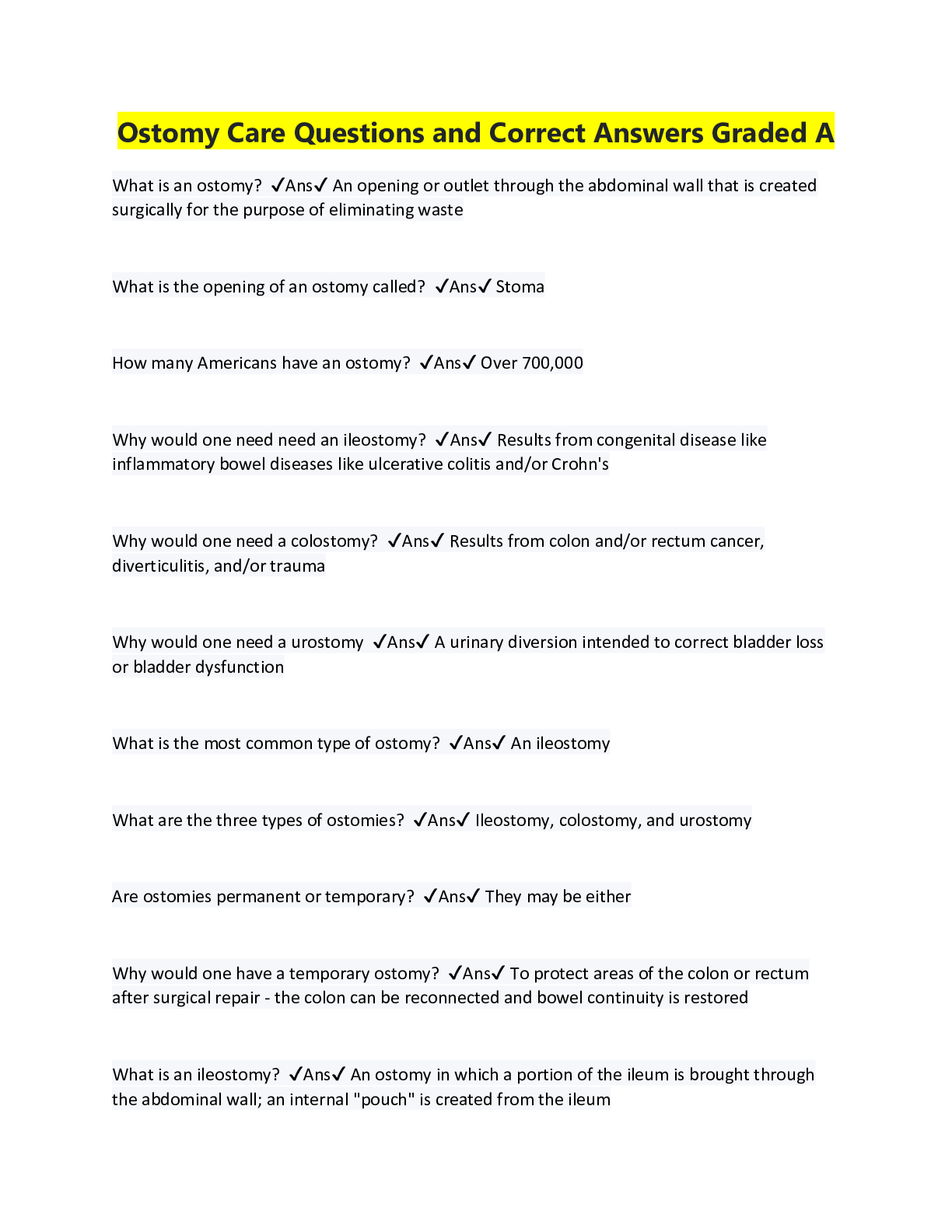
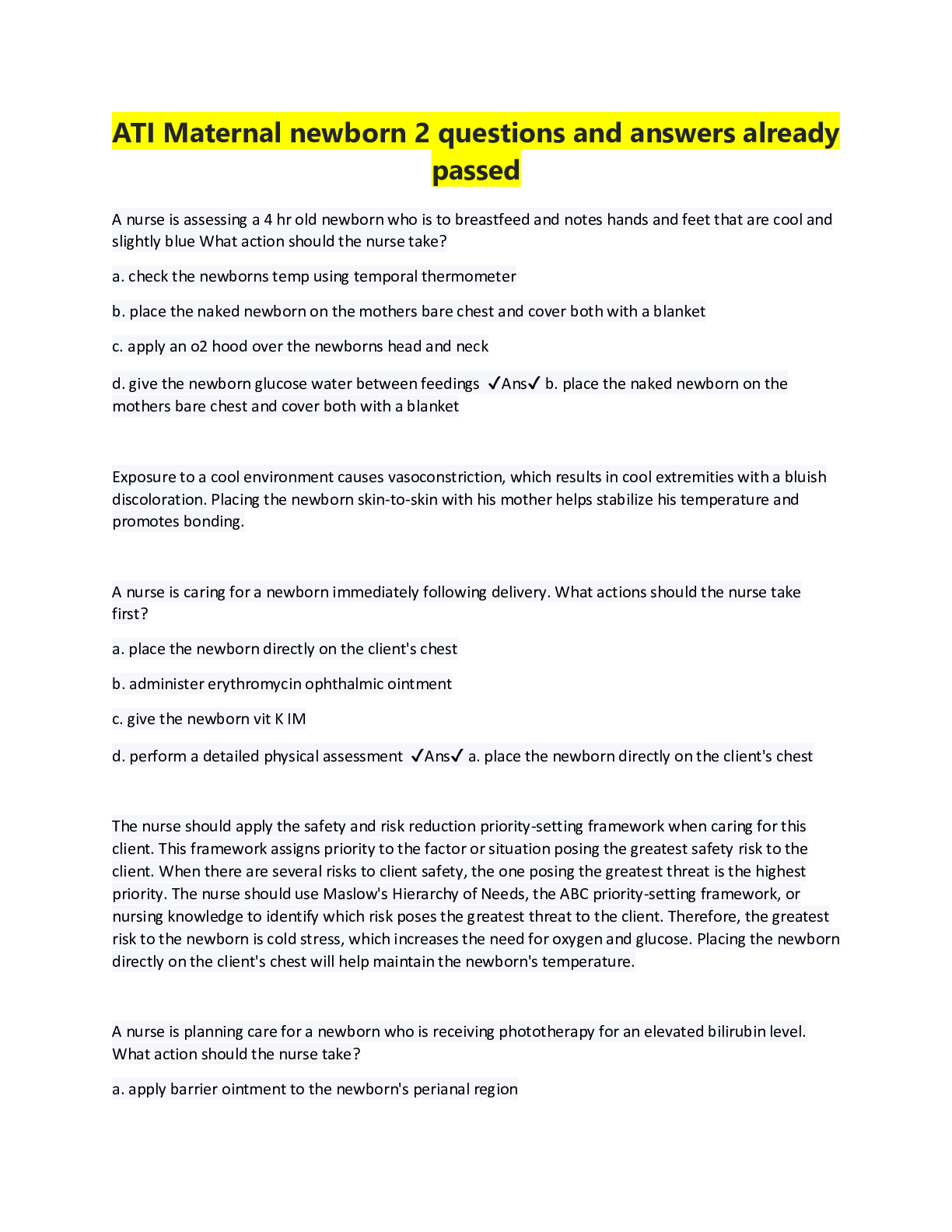
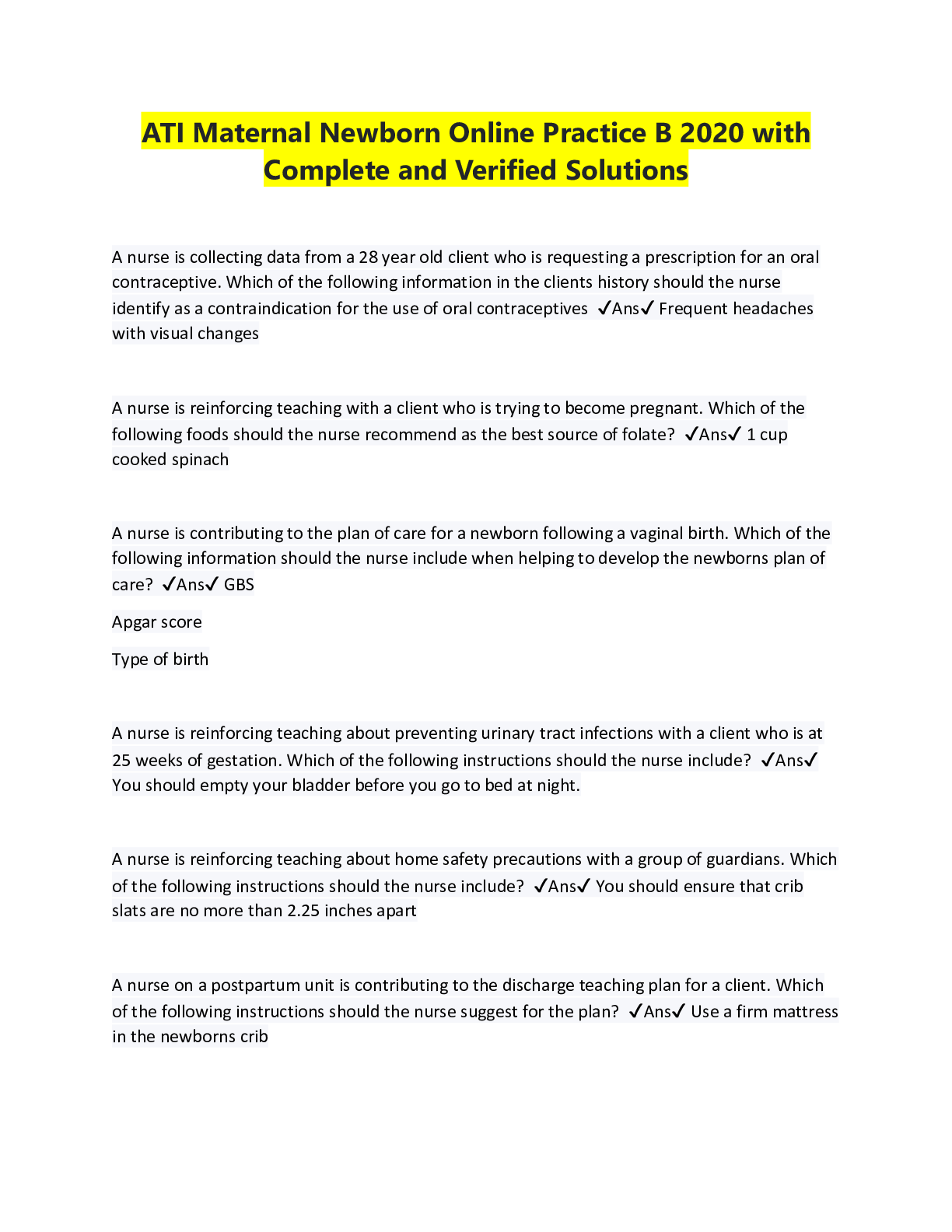
ATI Maternal Newborn Exams Bundled Together with complete solutions Questions and Answers (Verified Answers)(Full Solution Pack)
ATI Maternal Newborn Posttest Questions and Answers Graded A+ ATI Maternal Newborn Practice A Questions and Answers Graded A+ ATI Maternal newborn 2 questions and answers already passed ATI M...
By Crescent 3 years ago
$22
22
Reviews( 0 )
Document information
Connected school, study & course
About the document
Uploaded On
Feb 02, 2023
Number of pages
12
Written in
All

Additional information
This document has been written for:
Uploaded
Feb 02, 2023
Downloads
0
Views
206
Topic Tags
Recommended For You
Get more on ATI Study Resources. »
ATI MATERNAL NEWBORN PROCTORED EXAM | 33 VERSIONS Contains 260...
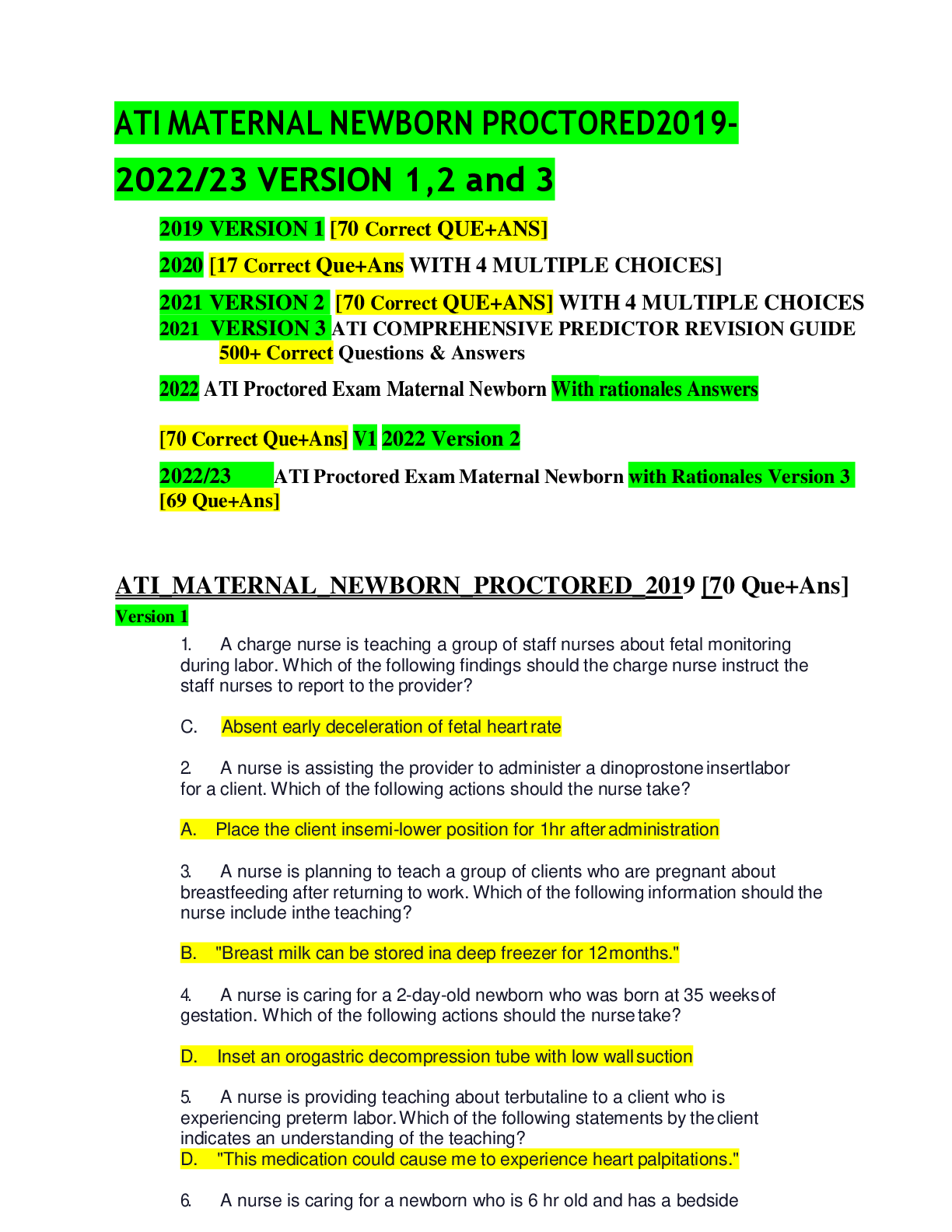
ATI MATERNAL NEWBORN PROCTORED EXAM WITH RATIONALES Version...
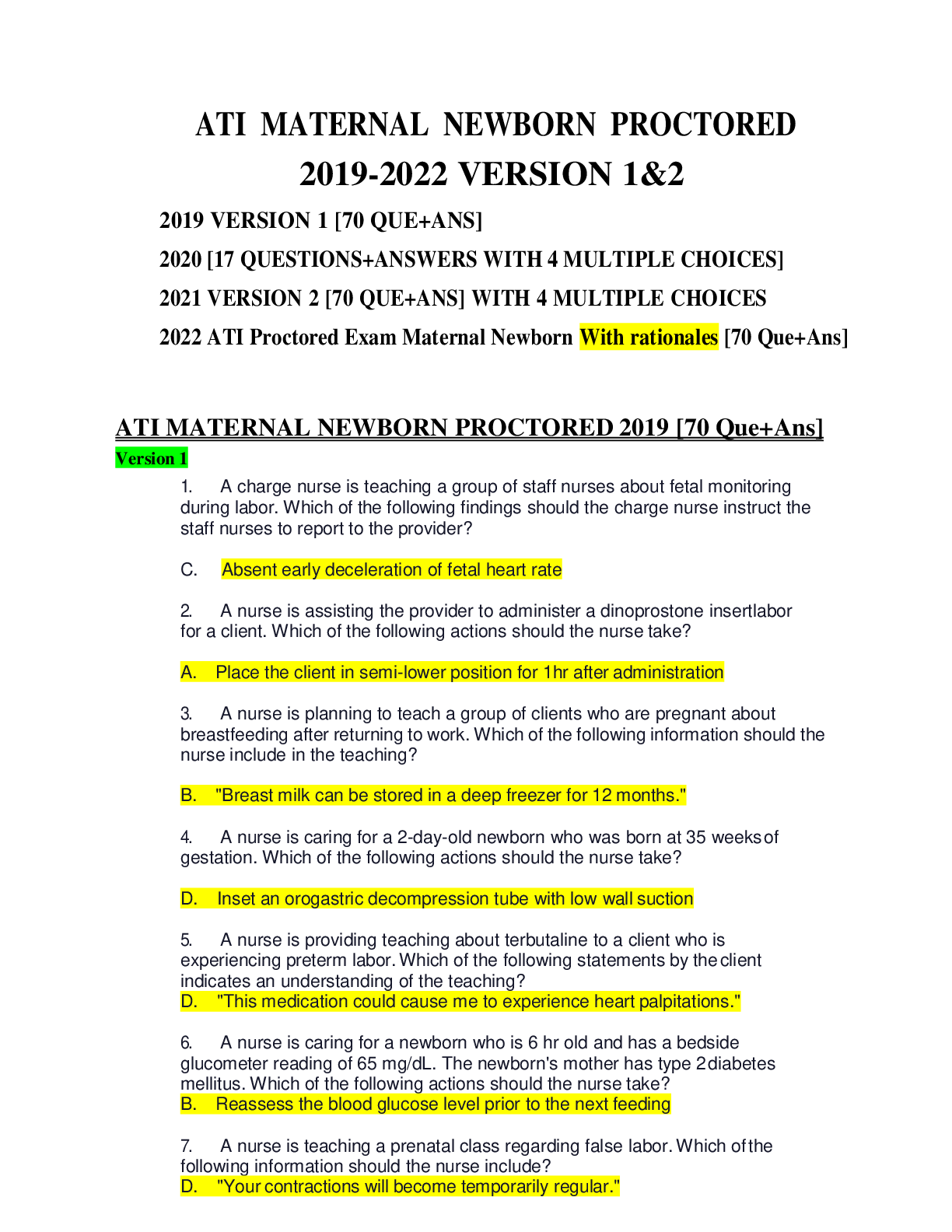
ATI MATERNAL NEWBORN PROCTORED EXAM WITH RATIONALES Version...
ATI PN Maternal Newborn Proctored Exam /PN ATI Maternal Newbor...

ATI Maternal Newborn Proctored Exam (2022/2023 TESTED & VERIFI...
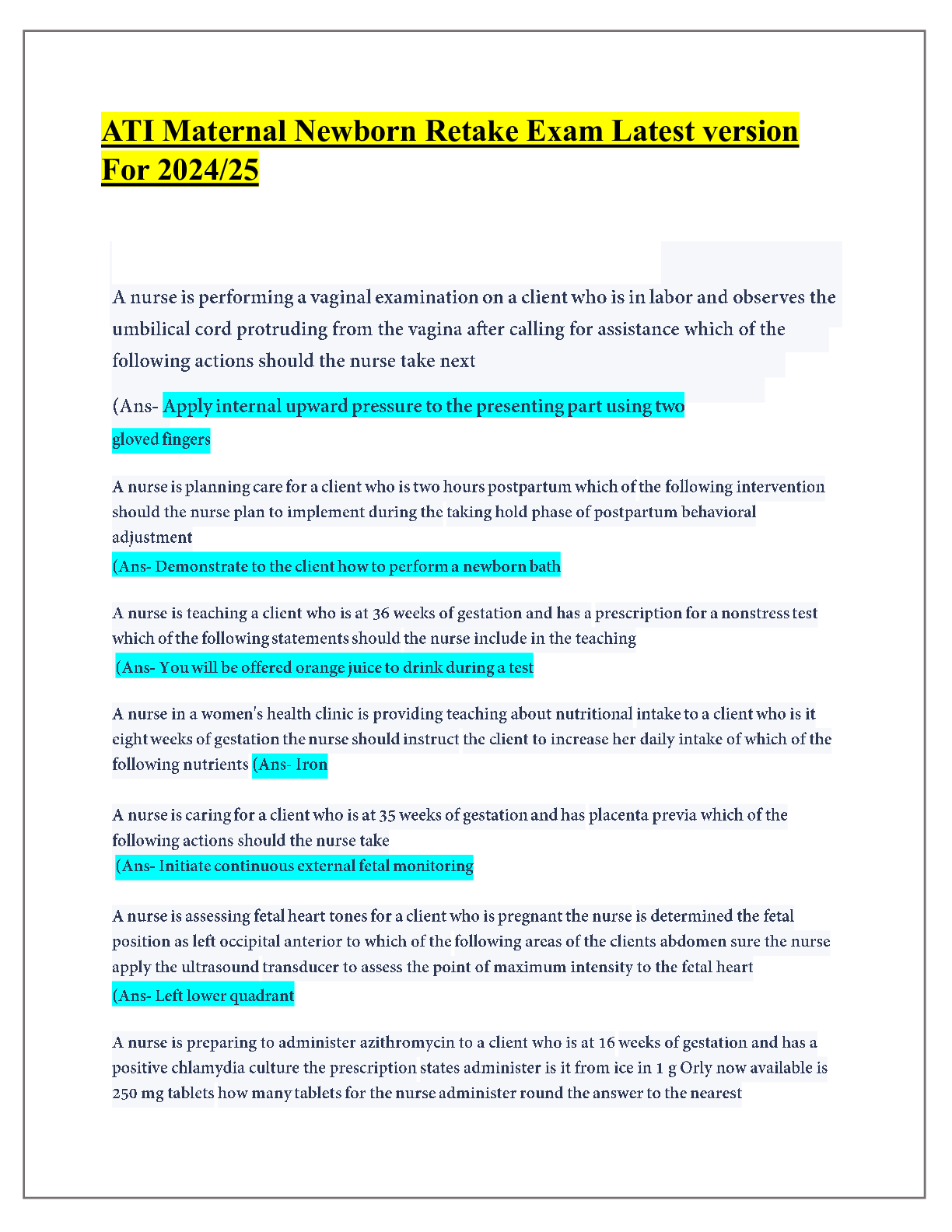

.png)
ATI Maternal Newborn Proctored Exam Study Guide ( 2021 / 2022)
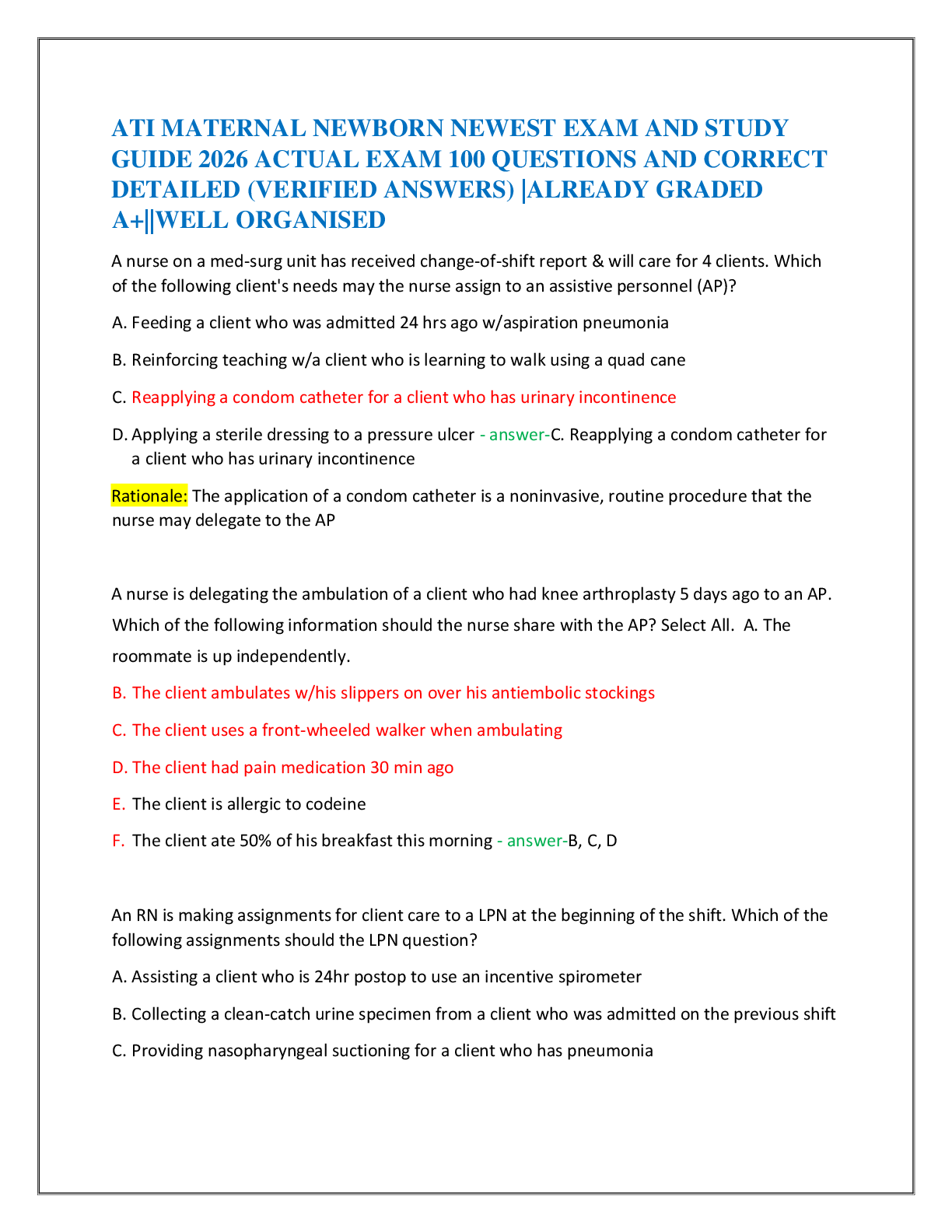

TEST BANK for Davis Advantage for Psychiatric Mental Health Nu...

Test Bank For Fundamentals of Nursing 11th Edition Potter Perr...

TEST BANK for Essentials of Psychiatric Mental Health Nursing:...
Essentials of Psychiatric Nursing 2nd Edition Boyd TEST BANK