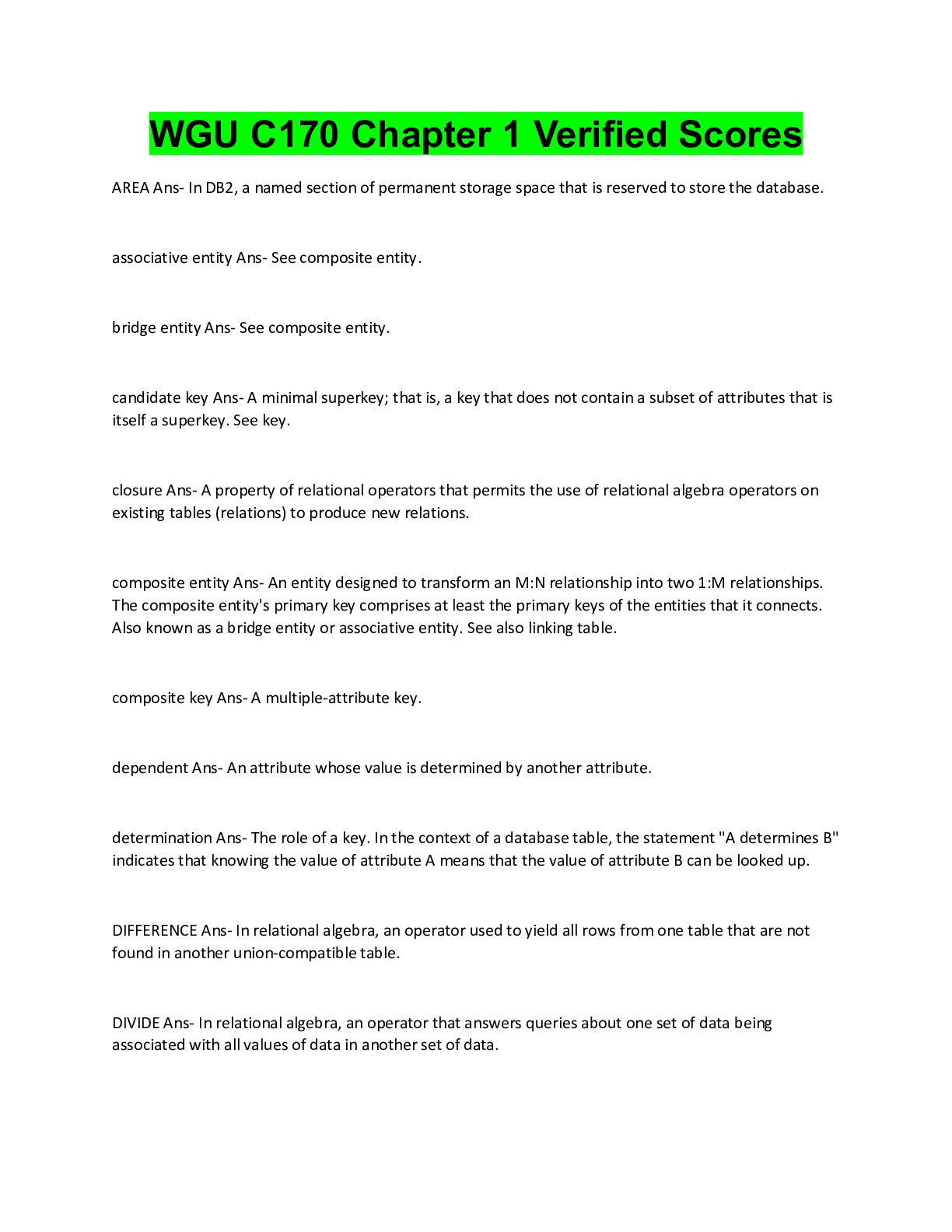
Foodborne Illness Ans- A disease carried or transmitted to people by food
Foodborne Illness Outbreak Ans- When two or more people experience the same illness after
eating the same food
High Risk Populations Ans- Infa
...
Foodborne Illness Ans- A disease carried or transmitted to people by food
Foodborne Illness Outbreak Ans- When two or more people experience the same illness after
eating the same food
High Risk Populations Ans- Infants, preschool age children, pregnant women, the elderly, people
taking meds, people who are ill
Temperature Control for Safety Ans- TCS
41-135 Ans- Danger Zone
TCS Foods Ans- Milk, eggs, shellfish, fish, meats, meat alternatives, untreated garlic and oil
mixtures, baked potatoes, raw sprouts, cooked rice, cut tomatoes, and cut melos
Biological, physical, chemical Ans- 3 types of contamination
Biological contaminants Ans- Bacteria, virus, parasites, fungi, natural toxins
Chemical contaminants Ans- Cleaners, sanitizers, toxic metal from Non Food Service Grade
utensils and cookware, pesticides
Physical contaminants Ans- Foreign objects
Top reasons for outbreak Ans- 1. Purchasing food from unsafe sources
2. Failing to cook food adequately
3. Holding food at incorrect temps
4. Contaminated equipment
5. Poor personal hygiene
TTC, cross contamination, poor personal hygiene Ans- 3 ways food becomes contaminated
Time- temperature abuse Ans- TCS foods are left in the danger zone for more than 4 hours
Cross contamination Ans- Contaminants cross to a food that is not going to be cooked any
further
Poor personal hygiene Ans- Food handlers cause foodborne illness
Foodborne infections Ans- When a person eats food containing pathogens
Foodborne intoxications Ans- Result when a person eats food containing pathogens, which then
grow in the intestines and cause illness
Bacteria Ans- Found everywhere and under favorable conditions, can grow rapidly
Food, Acidity, Temperature, Time, Oxygen, Moisture Ans- FATTOM
Viruses Ans- Practicing good personal hygiene and minimizing bare hand contact with ready to
eat food can help defend against
Fish toxins Ans- Scombroid and Ciguatera are
Approved supplier Ans- All produce should be purchased from an
Allergic reaction Ans- Itching, tightening of throat, wheezing, hives, swelling, diarrhea,
vomiting, cramps, and loss of consciousness are all signs of
Common food allergens Ans- Milk, dairy, eggs, shellfish, fish, wheat, soy, peanuts, and tree nuts
are all
100F Ans- When properly washing hands, water should be
4 Ans- Gloves must be changed every ___ hours or when starting a new task
Plain wedding band Ans- The only jewelry allowed is a ___
Restricted Ans- Employees with a sore throat with a fever should be ___ from working with or
around food
Excluded Ans- Employees with active Jaundice, diarrhea or vomiting should be ___ from
working with or around food
Contact the health department Ans- If employees are diagnosed with Salmonella, Shigella, E.
Coli, Hepatitis A, or Norovirus you should
Calibrated Ans- Thermometers should be ____ before each shift to ensure accuracy
Sensing area Ans- A bimetallic stemmed thermometer should be immersed in the product from
the tip to the end of the
Internal Ans- An infrared thermometer cannot be used to take the ___ temperature
Penetration Ans- ___ probe is used for internal temperature of food
Immersion Ans- ___ probe is used for liquids
Surface Ans- ___ probe is used for surface
False Ans- T or F: Glass thermometers can be used to measure food temperatures
Approved Supplier Ans- A ___ has been inspected and meets all applicable local, state, and
federal laws
41F or lower Ans- Cold TCS foods must be delivere
[Show More]


.png)