PEDIATRIC GASTROENTEROLOGY
1. Pediatric GI problems (bolded are more common)
a. GER / “reflux”
b. Vomiting
c. Constipation/Diarrhea
d. Pyloric stenosis
e. Peptic ulcer disease
f. Obstruction
i. Malrotation/volvul
...
PEDIATRIC GASTROENTEROLOGY
1. Pediatric GI problems (bolded are more common)
a. GER / “reflux”
b. Vomiting
c. Constipation/Diarrhea
d. Pyloric stenosis
e. Peptic ulcer disease
f. Obstruction
i. Malrotation/volvulus
ii. Intussusception
iii. Atresias/Webs
g. Meckel's Diverticulum
h. Hirschprung disease
i. GI bleeding
j. IBS
k. Inflammatory bowel
l. Appendicitis
2. Approaching the problem
a. Functional
i. Sxs without pathologic correlate (diagnosis of exclusion)
ii. Lab tests/ work up negative
iii. Variant of normal
1. Example constipation
b. Organic
i. Sxs caused by a distinct pathological entity
ii. Labs and workup indicative of underlying pathology
iii. Disease state -requires intervention
3. My tummy hurts
a. 10% healthy school-aged children 5-15yo will experience recurrent episodes of unexplained abdominal pain. – usually functional problem bc
unexplained
4. Symptoms
a. Pain
i. OPQRST: Sharp, Dull, cramping? changing? Progressing? Radiating?
ii. Abdominal Pain -Think outside the GI tract as well (organ system above and below), very vague
1. Strep Throat = Headache and stomachache for some
2. UTI
3. Kidney stone
4. Ovarian cyst, ectopic pregnancy, endometriosis
b. Vomiting
i. Effortless? Projectile (pyloric stenosis, malrotation)? bilious (green/yellow)? Bloody? With nausea or without? No nausea – think
CNS/tumor
c. Stool – frequency, consistency, color
i. Constipation
1. Hard, Encopresis, No stool
ii. Diarrhea
1. Bloody, watery
d. Other sxs?
5. A good history
a. Exacerbating (diet, activity, position) &
relieving factors
b. Does the patient have a good appetite;
are they feeding well?
c. Any dysuria or urinary frequency?
d. Is the patient passing a normal volume of urine?
i. Monitor for dehydration
ii. (In babies, are diapers wet?)
e. Any recent illnesses (specifically ask about
coughs, colds, sore throats, & GI upset)?
f. In older girls take a menstrual history (sexual hx
for males & females)
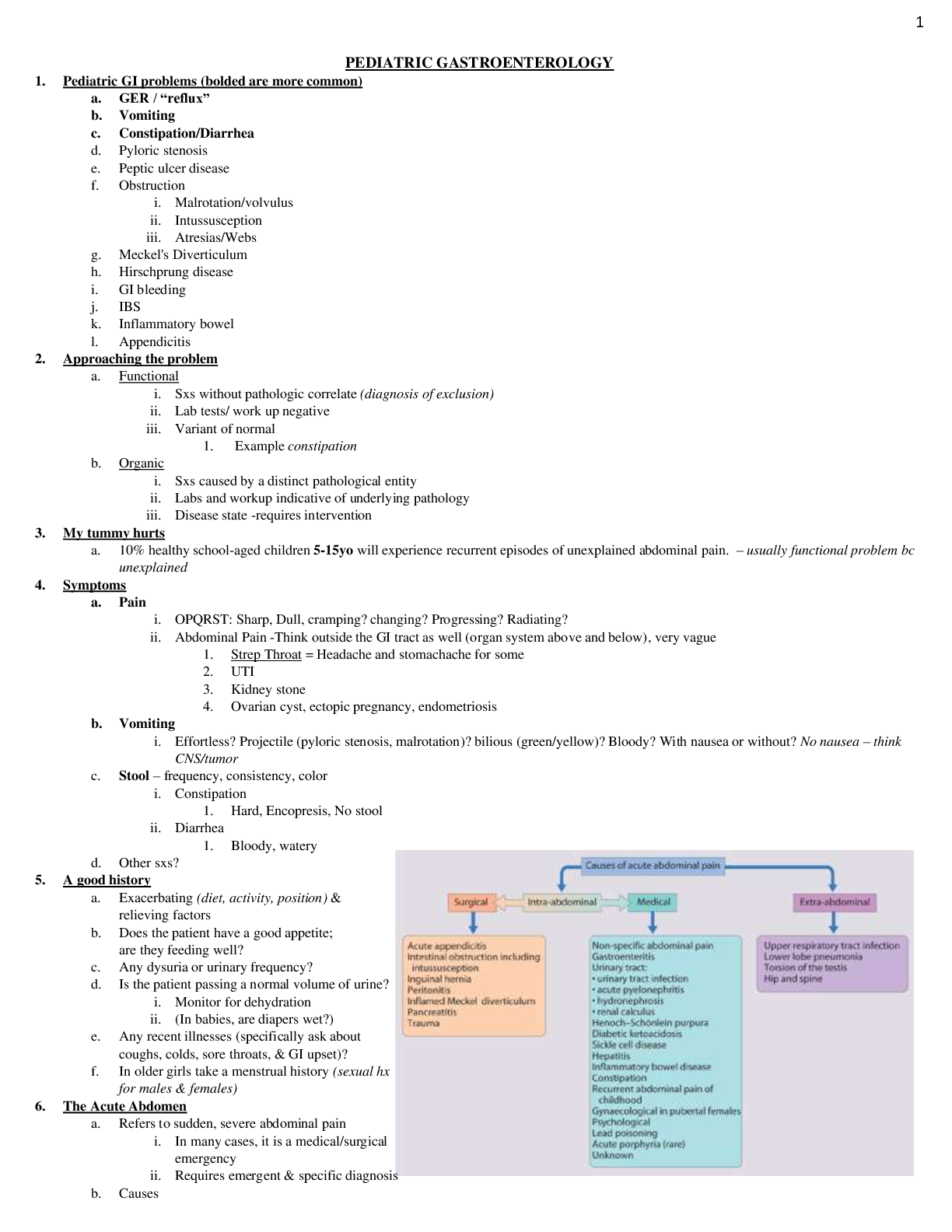
6. The Acute Abdomen
a. Refers to sudden, severe abdominal pain
i. In many cases, it is a medical/surgical
emergency
ii. Requires emergent & specific diagnosis
b. Causes
2
i. Young Children
1. Malrotation, intussusception, incarcerated hernia, congenital anomalies (usually result of obstruction or ischemia)
ii. Older Children
1. Appendicitis, mesenteric adenitis (usually result of obstruction, ischemia, or infection)
7. Chronic Abdominal Pain >3 months Acute abdominal pain: <1-month Persistent abdominal pain: 1-3 months
a. Chronic abdominal pain is functional 70-90% of time
i. Constipation, Irritable Bowel Syndrome (IBS), somatization of mental health issues
b. Organic 10-30% of time: (short list of causes, need to be r/o)
i. Gastritis/ulcer, Lactose intolerance, Parasites, Gall bladder disease, Celiac, IBD (autoimmune dz- fam hx important)
c. Tx: reassurance and explanation of functional pain
i. Fluids, diet, activity, sleep, emotions
8. Lab Tests
a. CBC – infection, inflammation, bleeding
b. CMP
i. (electrolytes + BUN/Cr) – hydration &/or electrolyte imbalances
ii. Bili/ALT /AST/ Alk Phos/ GGT (liver enzymes)
c. Coags: PT / PTT / Fibrinogen - to check bleeding and liver function
d. Amylase / Lipase – Pancreas
e. Specific testing
i. Celiac disease, viral hepatitis; pregnancy
f. Stool tests: Culture, Parasites, occlut blood
9. Studies
a. X-ray: Gas patterns, dilation, ileus, retained stool, obstruction (air fluid levels)
b. Barium Swallow or Barium Enema
i. Reflux, obstruction, malrotation, ulcer, certain IBD
ii. Colon size, obstruction, intussusception, US
iii. Pylorus, gallbladder, appendicitis
c. CT: Mass, appendicitis
d. Endoscopy: Gastritis, ulcers
10. Irritable Bowel Syndrome (IBS) AKA “Recurrent Abdominal Pain Syndrome of Childhood”
a. Familial association
b. Abnormal electrophysiology of bowel wall (may have switching of diarrhea & constipation)
i. Often have diarrhea as infants, constipation as older children
ii. Abdominal pain in early school years
c. Often stress-associated (type A personalities), risk of school avoidance
i. Rarely, if ever, awakens at night
d. Tx: education of functional pain
i. Important not to “medicalize”; Behavior modification, coping skills, distraction, CBT often helpful; Balanced diet helpful – no
specific food restrictions
11. Vomiting
a. Causes
i. Viral gastroenteritis (acute vomiting) is most common cause in childhood
ii. Can be obstruction (projectile), and acute or chronic inflammation of GI tract
iii. CNS inflammation, pressure or tumor - no nausea, just HA then vomit
iv. Metabolic derangements: IEM, sepsis, drug intoxication
b. Ddx by sxs
i. Projectile – high obstruction, i.e. pyloric stenosis
ii. Bilious – obstruction beyond ampulla of vater … duodenal, jejunal, ileal, colonic
1. Can be caused by malrotation
iii. Bloody – Mallory weiss tear, Gastritis, Peptic ulcer disease
c. Extra-GI causes
i. Viral Illness; Strep pharyngitis
ii. UTI (pyelonephritis); Otitis media
d. Neonates – Much greater concern (obstruction, met acidosis, sepsis, IEM very important to r/o)
i. Obstruction
1. Duodenal atresia and stenosis; Malrotation / volvulus; Pyloric stenosis- forceful, non-bilious
ii. Metabolic Acidosis
1. Sepsis; Metabolic disorders / Inborn errors of metabolism (IEM)
e. If Chronic vomiting, consider CNS tumor (no nausea)
f. If with pain or bilious emesis: bowel obstruction, peptic disorders, appendicitis
g. Physical Exam (extra-GI, depends on what you’re looking for)
i. Development: appropriate for age?
ii. General appearance, fontanelles
iii. Growth Charts for height, weight, FOC- excessive vomiting could lead to FTT
h. Labs: Electrolytes, BUN/Cr, CBC, UA/UC, amylase, lipase, LFTs
i. Imaging
3
i. US- pyloric Stenosis, gallstones, renal stones, Hydronephrosis, biliary obstruction, pancreatitis, appendicitis, malrotation,
intussusception
ii. CT appendicitis
j. Treatment: Treat underlying cause if identified; Management of fluid and electrolytes; Anti-emetics: very carefully
12. Diarrhea
a. Acute diarrhea nearly always infectious
i. Viral (most common infectious cause) – Norovirus, enteroviruses, Rotavirus
ii. Management is supportive – fluids, Na, K
1. Oral rehydration, starvation prolongs diarrhea; Avoid lactose is helpful
b. Rotavirus (potent vinegar odor)
i. Mainly infants 3-15mo
ii. Peaks in winter - Transmitted fecal-oral route
iii. Affects the small intestine
iv. Vomiting first in 80-90% pt followed by low fever
v. Large Volume watery diarrhea without leukocytes or blood follows vomiting
vi. Pt become dehydrated / hypernatremic, metabolic acidosis, ketosis from poor intake
c. Bacterial – Campylobacter, Salmonella, Shigella, E. coli, Yersinia, C diff
i. Suspect if blood in stool (effect large intestine: colitis); if exposure
1. Foreign travel, contaminated water/food, sick pets
ii. Shigella dysenteriae, Shigatoxin producing bacteria (E coli O157:H7)
1. Hemolytic Uremic Syndrome potential complication
iii. Pseudomembranous colitis by Clostridium difficile - 0.2-10% pt taking antibiotics
1. Fever, tenesmus, abdominal pain with diarrhea
2. Tx: oral metronidazole (or vanc $$)
iv. CBC, stool culture, C. dif toxin EIA
v. Tx depending on cause
1. No antidiarrheal medications- ineffective, poss worsening illness
2. No treatment with antibiotics except for Cdiff (can release toxins and make things worse)
d. Chronic diarrhea
i. If healthy appearing – Often functional issue
1. Normal 5-8 stools /day for infants
ii. If weight loss, growth failure, ill – probably organic cause
iii. Functional causes
1. Irritable bowel syndrome; Toddler’s diarrhea (too much intake of fluid, sugar, or both)
iv. Organic causes
1. Food allergies Inflammatory bowel dz
2. Malnutrition Hirschprung’s dz
3. Impaction Immune deficiency syndromes
4. Malabsorption
a. Lactose Intolerance; Celiac disease; Cystic fibrosis; steatorrhea
13. Constipation – often functional issue (holding in their stool, hurts, hold stool even more, cyclical)
a. 10% of children seek medical attention for Constipation
b. 2
nd most common cause of referrals to Peds GI.
c. Chronic constipation defined as 2 or more of the
following for 2 months:
i. < 3 BM/Wk
ii. > 1 episode of encopresis/wk (involuntary passage
of stool, especially large/hard/impacted or watery)
iii. impaction of rectum with stool
iv. stool that plugs toilet
v. retentive posturing and fecal withholding (obvious
they are holding in poop)
vi. pain with defecation
d. Functional – most childhood constipation
i. Withholding
ii. Slow transit times (Irritable Bowel Syn.)
1. Absorb more water in LI
iii. Diet – high fat, low fiber. Low fluid intake
e. Organic
i. Hirschprung's disease (obstruction)
1. Lacking innervation of part of intestine
ii. Absence of Meissner and Auerbach plexi
iii. Sympathetic hyperactivity leading to tonic contraction (doesn’t relax)
iv. Hypothyroidism, cystic fibrosis, anorectal malformation
f. Encopresis
i. Chronic constipation w/ dilatation of rectal ampulla & fecal soiling, leads to loss of peristalsis and normal bowel habits
4
Type 1 or 2: constipation
Type 3 or 4: normal
Type 5 or 6: diarrhea
ii. Requires stool evacuation followed by chronic management to avoid reaccumulation of stool
iii. Long term laxative use, stool softeners important
14. Treatment – nonpharmacological/lifestyle
a. Diet
i. Whole grains, fruits, and vegetables, water/fluids
ii. Recommended fiber amount adds 5 to age until 15 then adult amount.
iii. Sorbital-containing fluids (prune or apple juice); Consider milk elimination trial
b. Behavior Modification-based on age and individual factors
i. Regular sitting on toilet for 5-10minutes after meals/ gastrocolic reflex. Make sure child has a stepstool if they cannot touch the floor
ii. Motivation-rewards
iii. Diary/calendar with stickers
15. Treatment – Medical
a. Laxatives
i. Osmotic - pushes fluid into GI tract
1. Lactulose
2. Magnesium hydroxide
3. Magnesium citrate
4. PEG 3350 (polyethylene glycol, MiraLax, Glycolax)-mix in smallest amount of fluid like water or crystal light
a. higher doses of medicine for cleanout. Dose can then be titrated down depending on stool consistency. Ideal
consistency- Soft mushy banana or peanut butter like.
5. Osmotic enema-phosphate enemas
6. Lavage-Polyethylene glycol-electrolyte solution (GoLytely)
7. Lubricant-Mineral oil lubricate GI tract to increase mvmt
8. Stimulants – can cause cramping & abdominal pain, avoid
9. Senna-Little tummies
10. Bisacodyl
11. Glycerin suppositories – cause stimulant & osmotic effect
[Show More]