BCAT CERTIFICATION TEST 100% CORRECT ANSWERED 2023
Document Content and Description Below
BCAT CERTIFICATION TEST 100% CORRECT ANSWERED 2023
Elapsed time from the onset of a stimulus to the initiation of a response --------Latency
ranging, for example, from abnormal social approach and failure of normal b
...
[Show More]
Last updated: 3 years ago
Preview 1 out of 12 pages
Instant download

Buy this Document to get the Full Access Instantly
Provided by Students Who Aced it
We Verify Document Content to Gurantee Accuracy
Reviews( 0 )
Document information
Connected school, study & course
About the document
Uploaded On
Mar 03, 2023
Number of pages
12
Written in
All

Additional information
This document has been written for:
Uploaded
Mar 03, 2023
Downloads
0
Views
128
Topic Tags
Related Subjects & Courses
Explore similar study resources and related concepts.
Recommended For You
Get more on EXAM »
$5
3 Pages
Sere 100.2 Post Test 100% | 33 Questions with 100% Correct Ans...
$20
170 Pages
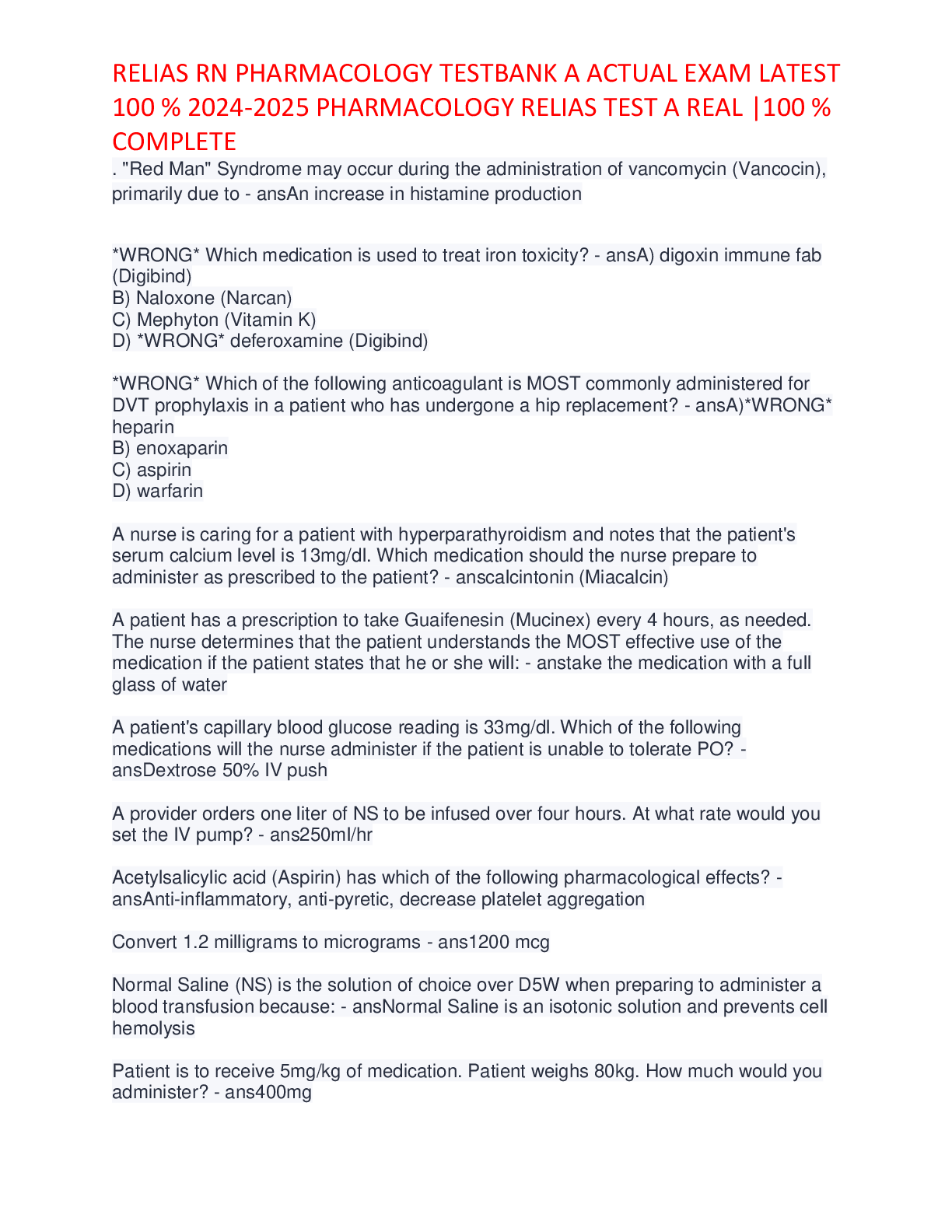
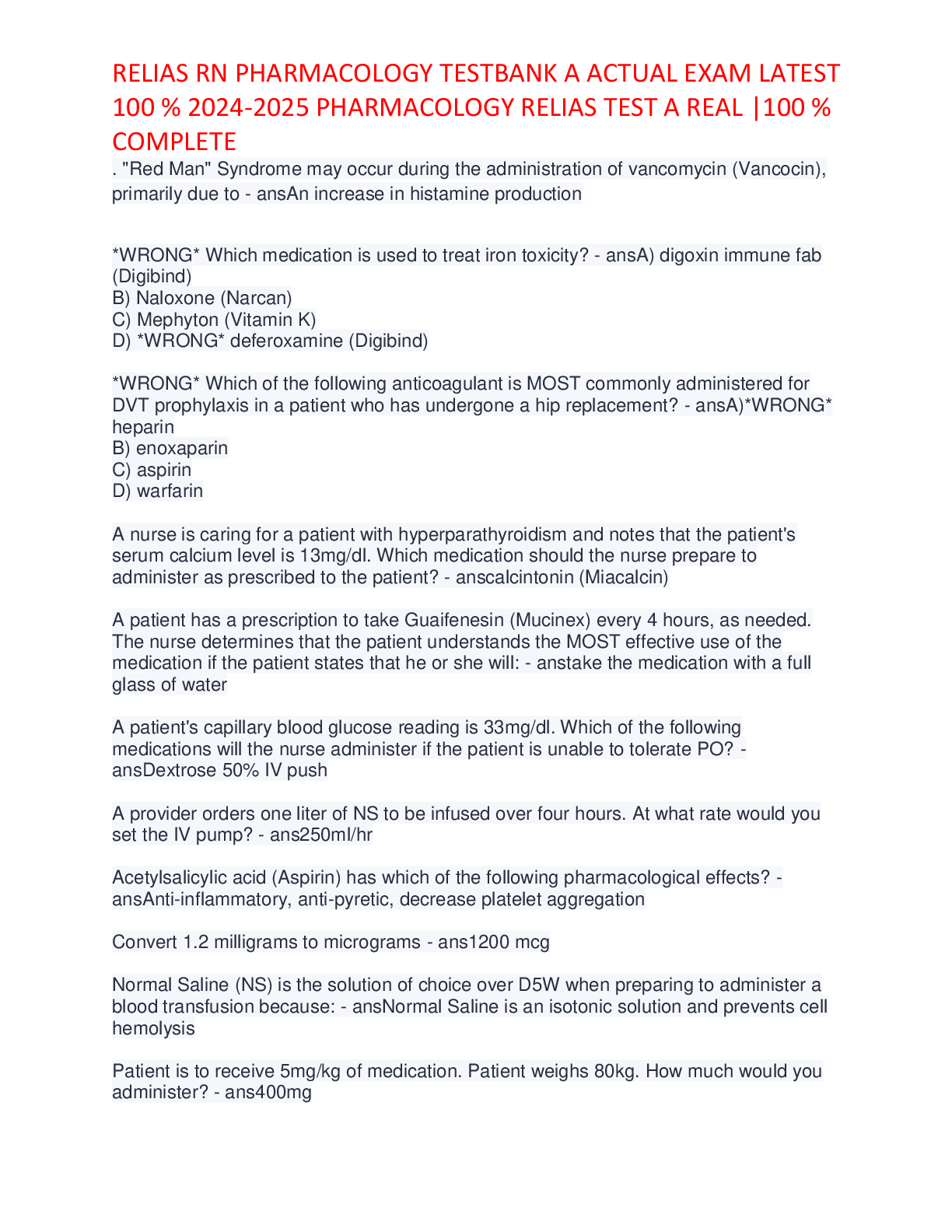
RELIAS RN PHARMACOLOGY TESTBANK A ACTUAL EXAM LATEST 100 % 20...
$18
6 Pages
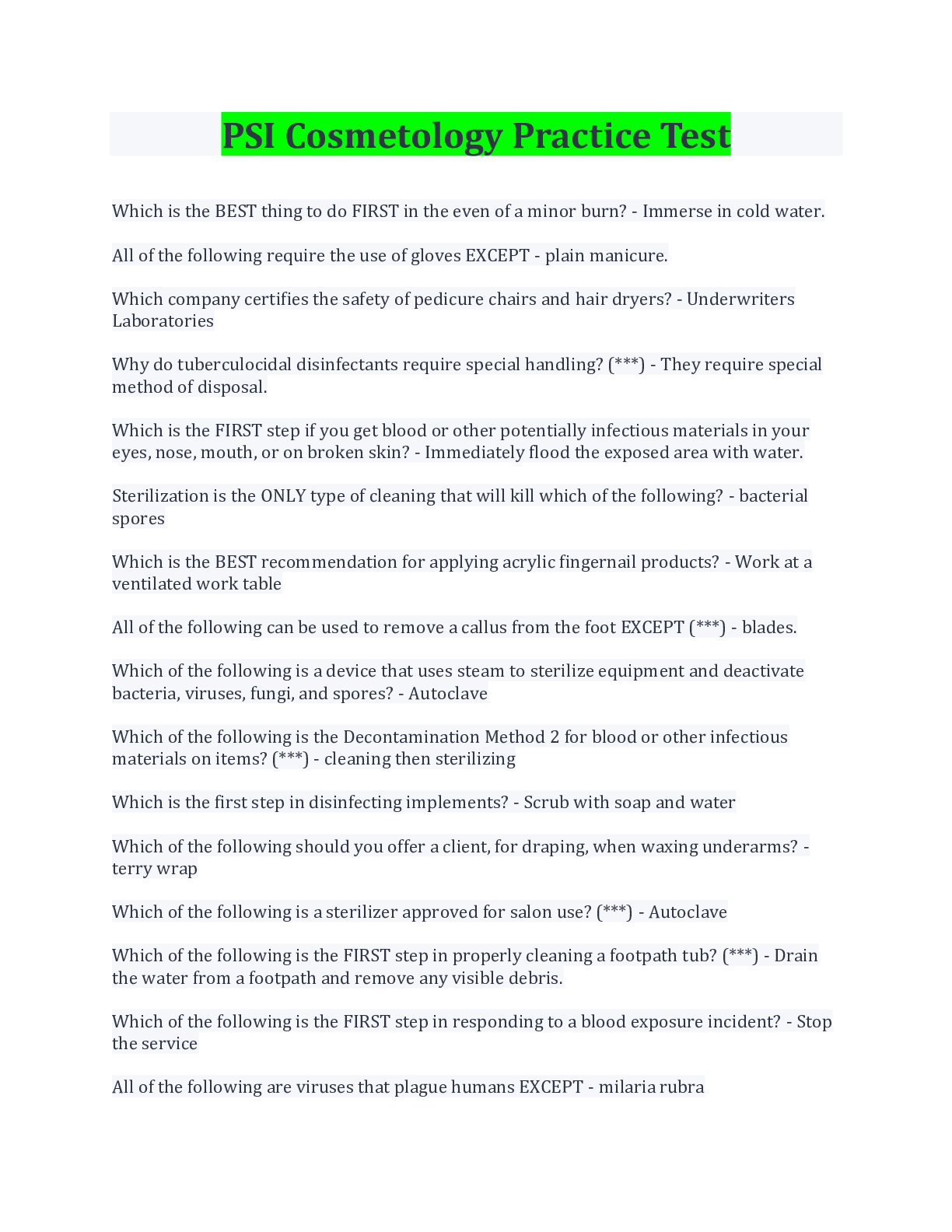
PSI Cosmetology Practice Test 100 questions (and correct answe...

$17
39 Pages
MATERNITY AND PEDIATRIC NURSING 3Ed. by RICCI TEST BANK|LATEST...

$11
301 Pages
HESI Exit RN Test bank Over 700 Questions, Answers Rationale N...


$13.5
14 Pages
ATI RN MEDSURG PROCTORED EXAM- LATEST 100% CORRECT STUDY GUIDE...

$10.5
41 Pages
NR 509 Midterm Study Guide Week 3 ALL SOLUTION SPRING-FALL 202...

$6
6 Pages
Comptrollers Fiscal Law - Module I & II Test - 100% Correct
$25
107 Pages
The Law of Public Communication, 12th Edition William, Daxton...
$25
80 Pages
Briefs of Leading Cases in Law Enforcement, 10e Rolando Del Ca...
More related documents below