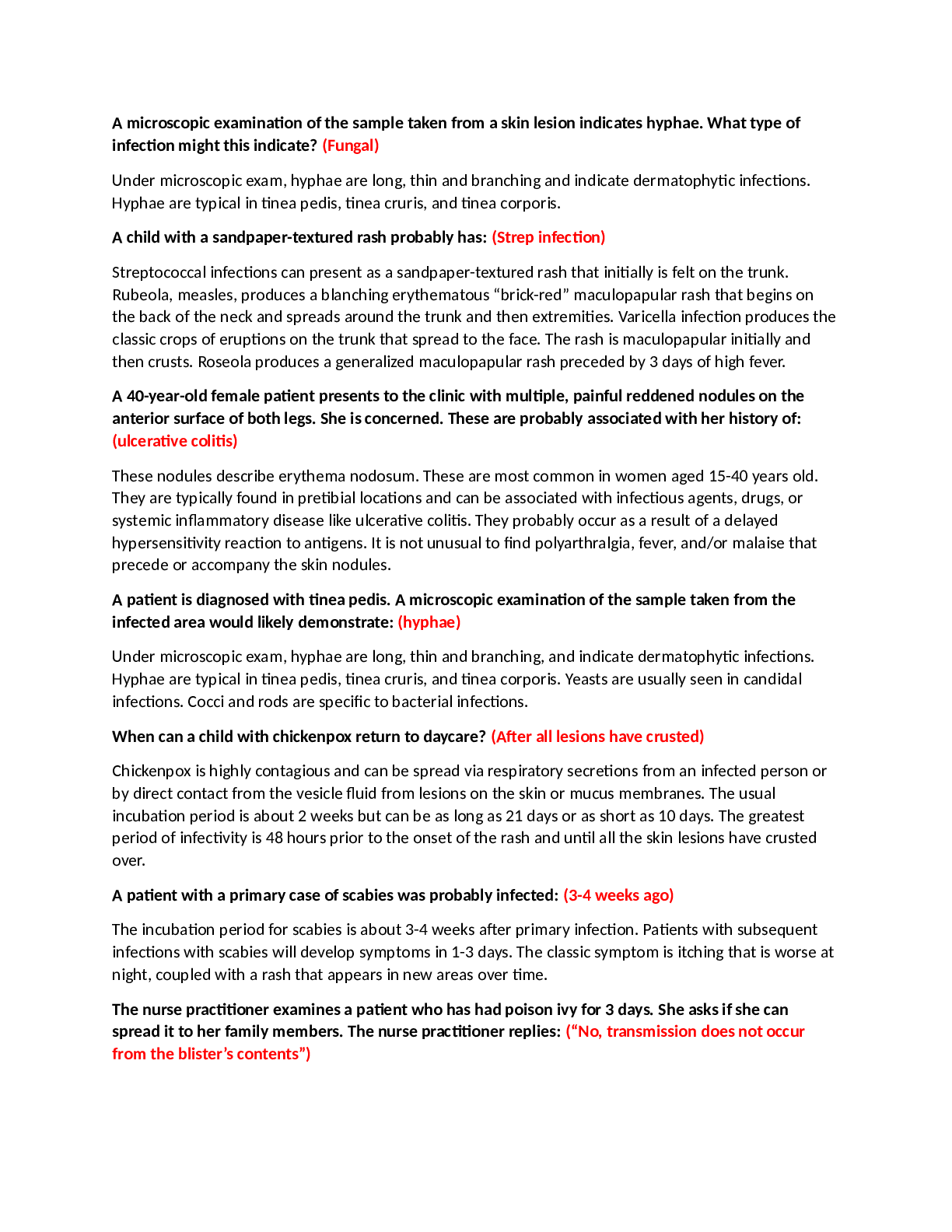
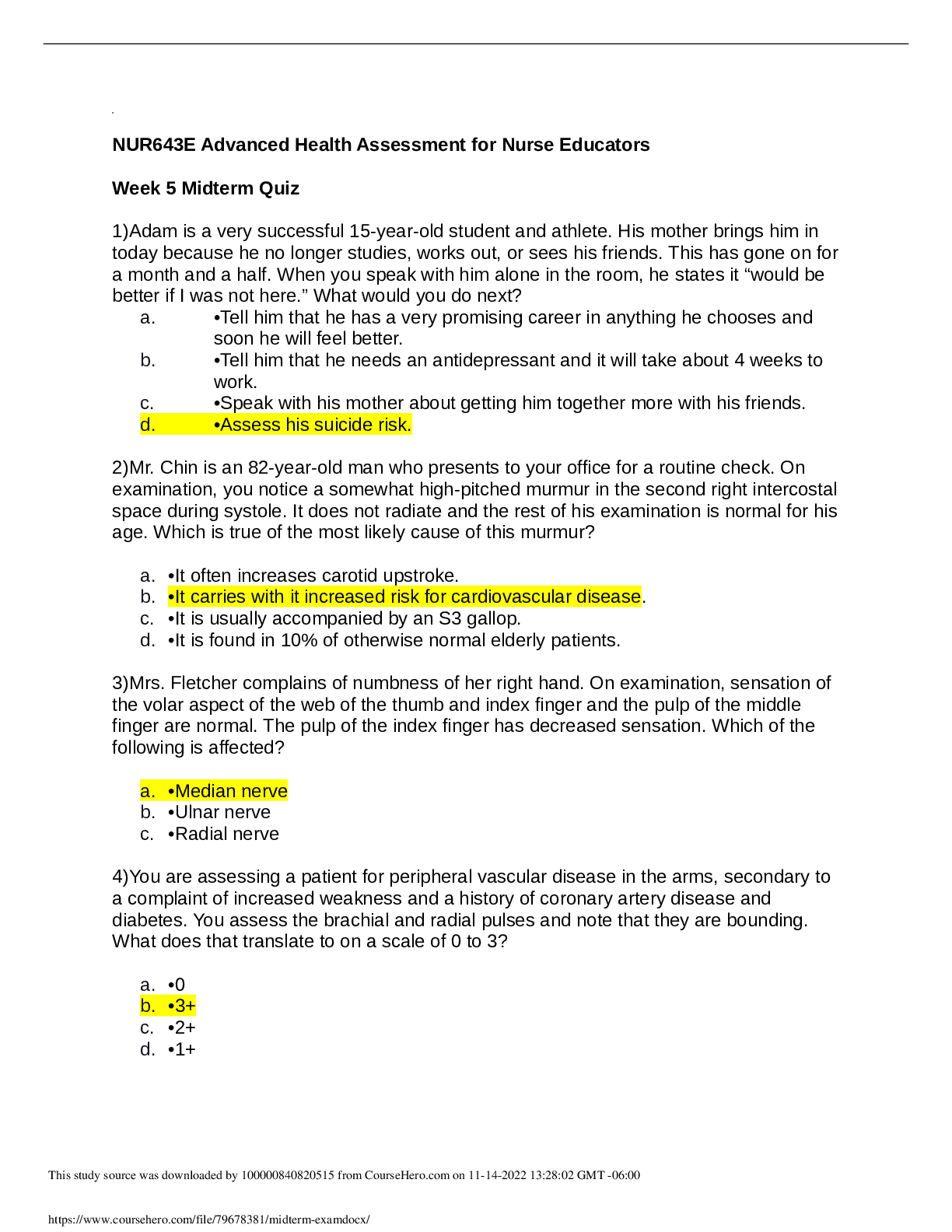
Physiology > QUESTION PAPER (QP) > Sample NBME Family Medicine Shelf Exam Questions (All)
Sample NBME Family Medicine Shelf Exam Questions
Document Content and Description Below
Last updated: 3 years ago
Preview 1 out of 13 pages
Instant download

Buy this Document to get the Full Access Instantly
Provided by Students Who Aced it
We Verify Document Content to Gurantee Accuracy
Reviews( 0 )
Document information
Connected school, study & course
About the document
Uploaded On
Mar 05, 2023
Number of pages
13
Written in
All

Additional information
This document has been written for:
Uploaded
Mar 05, 2023
Downloads
0
Views
184
Topic Tags
Recommended For You
Get more on QUESTION PAPER (QP) »
Test Bank for Psychology in Your Life 2nd Edition by Sarah Gri...
TEST BANK for Human Physiology: An Integrated Approach 6th Edi...
TEST BANK for Human Physiology: An Integrated Approach 8th Edi...

Social Psychology, 5e Tom Gilovich, Dacher Keltner, Serena Che...
Test Bank for Human Physiology; From Cells To Systems, 5th Can...

Exam II Study Guide - Psych 3460 - Intro to Health Psychology...
.png)
University of Rochester - BCS 110BCS Notes 110 BEST STUDY NOTE...