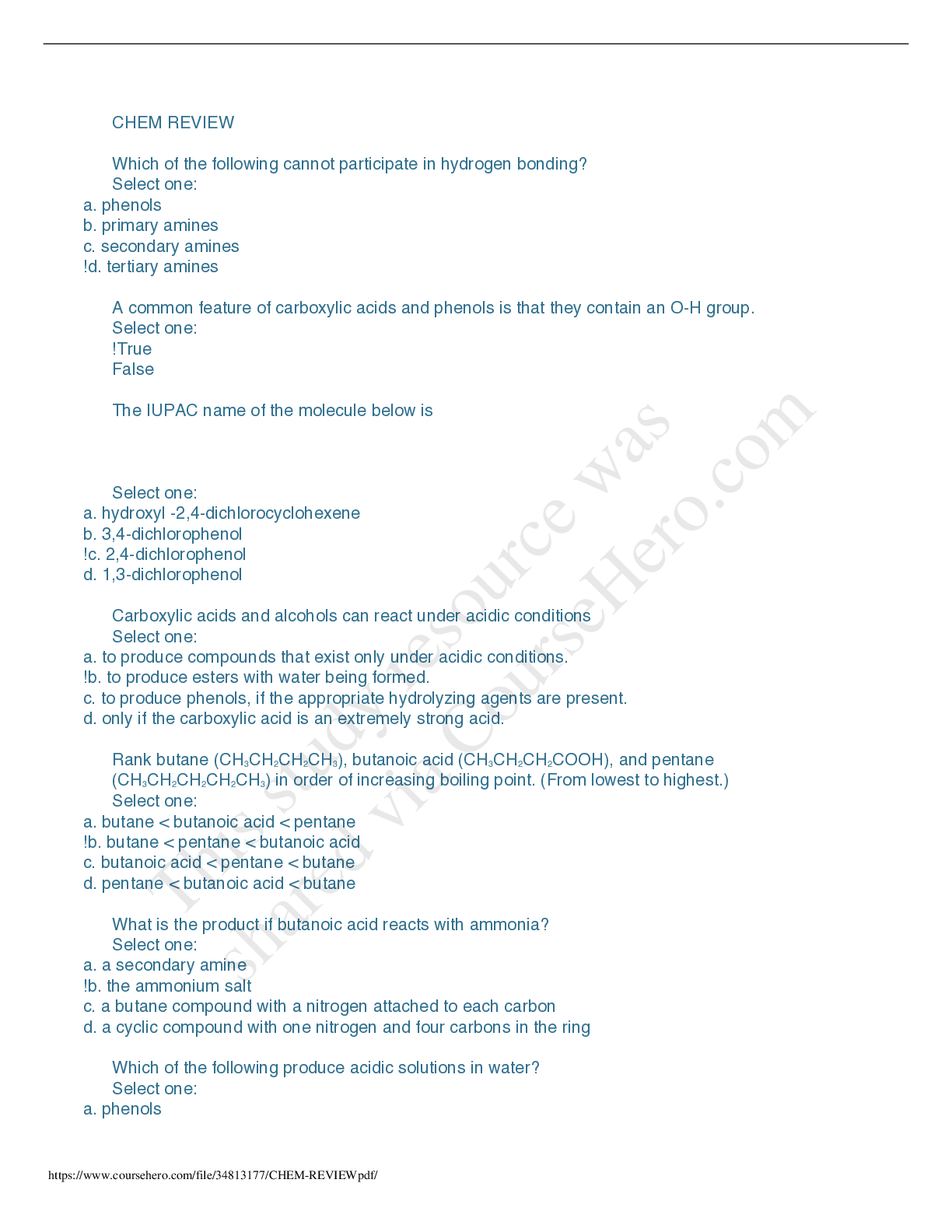
Chemistry > QUESTIONS & ANSWERS > CHEM 115CHEM REVIEW. Questions and Answers. (All)
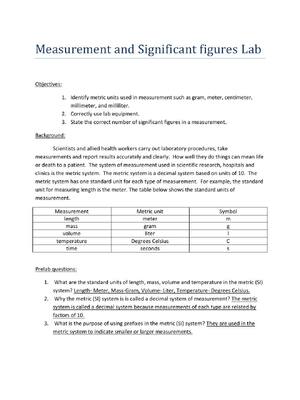
CHEM 115CHEM REVIEW. Questions and Answers.
Document Content and Description Below
Last updated: 4 years ago
Preview 1 out of 2 pages
Instant download
Buy this Document to get the Full Access Instantly
Provided by Students Who Aced it
We Verify Document Content to Gurantee Accuracy
Reviews( 0 )
Document information
Connected school, study & course
About the document
Uploaded On
Jan 31, 2021
Number of pages
2
Written in
All

Additional information
This document has been written for:
Uploaded
Jan 31, 2021
Downloads
0
Views
112
Topic Tags
Recommended For You
Get more on QUESTIONS & ANSWERS »
Test Bank For Petrucci General Chemistry Principles and Modern...
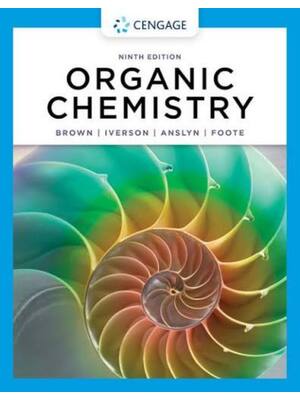
Test Bank For Organic Chemistry 9th Edition By William Brown,...
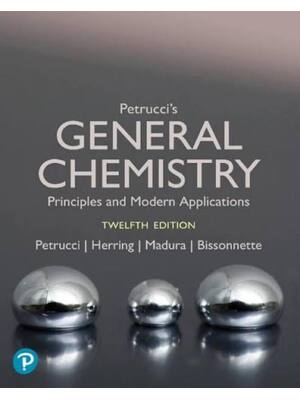
Solution Manual For Petrucci General Chemistry Principles and...
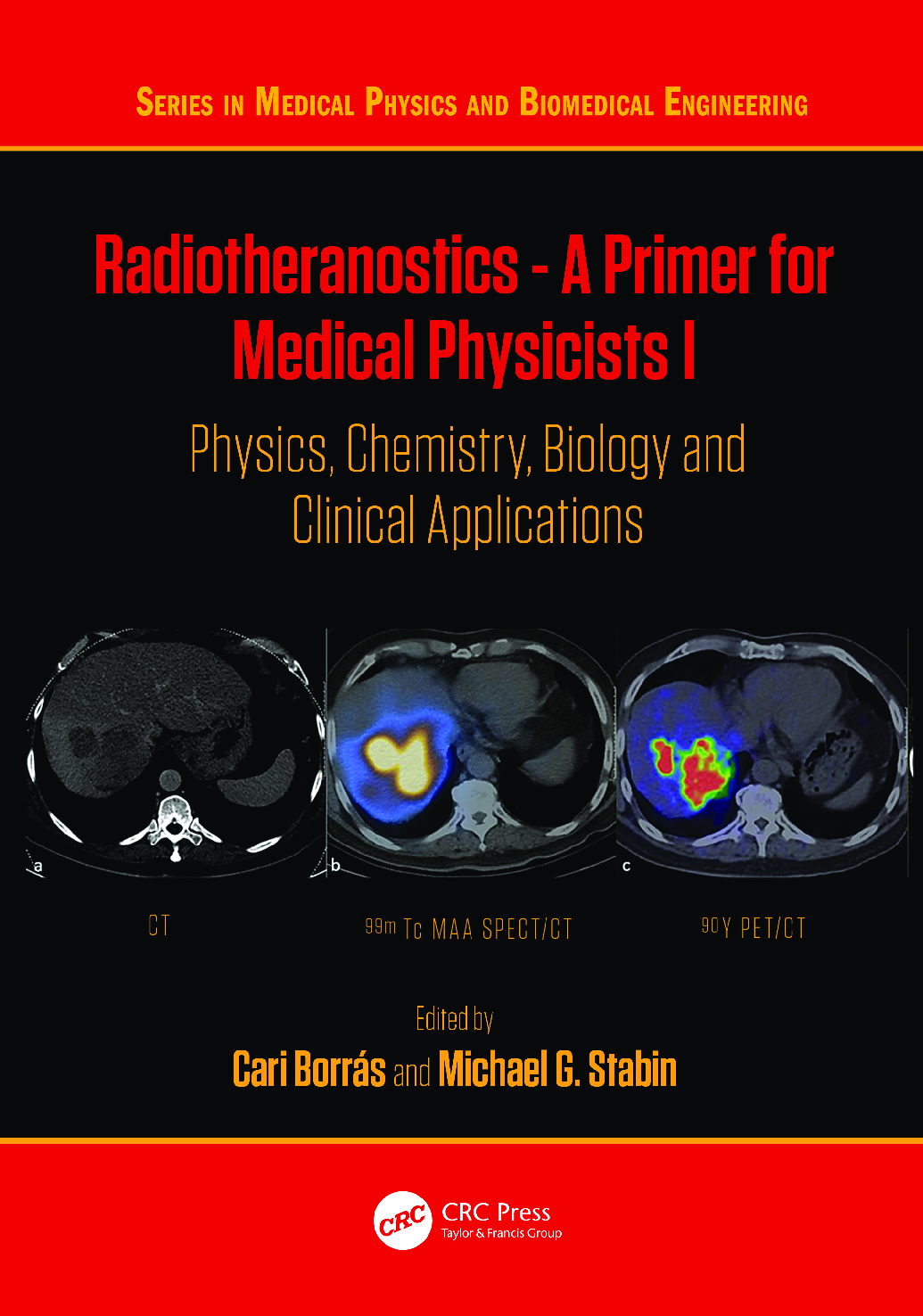
eBook [PDF] Radiotheranostics A Primer for Medical Physicists...
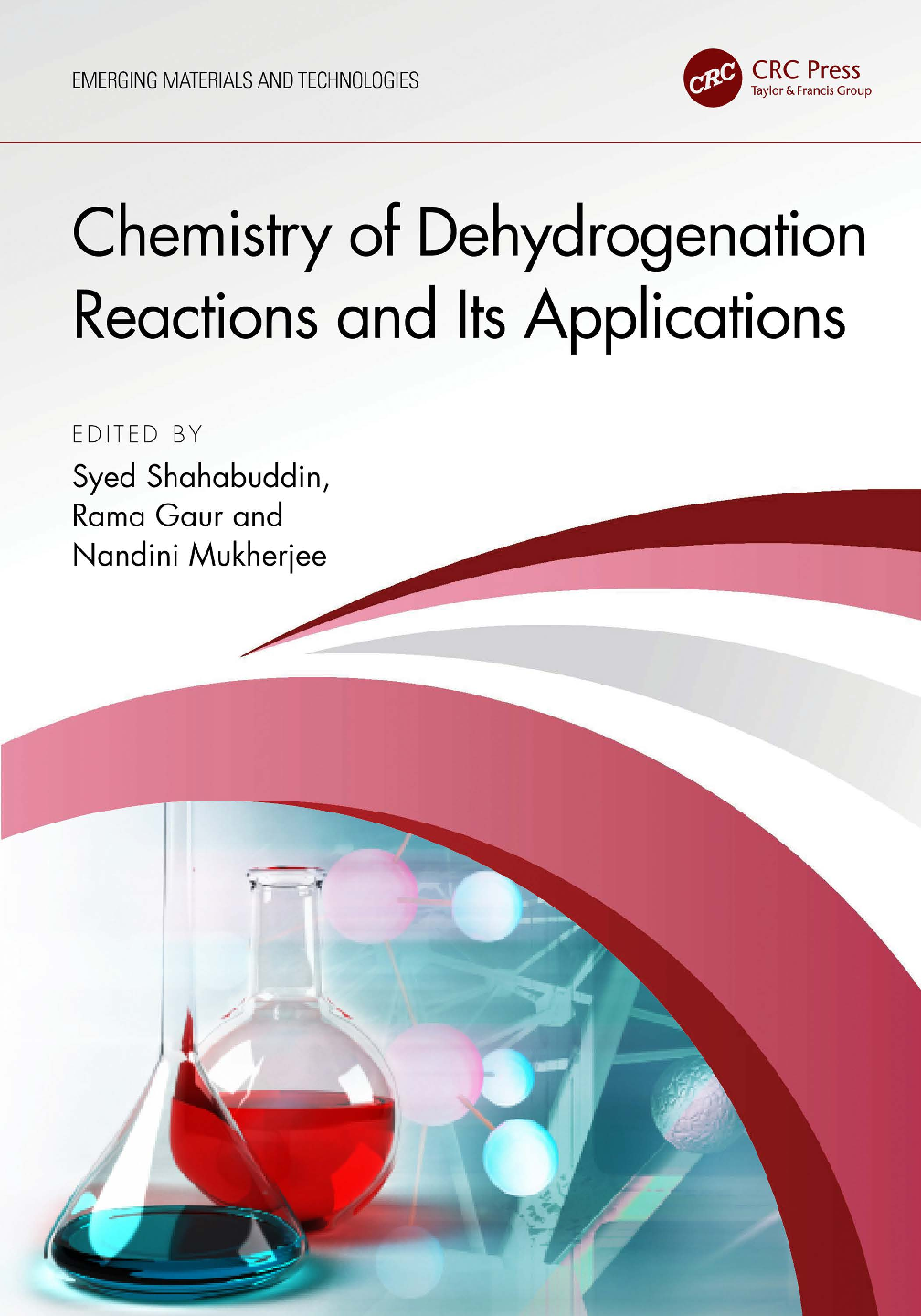
eBook [PDF] Chemistry of Dehydrogenation Reactions and Its App...
eBook [PDF] Carbon Nanotube Based Sensors Fabrication, Charact...
Test Bank for Hill's Chemistry for Changing Times, 15th Editi...
Solution Manual For Chemistry & Chemical Reactivity 11th Edi...
Test Bank for Chemistry The Central Science 14 Edition by Bro...
Test Bank For Chemistry Chemical Reactivity 9th Edition by Joh...
Quantitative Chemical Analysis 11th Edition By Daniel Harris,...