NSG 6430 APEA Exam-Ortho (Questions and Answers)
Document Content and Description Below
NSG 6430 APEA Exam-Ortho (Questions and Answers)
1. Which joints are least commonly involved in osteoarthritis? Wrists
2. Which of the following is NOT true regarding cervical whiplash injury? Is identifiable on MRI o
...
[Show More]
Last updated: 4 years ago
Preview 1 out of 7 pages
Instant download
.png)
Buy this Document to get the Full Access Instantly
Provided by Students Who Aced it
We Verify Document Content to Gurantee Accuracy
Reviews( 0 )
Document information
Connected school, study & course
About the document
Uploaded On
Feb 01, 2021
Number of pages
7
Written in
All

Additional information
This document has been written for:
Uploaded
Feb 01, 2021
Downloads
0
Views
66
Topic Tags
Recommended For You
Get more on EXAM »
$11
7 Pages
South University - NSG 6430_APEA_ORTHO Exam - Latest 2019 Ques...
$7
8 Pages
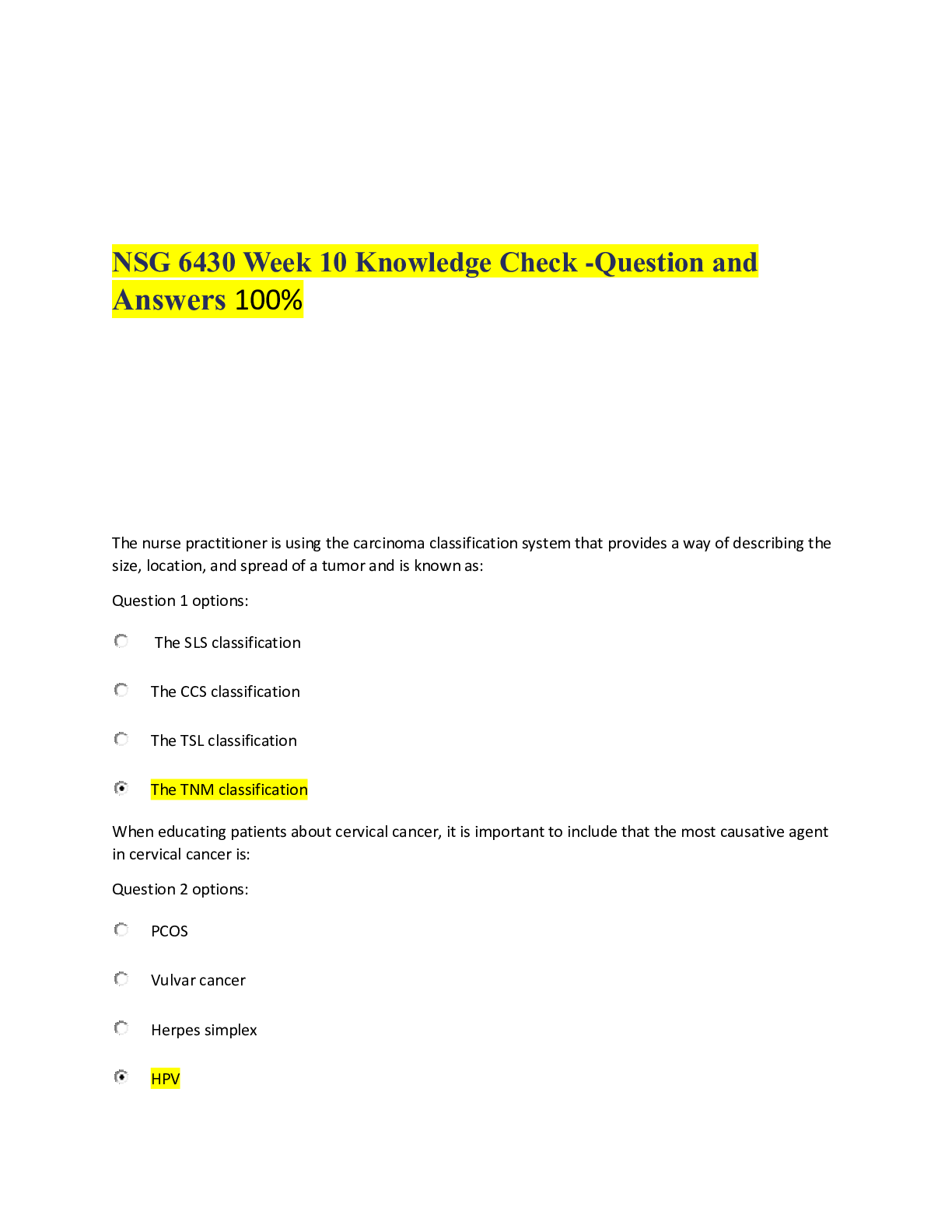
NSG 6430_APEA 105 Questions and Answers | South University


$10
11 Pages
NSG6430 FINAL Exam / NSG 6430 FINAL Exam (Latest 2020/2021) gr...
$15
10 Pages
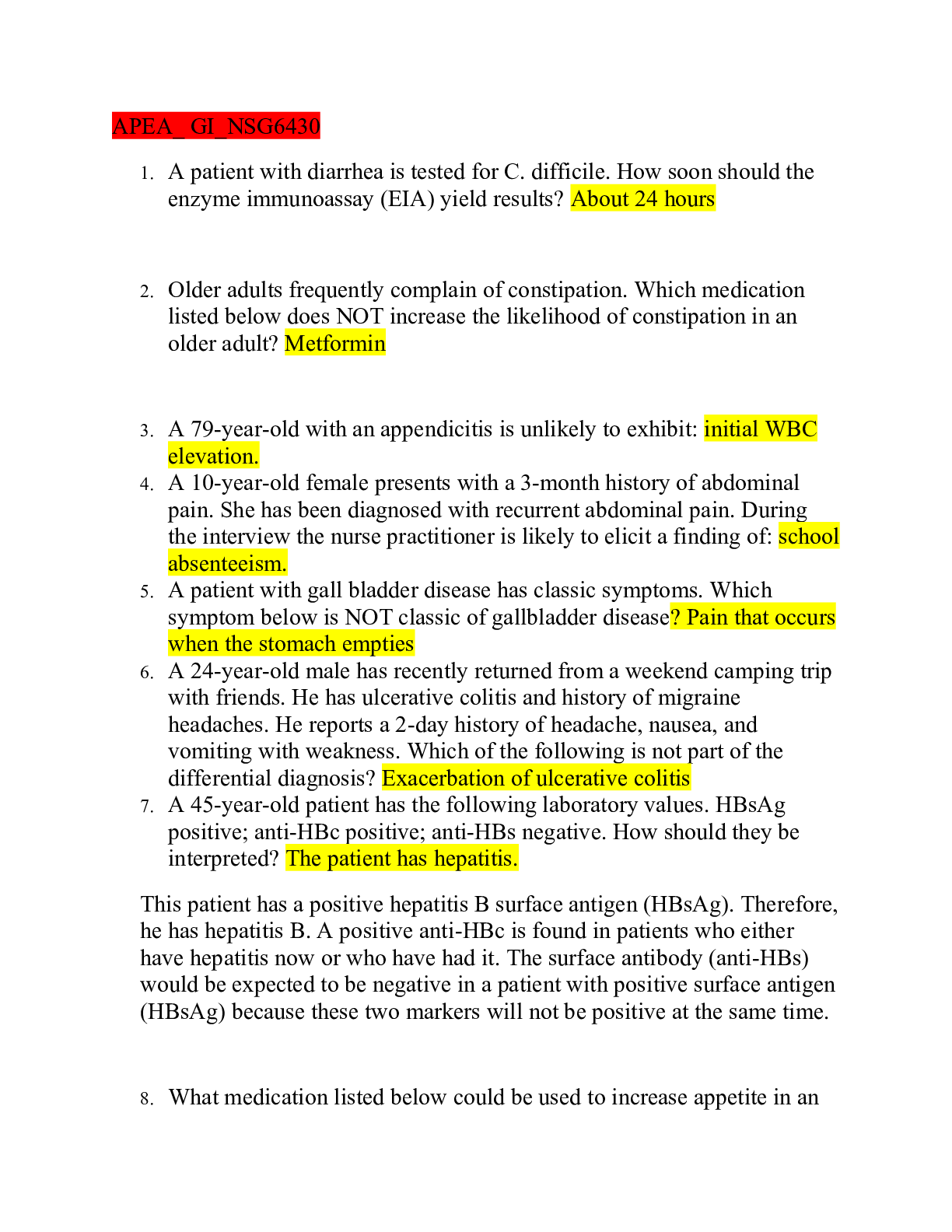
NSG6430_ APEA_ GI SOUTHERN UNIVERSITY QUESTIONS AND ANSWERS LA...

$11
41 Pages
NSG 6430 - Women's health exam study guide > South University,...

$15
7 Pages
APEA ORTHO NSG 6430, Complete A+ Guide Latest 2020 Answers.

$3.5
2 Pages
NSG 6430 Week 4 knowledge check 2025 100% Graded Already.

$10
7 Pages
NSG6430 APEA ORTHO / NSG 6430 APEA Test (Ortho): South Univers...

$30
41 Pages
Women_s health exam study guide (GUARANTEED A+) ALL ANSWERS CO...

$9
60 Pages
NSG 6430 Women’s Health Study Guide | South University, Savan...
$12
8 Pages
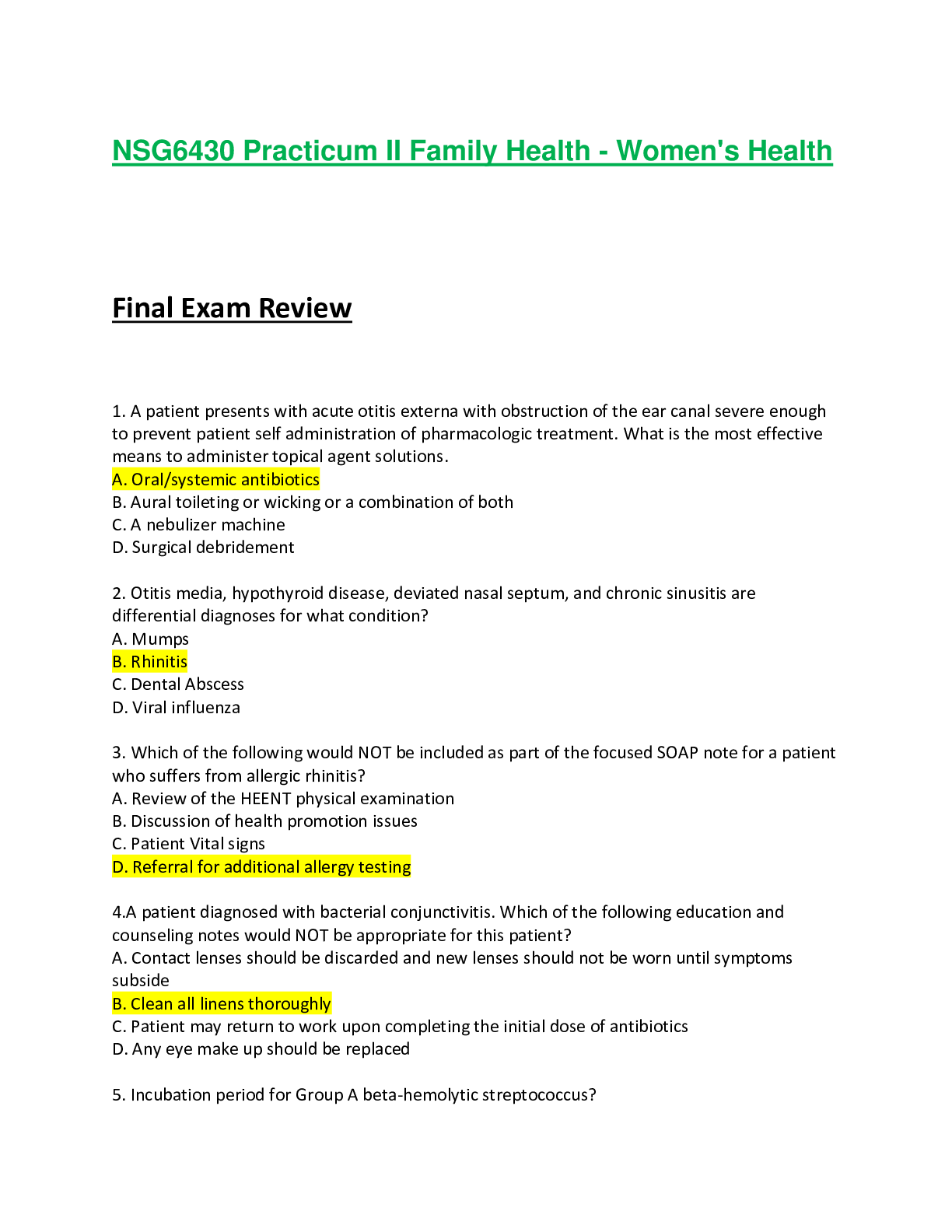
NSG6430 / NSG 6430 Final Review (Latest Update): Practicum II...
$15
11 Pages
NSG6430_ APEA_CARDIO QUESTIONS AND ANSWERS LATEST STUDY GUIDE
$15
9 Pages
NSG6430_ ADVANCED PRACTICE EDUCATION ASSOCIATES APEA_ORTHO QUE...
More related documents below