NSG 6020 APEA CARDIAC-Questions and Answers
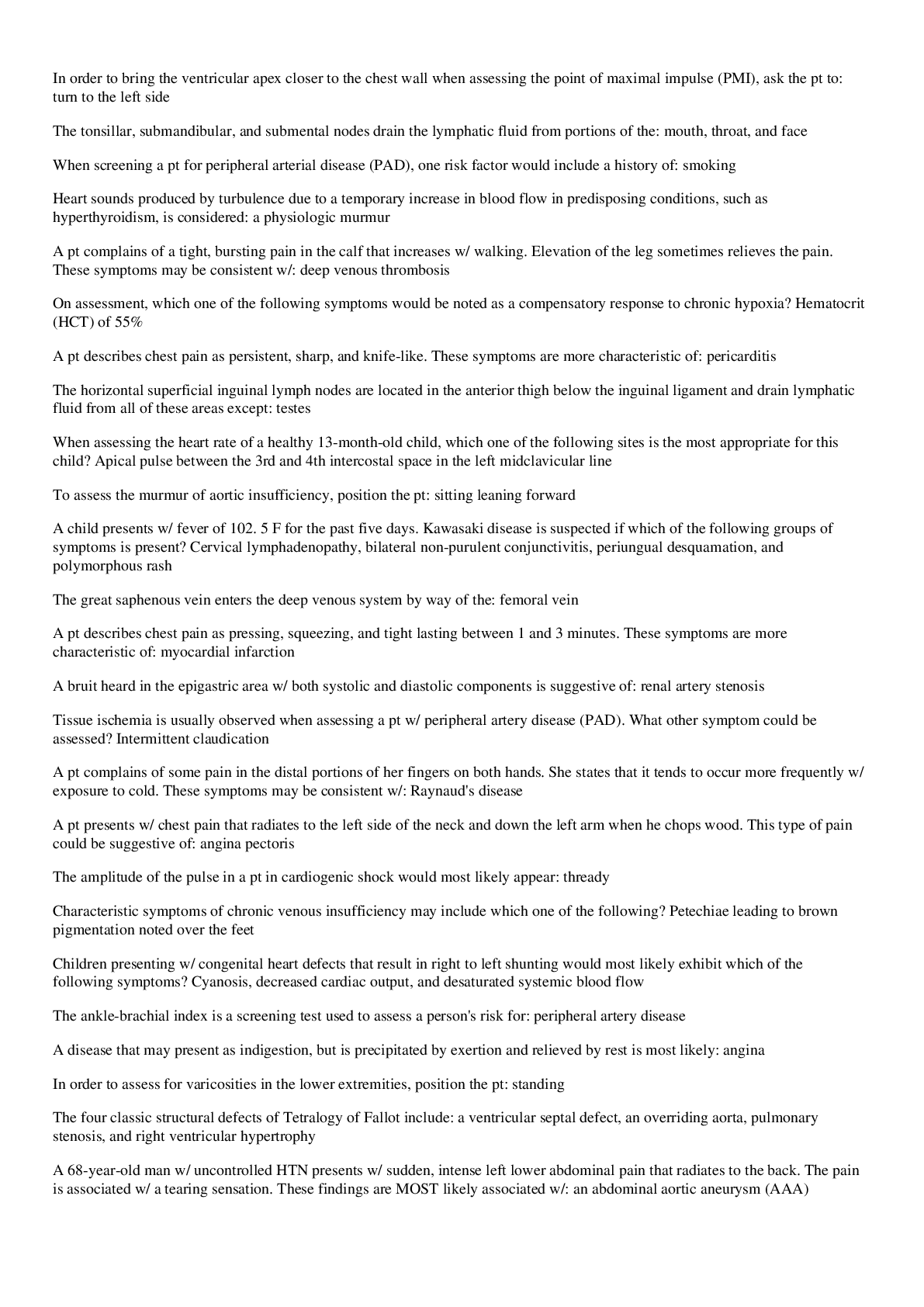
1. In order to bring the ventricular apex closer to the chest wall when assessing the point of maximal impulse (PMI), ask the pt to: turn to the left side
2. The tonsillar,
...
NSG 6020 APEA CARDIAC-Questions and Answers
1. In order to bring the ventricular apex closer to the chest wall when assessing the point of maximal impulse (PMI), ask the pt to: turn to the left side
2. The tonsillar, submandibular, and submental nodes drain the lymphatic fluid from portions of the: mouth, throat, and face
3. When screening a pt for peripheral arterial disease (PAD), one risk factor would include a history of: smoking
4. Heart sounds produced by turbulence due to a temporary increase in blood flow in predisposing conditions, such as hyperthyroidism, is considered: a physiologic murmur
5. A pt complains of a tight, bursting pain in the calf that increases w/ walking. Elevation of the leg sometimes relieves the pain. These symptoms may be consistent w/: deep venous thrombosis
6. On assessment, which one of the following symptoms would be noted as a compensatory response to chronic hypoxia? Hematocrit (HCT) of 55%
7. A pt describes chest pain as persistent, sharp, and knife-like. These symptoms are more characteristic of: pericarditis
8. The horizontal superficial inguinal lymph nodes are located in the anterior thigh below the inguinal ligament and drain lymphatic fluid from all of these areas except: testes
9. When assessing the heart rate of a healthy 13-month-old child, which one of the following sites is the most appropriate for this child? Apical pulse between the 3rd and 4th intercostal space in the left midclavicular line
10. To assess the murmur of aortic insufficiency, position the pt: sitting leaning forward
11. A child presents w/ fever of 102. 5 F for the past five days. Kawasaki disease is suspected if which of the following groups of symptoms is present? Cervical lymphadenopathy, bilateral non-purulent conjunctivitis, periungual desquamation, and polymorphous rash
12. The great saphenous vein enters the deep venous system by way of the: femoral vein
13. A pt describes chest pain as pressing, squeezing, and tight lasting between 1 and 3 minutes. These symptoms are more characteristic of: myocardial infarction
14. A bruit heard in the epigastric area w/ both systolic and diastolic components is suggestive of: renal artery stenosis
15. Tissue ischemia is usually observed when assessing a pt w/ peripheral artery disease (PAD). What other symptom could be assessed? Intermittent claudication
16. A pt complains of some pain in the distal portions of her fingers on both hands. She states that it tends to occur more frequently w/ exposure to cold. These symptoms may be consistent w/: Raynaud's disease
17. A pt presents w/ chest pain that radiates to the left side of the neck and down the left arm when he chops wood. This type of pain could be suggestive of: angina pectoris
18. The amplitude of the pulse in a pt in cardiogenic shock would most likely appear: thready
19. Characteristic symptoms of chronic venous insufficiency may include which one of the following? Petechiae leading to brown pigmentation noted over the feet
20. Children presenting w/ congenital heart defects that result in right to left shunting would most likely exhibit which of the following symptoms? Cyanosis, decreased cardiac output, and desaturated systemic blood flow
21. The ankle-brachial index is a screening test used to assess a person's risk for: peripheral artery disease
22. A disease that may present as indigestion, but is precipitated by exertion and relieved by rest is most likely: angina
23. In order to assess for varicosities in the lower extremities, position the pt: standing
24. The four classic structural defects of Tetralogy of Fallot include: a ventricular septal defect, an overriding aorta, pulmonary stenosis, and right ventricular hypertrophy
25. A 68-year-old man w/ uncontrolled HTN presents w/ sudden, intense left lower abdominal pain that radiates to the back. The pain is associated w/ a tearing sensation. These findings are MOST likely associated w/: an abdominal aortic aneurysm (AAA)
..............Continued
[Show More]