NSG 6020 APEA Cardiovascular Disorder
Document Content and Description Below
NSG 6020 APEA Cardiovascular Disorder
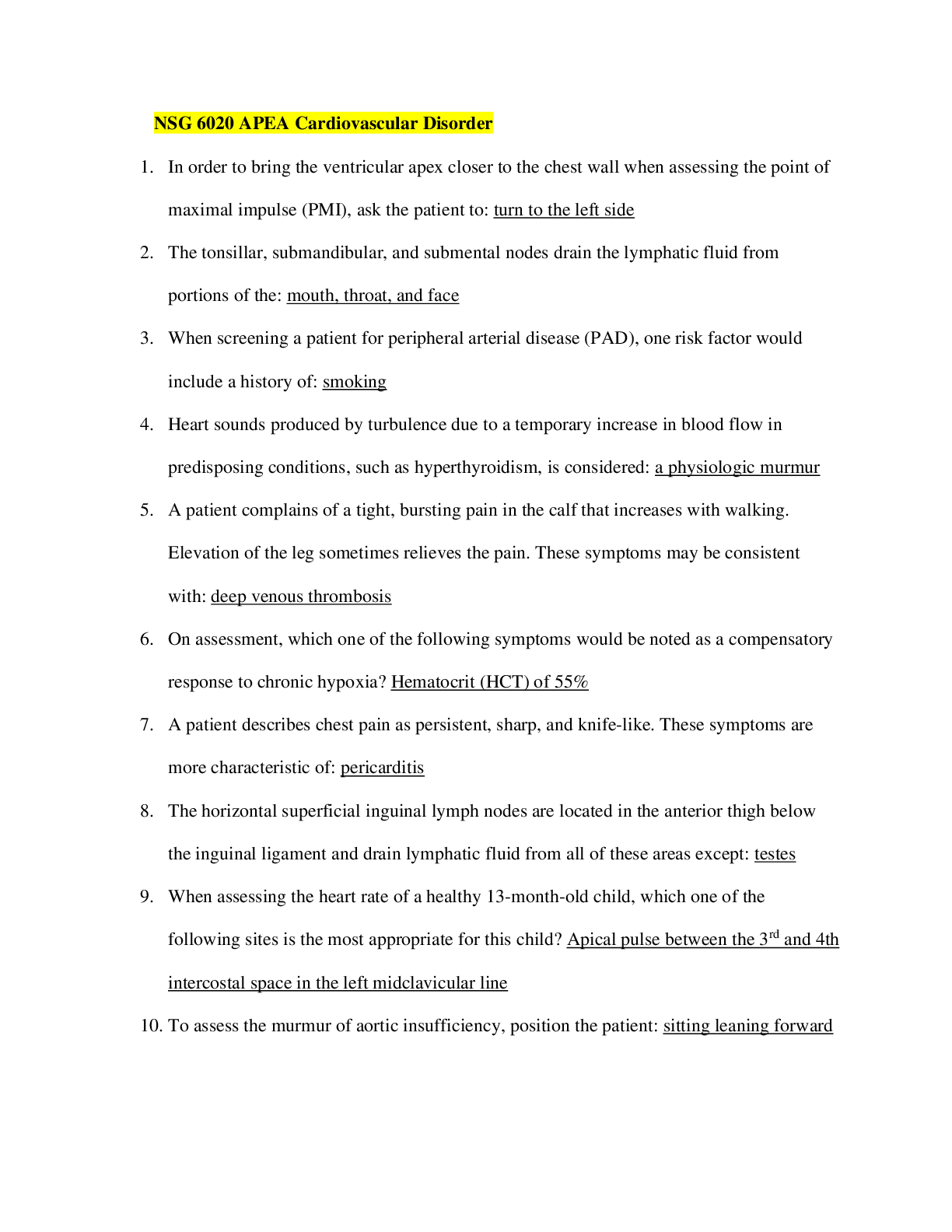
1. In order to bring the ventricular apex closer to the chest wall when assessing the point of maximal impulse (PMI), ask the patient to: turn to the left side
2. The tonsillar, s
...
[Show More]
Last updated: 3 years ago
Preview 1 out of 11 pages
Instant download
Buy this Document to get the Full Access Instantly
Provided by Students Who Aced it
We Verify Document Content to Gurantee Accuracy
Reviews( 0 )
Document information
Connected school, study & course
About the document
Uploaded On
Feb 01, 2021
Number of pages
11
Written in
All

Additional information
This document has been written for:
Uploaded
Feb 01, 2021
Downloads
0
Views
70
Topic Tags
Related Subjects & Courses
Explore similar study resources and related concepts.
Recommended For You
Get more on EXAM »

$13
11 Pages
NSG 6020 APEA Exam HEENT Questions with Answers 2020 QUESTIONS...

$16.5
200 Pages
NSG 6020 Midterm Exam Latest AlreadyGraded A Health Assessment...

$10
21 Pages
NSG6020 / NSG 6020 Advanced Health and Physical Assessment Fin...

$15.5
50 Pages
NSG 6020 MIDTERM EXAM Help 2 – QUESTION AND ANSWERS (answered)
$10
18 Pages
NSG6020 / NSG 6020: Advanced Health and Physical Assessment Fi...

$15
122 Pages
NSG6020 TEST BANK (MIDTERM EXAM+FINAL EXAM) / NSG 6020 TEST BA...

$13
6 Pages
NSG 6020 Cardiovascular Disorders - South University, Savannah

$12
7 Pages
NSG 6020 / NSG6020 WEEK 4 QUIZ 3 CARDIAC STUDY GUIDE QUESTIONS...
.png)
$10
4 Pages
NSG 6020 Week 6 PVD GI Study Guide_latest 2020 (answered)
.png)
$11
4 Pages
Week 5 Midterm Study Guide (HIGHLY RATED STUDY GUIDE ) A+ Sout...

$8
2 Pages
NSG 6020:Adv Assessment Week 10 DQ Bebe Babbitt ihuman Complet...

.png)


More related documents below