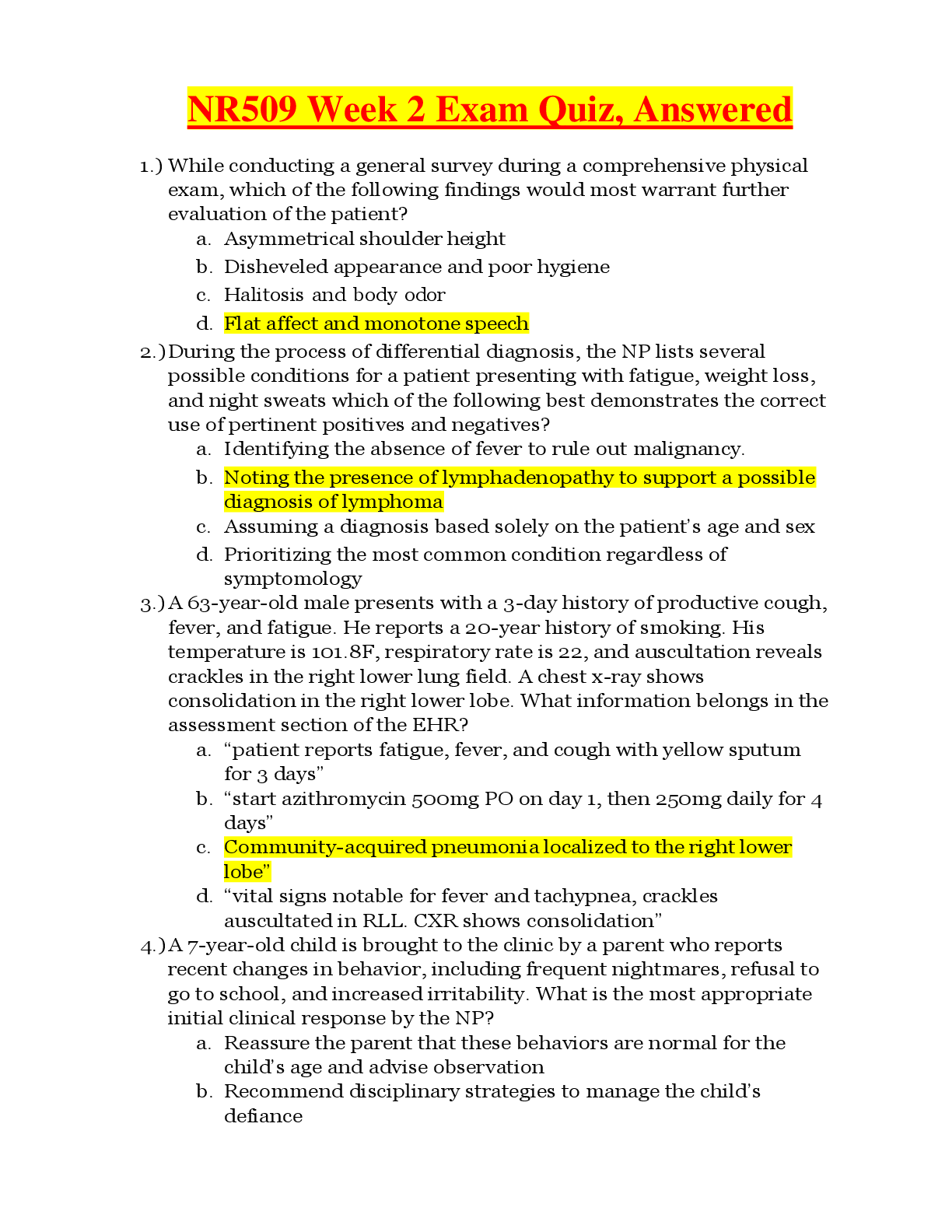
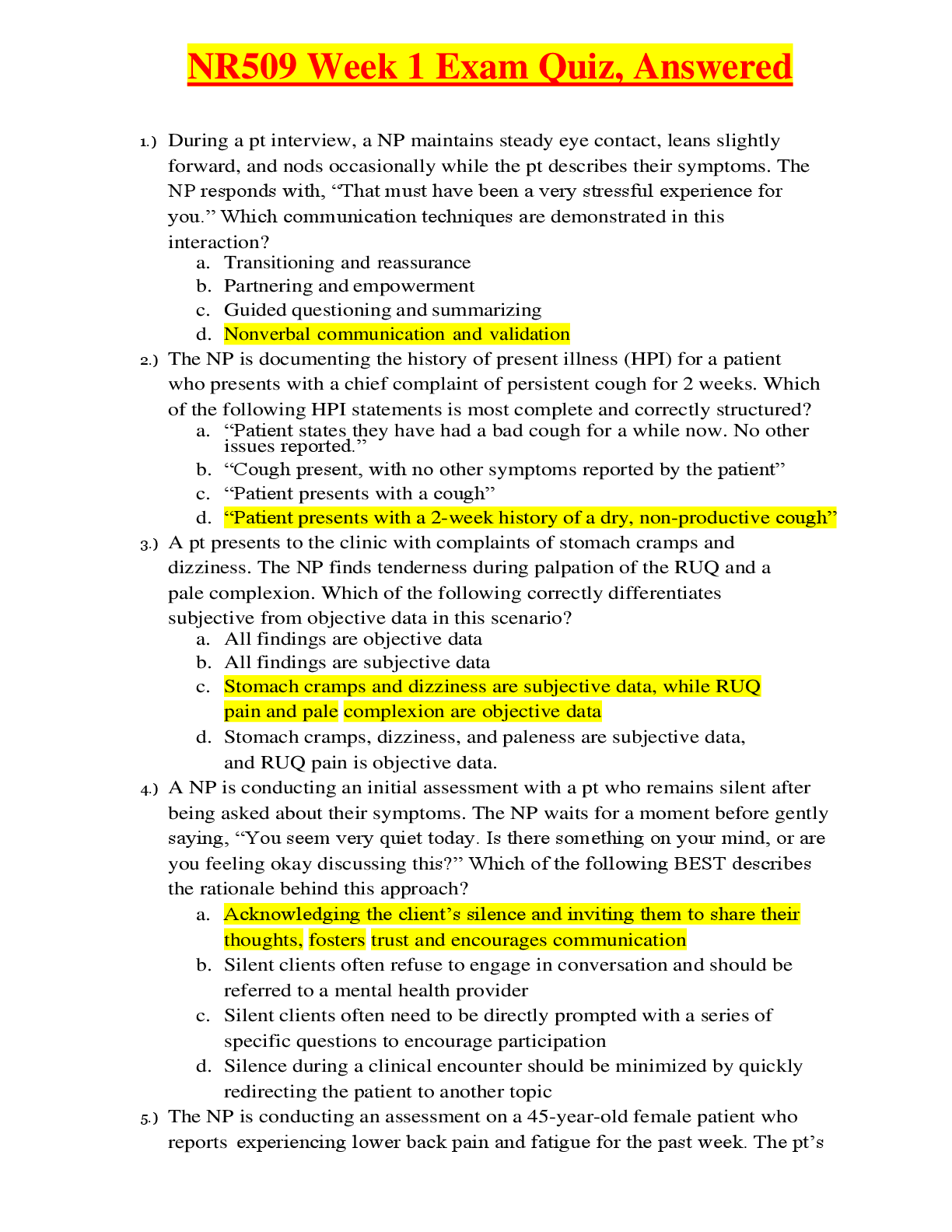
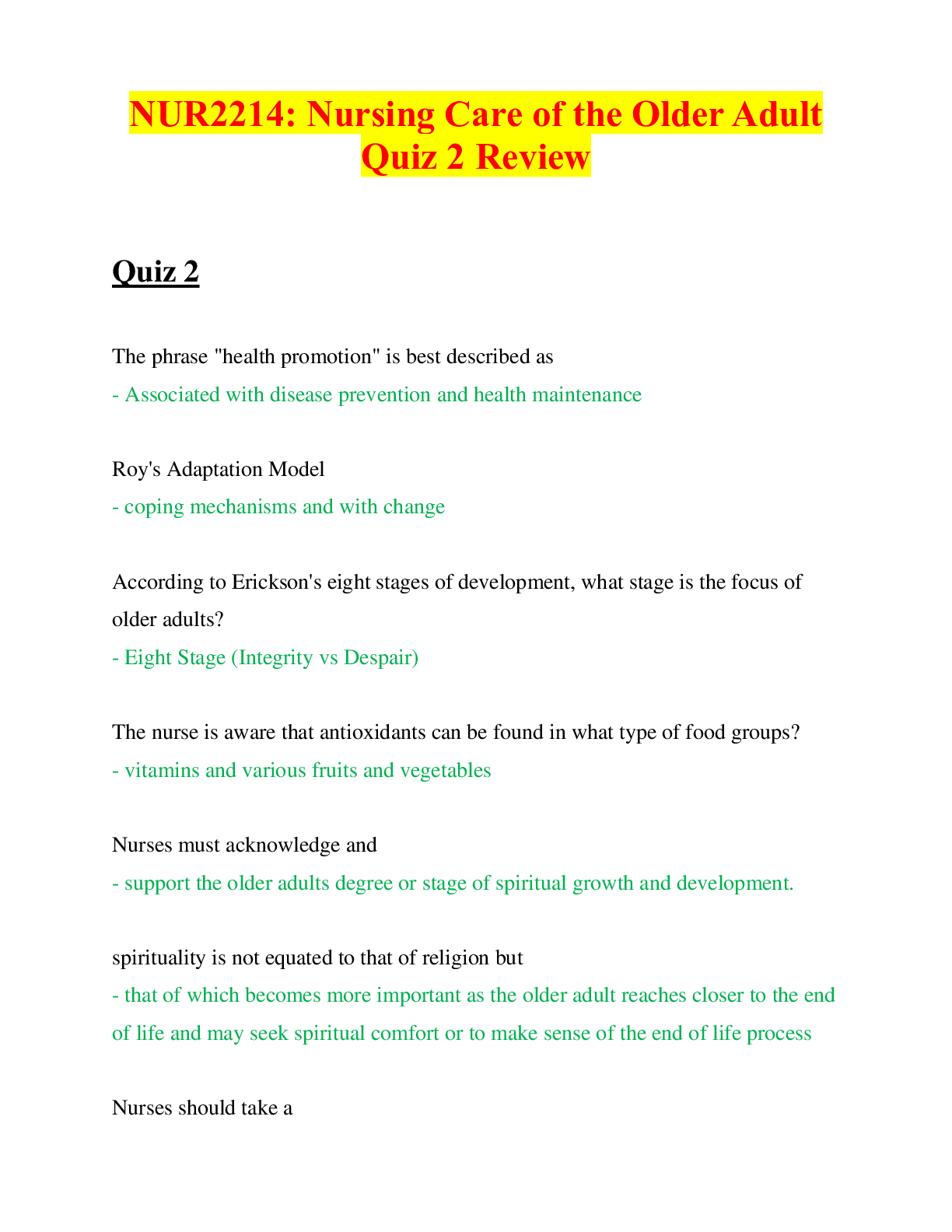
Nur 202- Cardiac, Exam Questions & Answers
Document Content and Description Below
Nur 202- Cardiac, Exam Questions & Answers-In third-degree atrioventricular (AV) block, there is no correlation between the impulse from the atrium to the ventricles and the ventricular rhythm seen. A pacemaker eventuall
...
[Show More]
Last updated: 3 years ago
Preview 1 out of 24 pages
Instant download

Buy this Document to get the Full Access Instantly
Provided by Students Who Aced it
We Verify Document Content to Gurantee Accuracy
Reviews( 0 )
Document information
Connected school, study & course
About the document
Uploaded On
Mar 16, 2023
Number of pages
24
Written in
All

Additional information
This document has been written for:
Uploaded
Mar 16, 2023
Downloads
0
Views
139
Topic Tags
Related Subjects & Courses
Explore similar study resources and related concepts.
Recommended For You
Get more on EXAM »
$20
22 Pages
IHUMAN SIMULATION NUR 2026 – ELDERLY PATIENT WITH DELIRIUM SEC...
$18
24 Pages
I HUMAN WEEK 4 NUR 2026 2 YEAR OLD FEMALE PRESENTING WITH EAR...


 Correct Study Guide, Download to Score A.png)
$22
62 Pages
NUR 202 FINAL STUDY GUIDE, (Latest 2021) Correct Study Guide,...
$22
62 Pages
NUR 202 FINAL STUDY GUIDE, (Latest 2021) Correct Study Guide,...
$13
62 Pages
NUR 202 FINAL STUDY GUIDE, (Latest 2021) Correct Study Guide,...
$7
2 Pages
ATI Chamberlain School - NURSING NUR 202 Blood Cells (Latest 2...
$7
3 Pages
Chamberlain School - NURSING NUR 202 Genital Urinary Disorders...
More related documents below