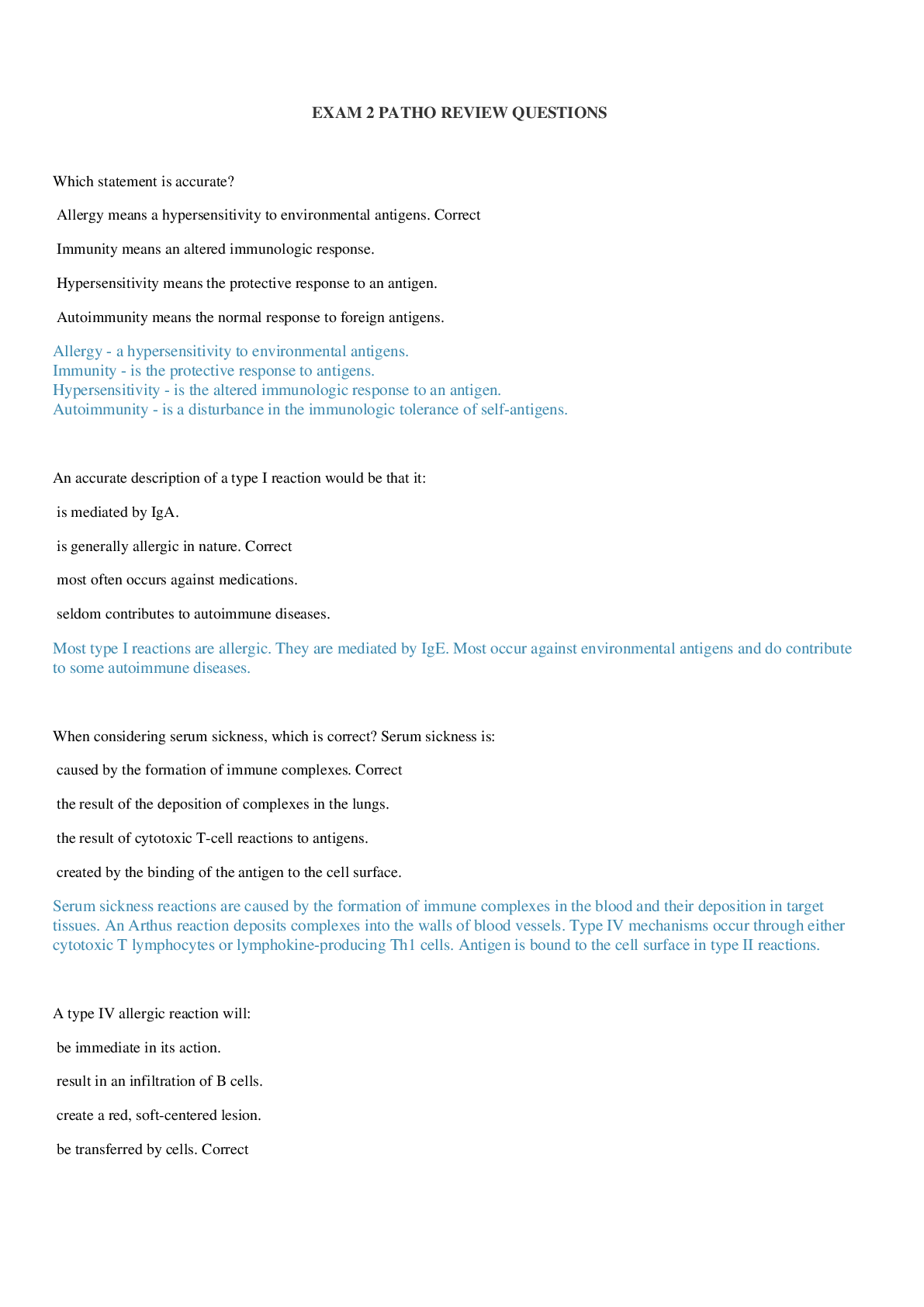
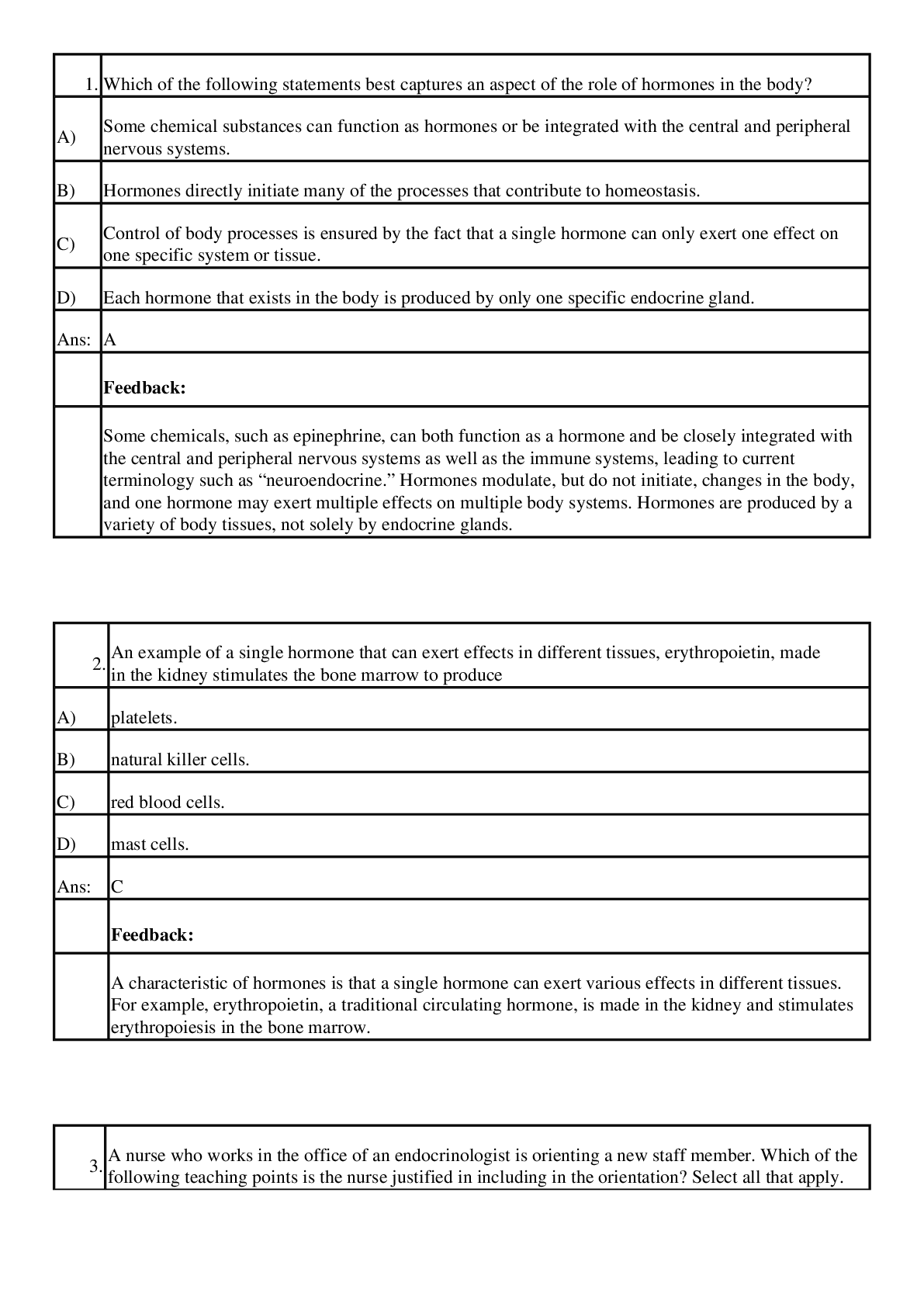
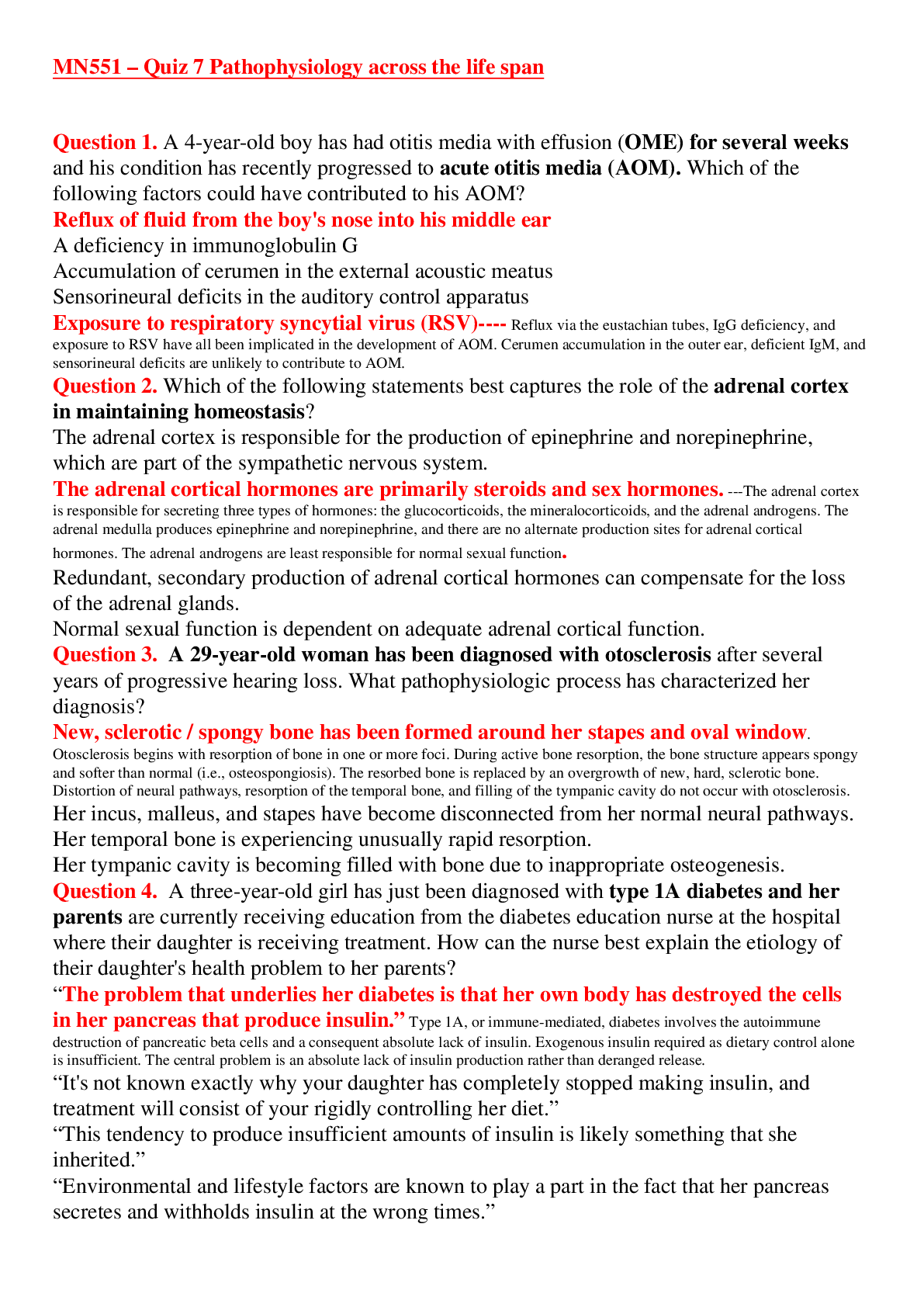
EXAM 2 PATHO REVIEW QUESTIONS 1. Which statement is accurate? A. Allergy means a hypersensitivity to environmental antigens. Correct B. Immunity means an altered immunologic response. C. Hyp ... ersensitivity means the protective response to an antigen. D. Autoimmunity means the normal response to foreign antigens. Allergy - a hypersensitivity to environmental antigens. Immunity - is the protective response to antigens. Hypersensitivity - is the altered immunologic response to an antigen. Autoimmunity - is a disturbance in the immunologic tolerance of self-antigens. 2. An accurate description of a type I reaction would be that it: A. is mediated by IgA. B. is generally allergic in nature. Correct C. most often occurs against medications. D. seldom contributes to autoimmune diseases. Most type I reactions are allergic. They are mediated by IgE. Most occur against environmental antigens and do contribute to some autoimmune diseases. 3. When considering serum sickness, which is correct? Serum sickness is: A. caused by the formation of immune complexes. Correct B. the result of the deposition of complexes in the lungs. C. the result of cytotoxic T-cell reactions to antigens. D. created by the binding of the antigen to the cell surface. Serum sickness reactions are caused by the formation of immune complexes in the blood and their deposition in target tissues. An Arthus reaction deposits complexes into the walls of blood vessels. Type IV mechanisms occur through either cytotoxic T lymphocytes or lymphokine-producing Th1 cells. Antigen is bound to the cell surface in type II reactions. 4. A type IV allergic reaction will: A. be immediate in its action. B. result in an infiltration of B cells. C. create a red, soft-centered lesion. D. be transferred by cells. Correct Type IV hypersensitivity reactions can be transferred by cells (cell-mediated), but not by serum. They are delayed as their onset takes from 24 to 72 hours. The site is infiltrated with T lymphocytes and macrophages. There is a clear hard center with surrounding erythema (redness). 5. A patient who presents with systemic lupus erythematosus (SLE) is likely to: A. be male. B. be white. C. report symptoms of arthritis. Correct D. experience memory loss. [Show More]
Last updated: 3 years ago
Preview 1 out of 30 pages
Buy this document to get the full access instantly
Instant Download Access after purchase
Buy NowInstant download
We Accept:
Can't find what you want? Try our AI powered Search
Connected school, study & course
About the document
Uploaded On
Feb 02, 2021
Number of pages
30
Written in
All
This document has been written for:
Uploaded
Feb 02, 2021
Downloads
0
Views
125
Scholarfriends.com Online Platform by Browsegrades Inc. 651N South Broad St, Middletown DE. United States.
We're available through e-mail, Twitter, and live chat.
FAQ
Questions? Leave a message!
Copyright © Scholarfriends · High quality services·