OSHA 10 - Personal Protective Equipment Questions and answers
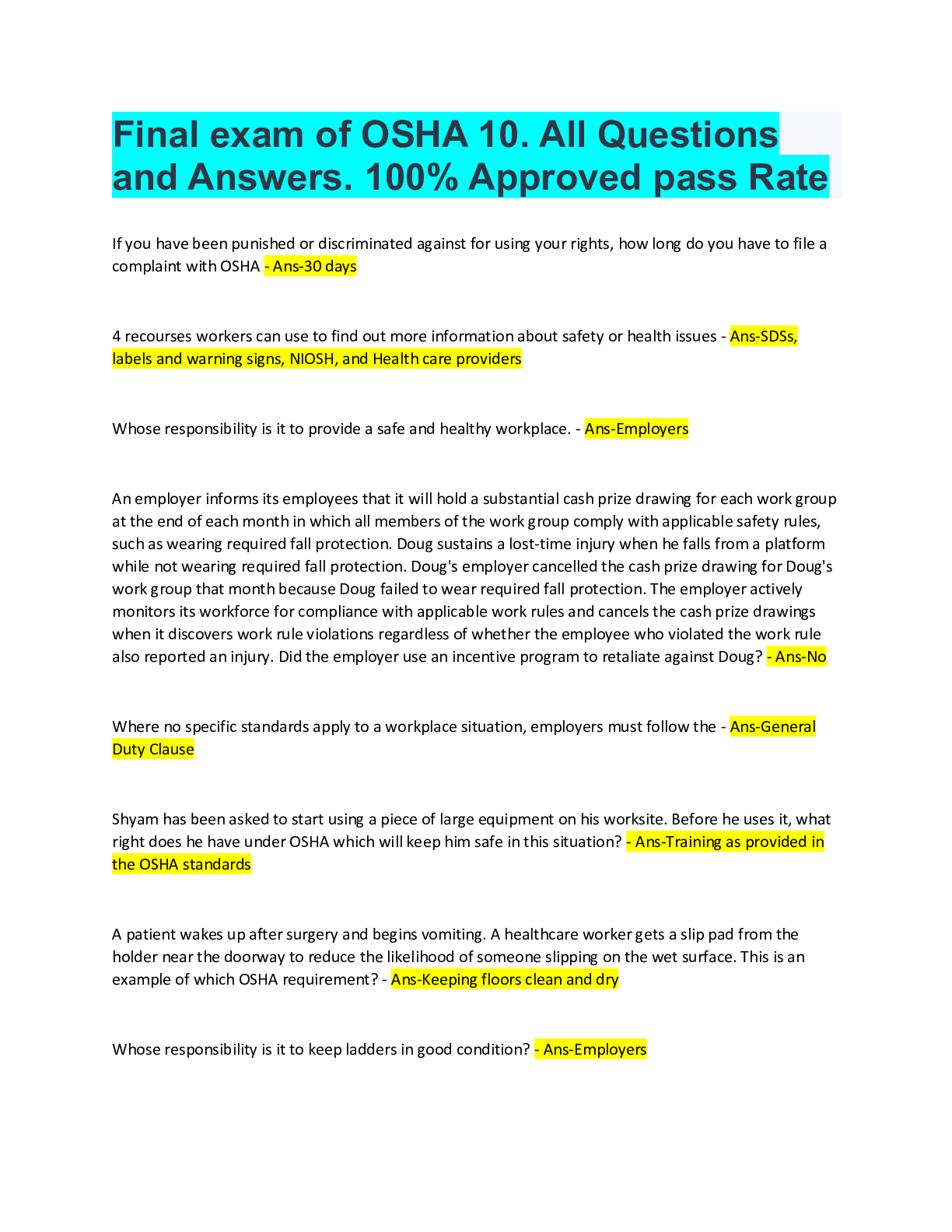
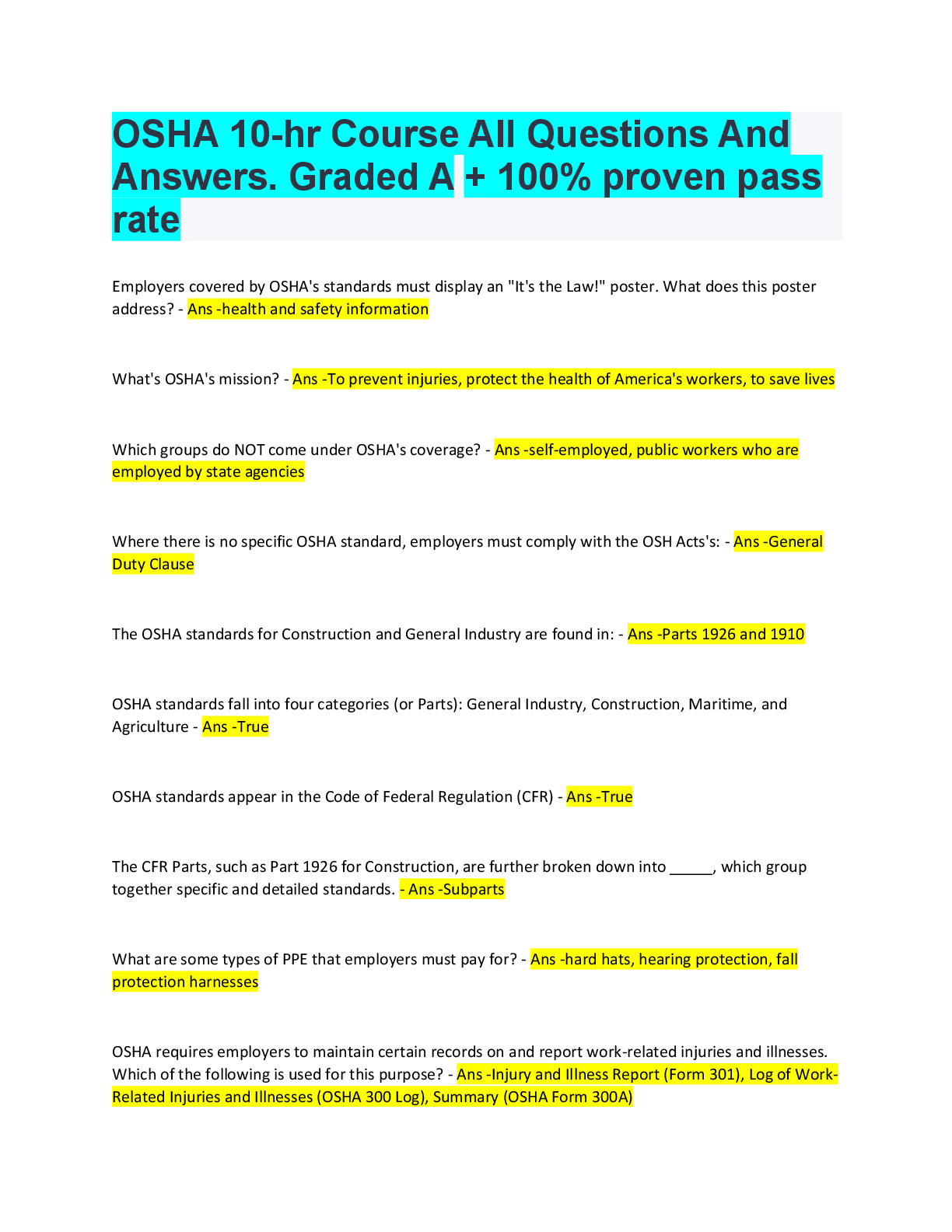
Question 1: PPE is used when ______________ , ______________ , and ______________ controls are not possible or do not provide suitable protection for workers
...
OSHA 10 - Personal Protective Equipment Questions and answers
Question 1: PPE is used when ______________ , ______________ , and ______________ controls are not possible or do not provide suitable protection for workers.
Question 2: Why is it important to wear personal protective equipment?
Question 3: Which of the following injuries can be prevented with the use of personal protective equipment?
a) Transmission of bloodborne pathogens
b) Hearing loss
c) Injuries from chemical contact
Question 4: In the previous case study what could the employee have done to prevent his injury?
Question 5: True or False: PPE can provide some protection from infectious materials as a barrier to protect skin and mucus membranes from contact with blood and other potentially infectious materials.
Question 6: When using eye and face protection, employees should do all of the following except:
Question 7: Safety footwear must meet ____________ minimum compression and impact performance standards.
Question 8: Which of the following types of ear protection is required to have a perfect seal around the ear?
Question 9: Safety belts, lifelines, lanyards, and personal fall arrest systems are all examples of:
Question 10: What type of PPE is required when working over dangerous machinery?
Question 11: Please select the equipment that qualifies as personal protective equipment.
a) Eye glasses
b) Laboratory coats
c) Particulate respirators
d) Headphones
e) Metal mesh gloves
Question 12: When a hard hat sustains an impact, it should:
Question 13: True or False: Ear protection is mandatory for anyone already suffering from hearing loss.
Question 14: True or False: Employees should always inspect personal protection equipment before each use.
Question 15: An employer hazard assessment is used to ______________.
Question 16: Employer-provided PPE training should include information about:
a) How to maintain the PPE offered
b) How to use the PPE
c) Which type of PPE to use and how it should fit
Question 17: True or false: The employer is not required to provide training to employees who use PPE.
Question 18: Which kinds of protection are employers required to pay for?
a) Hard hats
b) Lifting belts
c) Hearing protection
d) Welding PPE
Quiz Question 19: When a hard hat sustains an impact, it should:
Quiz Question 20: Which of the following types of protection is an employer required to pay for?
Quiz Question 21: PPE is used when ____________, ___________, and ____________ controls are not possible or do not provide suitable protection for workers.
Quiz Question 22: Safety footwear must meet _____________ minimum compression and impact performance standards.
Quiz Question 23: Employer provided PPE training should include information about:
a) How to maintain the PPE offered.
b) How to use the PPE
c) Which type of PPE to use and how it should fit.
Quiz Question 24: Employers should use data from the ____________ when selecting appropriate PPE.
Quiz Question 25: Safety belts, lifelines, lanyards, and Personal Fall Arrest Systems are all examples of:
Quiz Question 26: When using eye and face protection you should do all of the following except:
Quiz Question 27: For personal fall arrest systems all of the following apply except:
Quiz Question 28: Which of the following guards against exposure to electrical hazards?
[Show More]