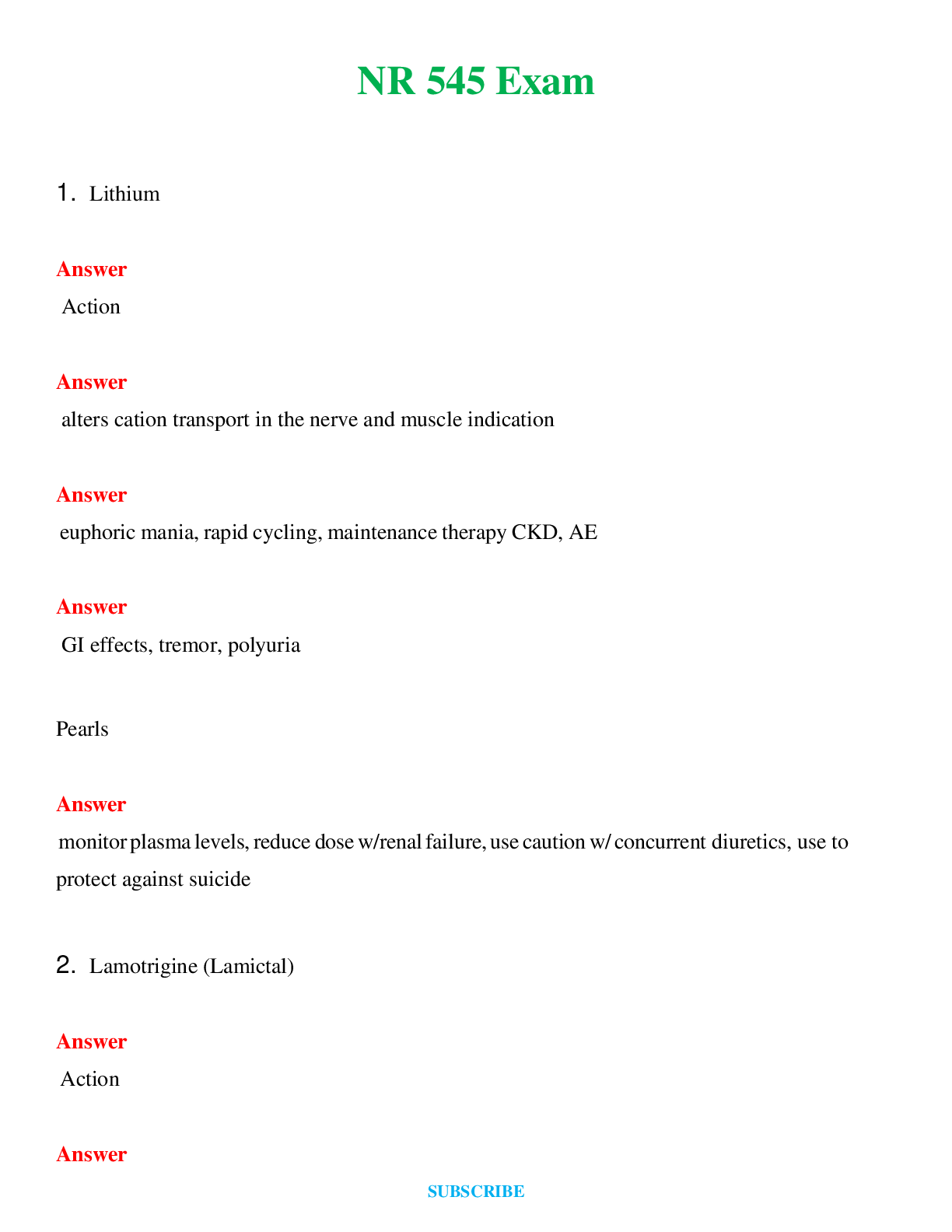
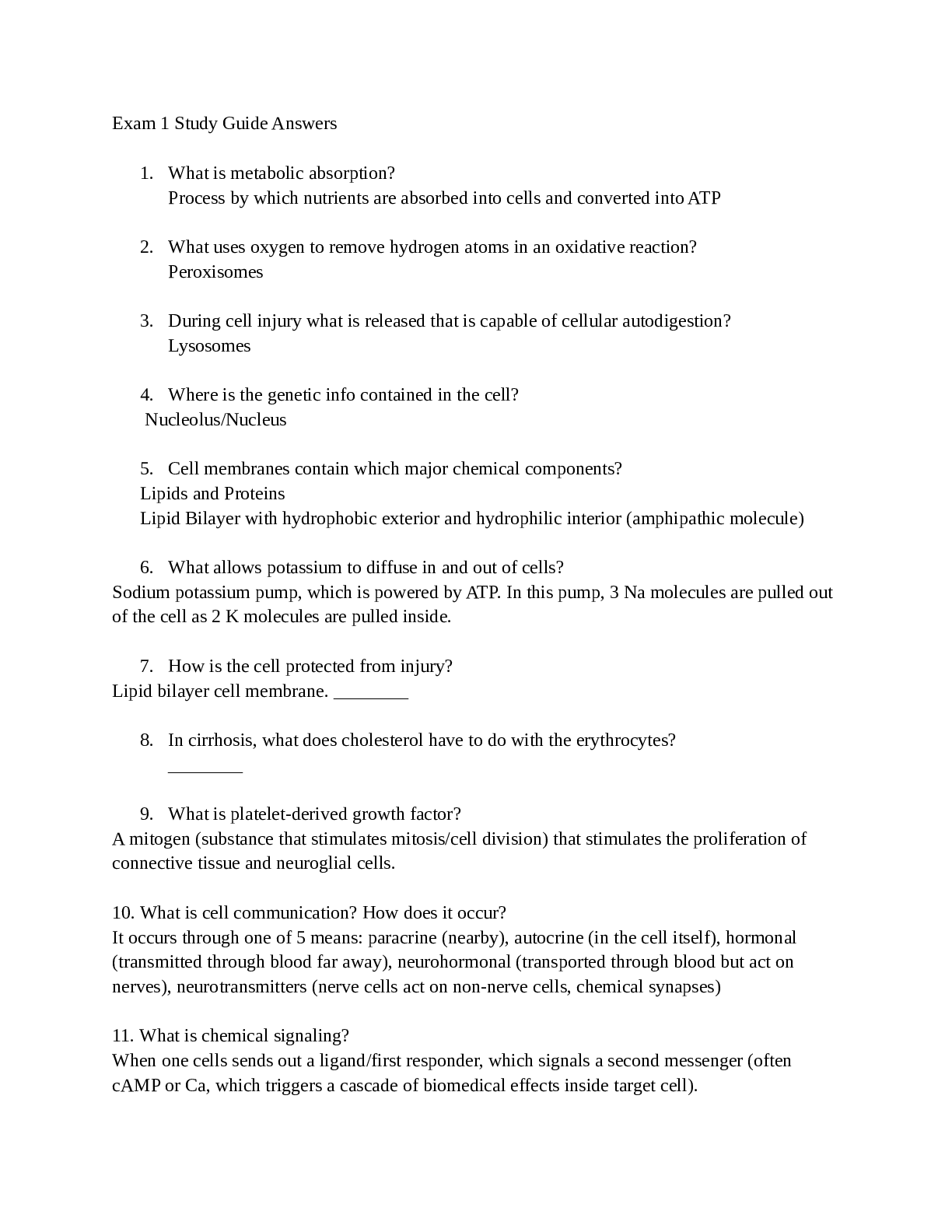
NR 545 Unit 2 Evolve Questions & Answers Graded A
Document Content and Description Below
Chapter 15
1. Which structure is part of the central nervous system (CNS)?
A. Brain Correct
B. Somatic nervous system
C. Peripheral nerve pathways
D. Cranial nerves
The brain is part of the CNS. The peripheral nerv
...
[Show More]
Last updated: 3 years ago
Preview 1 out of 20 pages
Instant download

Buy this Document to get the Full Access Instantly
Provided by Students Who Aced it
We Verify Document Content to Gurantee Accuracy
Reviews( 0 )
Document information
Connected school, study & course
About the document
Uploaded On
Feb 02, 2021
Number of pages
20
Written in
All

Additional information
This document has been written for:
Uploaded
Feb 02, 2021
Downloads
0
Views
205
Topic Tags
Related Subjects & Courses
Explore similar study resources and related concepts.
Recommended For You
Get more on EXAM »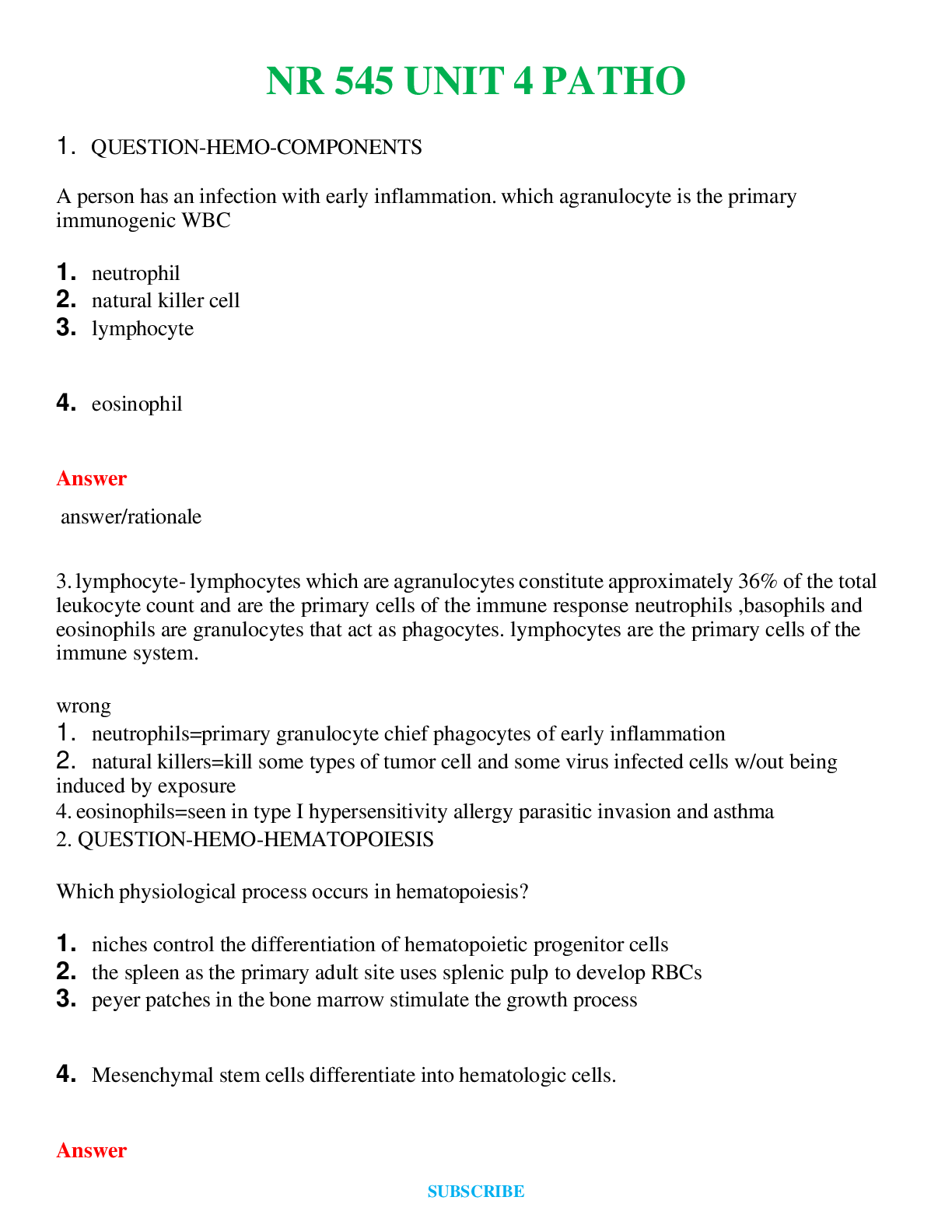
$8.5
81 Pages
NR 545 UNIT 4 PATHO Questions and Answers (Verified Answers...
$10.5
81 Pages
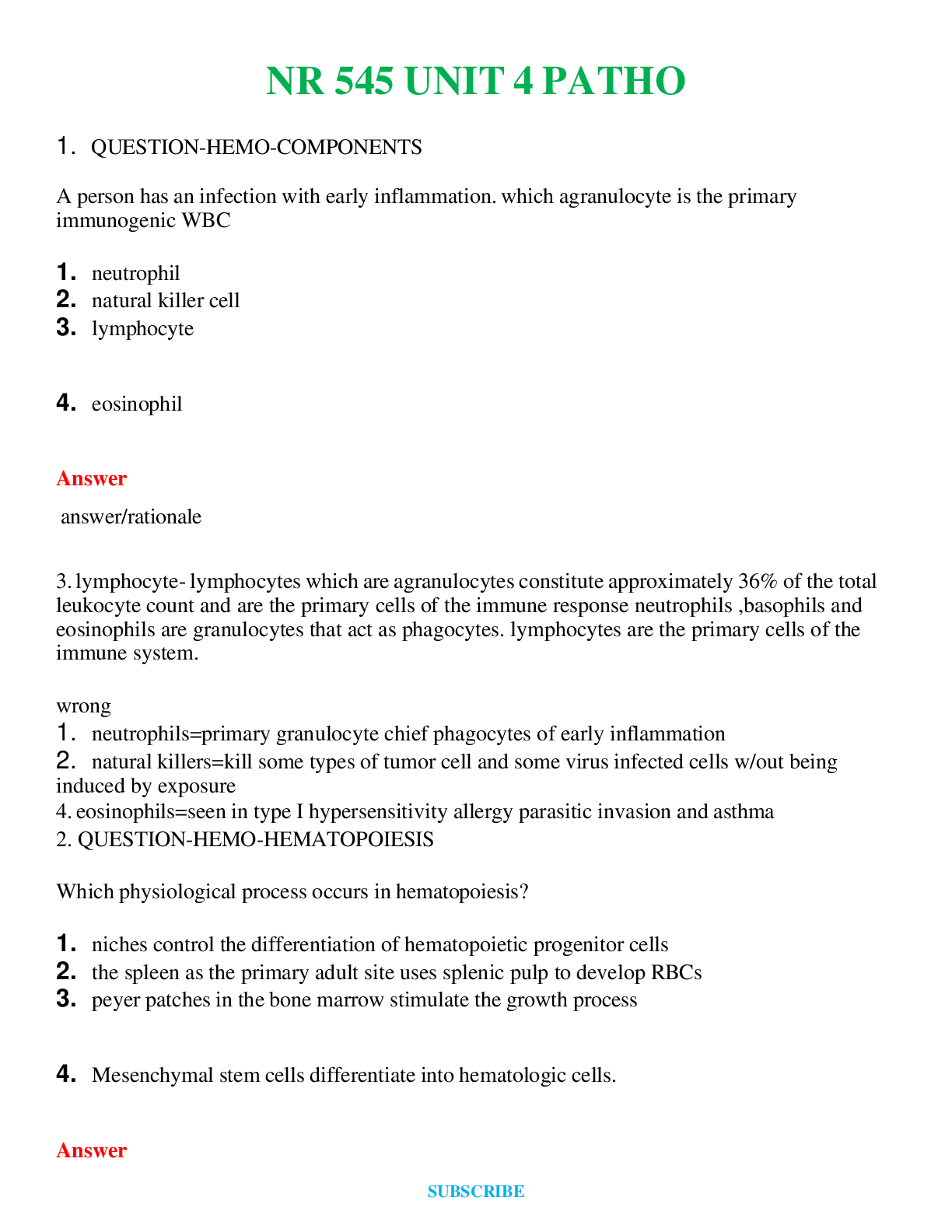
NR 545 UNIT 4 PATHO | Questions & Answers with rationales







More related documents below