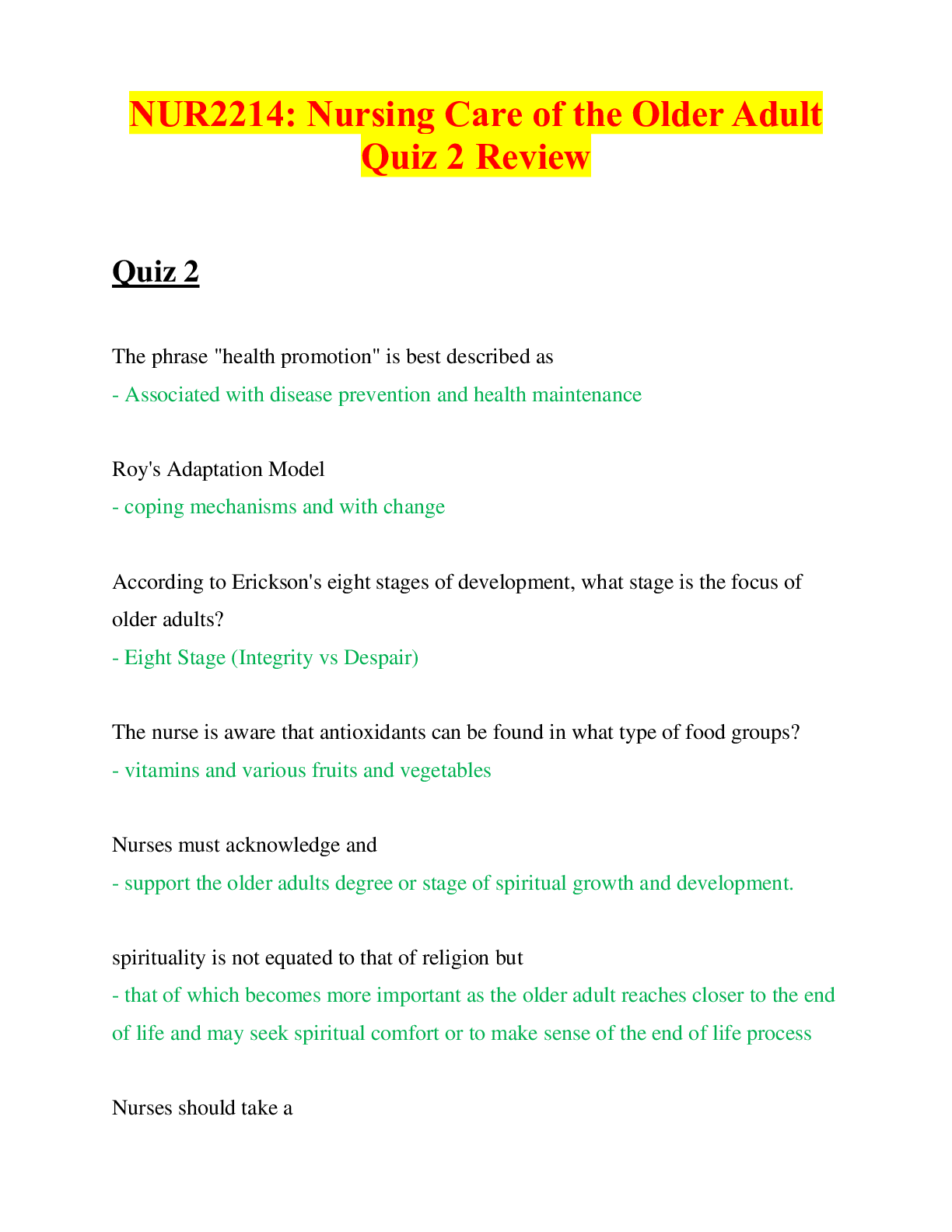
PHTLS Prehospital Trauma Life Support | PHTLS Review, Answered
Document Content and Description Below
PHTLS Prehospital Trauma Life Support | PHTLS Review, Answered-How many people die from trauma annually? - Over 5 million
What is the leading cause of trauma deaths? - MVA
Where do over 90% of trauma deaths occur?
...
[Show More]
Last updated: 3 years ago
Preview 1 out of 19 pages
Instant download
Buy this Document to get the Full Access Instantly
Provided by Students Who Aced it
We Verify Document Content to Gurantee Accuracy
Reviews( 0 )
Document information
Connected school, study & course
About the document
Uploaded On
Mar 26, 2023
Number of pages
19
Written in
All

Additional information
This document has been written for:
Uploaded
Mar 26, 2023
Downloads
0
Views
146
Topic Tags
Recommended For You
Get more on EXAM »
$9.5
5 Pages
Prehospital Trauma Life Support ( PHTLS ) Review Test Question...


$10
19 Pages
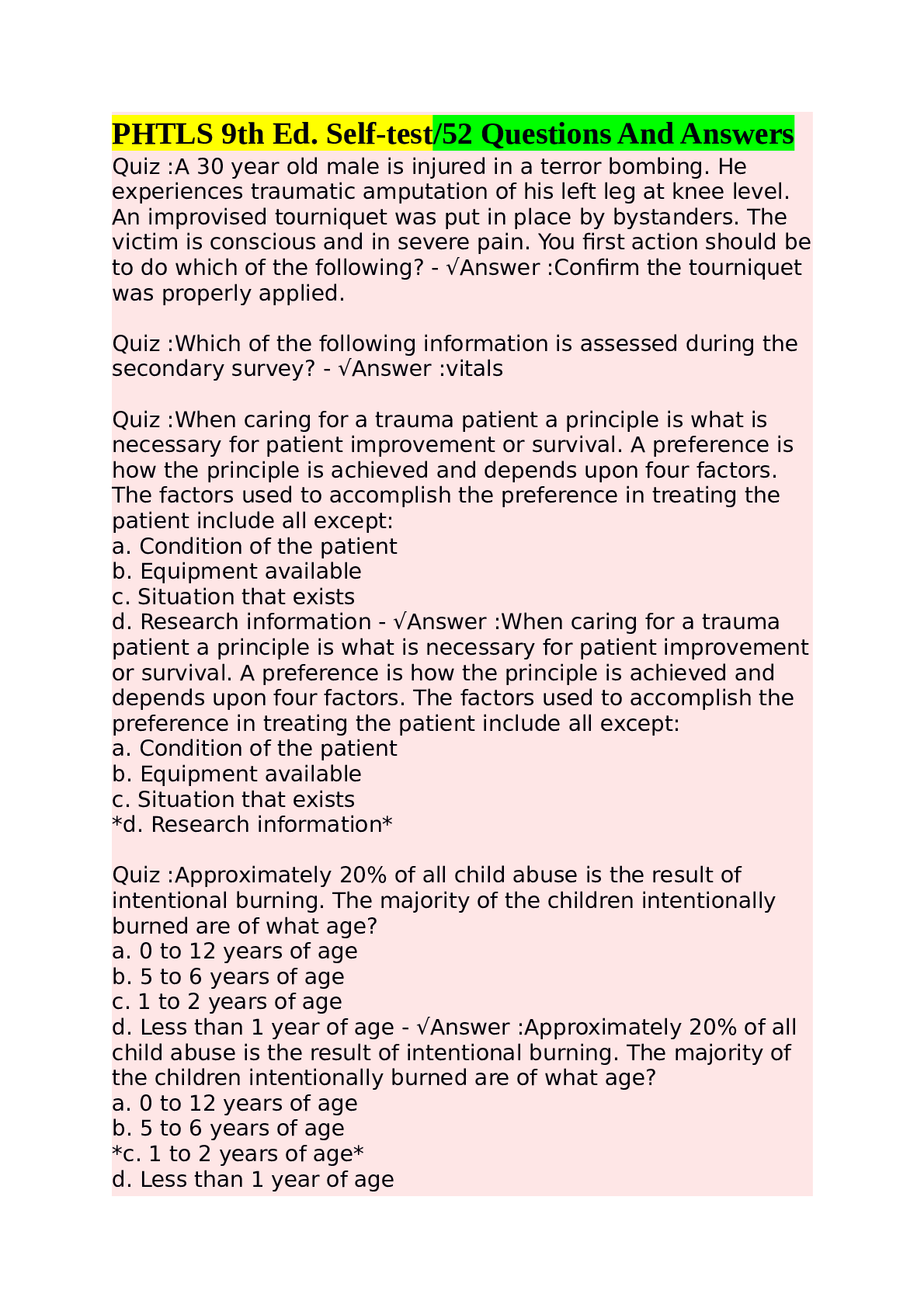
Prehospital Trauma Life Support PHTLS 9th Ed. Self-test/52 Que...

$15.5
43 Pages
Advanced Trauma Life Support (ATLS) Final Exam Questions & Ans...

$14.5
28 Pages
Advanced Trauma Life Support (ATLS) Exam 2 Questions & Answers...
$14.5
21 Pages
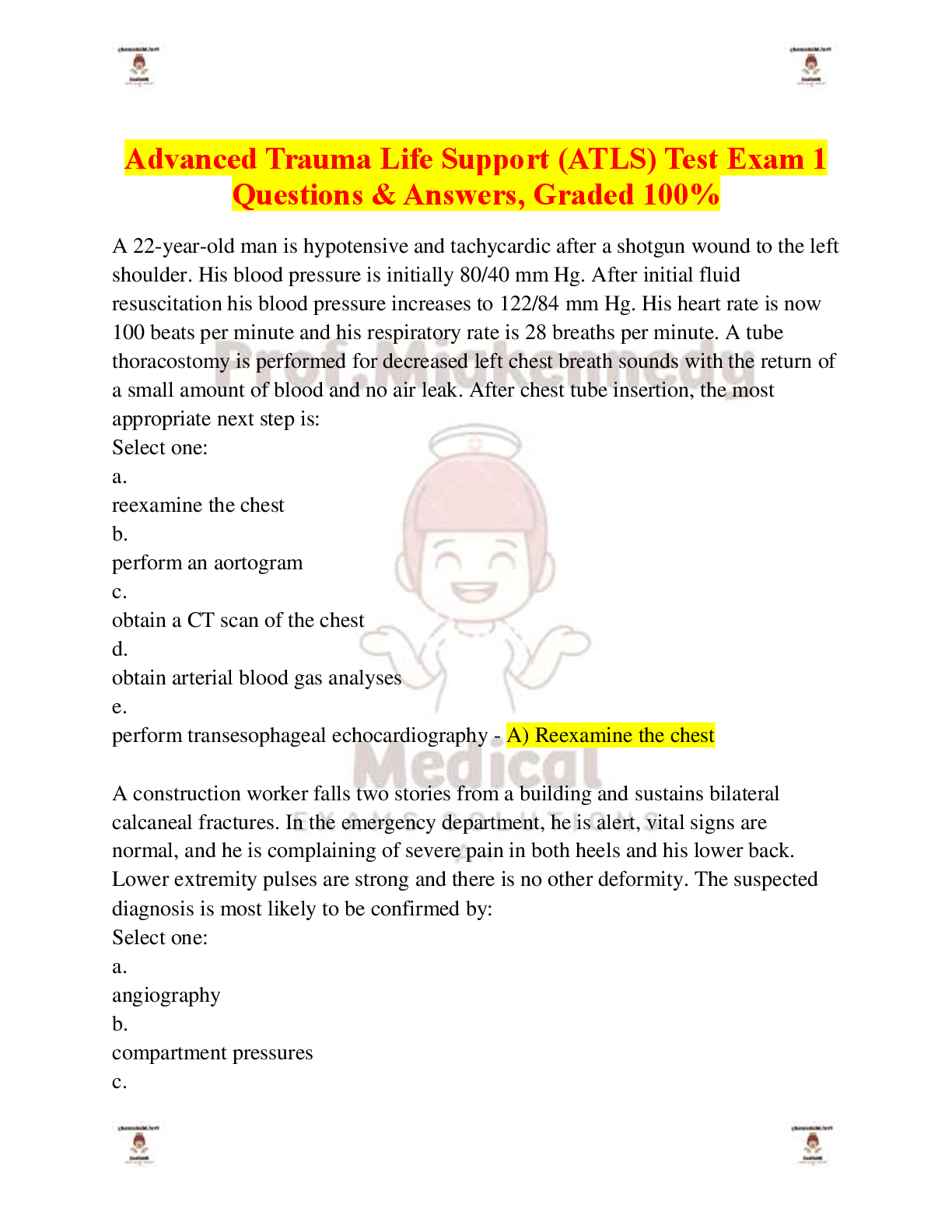
Advanced Trauma Life Support (ATLS) Test Exam 1 Questions & An...

$20
13 Pages
ADVANCED TRAUMA LIFE SUPPORT ATLS QUESTIONS AND ANSWERS 2024...

$4.5
8 Pages
PREHOSPITAL TRAUMA LIFE SUPPORT|PHTLS|POST TESTQUESTIONS WITH...

$6
14 Pages
ATLS Test 1 Latest 100% Answered (ADVANCED TRAUMA LIFE SUPPORT...

$7.5
11 Pages
Advanced Trauma Life Support (ATLS) REVISED & VERIFIED EXAM ST...

$20
76 Pages
Test Bank for International Trauma Life Support for Emergency...
$19
269 Pages
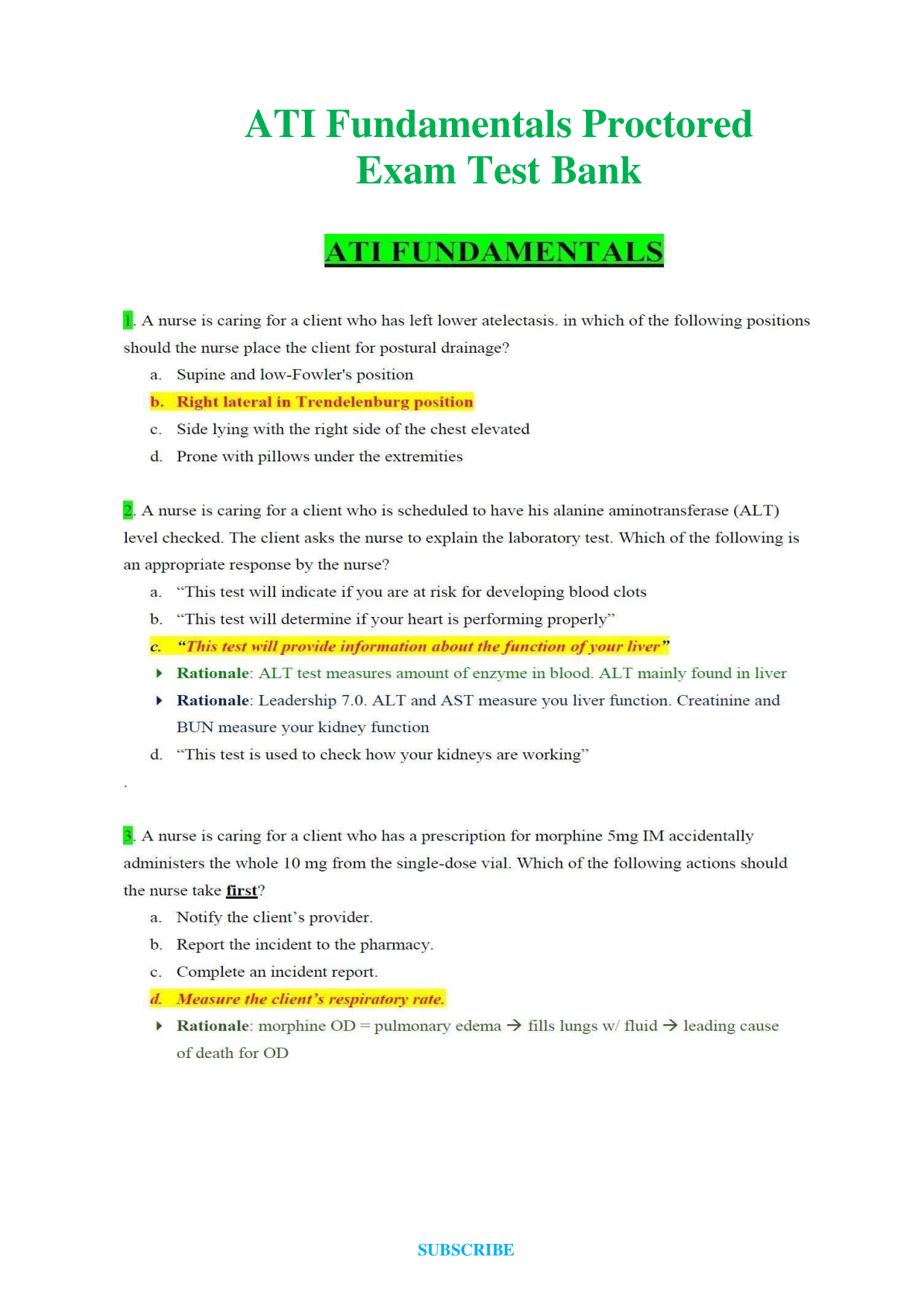
ATI Fundamentals Proctored Exam Test Bank | Contains ALL POS...

$16
25 Pages
ATLS POST TEST MCQ STUDY GUIDE 2026–2027 – ADVANCED TRAUMA LIF...
$12.5
38 Pages
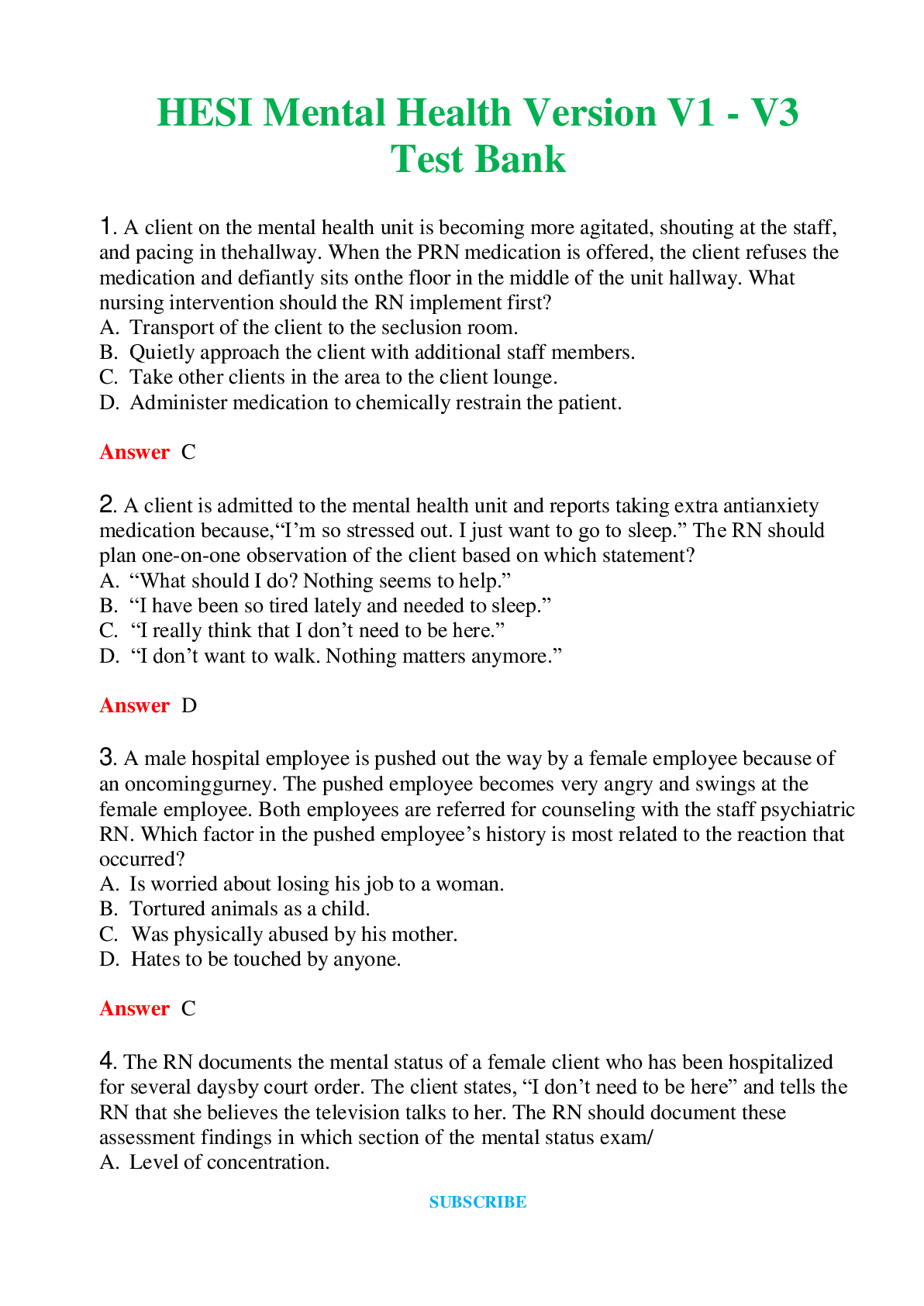
HESI Mental Health Version V1 - V3 Test Bank Questions and Ans...



$26
432 Pages
International Trauma Life Support for Emergency care Providers...

More related documents below