BioChemistry > QUESTIONS & ANSWERS > Biochemistry Test 1 Questions and Answers (All)
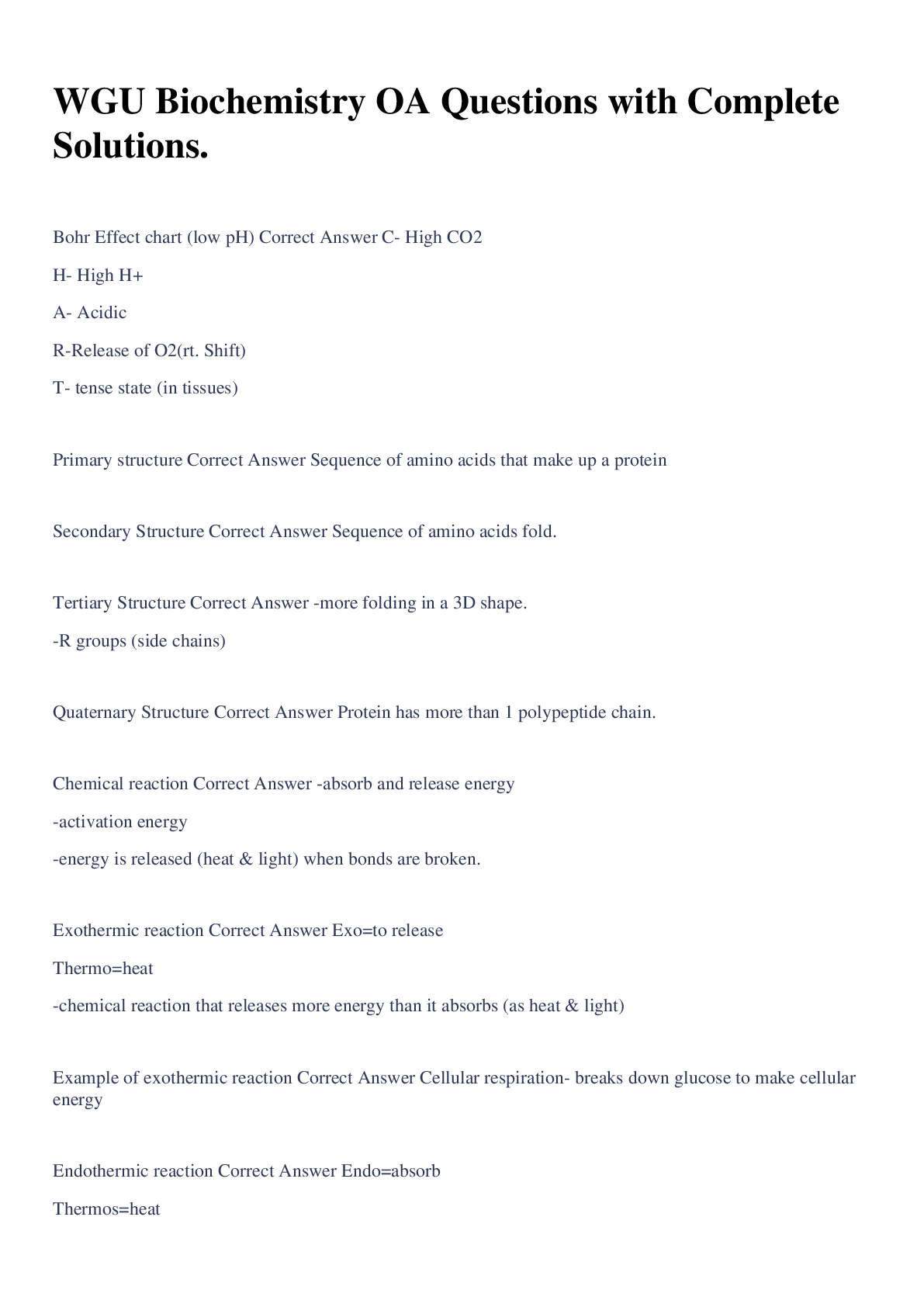
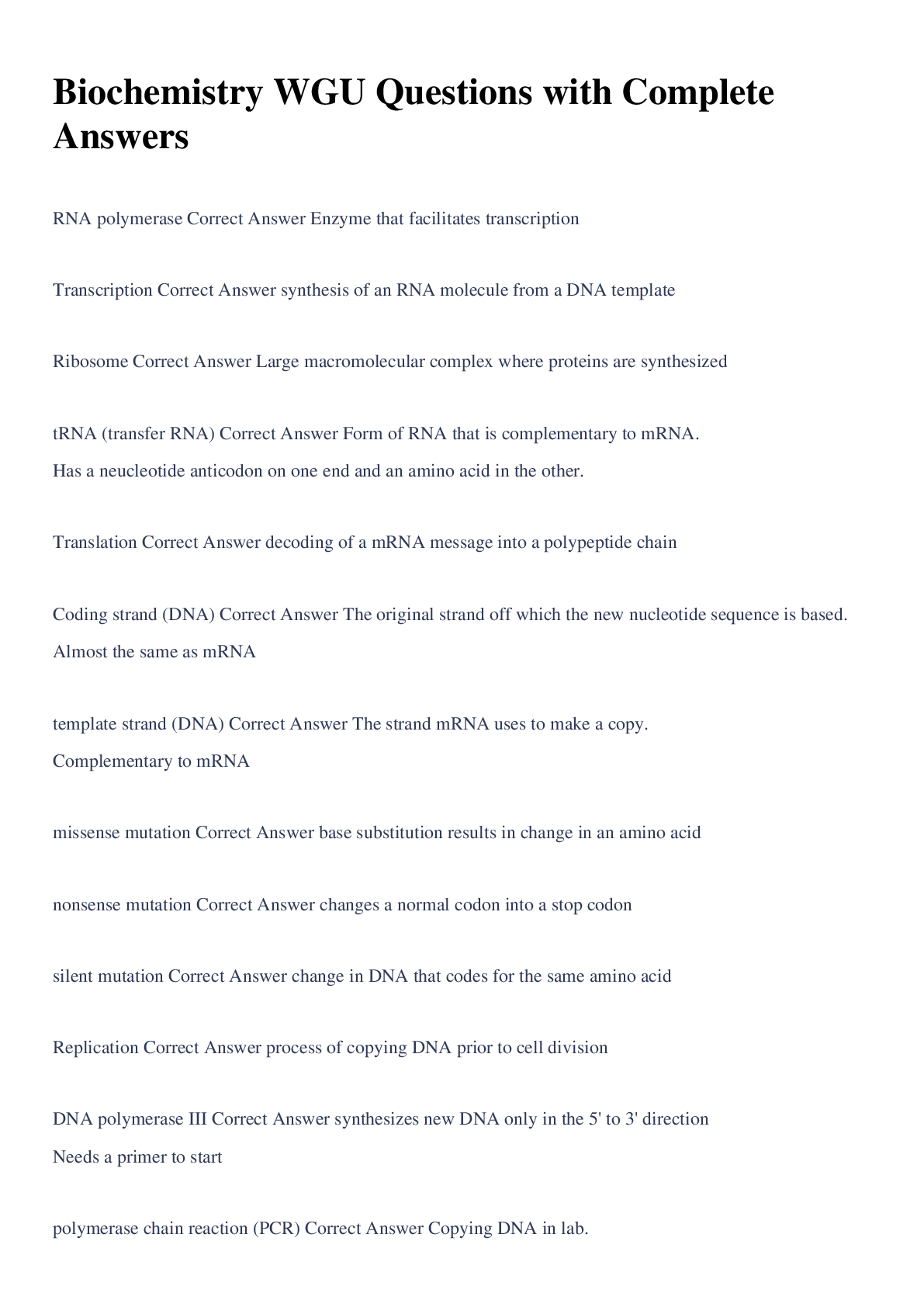
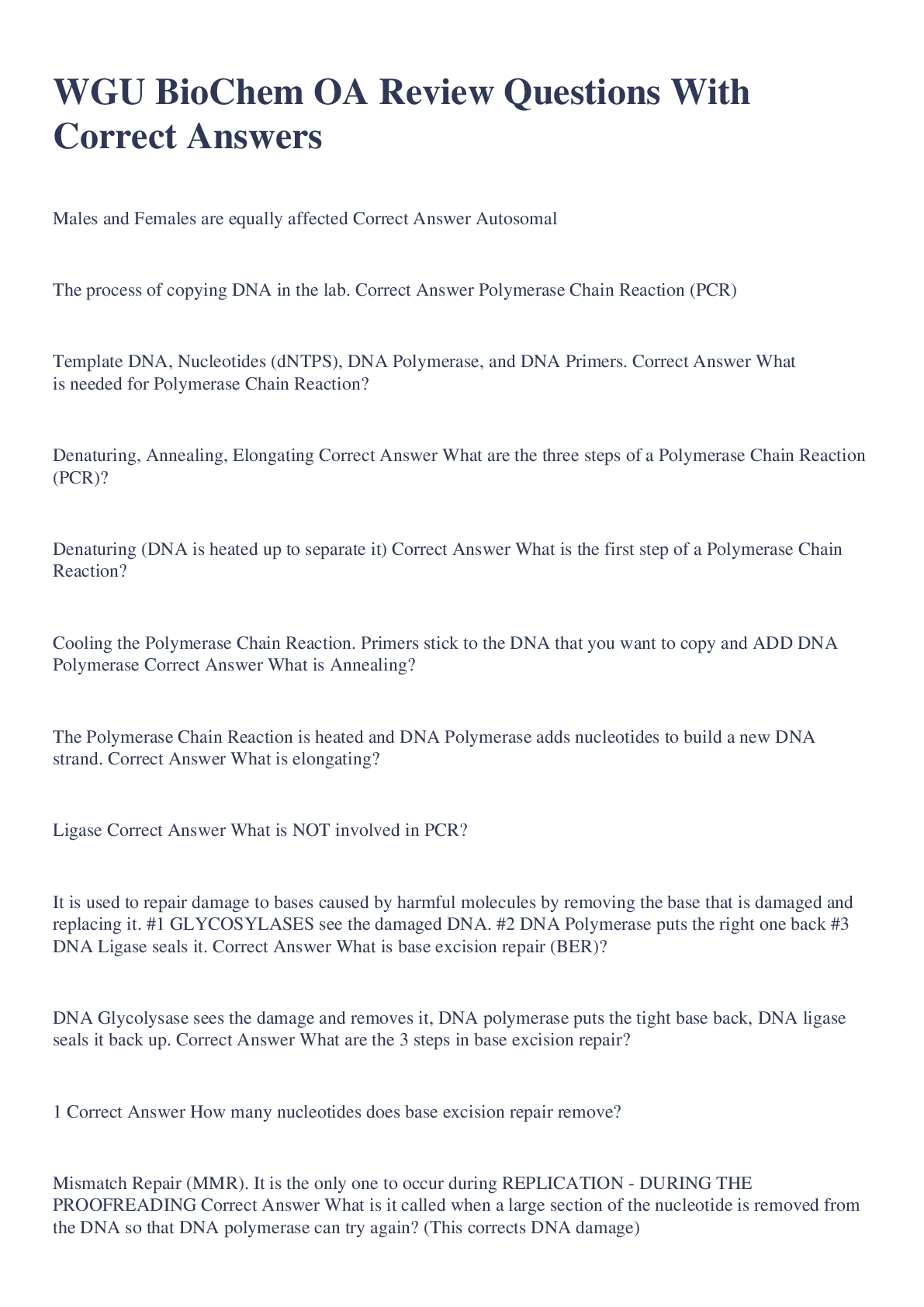
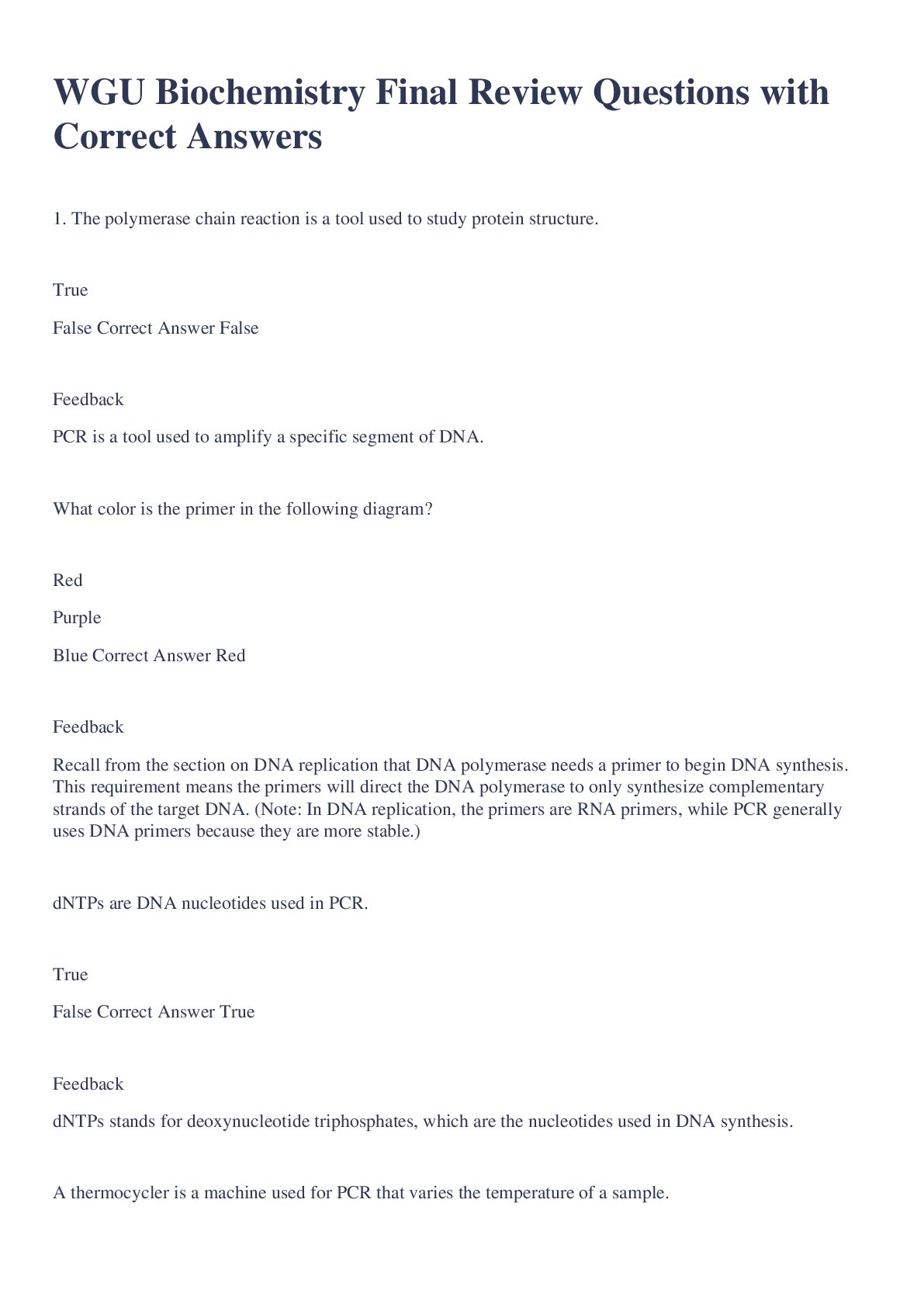
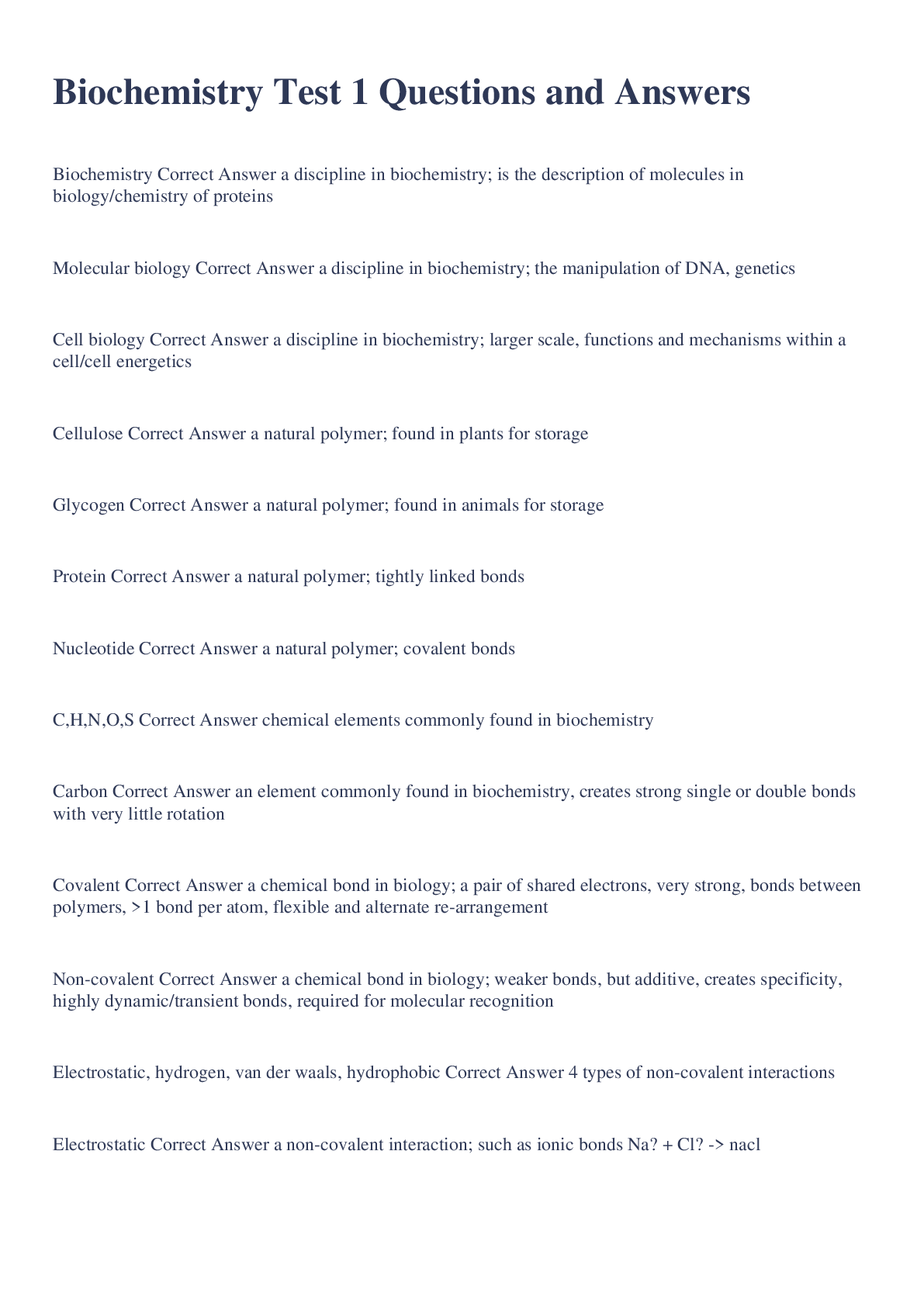
Biochemistry Test 1 Questions and Answers
Document Content and Description Below
Last updated: 3 years ago
Preview 1 out of 15 pages
Instant download
Buy this Document to get the Full Access Instantly
Provided by Students Who Aced it
We Verify Document Content to Gurantee Accuracy
Reviews( 0 )
Document information
Connected school, study & course
About the document
Uploaded On
Mar 31, 2023
Number of pages
15
Written in
All

Additional information
This document has been written for:
Uploaded
Mar 31, 2023
Downloads
0
Views
114
Topic Tags
Related Subjects & Courses
Explore similar study resources and related concepts.
Recommended For You
Get more on QUESTIONS & ANSWERS »
TEST BANK for Biochemistry A Short Course, 4e by John Tymoczko...

Lehninger Principles of Biochemistry 8th Edition by David Nels...
Biochemistry 10th Edition By Berg, Gatto, Hines, Tymoczko, Str...
NUR 2356 - NUR2356 Multidimensional Care I Final exam Review /...
Biochemistry, 1e Roger Miesfeld, Megan McEvoy (Solutions Manua...

Exam #3 PN 2 Know what the left temporal lobe of brain affects...

Summary PN 2 STUDY REVIEW FOR FINAL EXAM (complete solution gu...

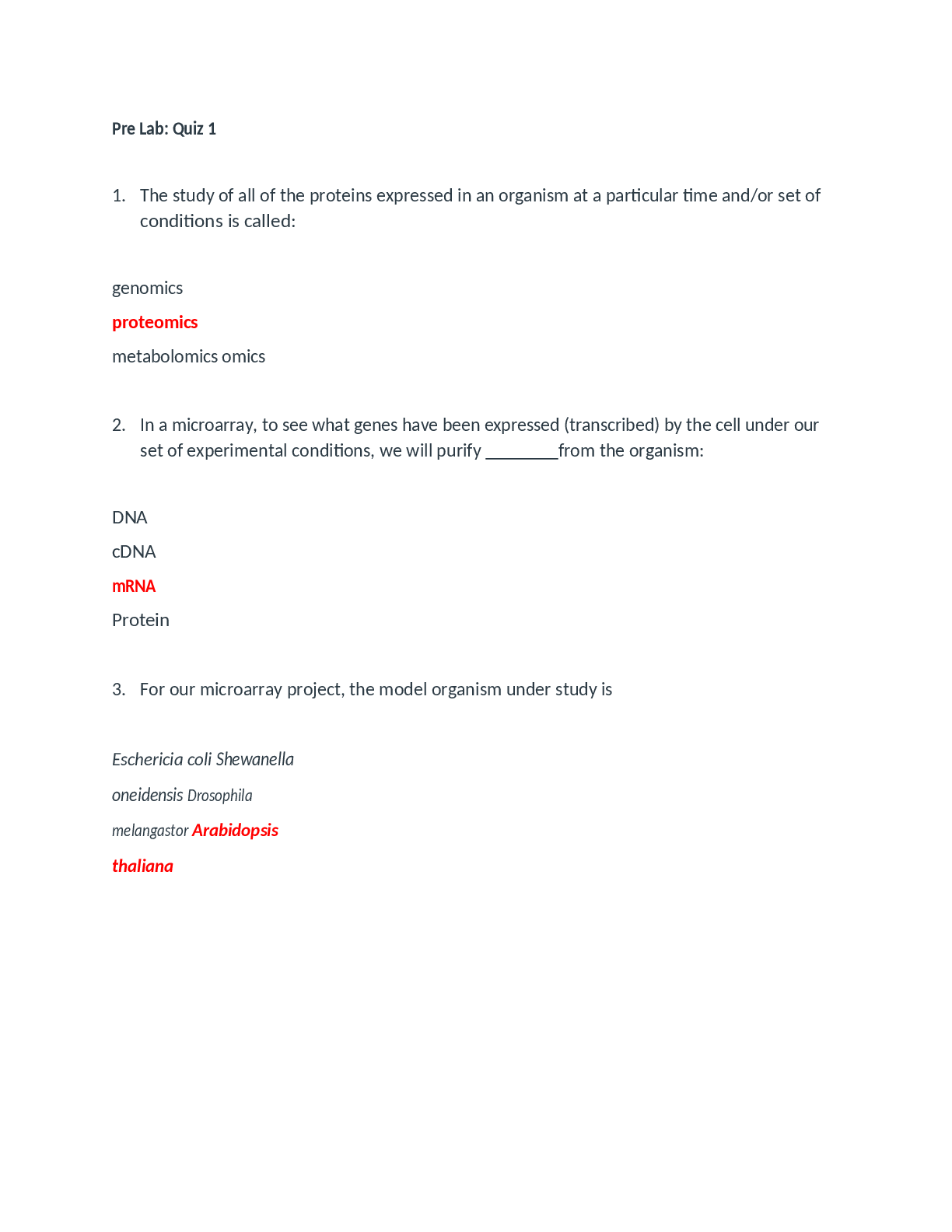

Biochemistry Readiness Check 1B Western Governors University -...

Miami Dade College, Miami - BC 2085Ch 07 - Anatomy and Physiol...
SOLUTIONS MANUAL for Biochemistry 1st Edition by Roger Miesfel...


BIOCHEM C785 Kaleys Comprehensive Study Guide final (Completed...