Computer Science > FINAL EXAM > UIUC-CS 412 Introduction To Data Mining Final Exam Solution. 150 points (All)
UIUC-CS 412 Introduction To Data Mining Final Exam Solution. 150 points
Document Content and Description Below
Last updated: 7 months ago
Preview 1 out of 17 pages
Instant download

Loading document previews ...
Buy this Document to get the Full Access Instantly
Provided by Students Who Aced it
We Verify Document Content to Gurantee Accuracy
Reviews( 0 )
Document information
Connected school, study & course
About the document
Uploaded On
Apr 02, 2023
Number of pages
17
Written in
All

Additional information
This document has been written for:
Uploaded
Apr 02, 2023
Downloads
0
Views
112
Topic Tags
Recommended For You
Get more on FINAL EXAM »
CS 412 Introduction To Data Mining Final Exam, Version 1. 150...

UIUC-CS412 An Introduction to Data Mining Final Exam 2019. 100...

UIUC-CS412 An Introduction to Data Mining Final Exam. 100 mar...
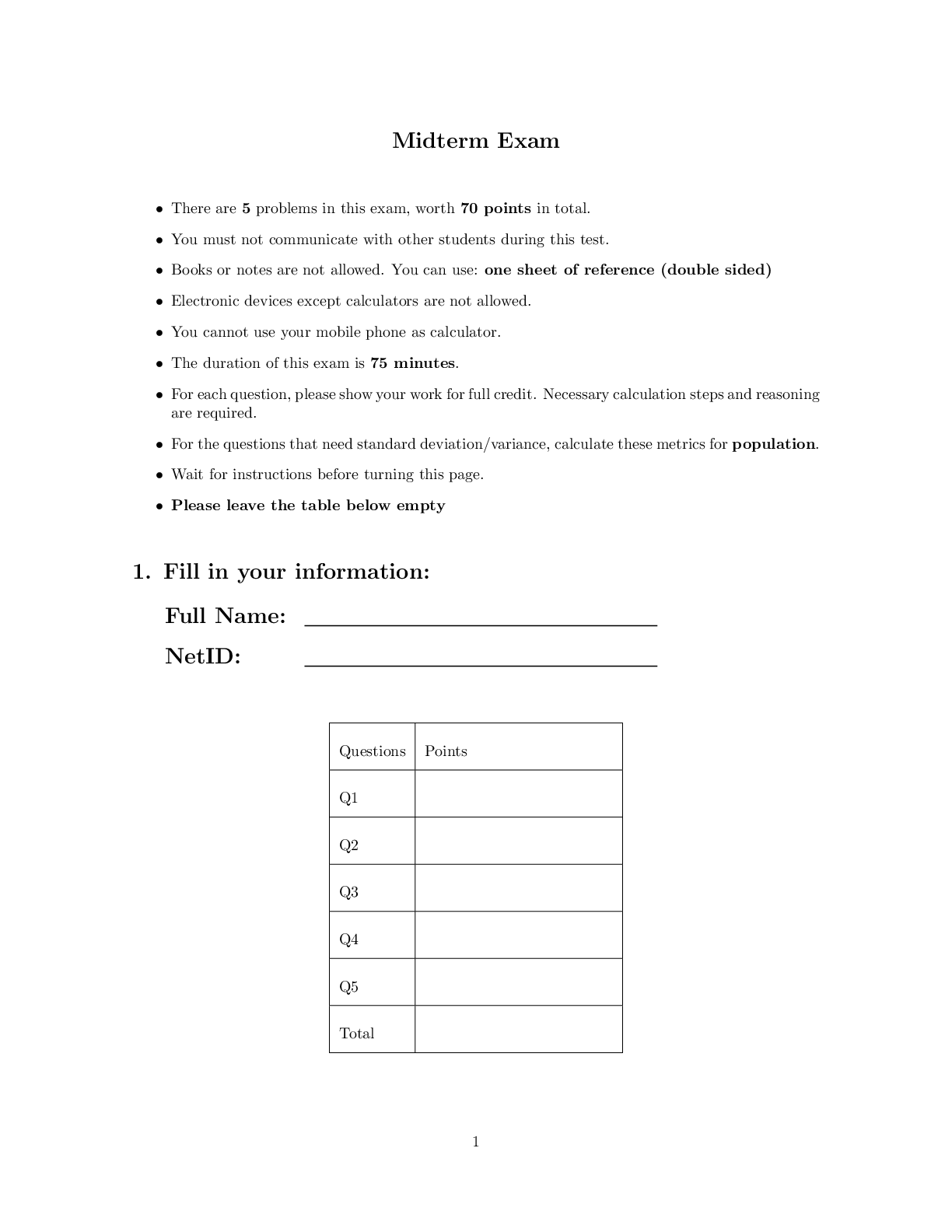
CS 412 Introduction To Data Mining - University of Illinois-20...
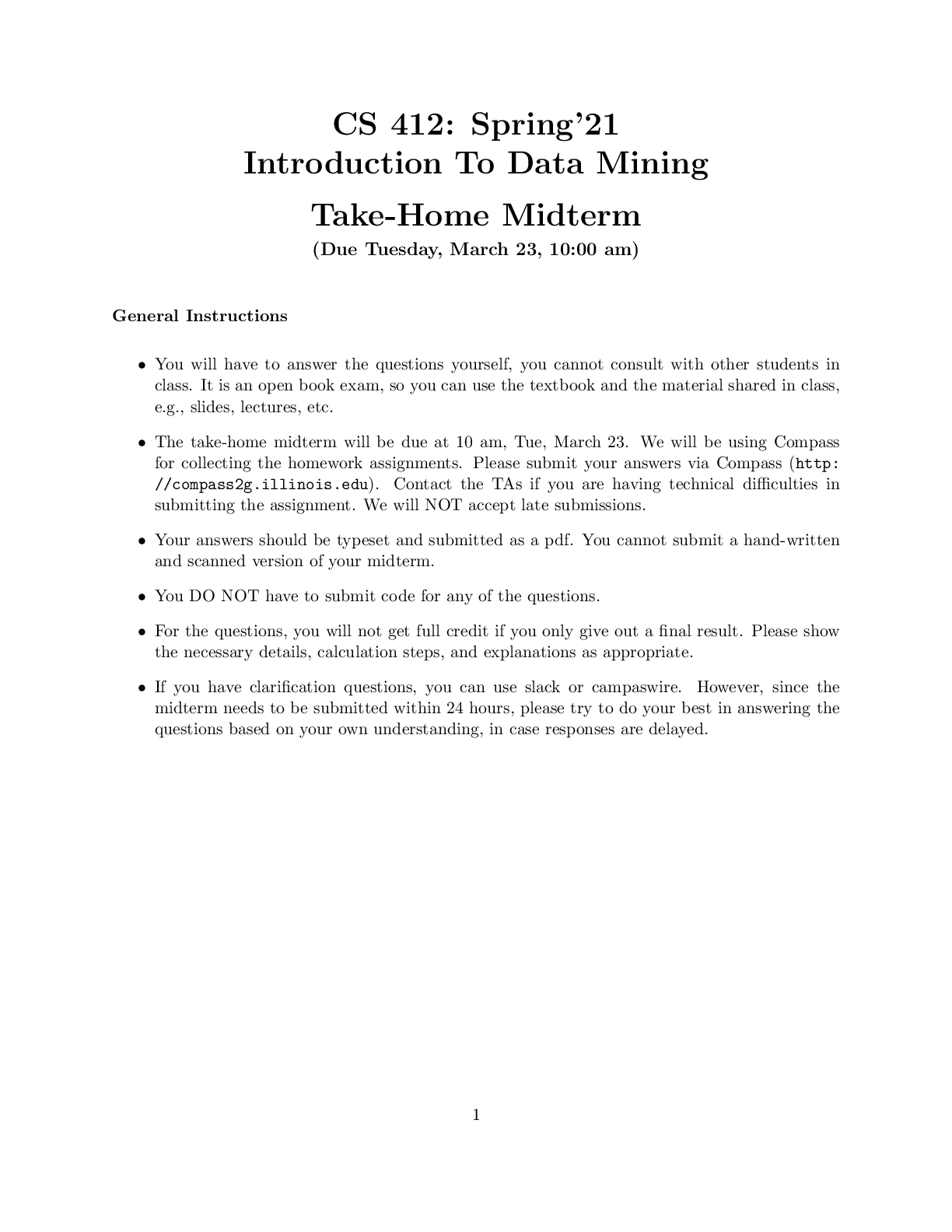
CS 412 Introduction To Data Mining - University of Illinois_Ta...
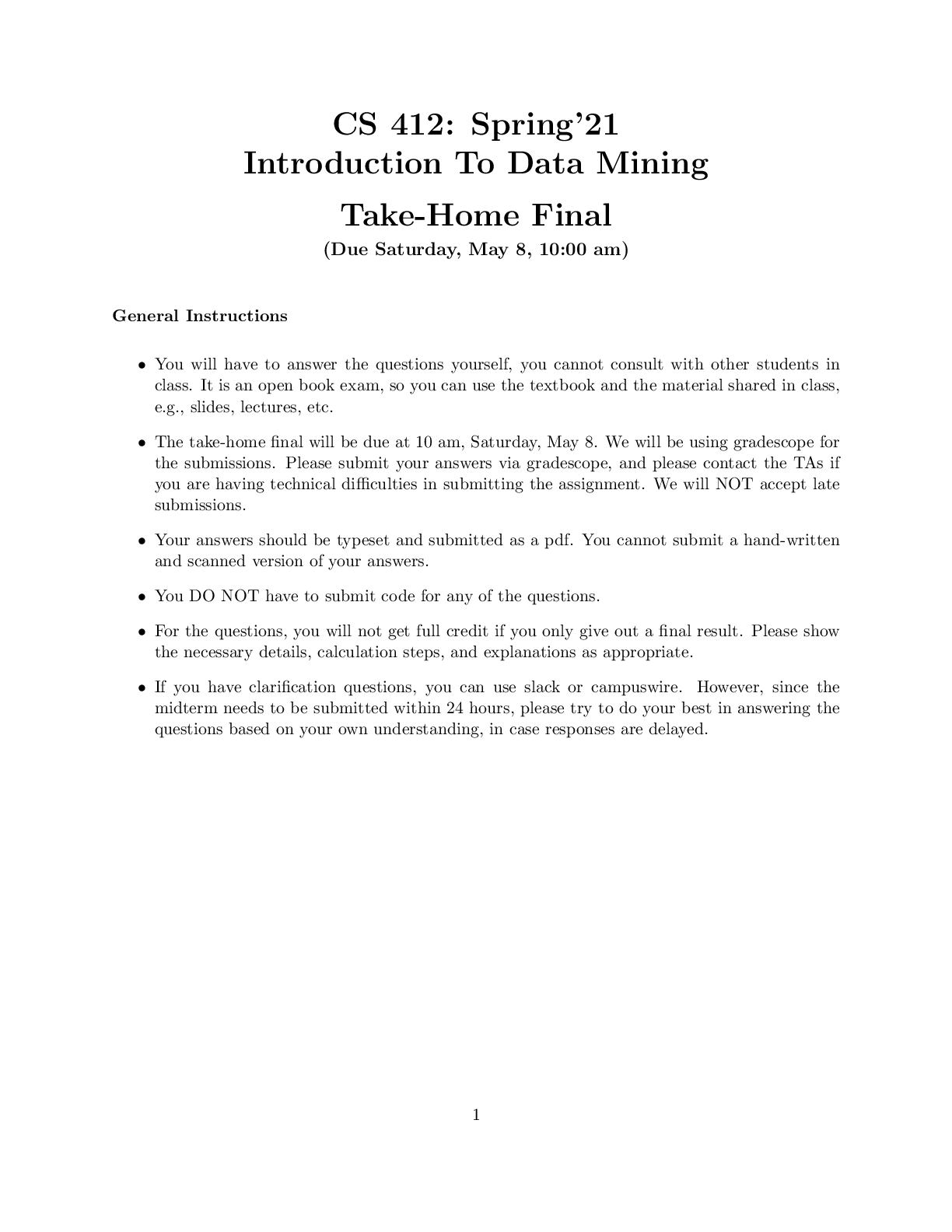
CS 412 Introduction To Data Mining - University of Illinois_Mi...


hcs412_team5wk3_Keeping_a_project_on_track.docx Keeping a P...

group_5_HCS412_Week_5_Challenges_of_Project_Management.docx...

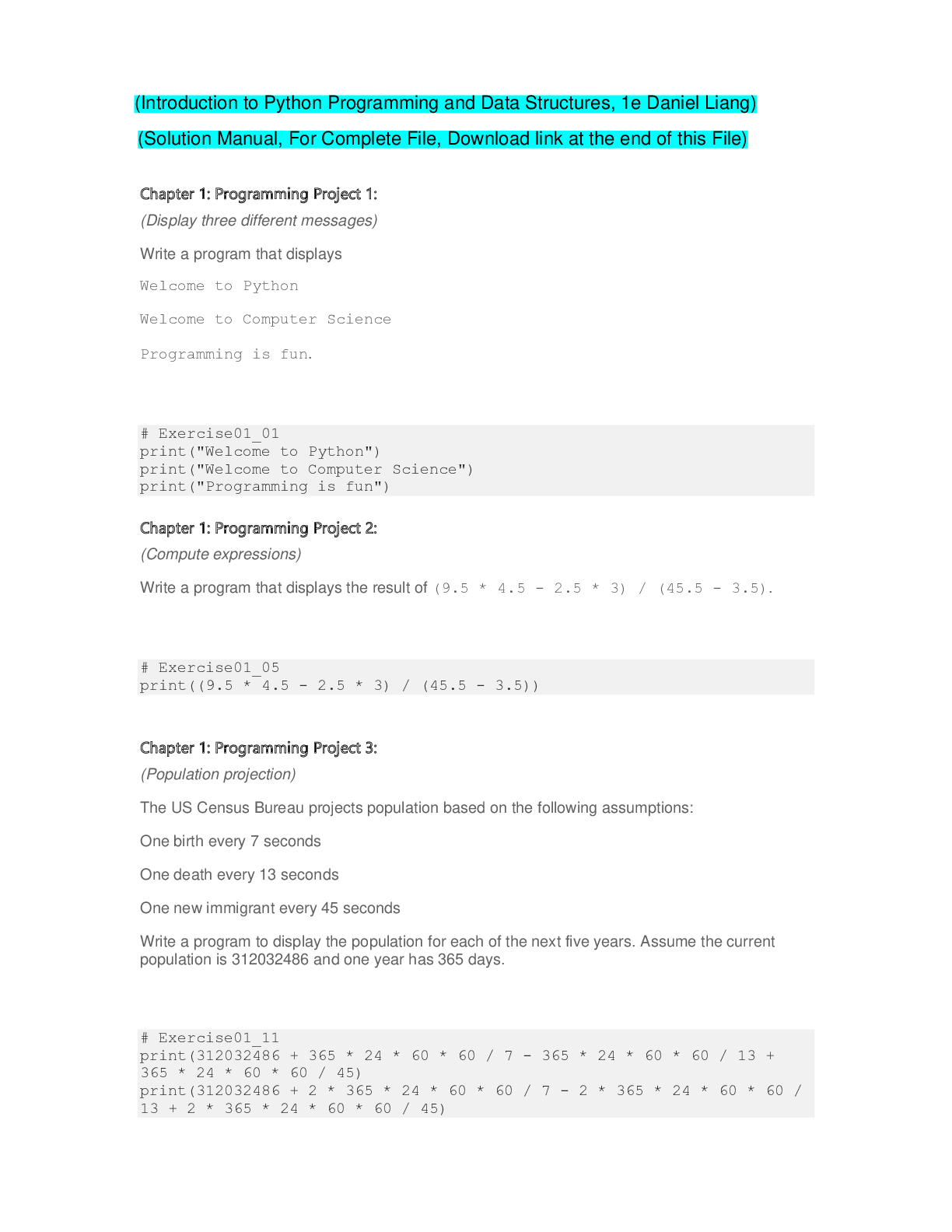
Introduction to Python Programming and Data Structures 1st Edi...
.png)
Solution Manual for Artificial Intelligence A Modern Approach,...

Introduction to Programming with Java A Problem Solving Approa...

Introduction to JavaScript Programming with XML and PHP 1st Ed...

Introduction to Parallel Computing 2nd Edition By Ananth Grama...

Introduction to Java Programming, Brief Version 11th Edition B...
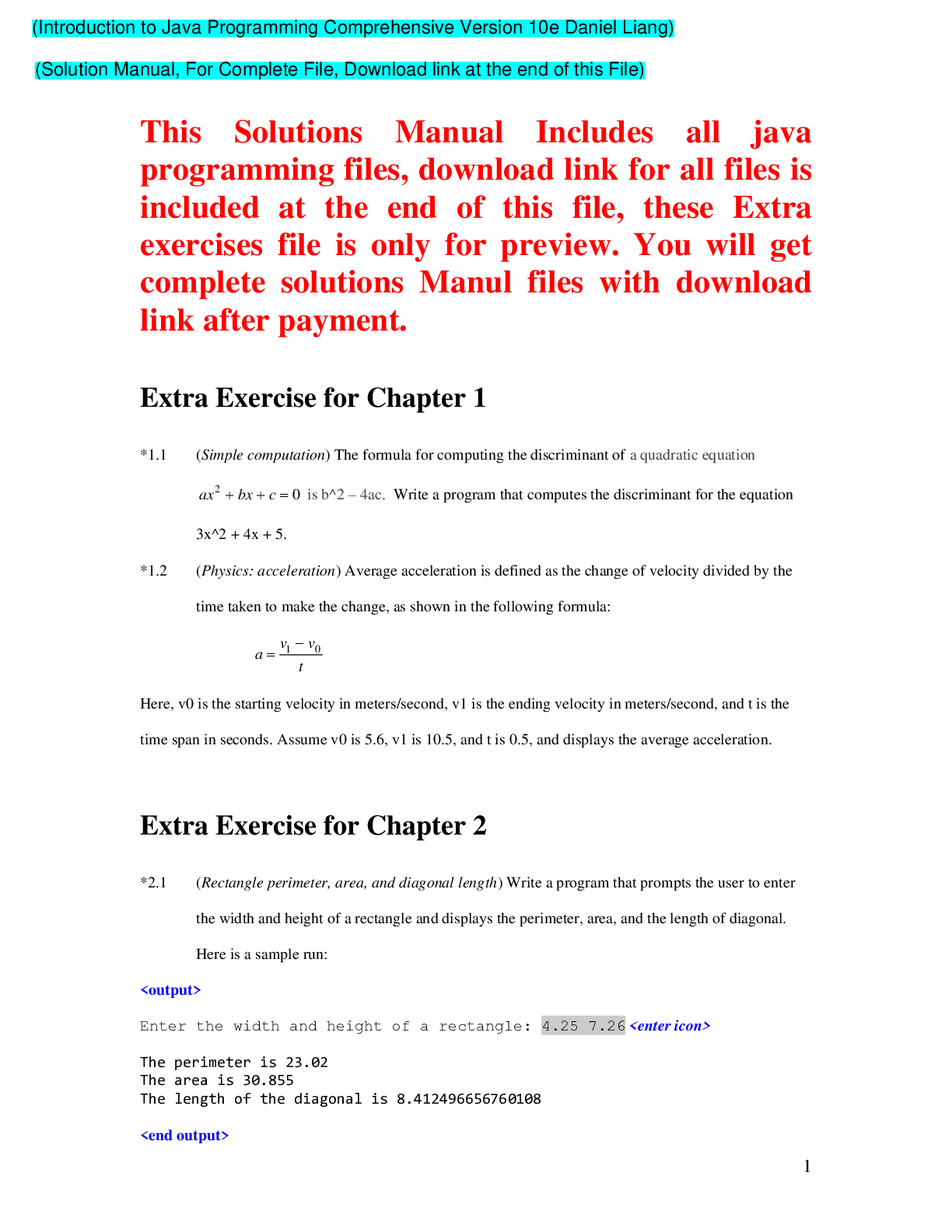
Introduction to Java Programming Comprehensive Version 10th Ed...

Introduction to Mechanism Design with Computer Applications 1s...