Operations Management > QUESTIONS & ANSWERS > QUAL 556 Human Aspects Continuous Improvement - Eastern Michigan University. CHAPTER 07—Designing (All)
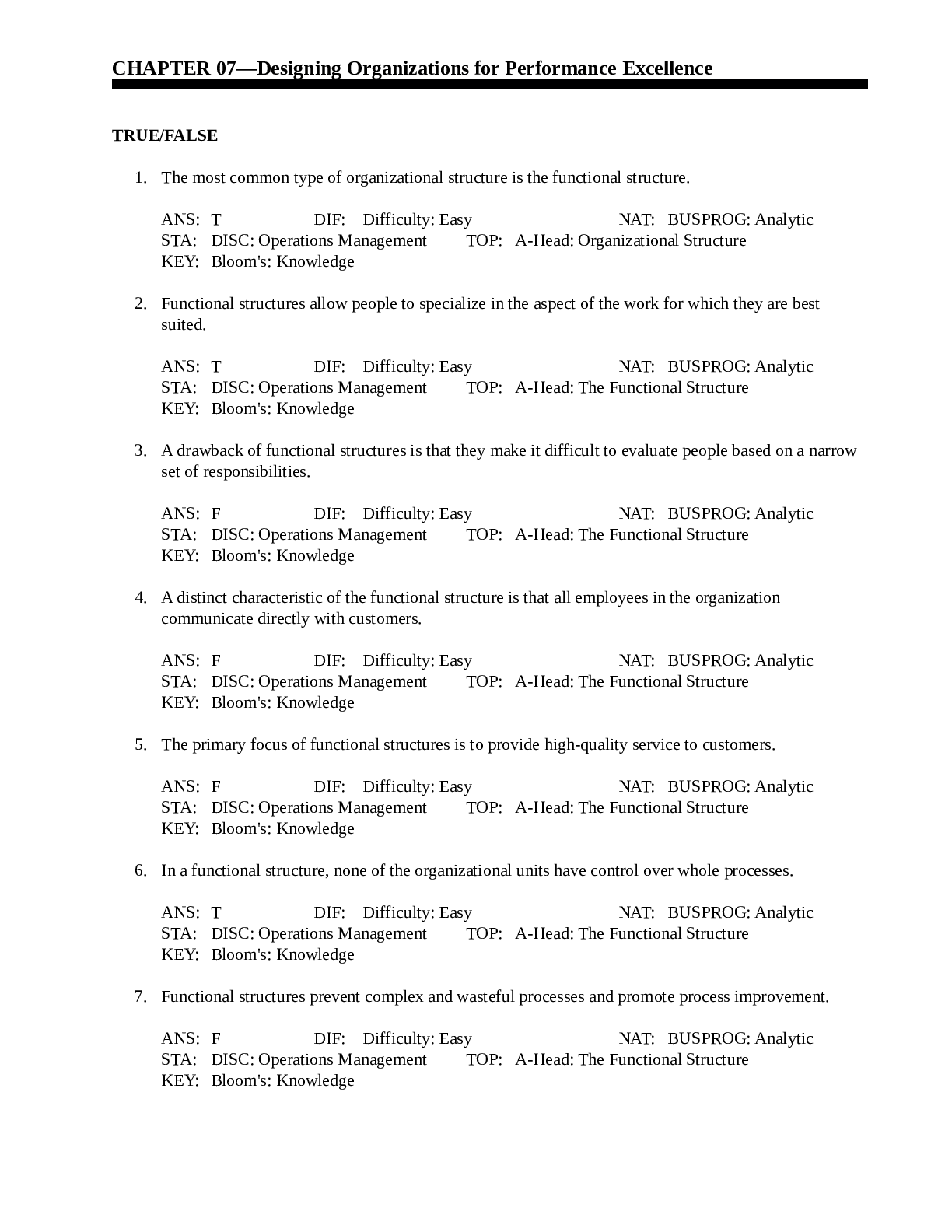
QUAL 556 Human Aspects Continuous Improvement - Eastern Michigan University. CHAPTER 07—Designing Organizations for Performance Excellence
Document Content and Description Below
Last updated: 3 years ago
Preview 1 out of 17 pages
Instant download
Buy this Document to get the Full Access Instantly
Provided by Students Who Aced it
We Verify Document Content to Gurantee Accuracy
Reviews( 0 )
Document information
Connected school, study & course
About the document
Uploaded On
Apr 02, 2023
Number of pages
17
Written in
All

Additional information
This document has been written for:
Uploaded
Apr 02, 2023
Downloads
0
Views
188
Topic Tags
Related Subjects & Courses
Explore similar study resources and related concepts.
Recommended For You
Get more on QUESTIONS & ANSWERS »
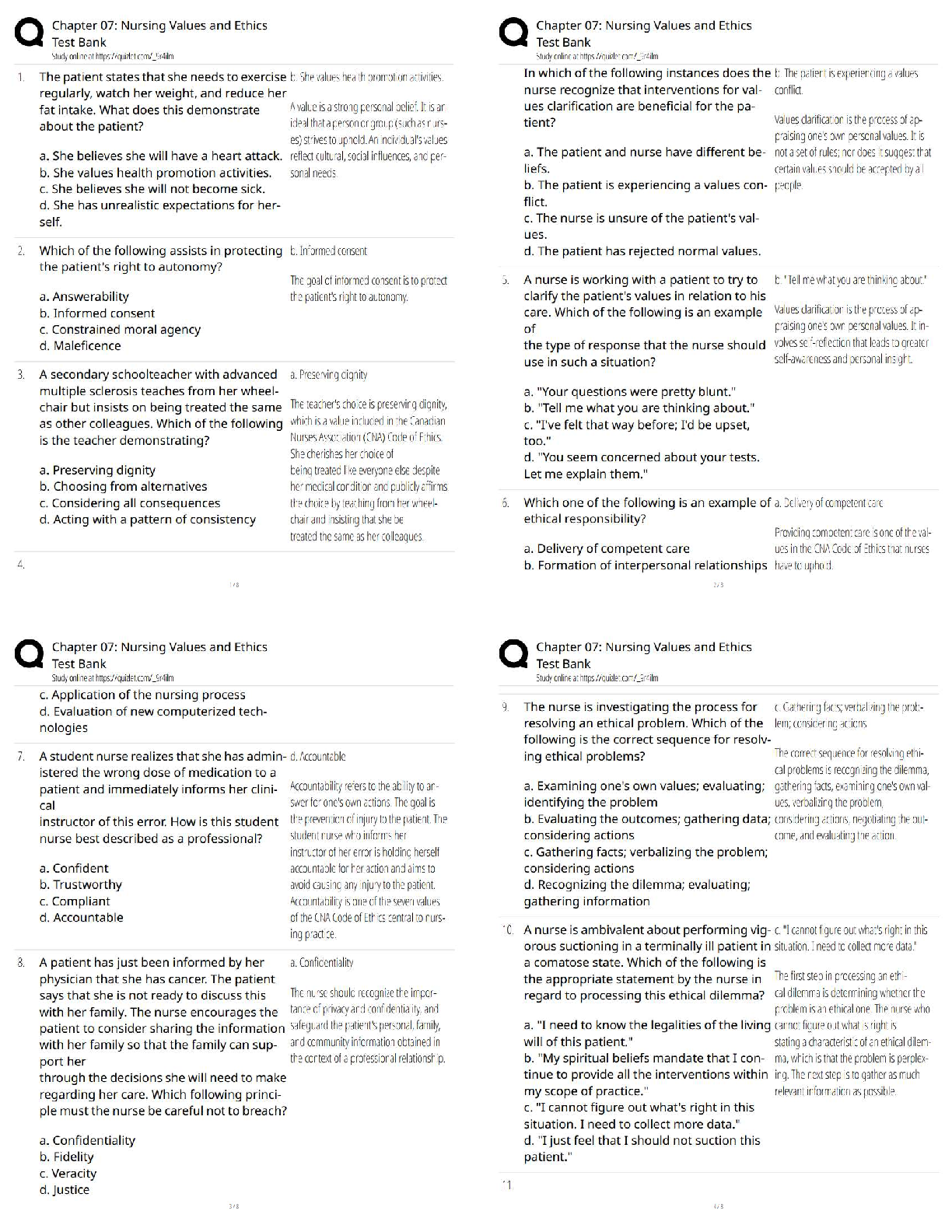
Milestone Chapter 07: End-of-Life Care (Concepts for Interprof...
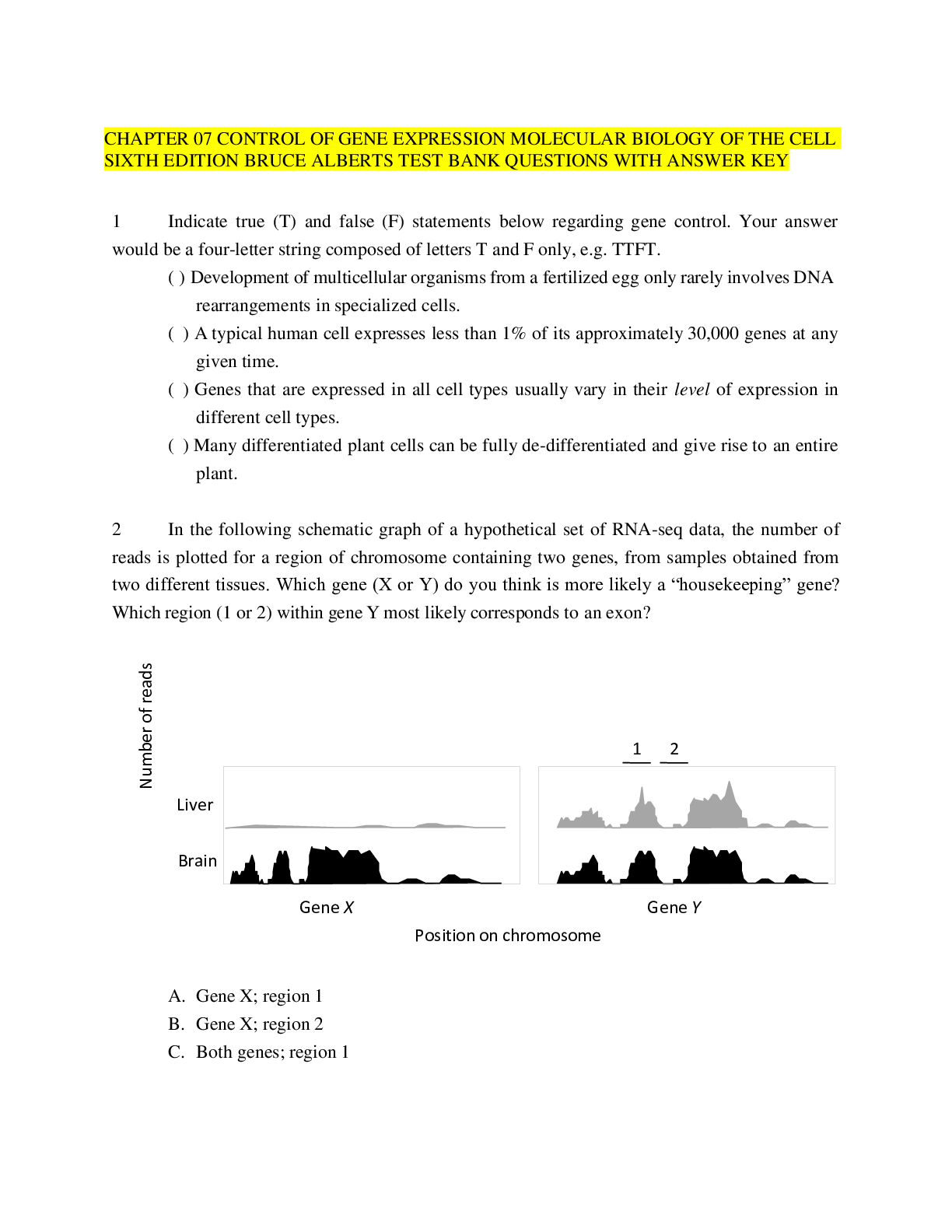
CHAPTER 07 CONTROL OF GENE EXPRESSION MOLECULAR BIOLOGY OF THE...
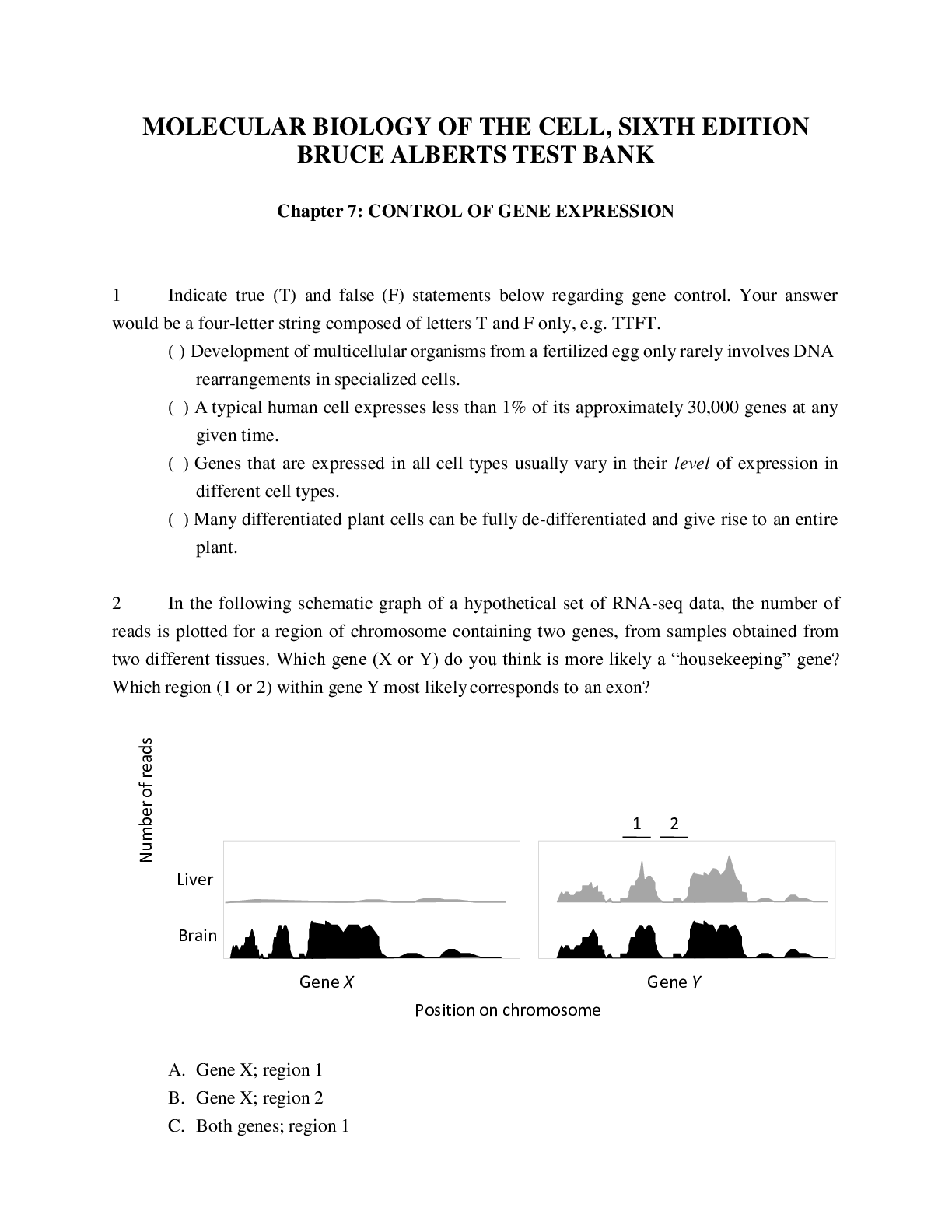
CHAPTER 07 CONTROL OF GENE EXPRESSION MOLECULAR BIOLOGY OF THE...
 Questions with Complete Answers.png)
TEST BANK CHAPTER 07_ COMMUNITY HEALTH PLANNING, IMPLEMENTATIO...
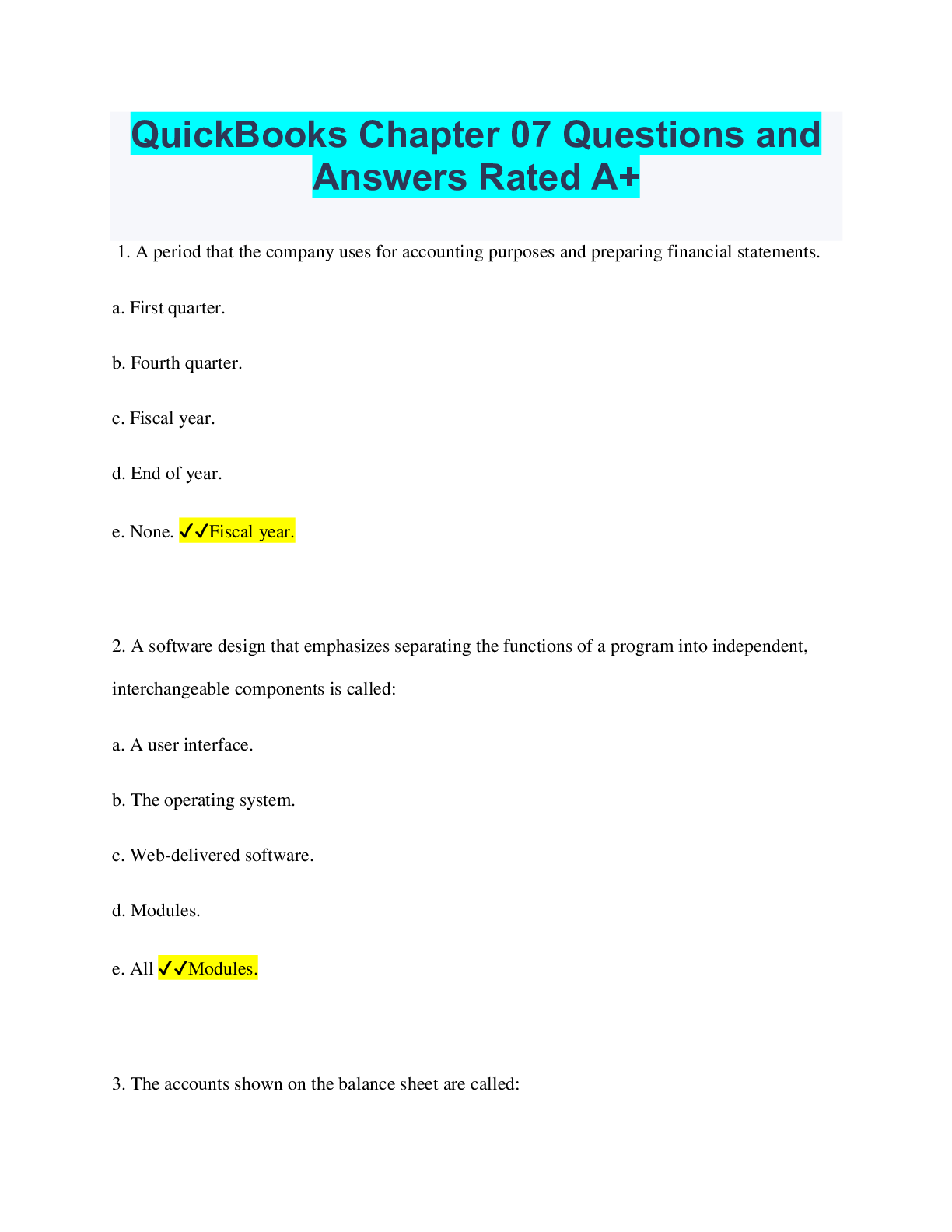
.png)
Sophia Milestone Adult Nursing (NUR 105) Med Surg test Latest...

NUR 1172 / NUR1172 Chapter 07: Minerals and Water Test Bank

ATI Chapter 07 Vitamins, Grodner and EscottStump Nutritional...

ATI Chapter 07 Vitamins, Grodner and Escott-Stump Nutritional...

Atkinson, Solutions Manual t/a Management Accounting, 6th Edit...
.png)
NURS 8022 Chapter 07: Adaptive Immunity Huether & McCance: Und...

Chapter 07: Integumentary System and Body Temperature Herlihy:...
Chapter 07: Pain Assessment and Management in Children_ Comple...
 Med Surg test questions Chapter 07 Overview of Transcultural Nursing.png)
Adult Nursing (NUR 105) Med Surg test questions Chapter 07 Ove...
ATI Chapter 07 Vitamins, Grodner and Escott-Stump Nutritional...

PHYSICAL EXAMINATION AND HEALTH ASSESMENT BY JARVIS:Chapter 07...