*NURSING  >  AQA QUESTION and MARK SCHEMES  >  HESI FUNDAMENTALS PROCTORED EXAM 2023 LATEST (All)

HESI FUNDAMENTALS PROCTORED EXAM 2023 LATEST

Document Content and Description Below

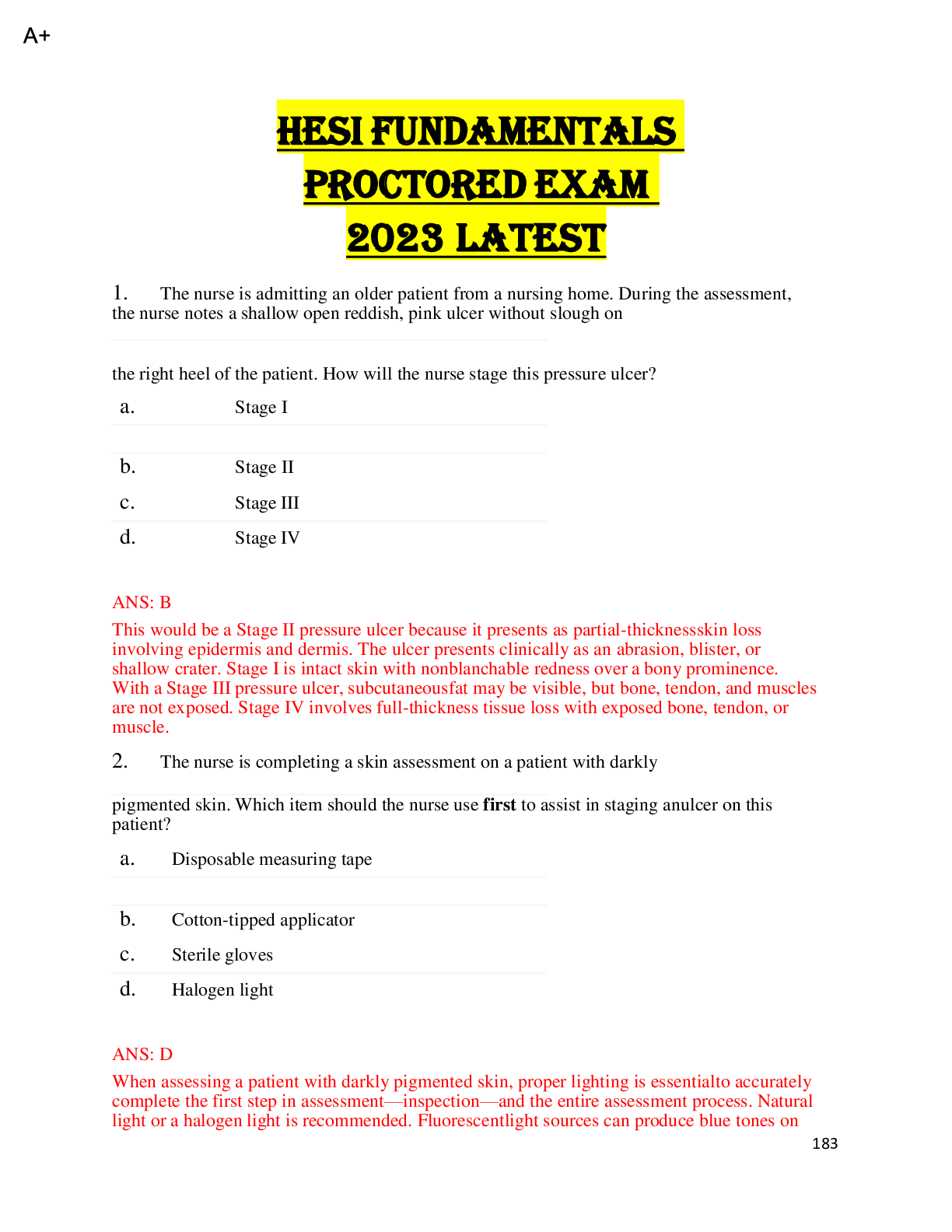
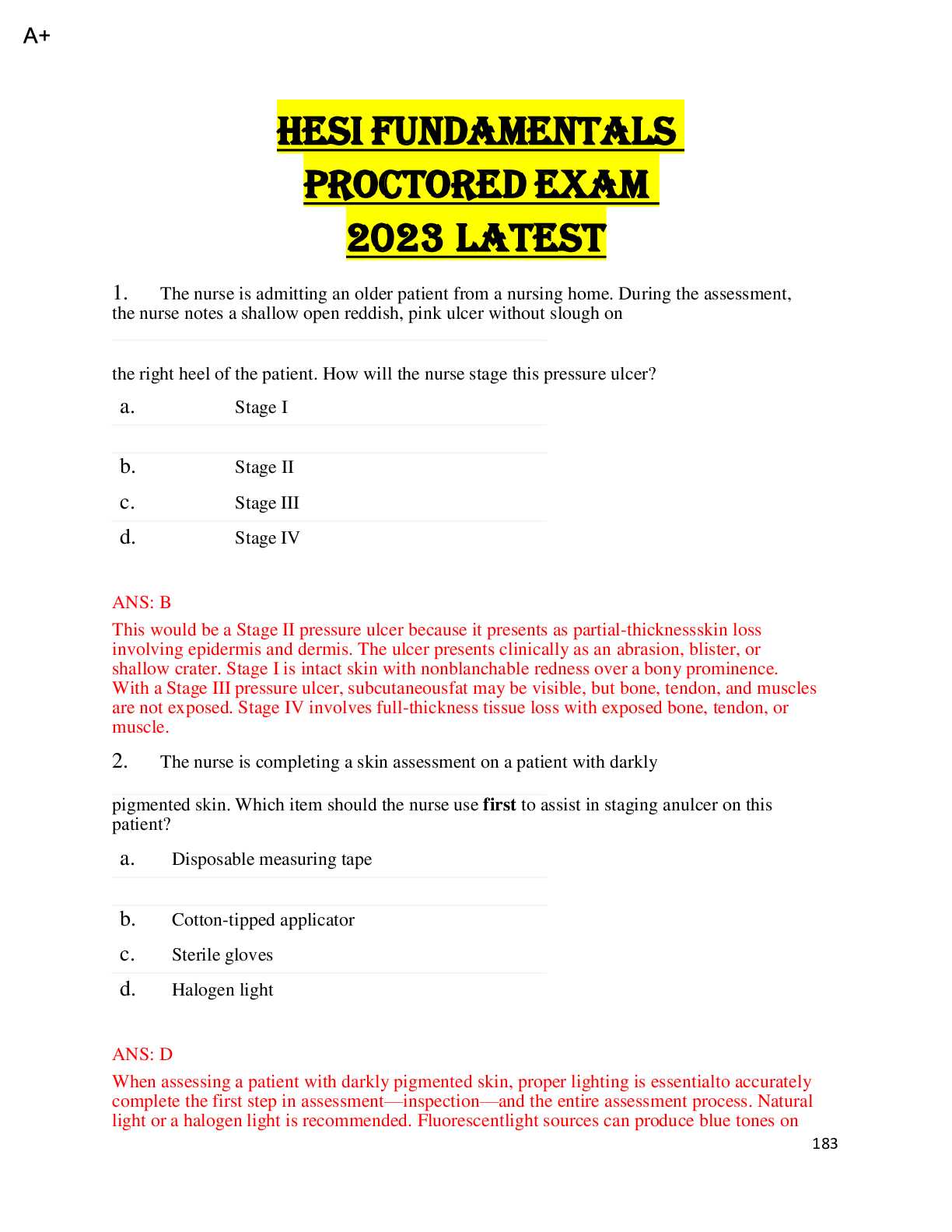
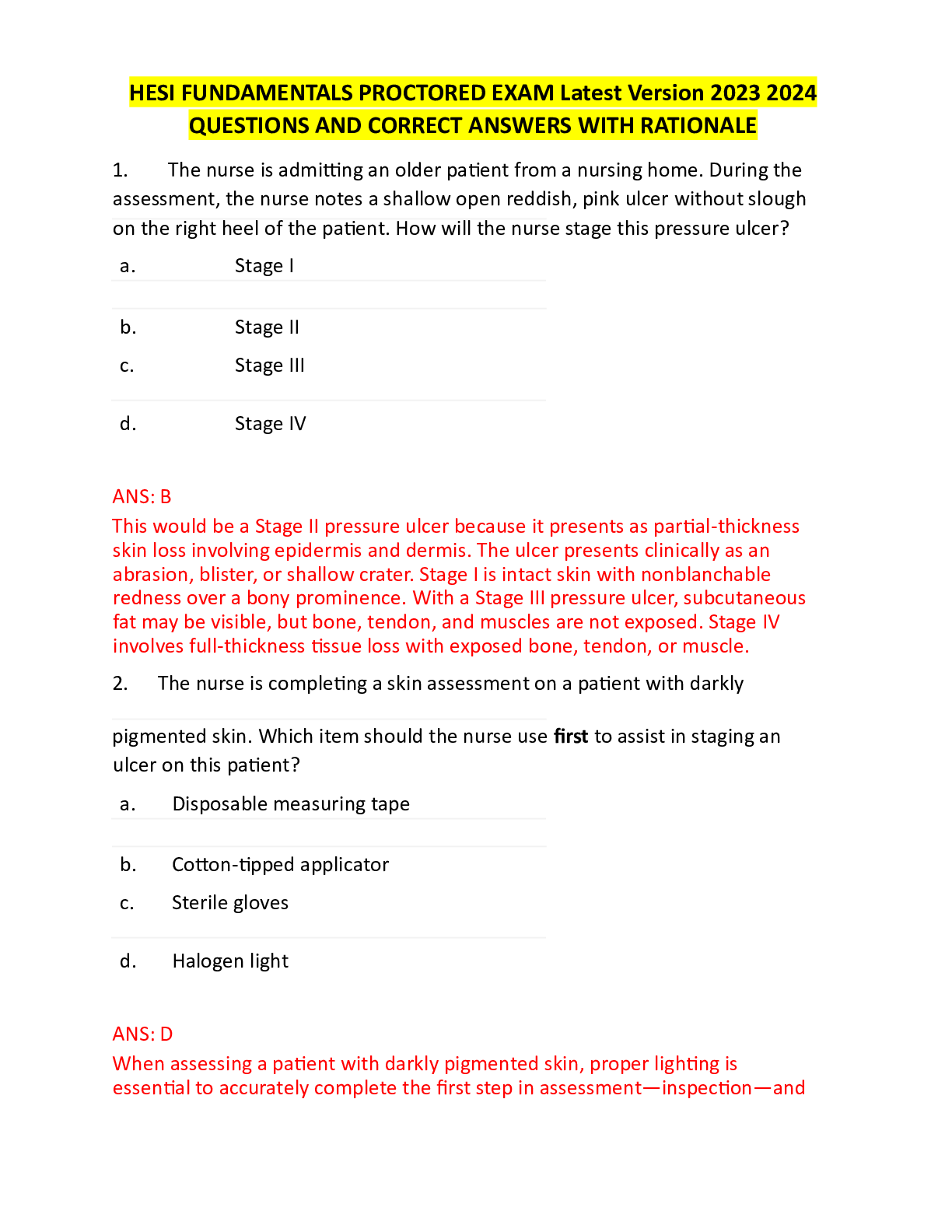
1. The nurse is admitting an older patient from a nursing home. During the assessment, the nurse notes a shallow open reddish, pink ulcer without slough on the right heel of the patient. How will th ... e nurse stage this pressure ulcer? a. Stage I b. Stage II c. Stage III d. Stage IV ANS: B This would be a Stage II pressure ulcer because it presents as partial-thicknessskin loss involving epidermis and dermis. The ulcer presents clinically as an abrasion, blister, or shallow crater. Stage I is intact skin with nonblanchable redness over a bony prominence. With a Stage III pressure ulcer, subcutaneousfat may be visible, but bone, tendon, and muscles are not exposed. Stage IV involves full-thickness tissue loss with exposed bone, tendon, or muscle. 2. The nurse is completing a skin assessment on a patient with darkly pigmented skin. Which item should the nurse use first to assist in staging anulcer on this patient? a. Disposable measuring tape b. Cotton-tipped applicator c. Sterile gloves d. Halogen light ANS: D When assessing a patient with darkly pigmented skin, proper lighting is essentialto accurately complete the first step in assessment—inspection—and the entire assessment process. Natural light or a halogen light is recommended. Fluorescentlight sources can produce blue tones on A+ 184 darkly pigmented skin and can interfere with an accurate assessment. Other items that could possibly be used during the A+ 185 assessment include gloves for A+ infection control, a disposable measuring device to measure the size ofthe wound, and a cotton-tipped applicator to measure the depth of the wound, but these items are not the first items used. 3. The nurse is caring for a patient with a Stage IV pressure ulcer. Which type of healing will the nurse consider when planning care forthis patient? a. Partial-thickness wound repair b. Full-thickness wound repair c. Primary intention d. Tertiary intention ANS: B Stage IV pressure ulcers are full-thickness wounds that extend into the dermis and heal by scar formation because the deeper structures do not regenerate, hence the need for fullthickness repair. The full-thickness repair has four phases: hemostasis, inflammatory, proliferative, and maturation. A wound heals by primary intention when wounds such as surgical wounds have little tissue loss; the skin edges are approximated or closed, and the risk for infectionis low. Partial-thickness repairs are done on partial-thickness wounds that are shallow, involving loss of the epidermis and maybe partial loss of the dermis. These wounds heal by regenerati [Show More]

Last updated: 2 years ago

Preview 1 out of 15 pages

Buy Now

Instant download

We Accept:

Payment methods accepted on Scholarfriends (We Accept)
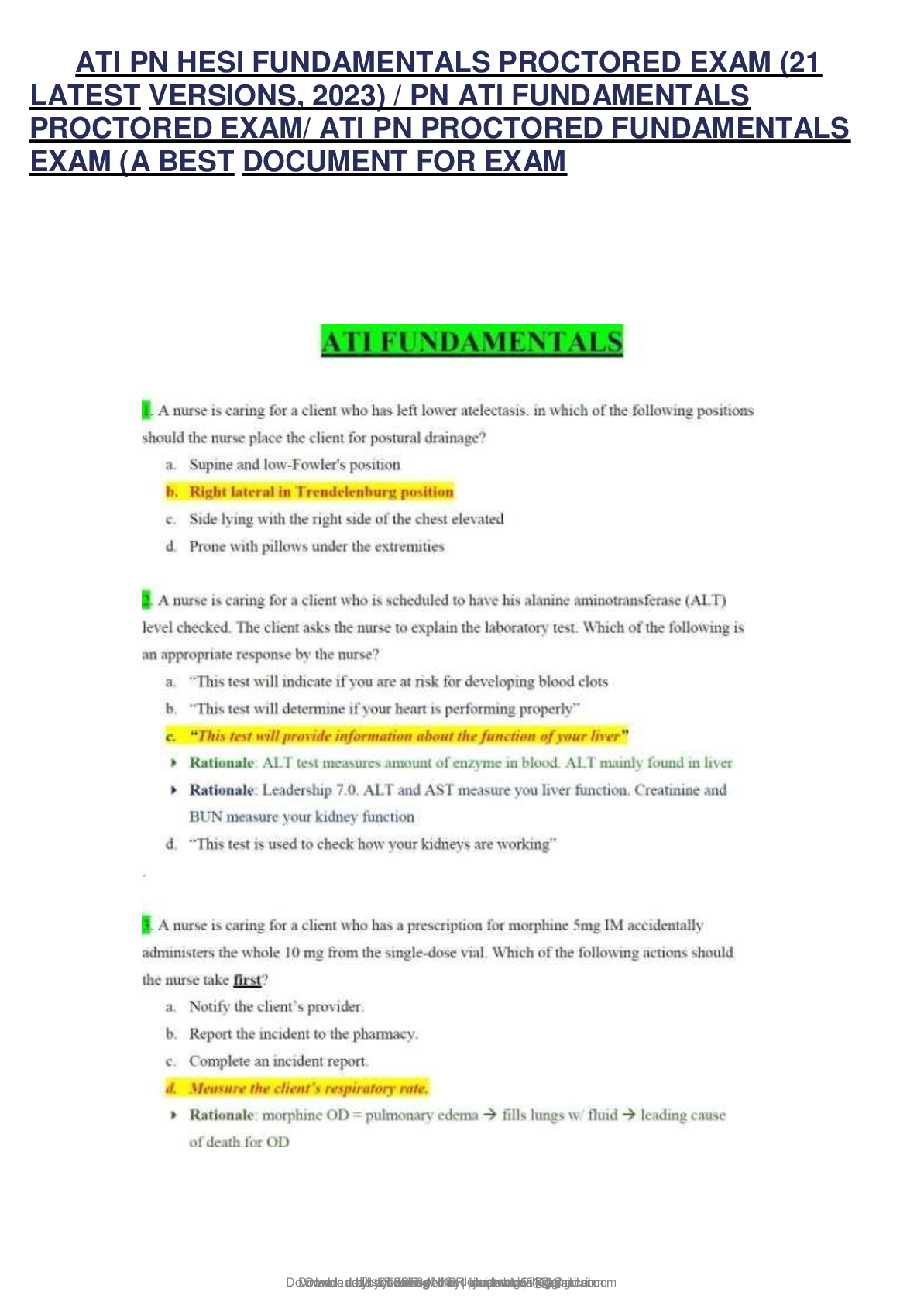
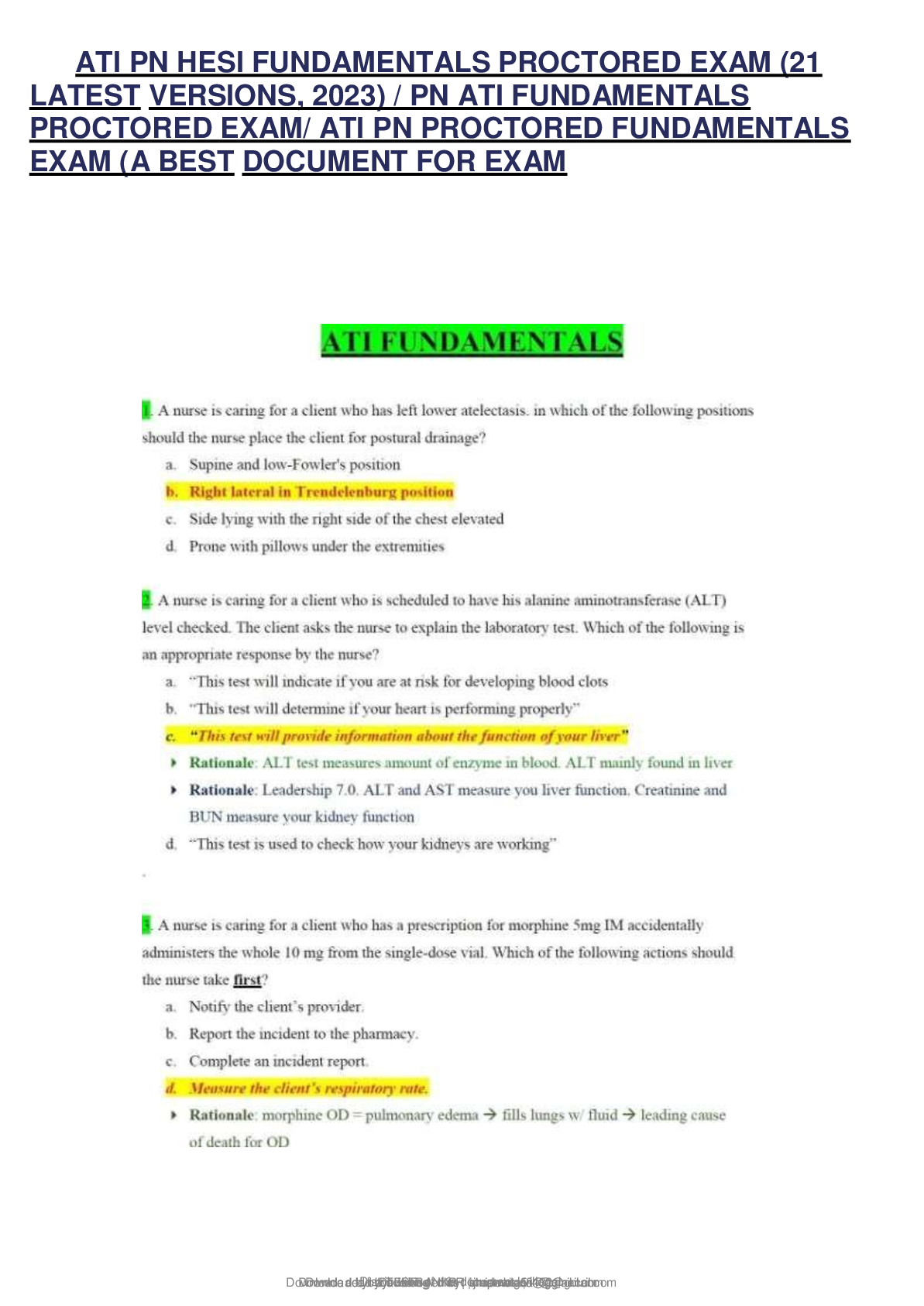
Preview image of HESI FUNDAMENTALS PROCTORED EXAM 2023 LATEST document

Buy this document to get the full access instantly

Instant Download Access after purchase

Buy Now

Instant download

We Accept:

Payment methods accepted on Scholarfriends (We Accept)

Reviews( 0 )

$15.50

Buy Now

We Accept:

Payment methods accepted on Scholarfriends (We Accept)

Instant download

Can't find what you want? Try our AI powered Search

82
0

Document information


Connected school, study & course


About the document


Uploaded On

Apr 03, 2023

Number of pages

15

Written in

All

Seller


Profile illustration for Passmark
Passmark

Member since 4 years

6 Documents Sold

Reviews Received
2
0
0
0
0
Additional information

This document has been written for:

Uploaded

Apr 03, 2023

Downloads

 0

Views

 82

Document Keyword Tags


$15.50
What is Scholarfriends

Scholarfriends.com Online Platform by Browsegrades Inc. 651N South Broad St, Middletown DE. United States.

We are here to help

We're available through e-mail, Twitter, Facebook, and live chat.
 FAQ
 Questions? Leave a message!

Follow us on
 Twitter

Copyright © Scholarfriends · High quality services·