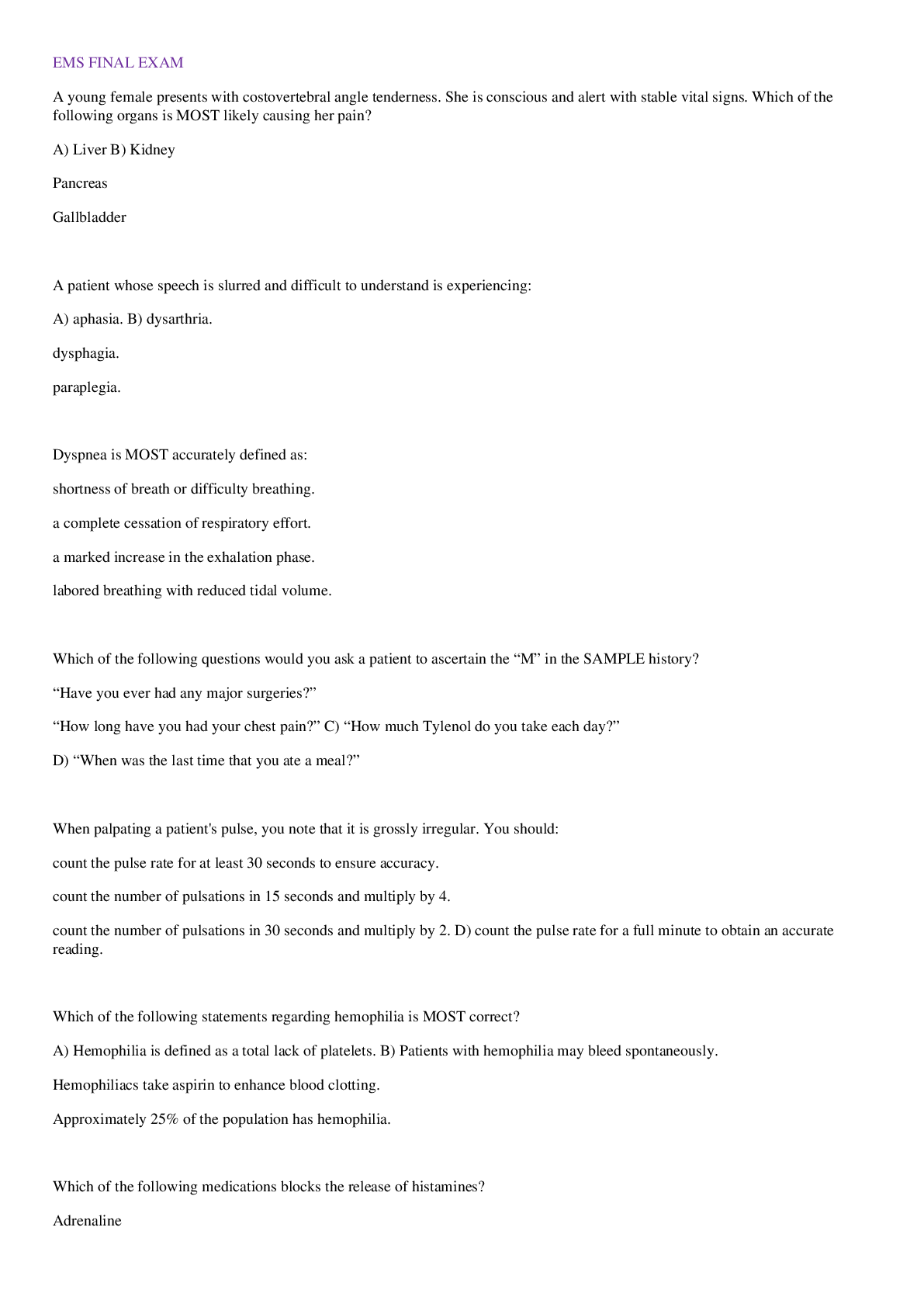
When caring for a patient who takes multiple medications it is best to:
a. Document the medications on your patient care report, but leave them at home so they do not get misplaced.
b. Take all the patients medicat
...
When caring for a patient who takes multiple medications it is best to:
a. Document the medications on your patient care report, but leave them at home so they do not get misplaced.
b. Take all the patients medications with you to the hospital and document them on your patient care report
c. Send the patients medications to the hospital with a family member or other persons who will safe guard them
d. Let the hospital staff retrieve the patients medical records which should show a list of his or her current medications
Correct Answer:
b. take all the patients medications with you to the hospital and document them on your patient care report
Which of the following assessment findings is MOST indicative of a cardiovascular problem?
a. Unequal breath sounds
b. Jugular venous distention
c. Use of the accessory muscles
d. Palpable pain to the epigastrium region
Correct Answer:
b. Jugular Venous Distention
Which of the following medications would an EMT be LEAST likely to administer to a patient with a medical complaint?
a. Aspirin
b. Ibuprofen
c. Albuterol
d. Oral glucose
Correct Answer:
b. Ibuprofen
Which of the following statements regarding hepatitis A is correct?
a. Hepatitis A can only be transmitted by a patient who has an acute infection
b. Infection with hepatitis A causes chronic illness with a high mortality rate
c. Hepatitis A is primarily transmitted via contact with blood or other bodily fluids
d. although there is no vaccine against hepatitis A, treatment is usually successful
Correct Answer:
a. Hepatitis A can only be transmitted by a patient who has an acute infection
Patients with tuberculosis pose the greatest risk for transmitting the disease when they:
a. Cough
b. Vomit
c. Are bleeding
d. Have a fever
Correct Answer:
a. Cough
[Show More]