BioChemistry > QUESTIONS & ANSWERS > BIOE 349 Metabolic Engineering - Metabolic Engineering: Homework 8. Q&A 100%. (All)
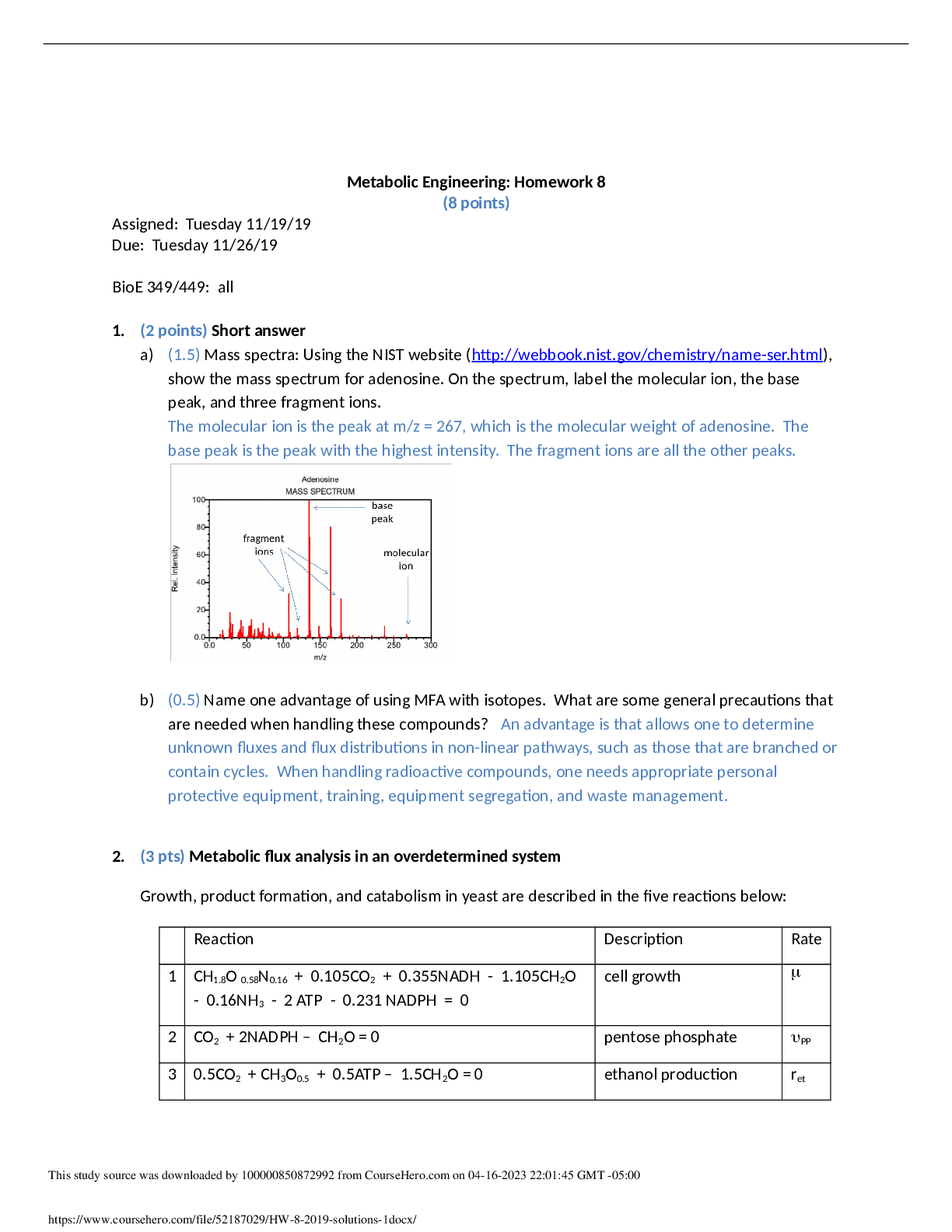
BIOE 349 Metabolic Engineering - Metabolic Engineering: Homework 8. Q&A 100%.
Document Content and Description Below
Last updated: 3 years ago
Preview 1 out of 6 pages
Instant download
Buy this Document to get the Full Access Instantly
Provided by Students Who Aced it
We Verify Document Content to Gurantee Accuracy
Reviews( 0 )
Document information
Connected school, study & course
About the document
Uploaded On
Apr 23, 2023
Number of pages
6
Written in
All

Additional information
This document has been written for:
Uploaded
Apr 23, 2023
Downloads
0
Views
118
Topic Tags
Related Subjects & Courses
Explore similar study resources and related concepts.
Recommended For You
Get more on QUESTIONS & ANSWERS »
American Public University - HIMA 100 / HIMA100 - FINAL EXAM (...

Computer Technologies ProgramFREE.MATERIALS 12021 Update Micro...

NURSING DL-F quiz 1 Applied Nursing Research Q&A 100% Correct

NURSING DL-F quiz 11 Applied Nursing Research Q%A 100% Correct

Microsoft DA-100 Exam Microsoft Analyzing Data with Microsoft...
2023 NCLEX RN Exam Test Bank 900 Actual Exam Q&A 100% Verifi...



Vism-Feedback Log & Score Rashid Ahmed Rashid Ahmed Age: 5...
WGU D431 OBJECTIVE ASSESSMENT REVIEW (NEW 2025-2026 UPDATE) DI...
WGU D431 OBJECTIVE ASSESSMENT REVIEW (NEW 2025-2026 UPDATE) DI...
TEST BANK for Biochemistry A Short Course, 4e by John Tymoczko...

Biochemistry 9th Edition By Lubert Stryer, Jeremy Berg, John T...