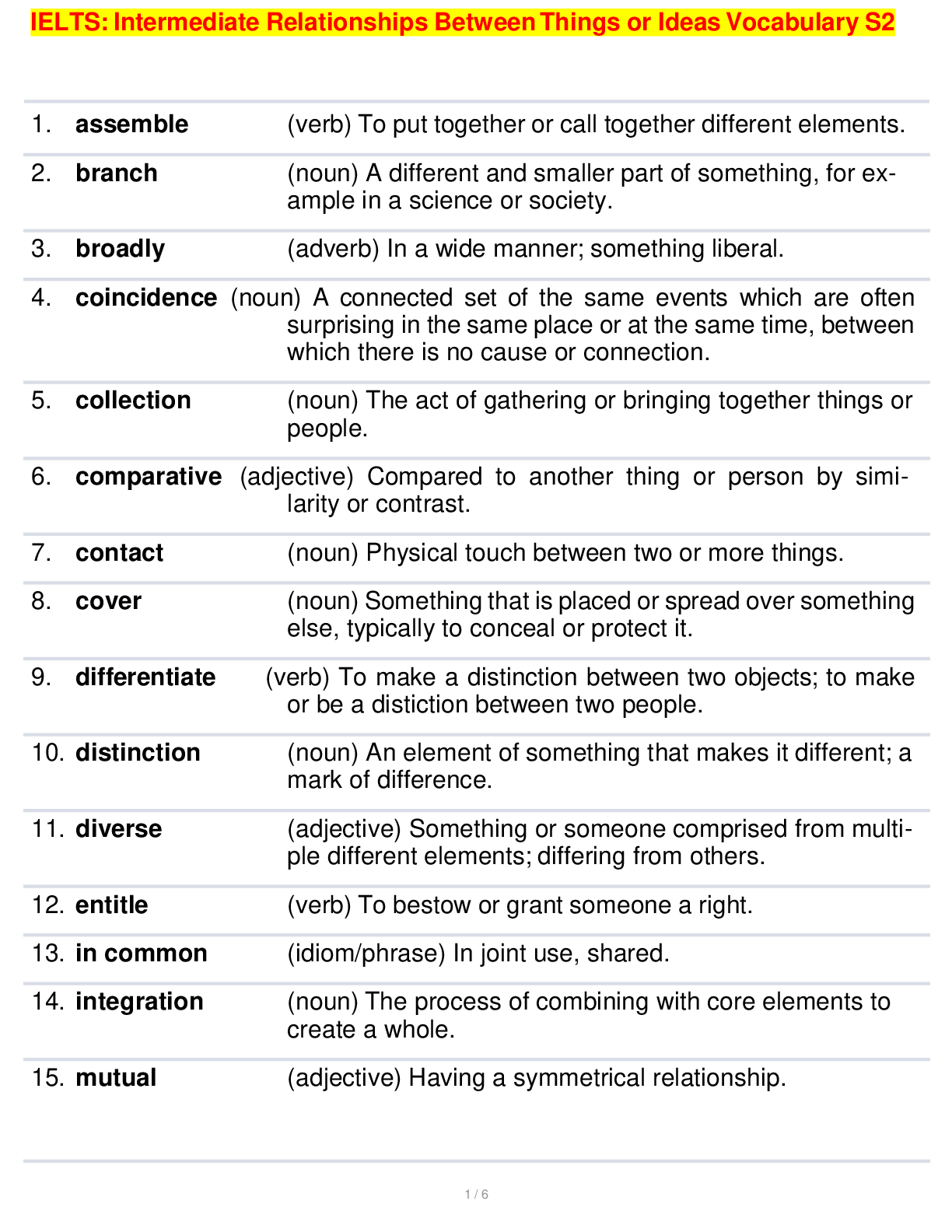
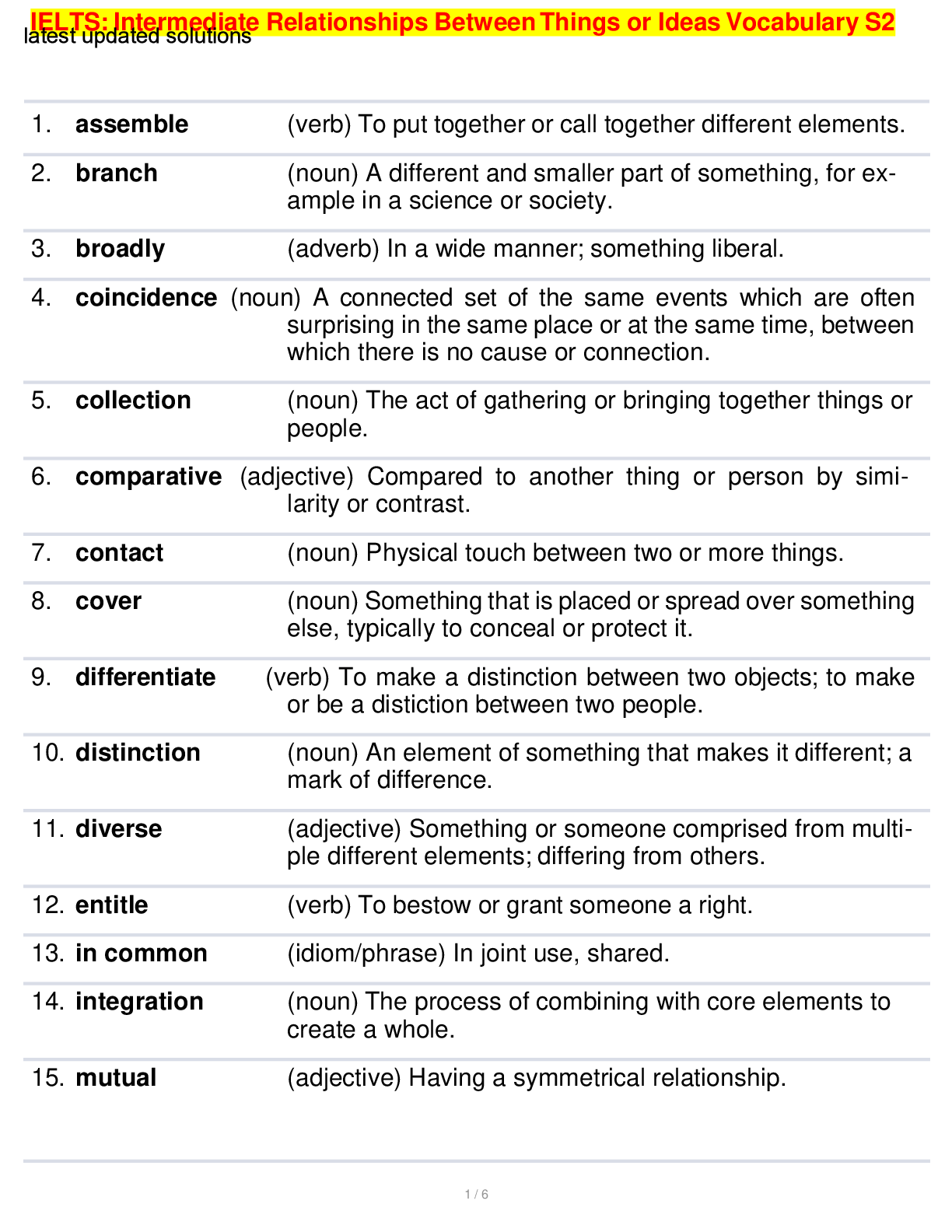
IELTS: Intermediate Relationships Between Things or Ideas Vocabulary S 2
Document Content and Description Below
IELTS: Intermediate Relationships Between Things or Ideas Vocabulary S 2-1. assemble (verb) To put together or call together different elements.
2. branch (noun) A different and smaller part of something, for ex- ampl
...
[Show More]
Last updated: 3 years ago
Preview 1 out of 6 pages
Instant download
Buy this Document to get the Full Access Instantly
Provided by Students Who Aced it
We Verify Document Content to Gurantee Accuracy
Reviews( 0 )
Document information
Connected school, study & course
About the document
Uploaded On
May 02, 2023
Number of pages
6
Written in
All

Additional information
This document has been written for:
Uploaded
May 02, 2023
Downloads
0
Views
219
Topic Tags
Related Subjects & Courses
Explore similar study resources and related concepts.
Recommended For You
Get more on IELTS »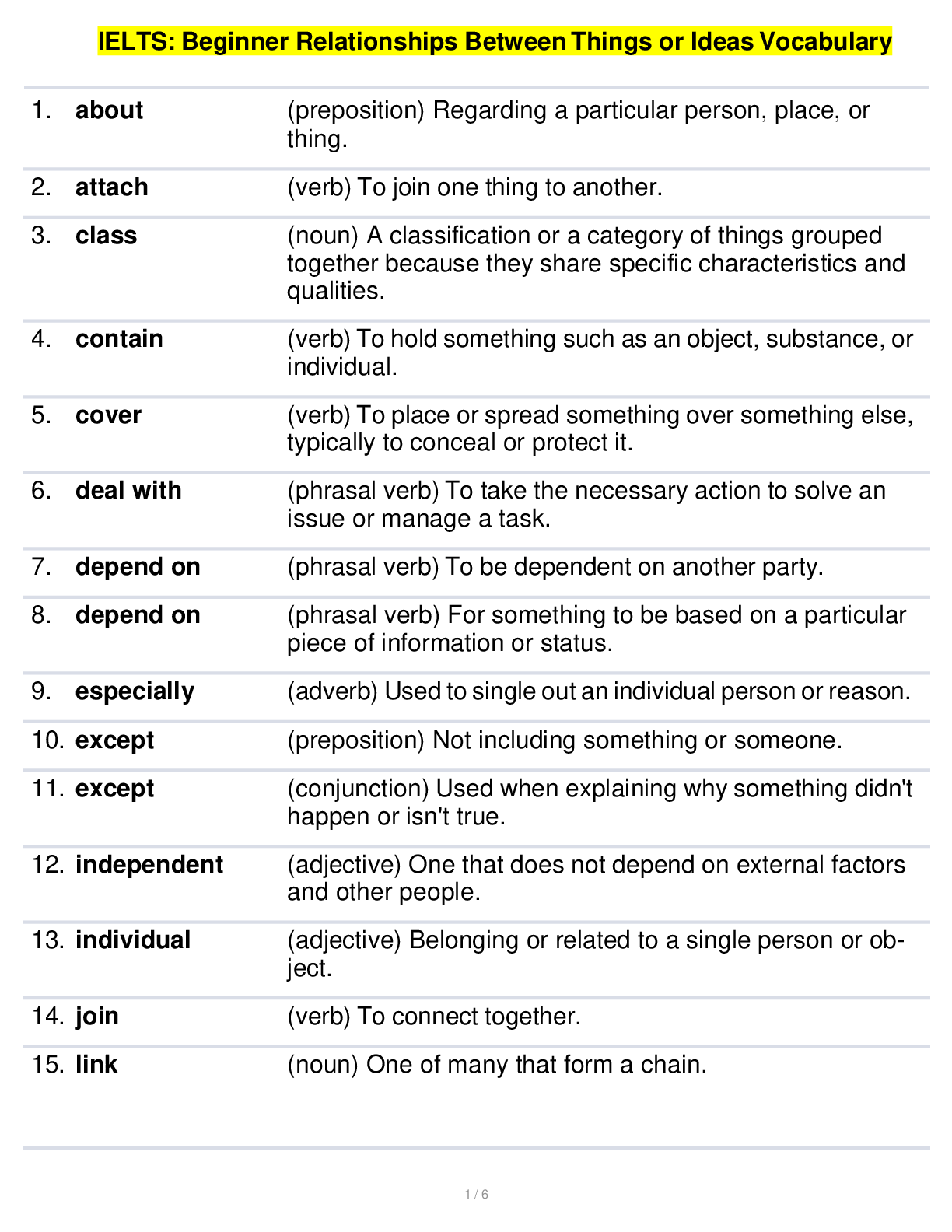
$6.5
6 Pages
IELTS: Beginner Relationships Between Things or Ideas Vocabula...
$5.5
5 Pages
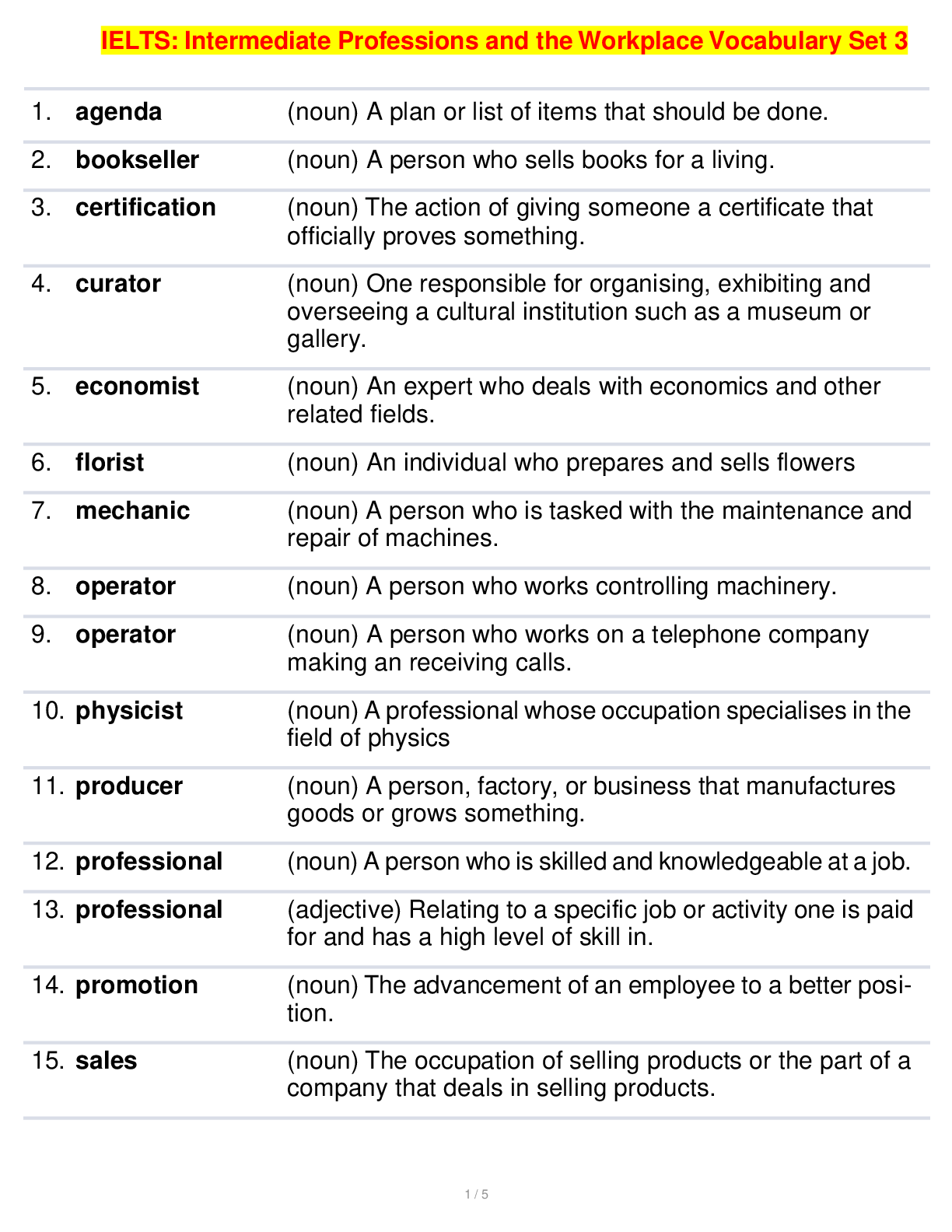
IELTS: Intermediate Professions and the Workplace Vocabulary S...
$5.5
6 Pages
IELTS: Intermediate Relationships Between Things or Ideas Voca...
 Block 1 to 7.png)
$18
128 Pages
PPME Block 1-7 - Primary Professional Military Education (Enli...

$19
21 Pages
ATI TEAS 7 ENGLISH & LANGUAGE USAGE LATEST VERSION 37 QUESTION...



$10
26 Pages
Identifying the Problem and Asking the Question: Inquiries, In...
.png)
$11
13 Pages
Purnell Swett HighENGLISH 4Anthem Study Guide - Nataiya Lockle...
$12
96 Pages
Test Bank:IELTS Practice Tests 2022 with Complete Solutions
$12
96 Pages