NR 443 CHAPTER 21: IMMOBILITY | LATEST UPDATE
Document Content and Description Below
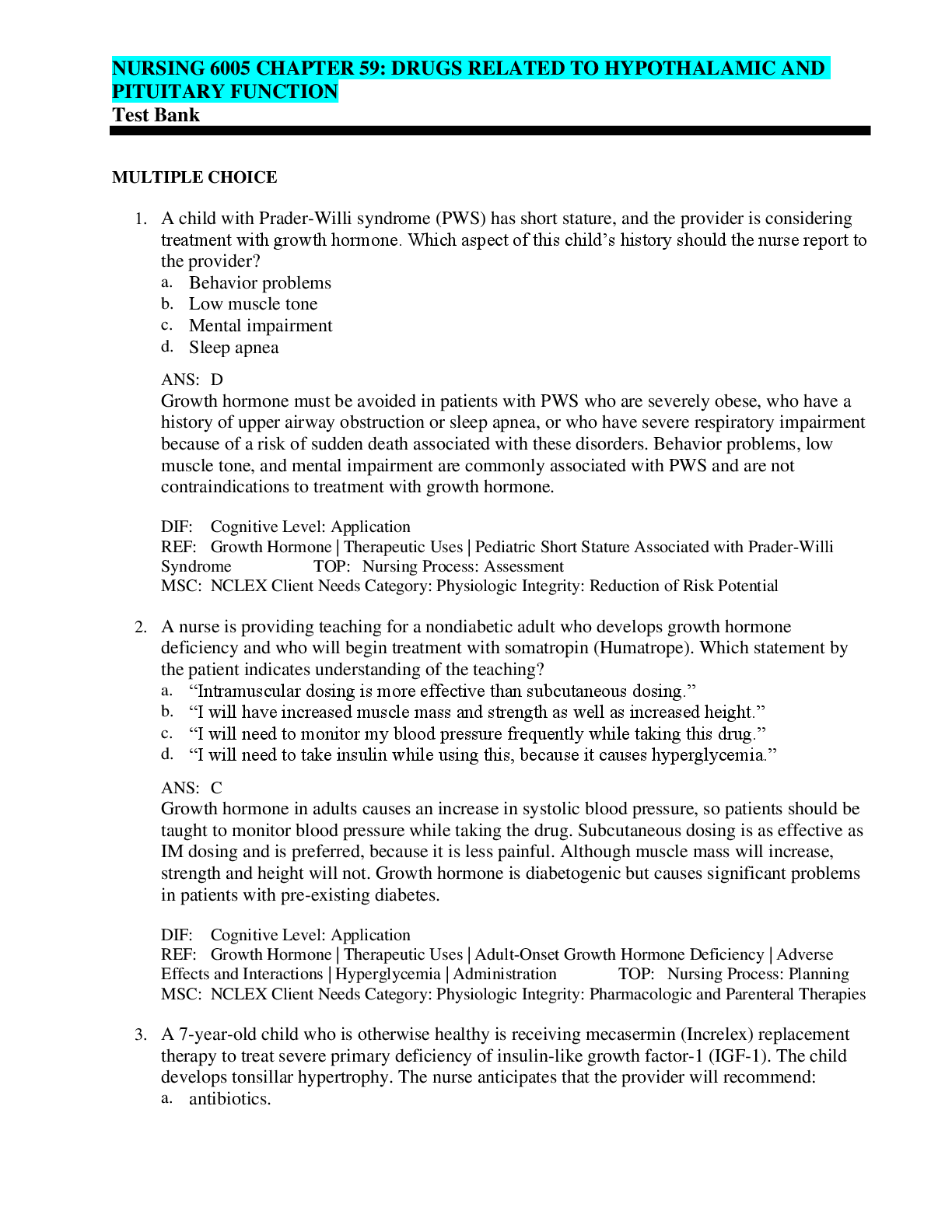
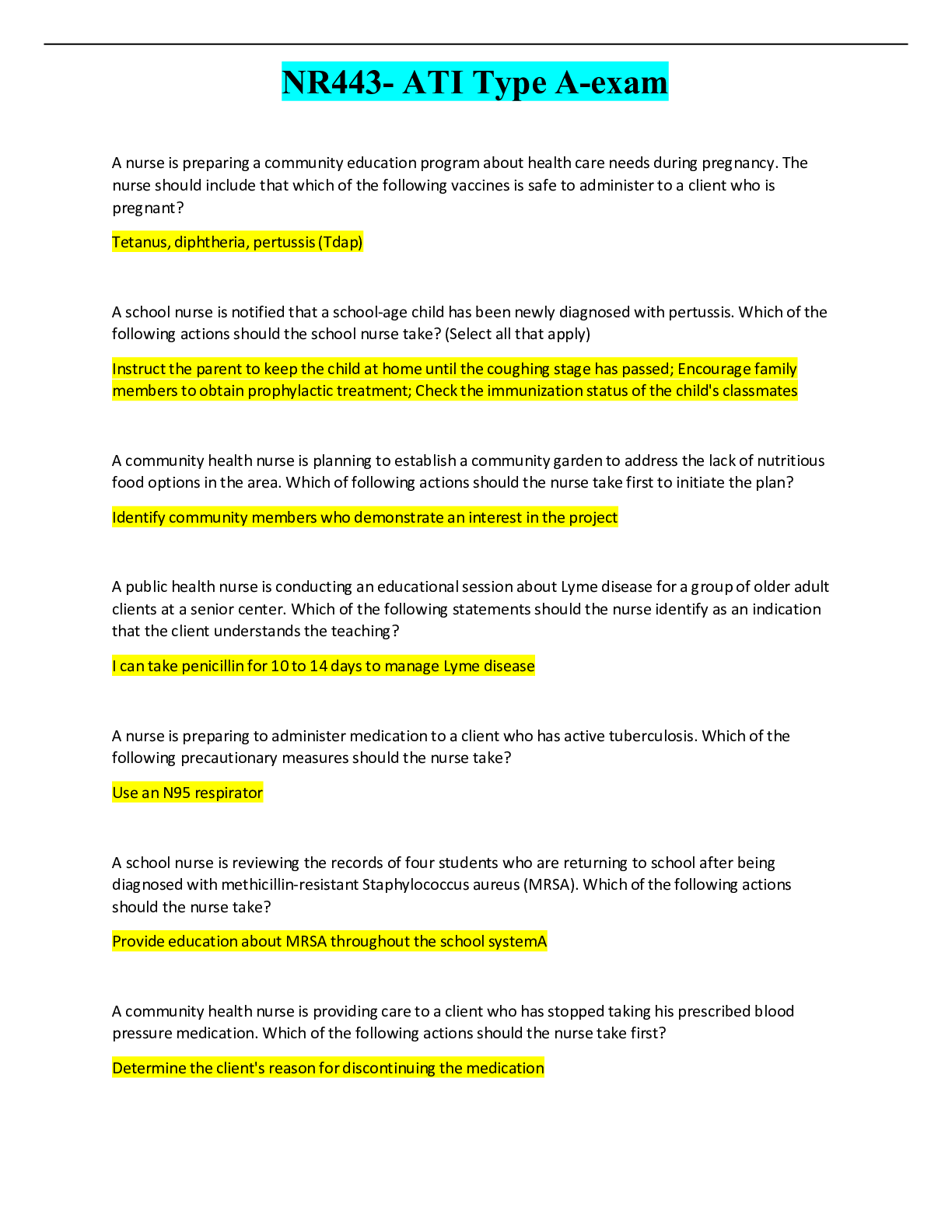
. What negative effects does immobilization have on the musculoskeletal system?
a. Demineralization of bone
b. Increase in aerobic capacity
c. Increased muscle oxidation
d. Lengthening of muscle fibers
. What should
...
[Show More]
Last updated: 3 years ago
Preview 1 out of 10 pages
Instant download

Buy this Document to get the Full Access Instantly
Provided by Students Who Aced it
We Verify Document Content to Gurantee Accuracy
Reviews( 0 )
Document information
Connected school, study & course
About the document
Uploaded On
Feb 07, 2021
Number of pages
10
Written in
All

Additional information
This document has been written for:
Uploaded
Feb 07, 2021
Downloads
0
Views
97
Topic Tags
Related Subjects & Courses
Explore similar study resources and related concepts.
Recommended For You
Get more on EXAM »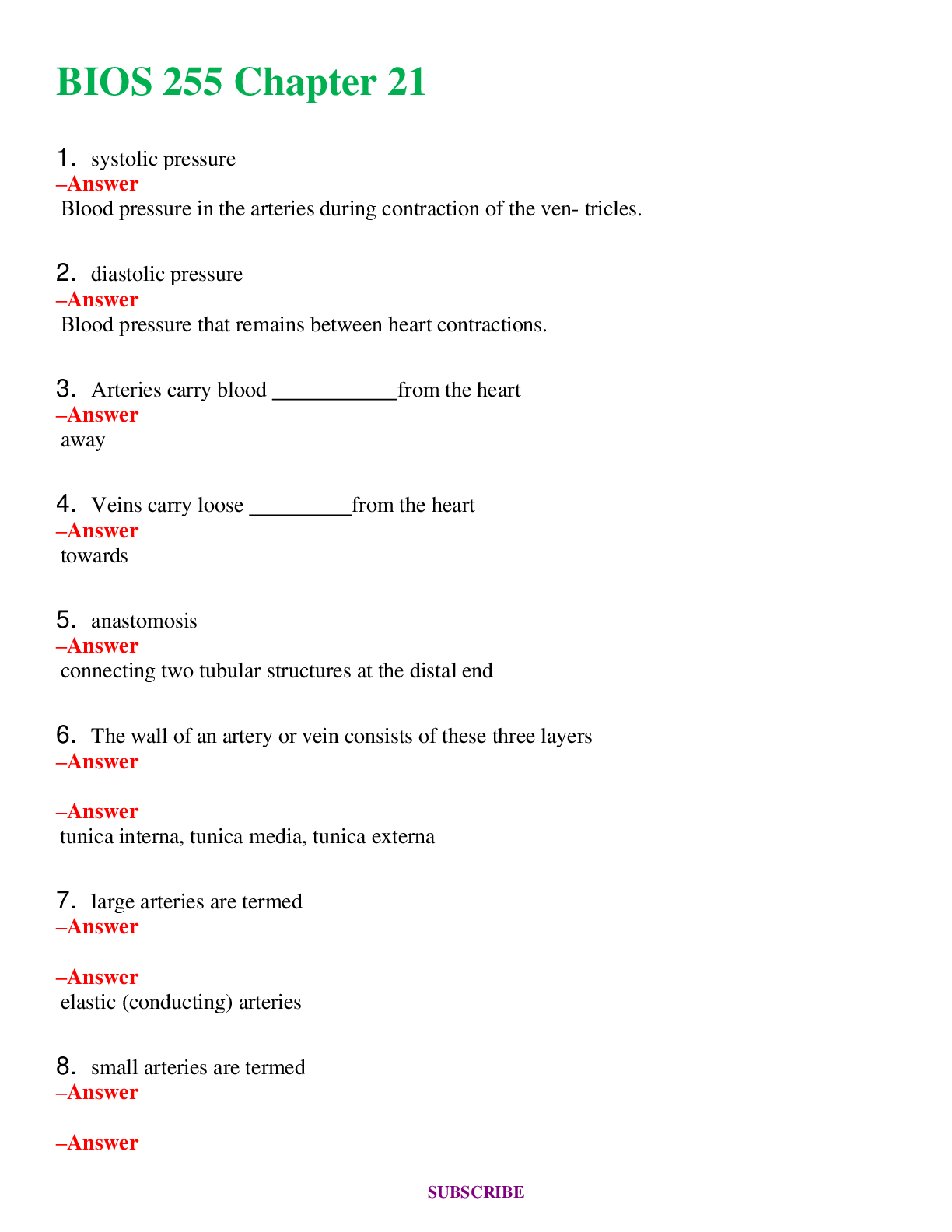

$5
6 Pages
NURSING 6005 CHAPTER 21: DRUGS FOR PARKINSON’S DISEASE | LATES...

$13
17 Pages
TEST BANK Chapter 21: Peripheral Vascular System and Lymphatic...
.png)
$12
14 Pages
TEST BANK Chapter 21: Peripheral Vascular System and Lymphatic...

$12
6 Pages
Milestone Chapter 21: Cancer Development (Concepts for Interpr...

$2.5
2 Pages
Giger & Davidhizar: Transcultural Nursing: Assessment and Inte...
.png)
$7
16 Pages
Appraisal, Synthesis, and Generation of Evidence 8th Edition T...

$10
17 Pages
Medical-Surgical Nursing,Visual and Auditory Problems;10th Edi...

$10
12 Pages
Chapter 21: Abdomen Jarvis:_ Physical Examination & Health Ass...

$6
10 Pages
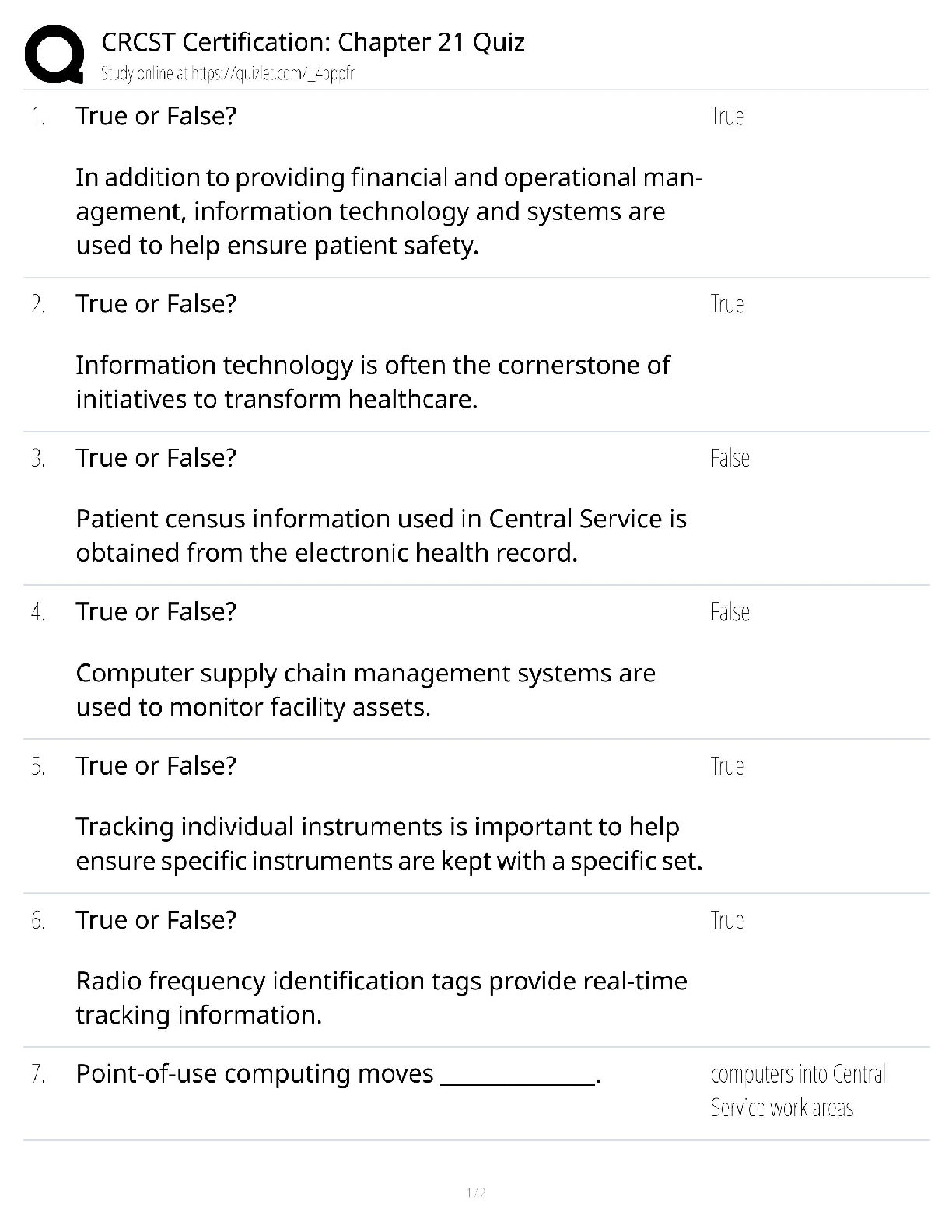
NURS 6501 / NURS6501: Advanced Pathophysiology - Chapter 21 St...
$6
36 Pages
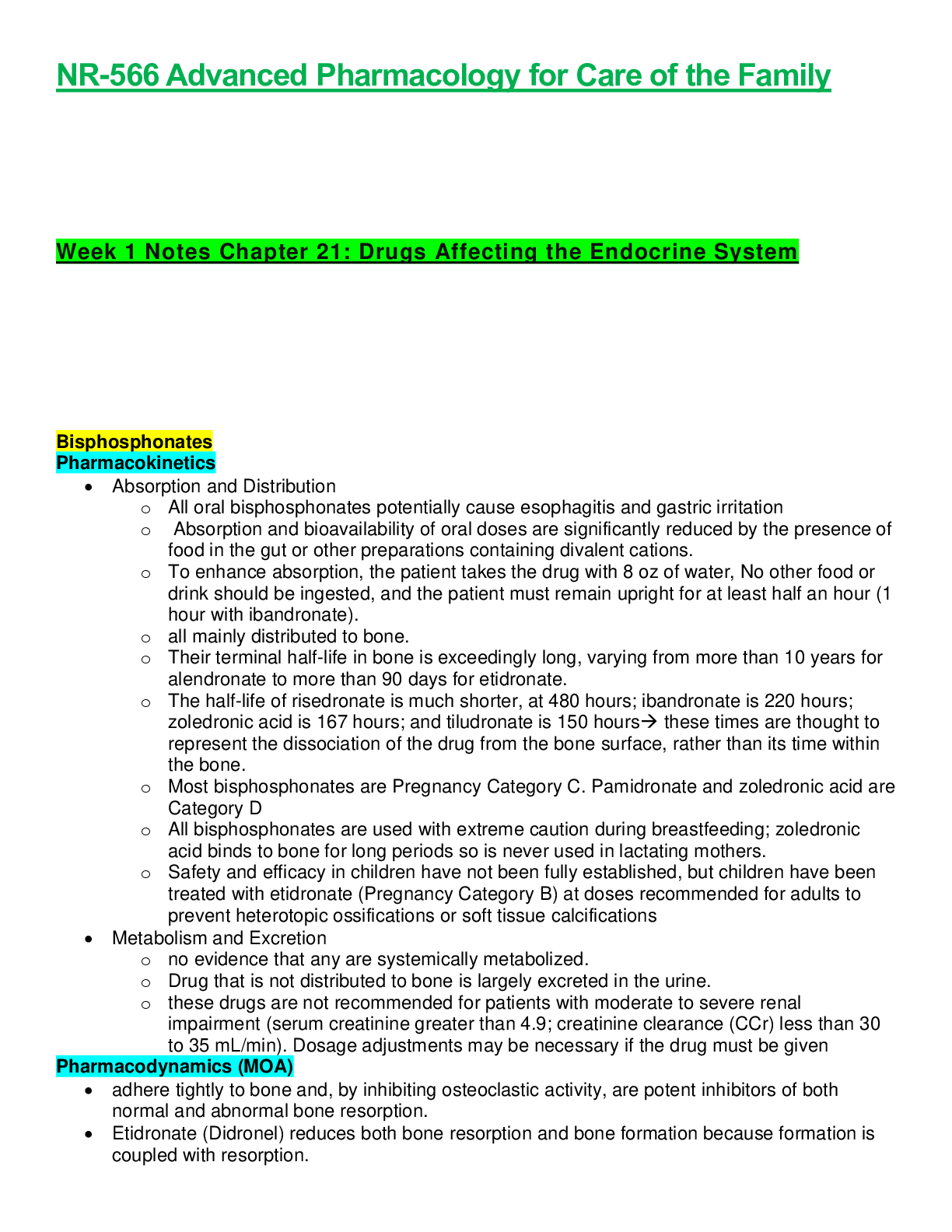
NR566 / NR 566: Advanced Pharmacology for Care of the Family W...

$6
49 Pages
NR 566 / NR566 Advanced Pharmacology for Care of the Family We...

$6
128 Pages
NR566 / NR 566: Advanced Pharmacology for Care of the Family W...
More related documents below