NURSING > ATI Study Resources. > ATI Learning System RN 3.0-Medical-Surgical Anesthesia & Moderate Sedation Practice Questions & Answ (All)
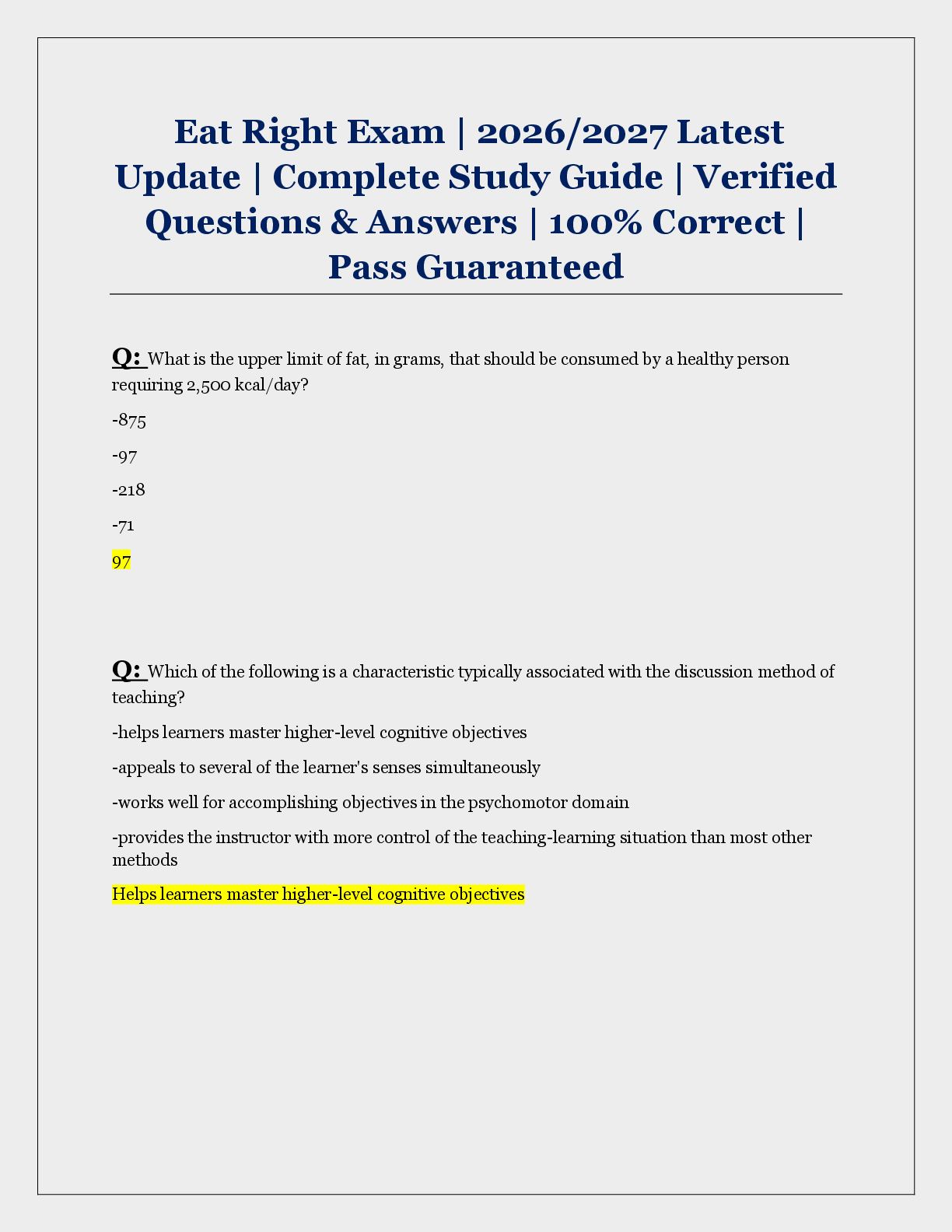
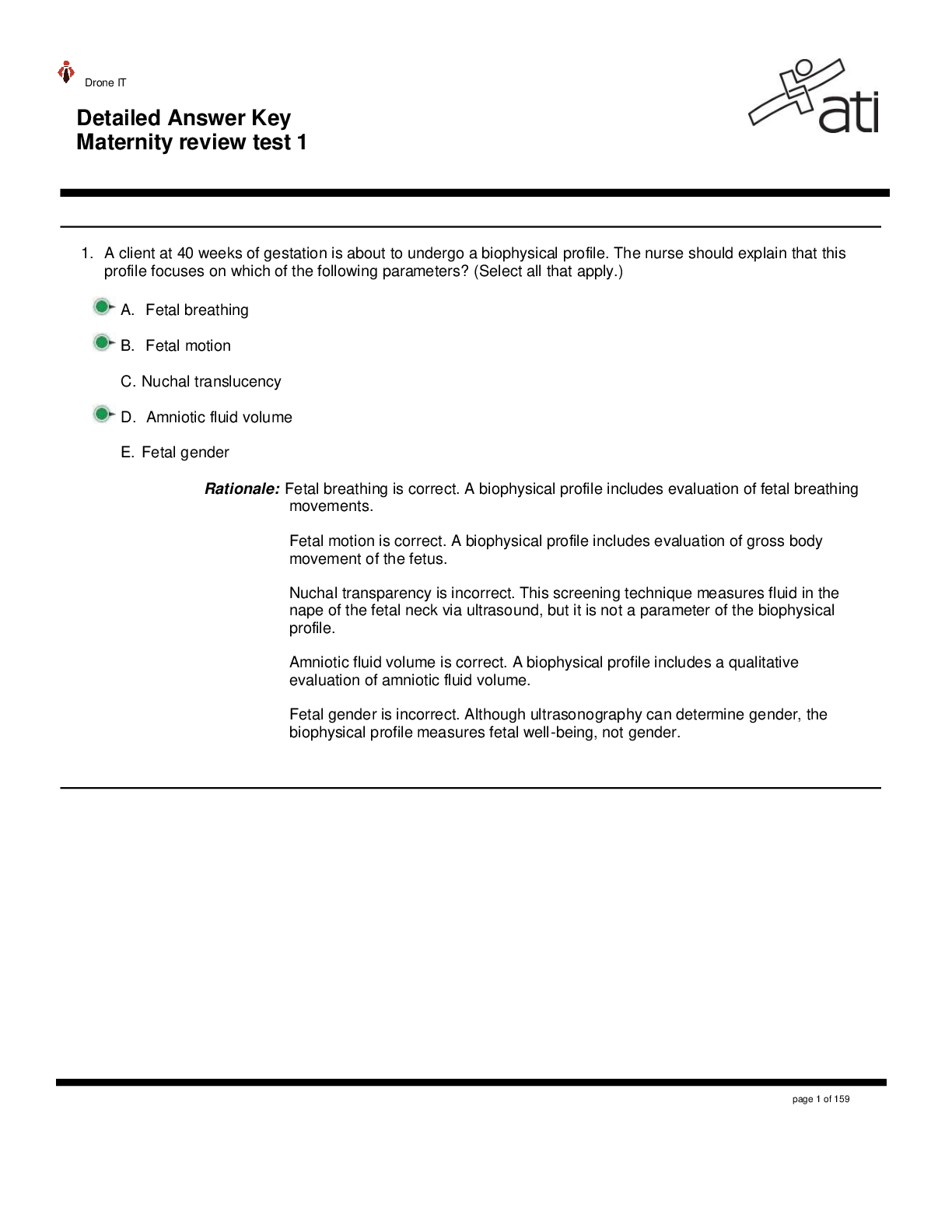
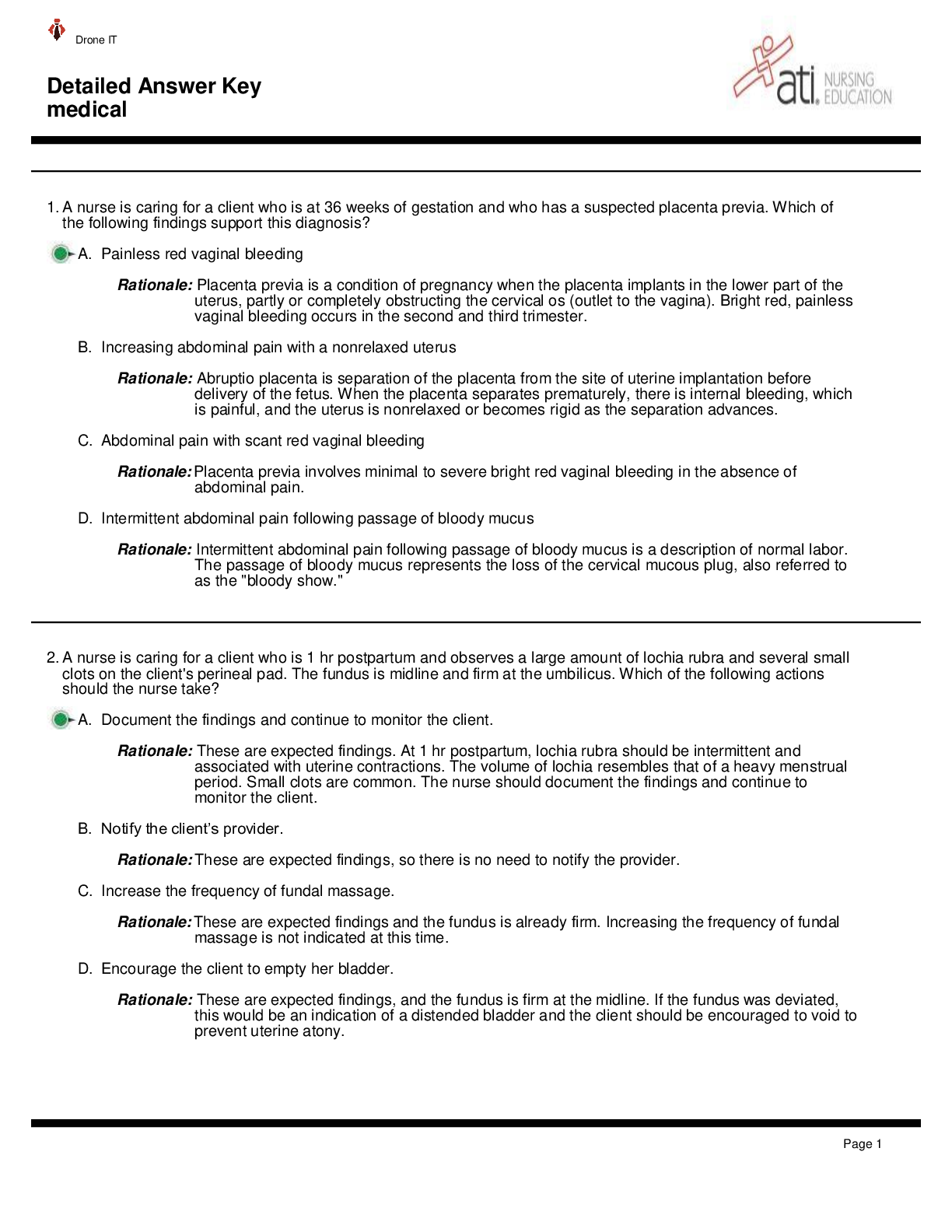
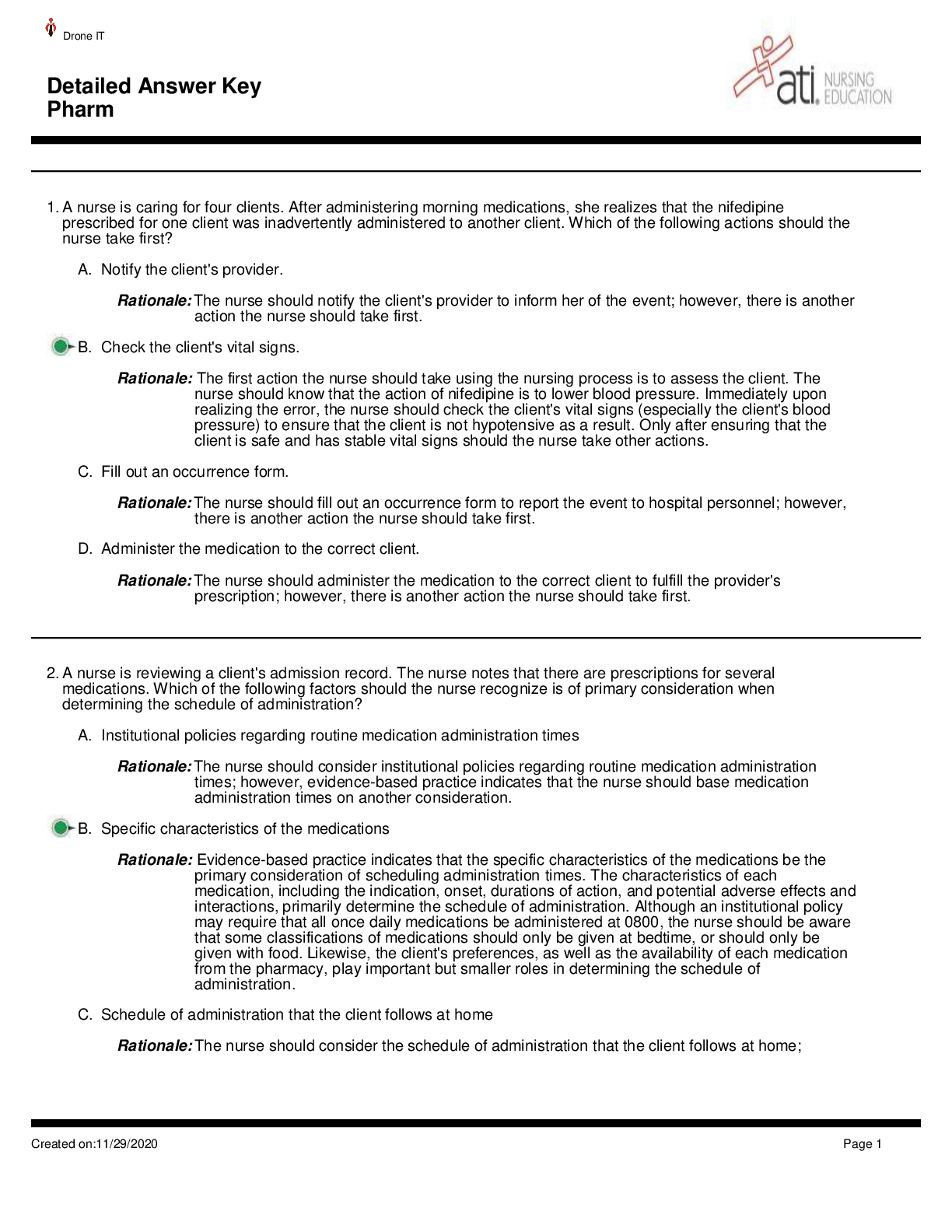
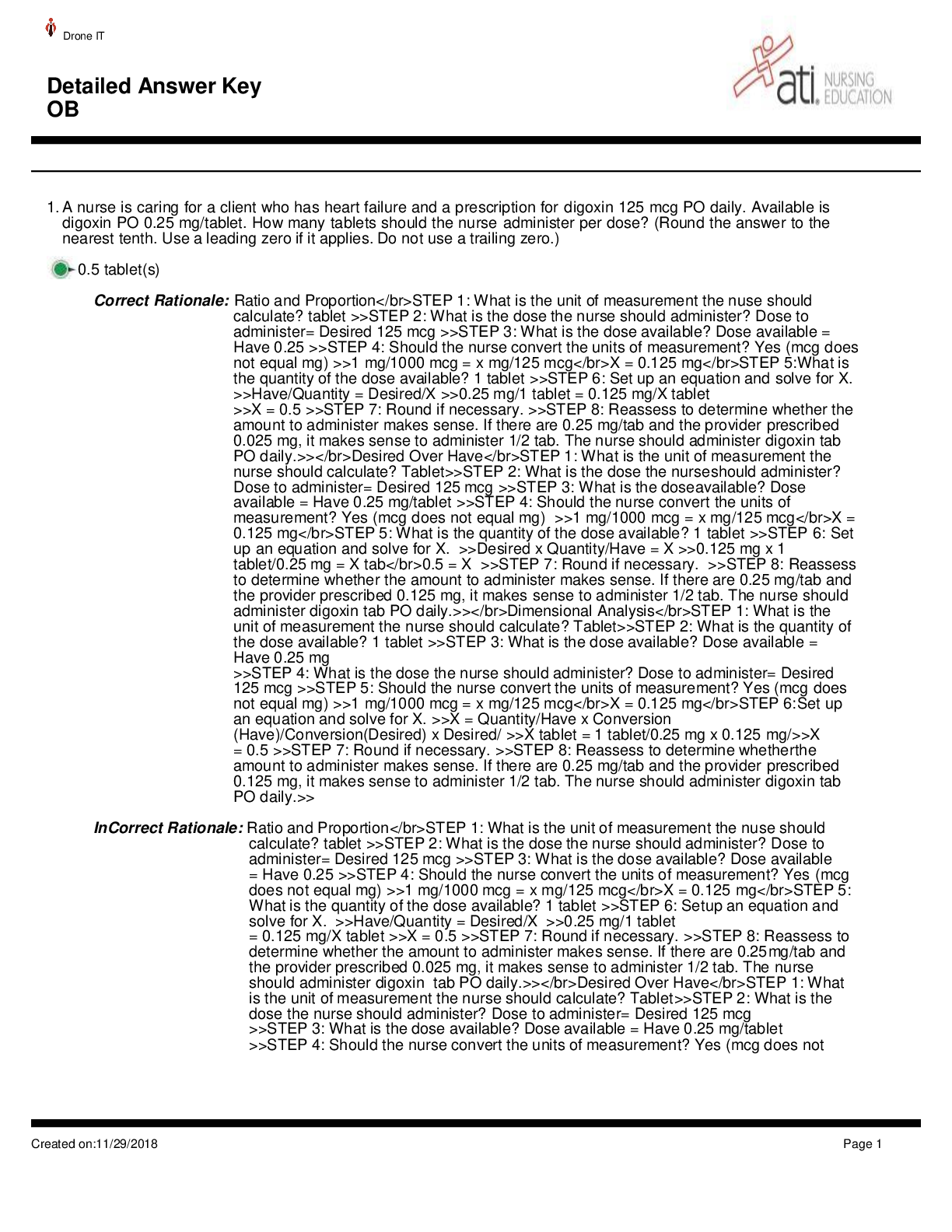
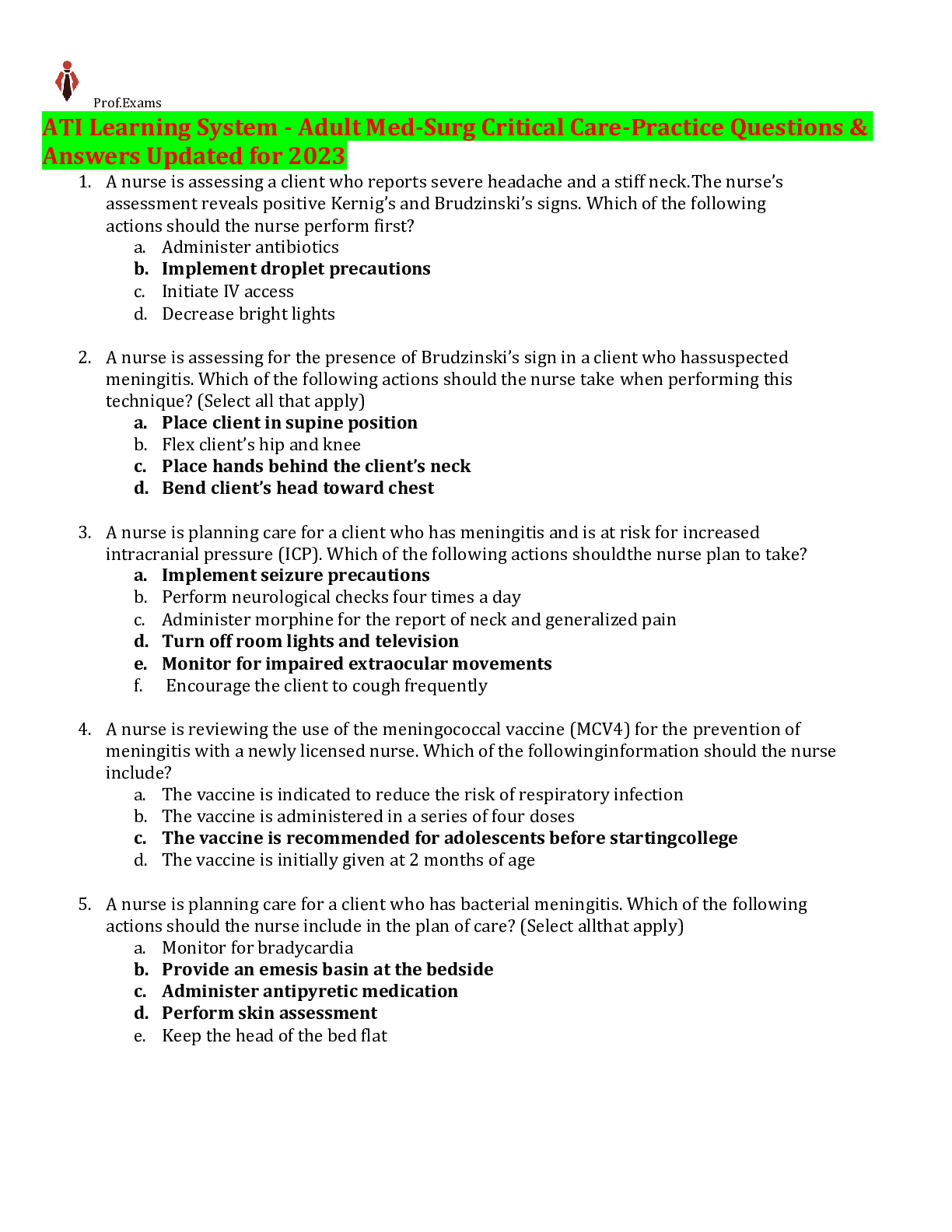
ATI Learning System RN 3.0-Medical-Surgical Anesthesia & Moderate Sedation Practice Questions & Answers-Updated for 2023.Pass Medical-Surgical Anesthesia & Moderate Sedation in First Attempt Guaranteed!Get 100% Latest Exam Questions, Accurate & Verified Answers to Pass the Actual Exam! Instant Download!
Document Content and Description Below
Last updated: 3 years ago
Preview 1 out of 270 pages
Instant download

Buy this Document to get the Full Access Instantly
Provided by Students Who Aced it
We Verify Document Content to Gurantee Accuracy
Also available in bundle (1)
Click Below to Access Bundle(s)

ATI Learning System RN 3.0-Disorders of the eye;Middle and Inner ear disorders; Immune and Infectious disorders diagnostic procedures; Immunization;HIV;Cancer; Anesthesia and moderate sedation;Pre and Post op nursing care;-Questions & Answers-Updated for 2023
ATI Learning System RN 3.0-Medical-Surgical Middle and Inner Ear Disorders Practice Questions & Answers-Updated for 2023 Pass Medical-Surgical Middle and Inner Ear Disorders in First Attempt Guarantee...
By ProfXams 3 years ago
$33
8
Reviews( 0 )
Document information
Connected school, study & course
About the document
Uploaded On
May 04, 2023
Number of pages
270
Written in
All

Additional information
This document has been written for:
Uploaded
May 04, 2023
Downloads
0
Views
178
Topic Tags
Recommended For You
Get more on ATI Study Resources. »
ATI Pharmacology Proctored Exam Review for 2023 | Contains 150...
ATI COMPREHENSIVE PREDICTOR RETAKE 2019 WITH NGN |180 VERIFIED...
Test Bank for Emergency Care 14th Edition by Daniel Limmer, Mi...
HEALTH ASSESSMENT HESI TEST BANK; Fall 2025 UPDATED EDITION...
TEST BANK for McCance & Huether’s Understanding Pathophysiolog...
Test Bank for Leadership and Nursing Care Management Ed.7 by D...

ATI MATERNAL NEWBORN PROCTORED EXAM | 33 VERSIONS Contains 260...
ATI Adult Medical-Surgical Nursing CMS Exams Study Guide – Lat...
ATI RN Predictor Study Guide 2024|2025 – Verified Questions &...