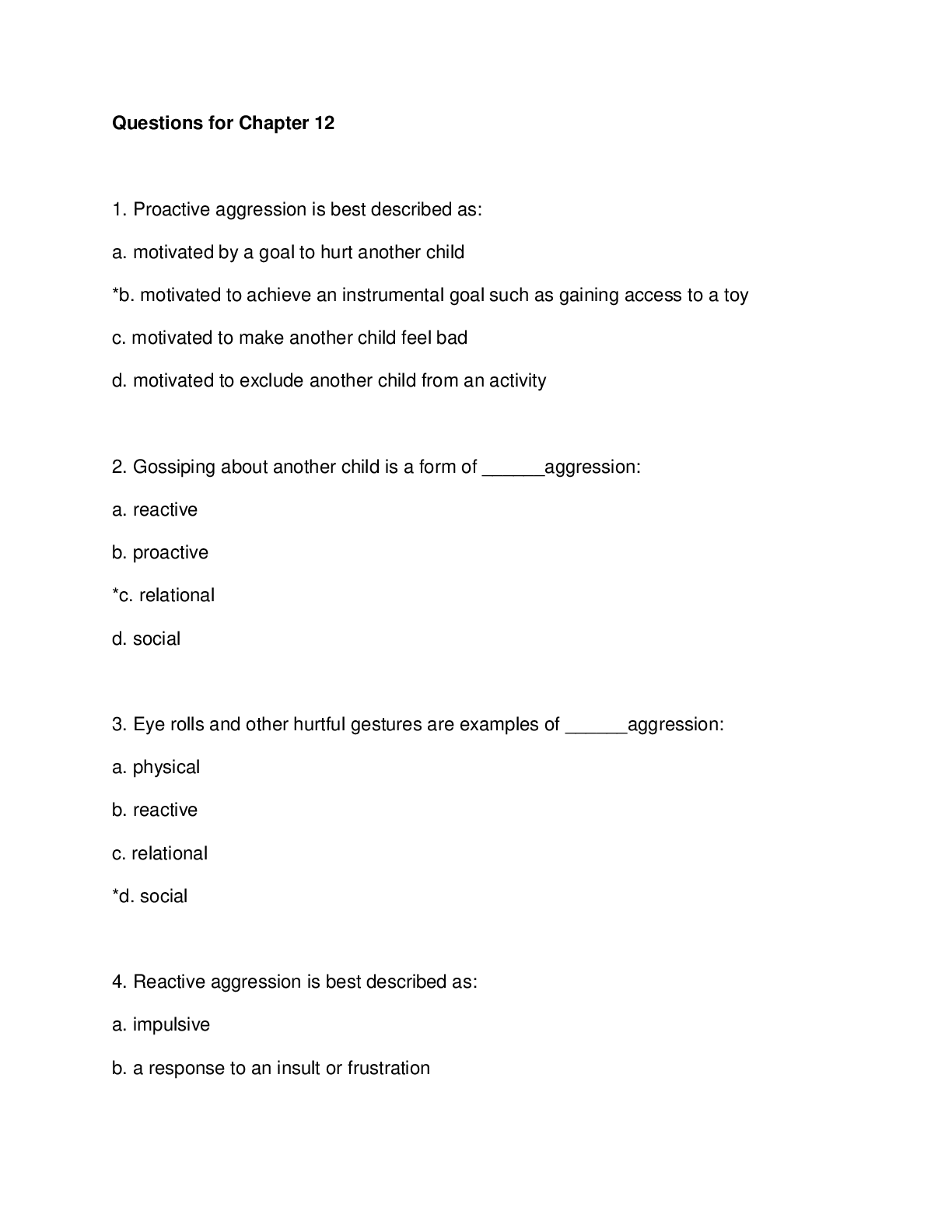
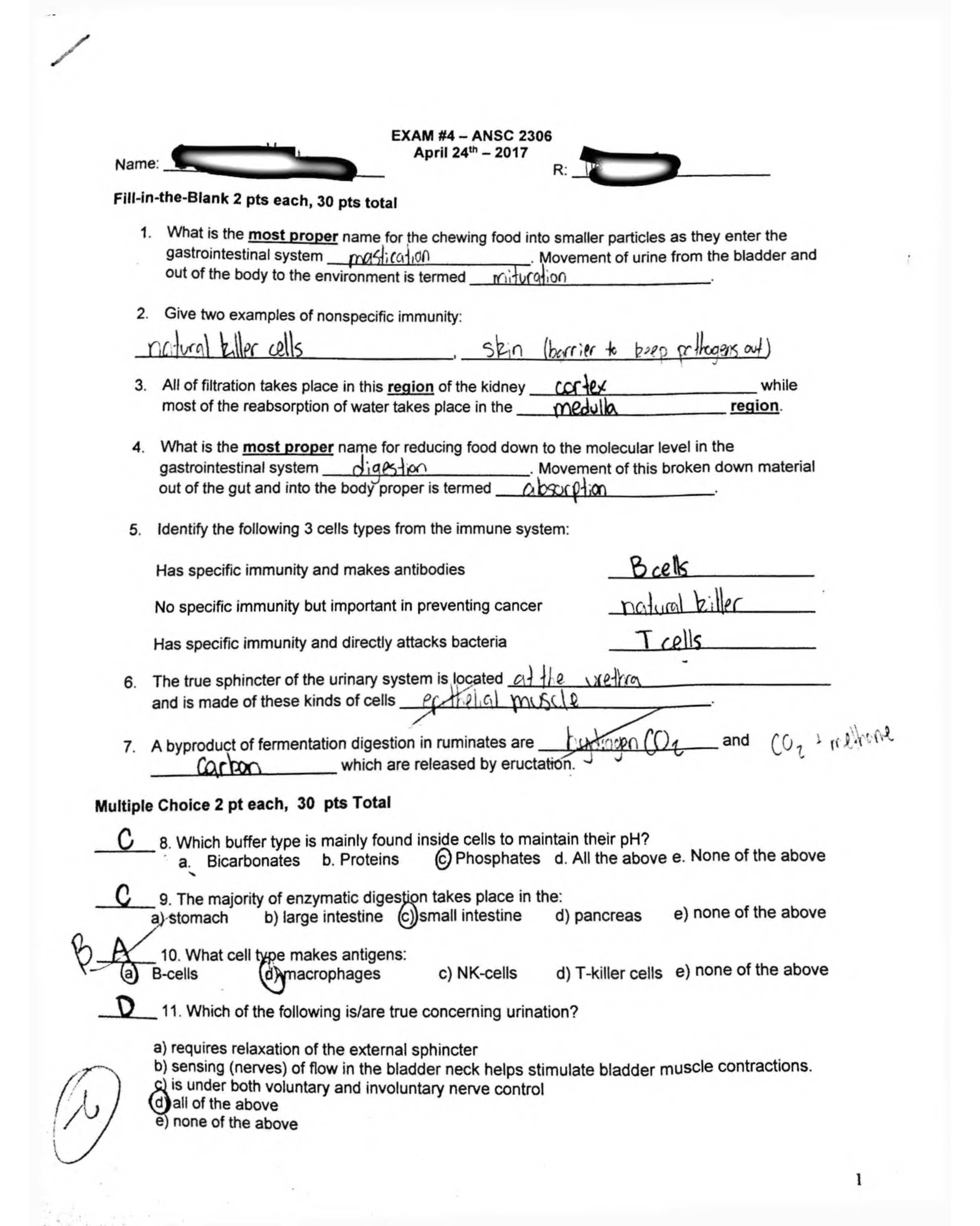
Biology > QUESTIONS & ANSWERS > Thomas Edison State College: BIO-211-OL009 Section no.: Written Assignment 3. (All)
Thomas Edison State College: BIO-211-OL009 Section no.: Written Assignment 3.
Document Content and Description Below
Last updated: 4 years ago
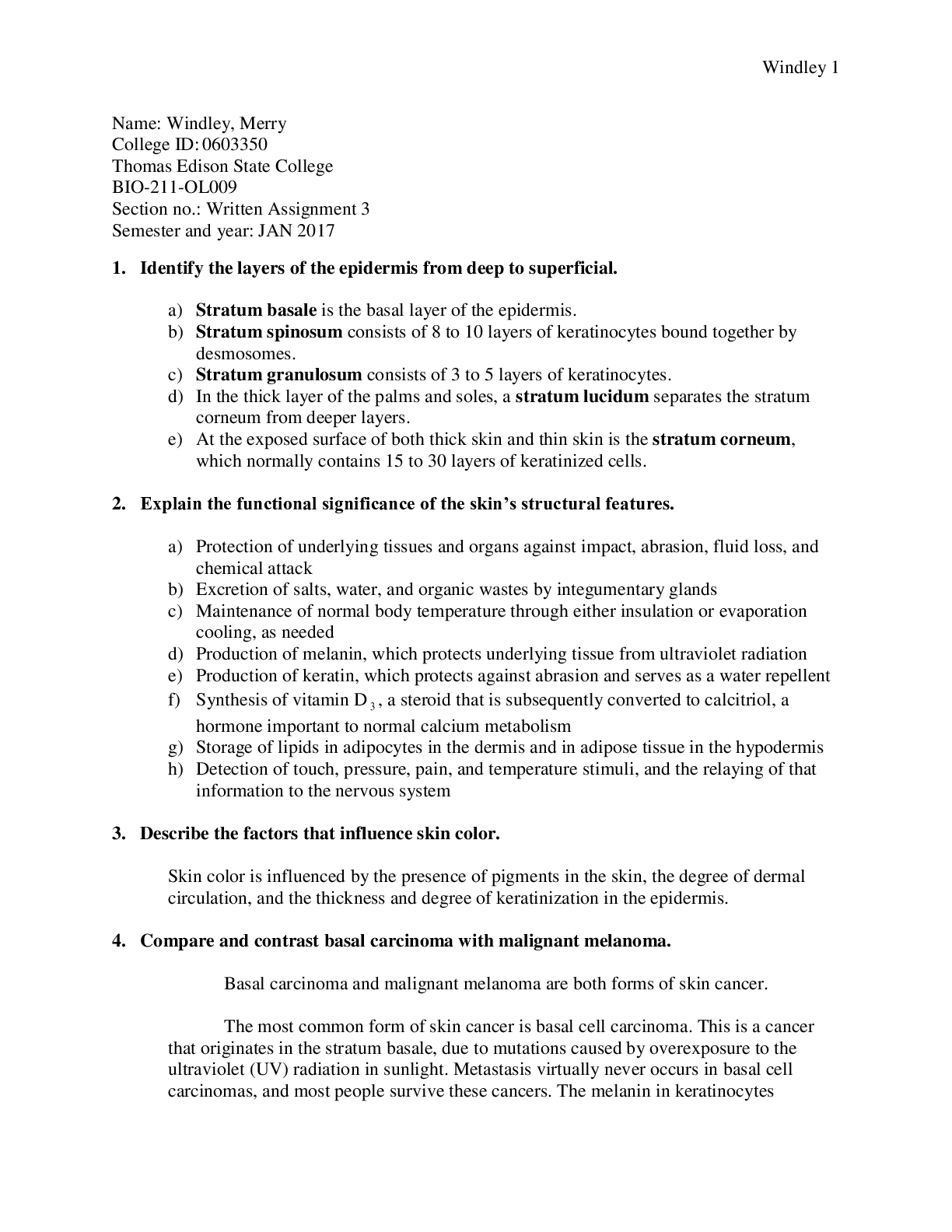
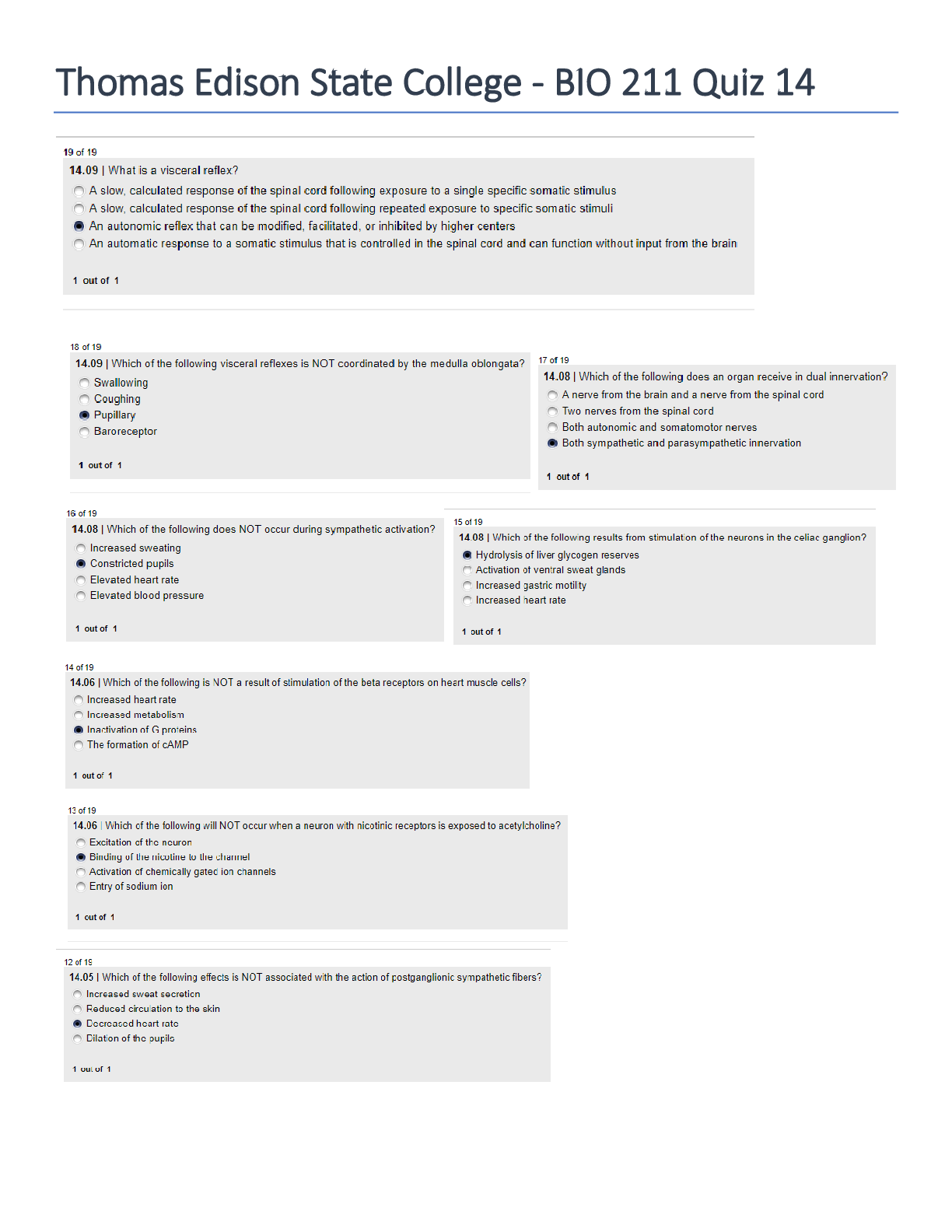
Preview 1 out of 5 pages
Instant download
Buy this Document to get the Full Access Instantly
Provided by Students Who Aced it
We Verify Document Content to Gurantee Accuracy
Reviews( 0 )
Document information
Connected school, study & course
About the document
Uploaded On
Feb 08, 2021
Number of pages
5
Written in
All

Additional information
This document has been written for:
Uploaded
Feb 08, 2021
Downloads
0
Views
142
Topic Tags
Recommended For You
Get more on QUESTIONS & ANSWERS »
Questions and Answers > Thomas Edison State College: BIO-211-O...

Thomas Edison State College - BIO 211BIO-211-OL009-WA4. Questi...

Test Bank for Biology The Essentials 4th Edition By Marielle H...

Test Bank for Introduction To Marine Biology 4th Edition Karle...
Test Bank For Essentials of Biology, 7th Edition By Sylvia Mad...
Test Bank for Human Development A Life-Span View 9th Edition B...
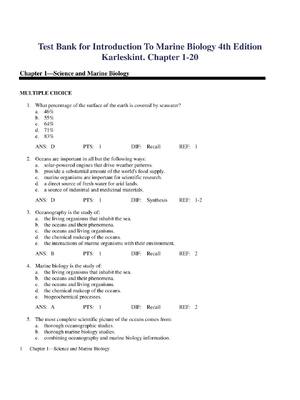
Test Bank for Introduction To Marine Biology 4th Edition Karle...
TEST BANK for Introduction to Marine Biology 4th Edition by Ge...
Solutions Manual Campbell Essential Biology 8th Edition By Eri...
eBook [PDF] Advances in Chromatography Volume 60 By Grinberg N...
Solution Manual for Biological Science, 8th edition Scott Free...