Tx food handler training course latest
update with verified solutions
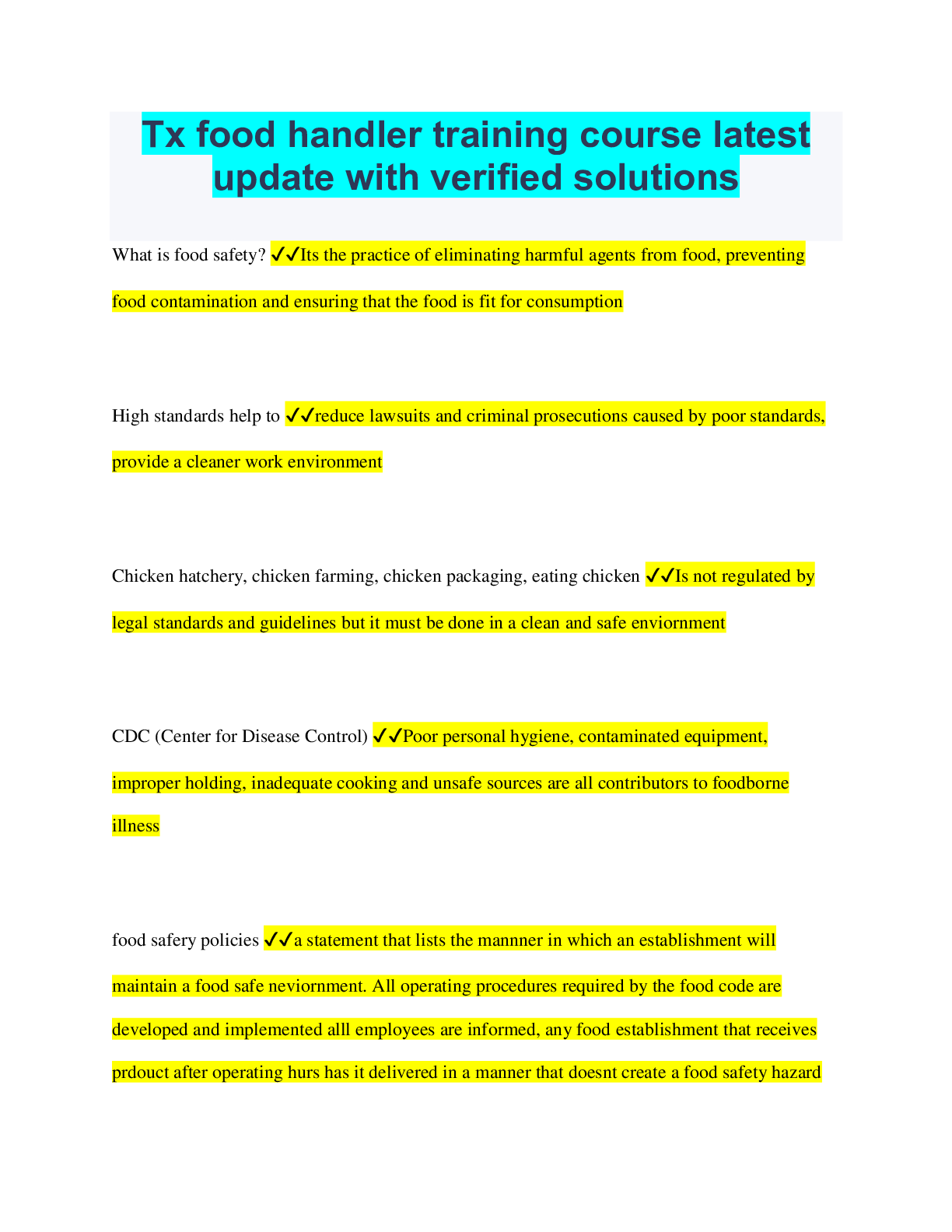
What is food safety? ✔✔Its the practice of eliminating harmful agents from food, preventing
food contamination and ensuring that the food is fit fo
...
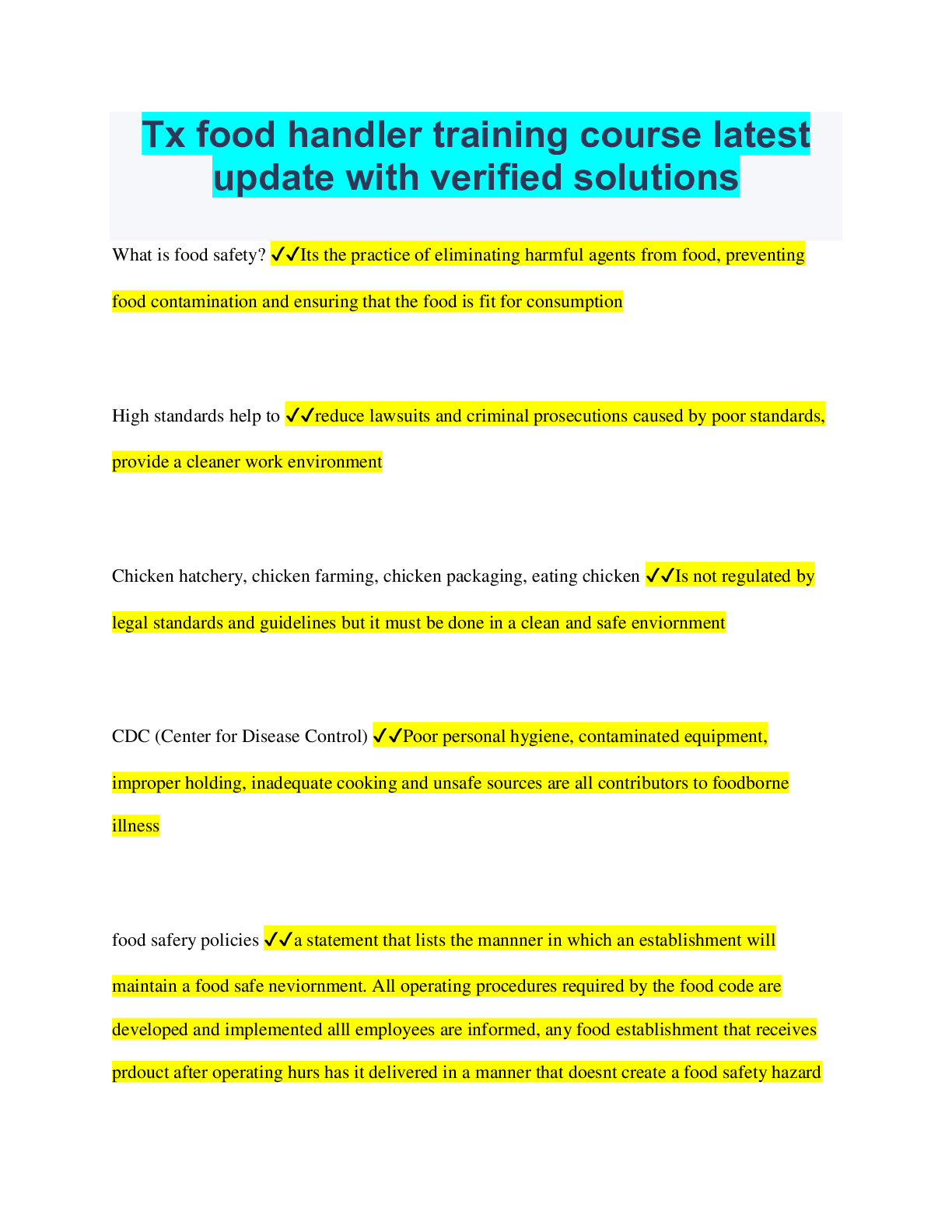
Tx food handler training course latest
update with verified solutions
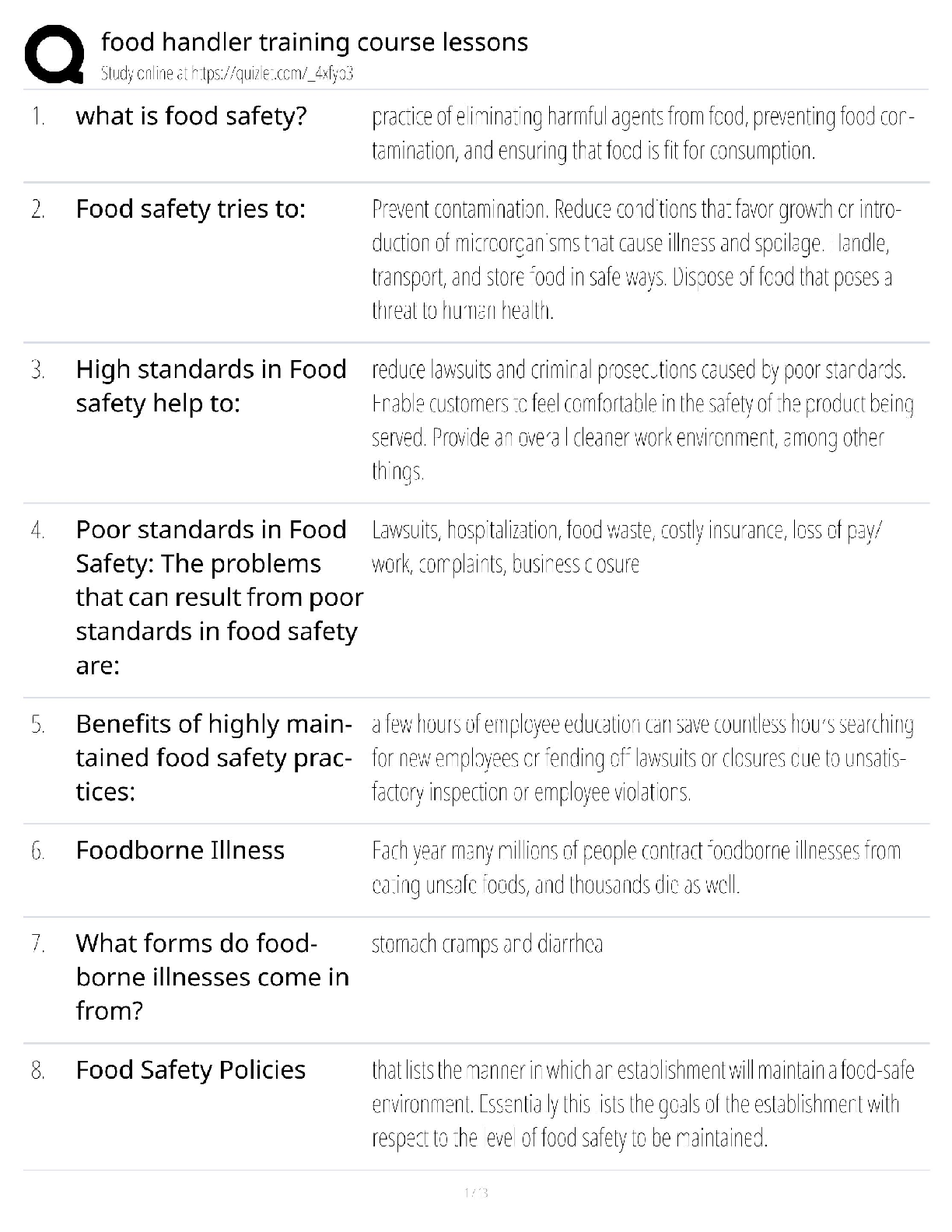
What is food safety? ✔✔Its the practice of eliminating harmful agents from food, preventing
food contamination and ensuring that the food is fit for consumption
High standards help to ✔✔reduce lawsuits and criminal prosecutions caused by poor standards,
provide a cleaner work environment
Chicken hatchery, chicken farming, chicken packaging, eating chicken ✔✔Is not regulated by
legal standards and guidelines but it must be done in a clean and safe enviornment
CDC (Center for Disease Control) ✔✔Poor personal hygiene, contaminated equipment,
improper holding, inadequate cooking and unsafe sources are all contributors to foodborne
illness
food safery policies ✔✔a statement that lists the mannner in which an establishment will
maintain a food safe neviornment. All operating procedures required by the food code are
developed and implemented alll employees are informed, any food establishment that receives
prdouct after operating hurs has it delivered in a manner that doesnt create a food safety hazard
HACCP (Hazard Analysis Critical Control Points) ✔✔this sstem is used for examinning and
managing the way inn which food is handled in a food establishment
CCPs (critical control points) ✔✔Points of food handling most likely to be vulnerable to
hazards. Pests, time and temp, corss-contamination, cleaning and sanitzation, personal hygiene.
Receiving, storing,thawing,cooking, hot hoolding, cooking, reheating
3 levels of Regulation and legislation of safety standarads ✔✔Federal, State, local government
agencies
Federal(FDA)Food and drug administration ✔✔USDA
EPA
CDC
NMFS
OSHA
CPSC
Regulates most food processing, regulates shipping and manufacturing, issues recalls of
potentially dangerous foods, set labeling standards, publishes and updates the food code.
State and local ✔✔Conduct inspections, give advice, enforce food safety laws, and issue permits
Health Codes ✔✔Sale of untift food iteams, sanization of premisses and equipment, personal
gyngine, workers help and safety, actions against violations
To recieve a food permit ✔✔Required to pay fees, allow inspections, comply with set standards,
often operate under a HACCP plan
Inspections focused in ✔✔food safety practices, food flow, temp, sanitazation, equipment,
storaage, water and wastes,
Inspection Violations ✔✔Normally the establishment has up to 10 days to corrected detected
violations. Minior violations may be granted upwards of 90 days for correction
Documentation of establishment ✔✔HACCP may provide the best defense of reasonable care in
any legal action
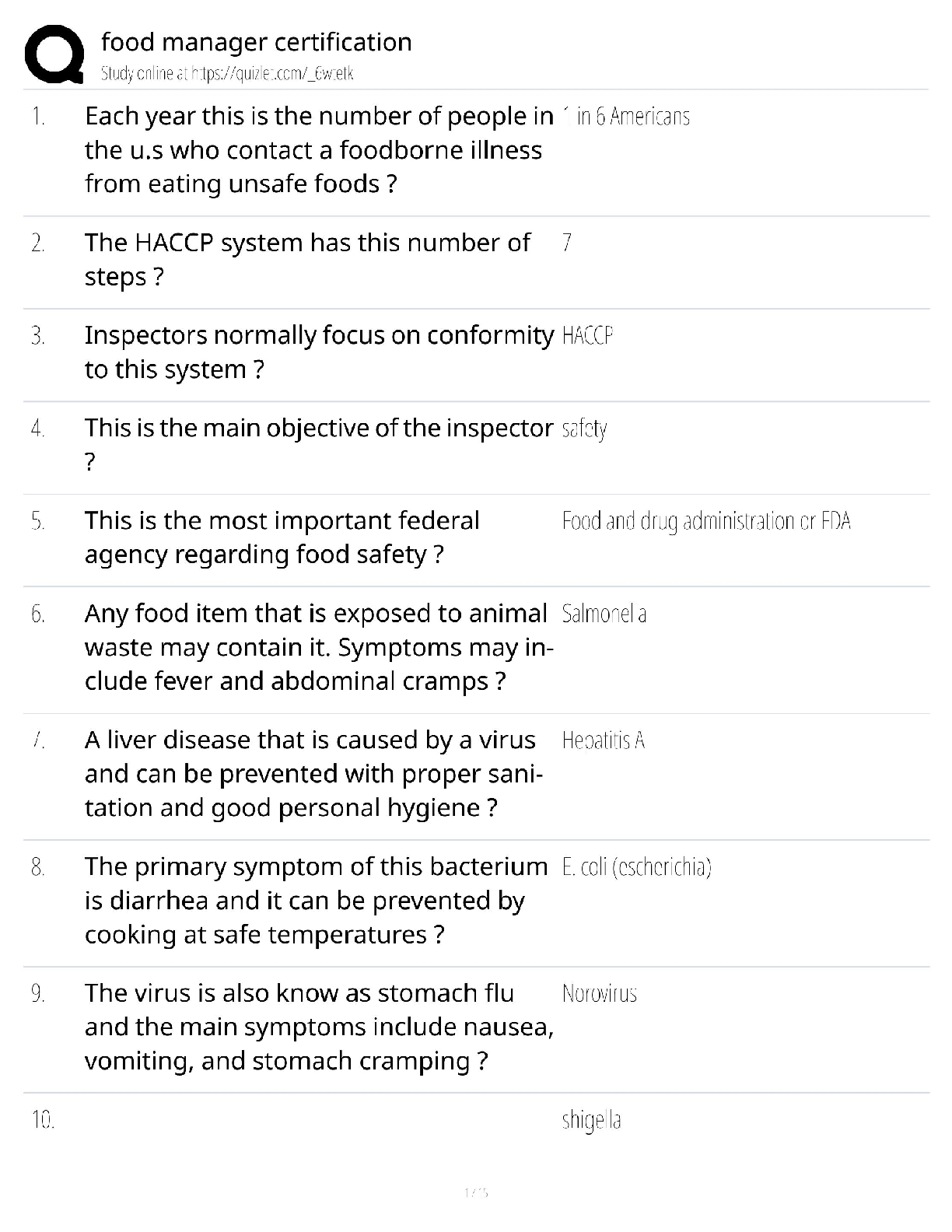
FDA ✔✔most important fed agency regarding to food safety
HACCP ✔✔Inspectors normally focus on conformity to this system
main purpose of inspector ✔✔safety
HACCP PLan ✔✔food establishments must obtain permits to operate and must operate under
this plan
Lesson 2: biohazards, foodborne illnesss and food spoilage ✔✔...
What is a biohazard? ✔✔A toxic or infectious agaent posing a threat to humans or the
enviornment. Bioharzards are living organisms. They need food and a place to live. Main cause
of foodobrne disease. (viruses and parasites, spoilage bacteria, pathogenic bateria, molds and
yeasts.
Virus ✔✔Extremlly small and simple organisms. a virus is a parasite because it depends on
another organisms called "hosts" to survive. The hosts acts both as a home and a supplier of food
for the virus
Parasites ✔✔Do not provided any benefits and often damage their hostes. Termites often live in
your home or in food.
Round wrms ✔✔Cause trichinosis in humans that have conumsed infected pork
Anisakis ✔✔Can be found in fish such as cod and herring
Flatworms ✔✔beef, pork, and fish tapeworms, and flukes such as liver fluke
Protozoa ✔✔Giardia Lambia and cryptospordium parvum often infect water
Bacteria ✔✔SIngle celled organizisms with distinct nuclei or organizaed cell structures. we need
bacteria because they are recylers of the plant. without bacteria life simply cannot be maintained
GOod bacteria ✔✔-Helps with food digestion
-Produce vitamins needed by the body
-recyle dead organisms
Bad bacteria ✔✔No benefit but can harm other organisms. IN the food industry pathogenic and
spoilage bacteria cause the largest problems.
Pathogenic bacteria ✔✔Cause illness and spoilage bacteria spoil food. Undetectable by smell,
sight, or taste. Proper cooking of foods is necessary
Raw foods can be contaminated by ✔✔Being processed improperly, handled carelessly, crosscontamination from other foods, cross contamination from an improperly cleaned surface.
Foodborn diseases ✔✔ANy typr of illness that results from injection of food contaminaton such
things as pathogenic bacteria, parasits, and viruses
Big Five foodborne Illness ✔✔Salmonella, shigella, norovirus, E.Coli, Hepatitis A
Salmonella ✔✔Infection caused by several strains of salmonella bacteria, undercooked chicken,
can be found in any food item exposed to animal waste. Infection develops within 12 to 72 hours
and lasts from 4 to 7 days.
Prevent by avoiding corss contaimination, persoanl hygiene, cleaning workspaces, cooking foods
properly
Sigella ✔✔Found in the digestive tract
Has been known to spread by flies
Usually develop iwthin 2-3 days of exposure
may spread to others throguh contaminated stool up to four weeks after symptoms have passed
Norovirus ✔✔Viral infections that causes inflammation of the intestines and stomach or
"stomach flu"
-she/he feeks very sick without warning
-symptoms last 1-2 days
-extremely contagius
-no vaccine for it or available antibiotics
-some do not have symptooms but are infected
Echerichia (E.) Coli ✔✔Found in digestive tract
Caused by poor processing and handling of food that has been contaminated by infected animal
or human feces
-can be prevented by proper handling and cooking to safe temperatures.
hand washing after restroom is really imporant
Hepatitis A ✔✔Liver diseasse caused by virus
-Raw and undercooked sellfish harvested from polluted waters and water contaimated with
sewage
-Symptoms typically are pressent for less than two monhts. It can survive outside the body for
months
- can be killed by sufficent chlorination or heatings it to 185F for one minute
-can still spread from cooked food if contaminated after cooking
-can be prevented with proper sanitation, good personal hygine, handwashing
Botulisms ✔✔Life threatening and can occur in badly package or damaged canned and vacuum
packed foods. Targets nervous system. Can be prevented by ensuring that canned and packaged
items are in good condtions. even small dents can be potentially dangerous
At risk individuals(can die) ✔✔Elderly, pregnant, 6 and under, already ill
Symptoms of a food borne illness ✔✔Abdominal pain and cramps, diarreah, nausea and
vomiiting, ever and headache, jaundice, sore throat with fever.
Last 24-48 hours
Appear a few hours to feveral days after eating contaminated food
Outbreak occurs when a grou of people consume the same food
Food Spoilage ✔✔Natural
caused by rough handling, exaggerated temp, bacteria, enzymes, mold and pests
bad smell, texture, feel and taste
lesson 3: contamination ✔✔..
Biological contamination ✔✔When pathogens sucha as virus, parasits, pathogenic bacteria and
spoilage are present in foods. Involved contamination of foods by other living organisms
-vulnerable
-to reduce, dehydration and overheating
can come from many places "Vehicles of contaminations" like your uncleaned hands
Physical contamination ✔✔Not caused by other organisms and not considered chemical. Paintchip from an old wall fallen into soup, packaging materials, pest droppings, employee jewelry,
metal and wood
Chemical contamination ✔✔Pesticides, cleaning liquids, personal grooming products. may
include toxic metals from surafce, natural toxins from seasfood, mushrooms, plants and some
mold and allergens.
lesson4: temp and control ✔✔..
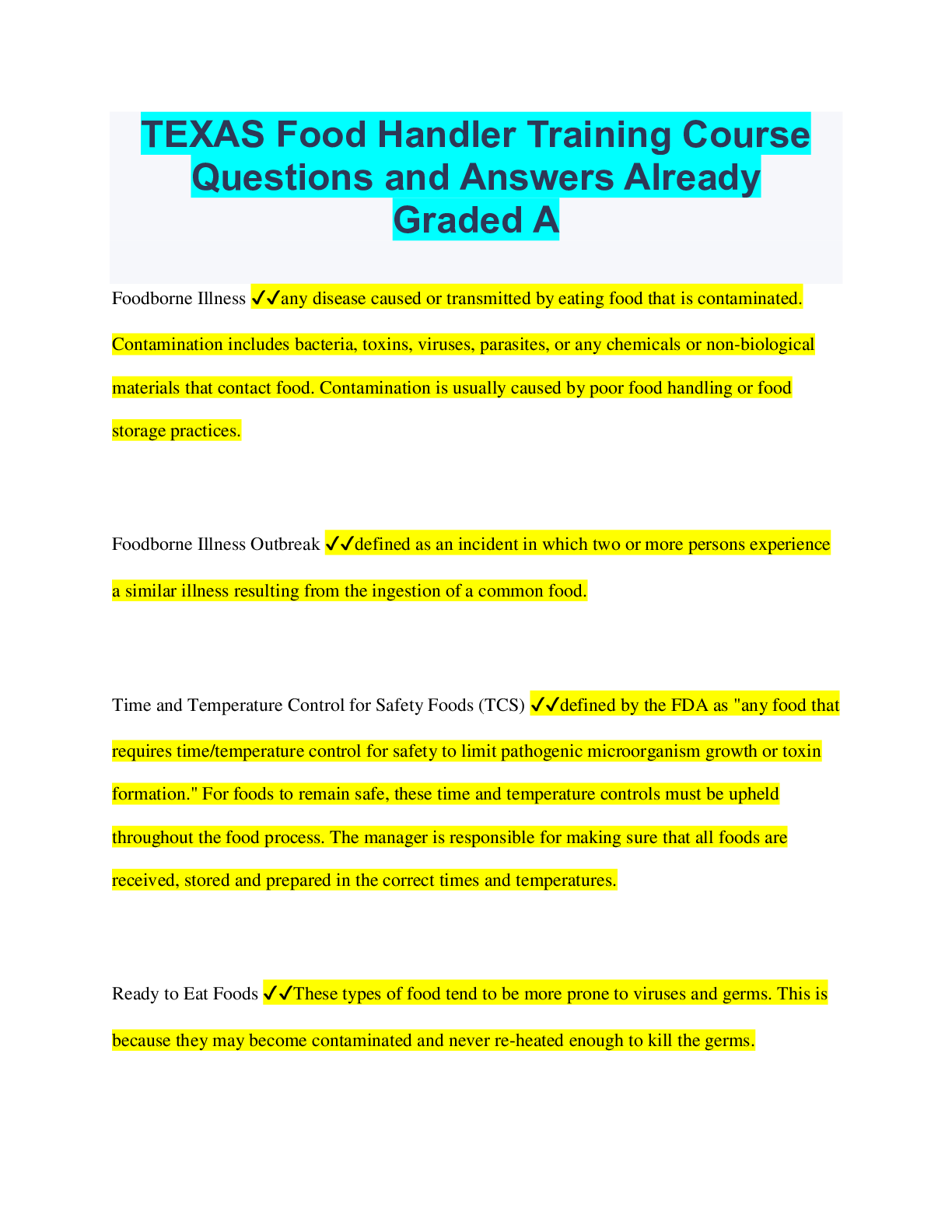
TCS (Time and Temperature Control for Safety) ✔✔Means food that need time and temp control
to limit the growth of pathogens for safety.
raw and most cooked meat
dairy products
cut melos
cut leafy greens
raw shell eggs
6 conditons that make disease-causing bacteria multiply to harmful levels ✔✔Food high in
pprotien, acidity, time bacteria need 10-20 minutes to multiply, temperautre 41 t 135 temperage
zon ideal temperature is 98.6, Aerobic bacterica need oxygen to reproduce, moisture to mutiply
need to hbe above 0.85
Allergic reaction symptoms ✔✔Rashes, swelling, hard to breathe, unconsciousness
Temperature control ✔✔Used to vary the temp at which foods are packaged shipped stored
cooked cooled saved and reheated
Thawing ✔✔Frozen foods enter the danger zone while thawing, must mark ready to eat, held at
temp of 41 for less than 7 days
Cooking ✔✔When using microwave to cook foods, rotate or stir, allow the food to stand for two
minutes after cooking so heat can equalize the required internal temperature in all parts of the
food
Internal cooked temp are normally between 130-165F
ground meats should be cooked at 155F for 15 seconds
Hot holding temperature ✔✔135
Cold holidng temperature ✔✔41F
Cooling hot foods ✔✔Foods should be cooled from 135 to 70F within two hours then to 135 to
41F within total of six hours
cooking methods ✔✔Blast chiller
Divide hot foods into smaller portions
Place hot foods in small containers
Use ice bath for cooling method
Sir or rate food
add aice
place cooked roast and whole chickens in clean containers enough space for air to circulate
Thermometer ✔✔The ice point method, the temp of a large class of crushed iced shoukd be at 32
the boiling ponit method temp of boiling water should read 212F
Thermometers should be calibrated ✔✔before they are first used, regular intervales, damage or
inaccurate reading, confirmed case of foodborne illness
handwashing ✔✔rub soap for 10-15 secs between fingers and above wrists
rinse well
Gontaminated gloves ✔✔remove gloves
throw away
wash hands
put on new gloves
[Show More]