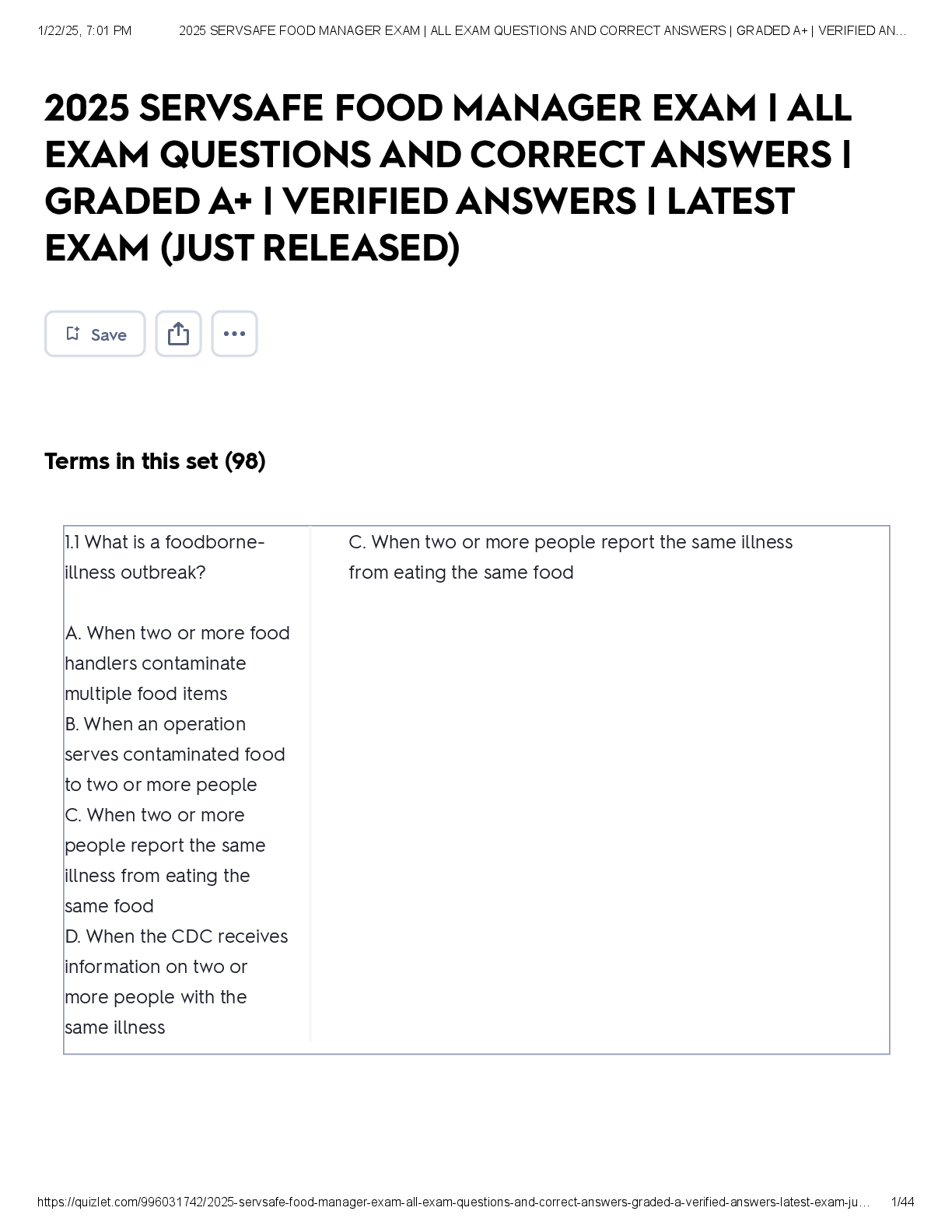
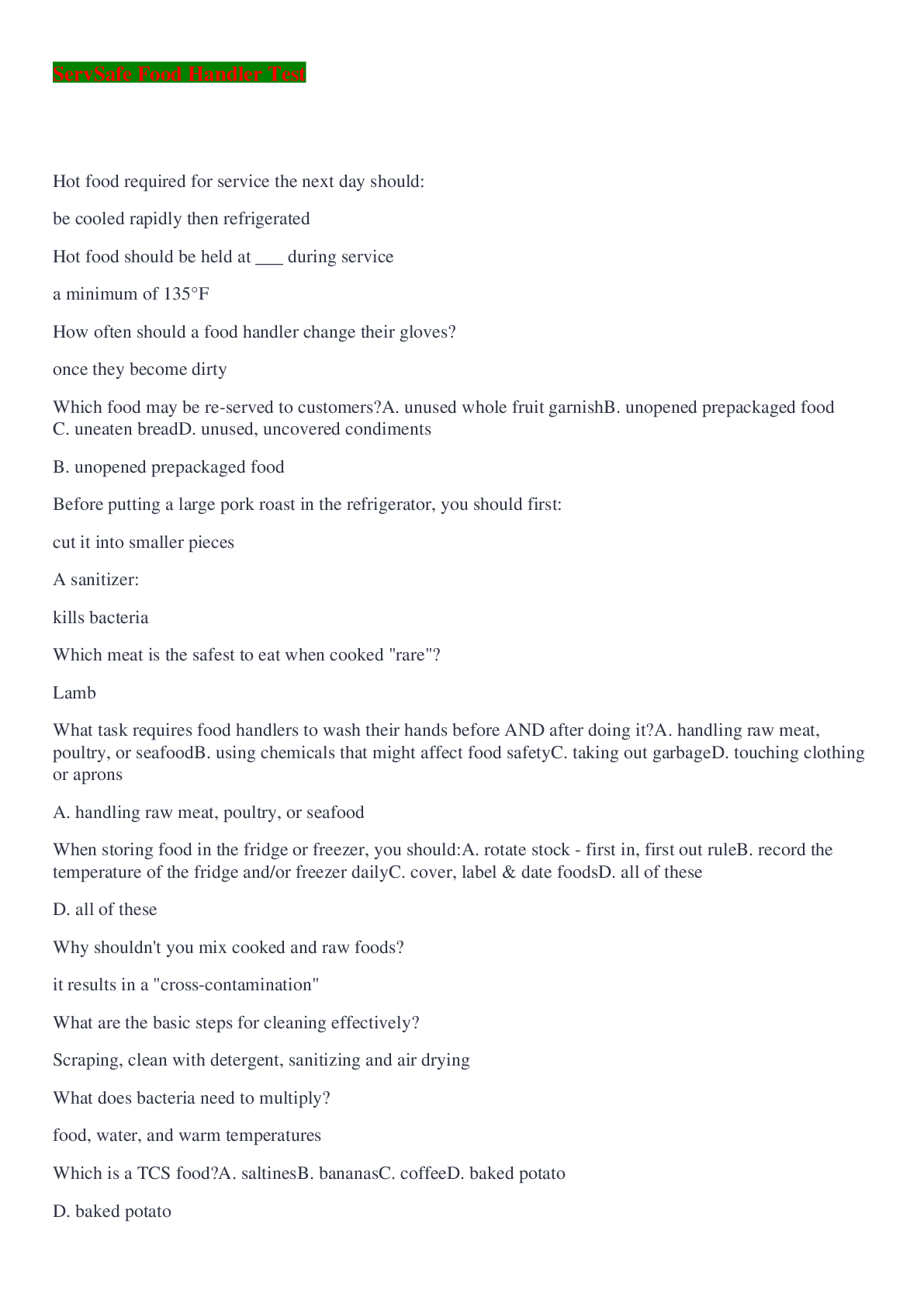
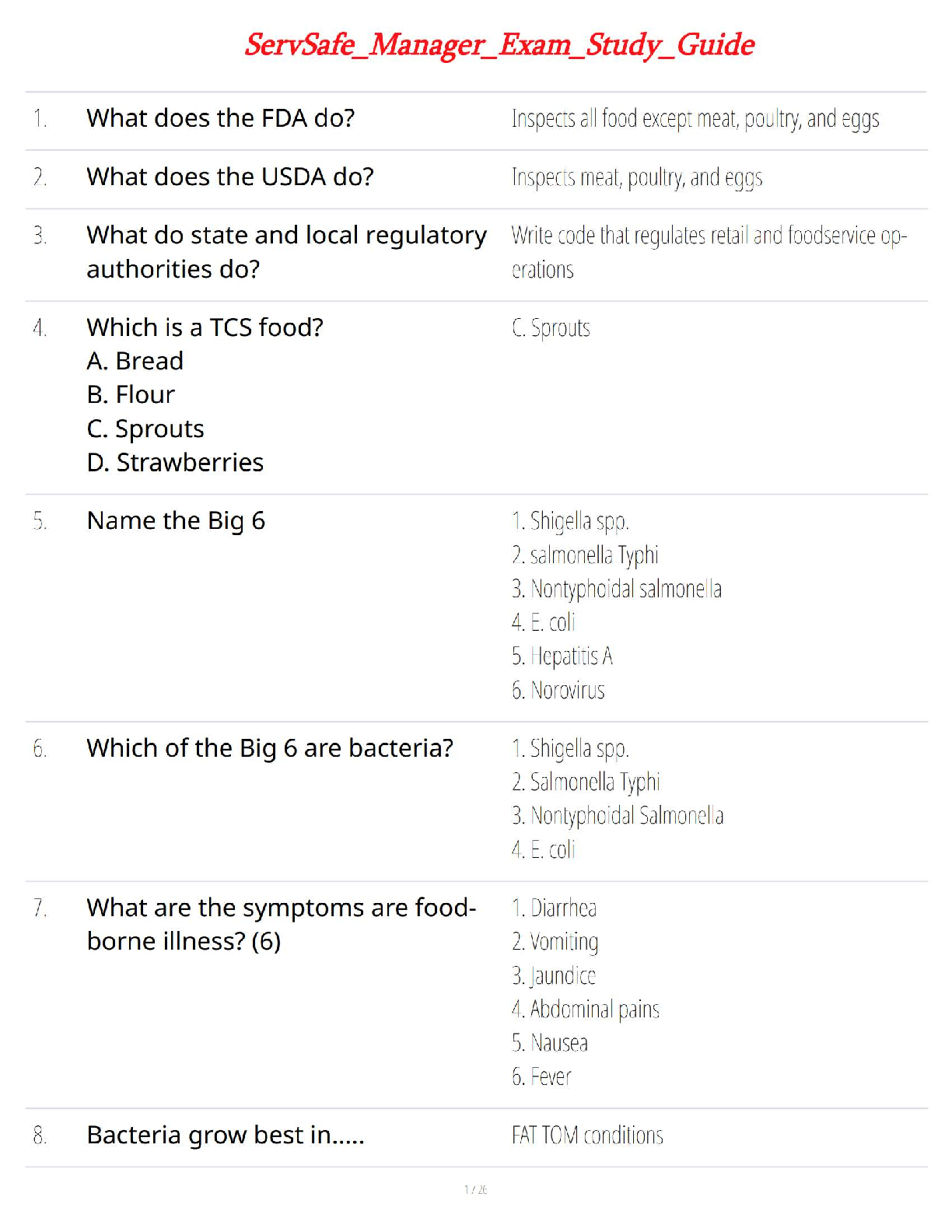
ServSafe Food Handler Guide
(2022/2023) Already Passed
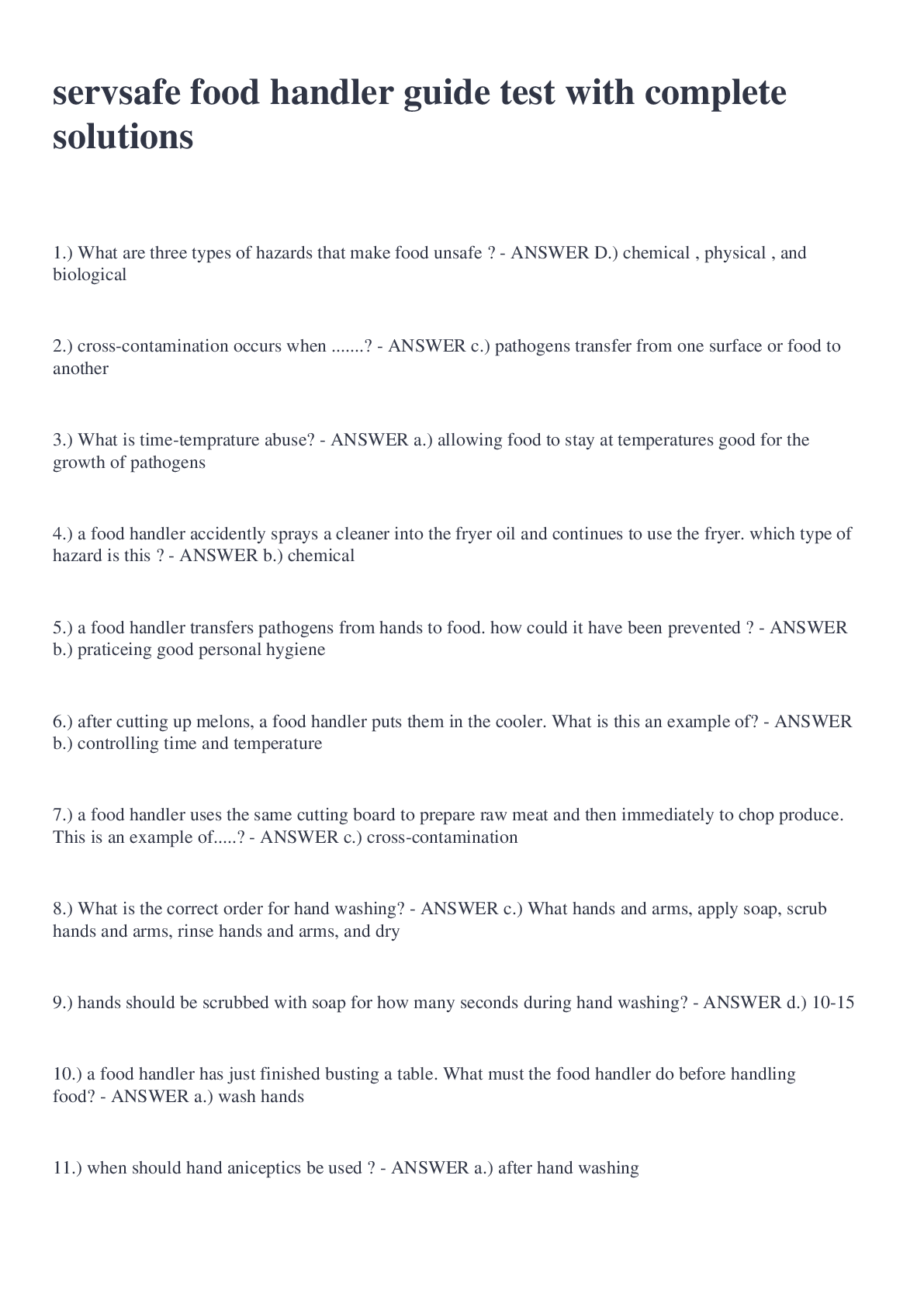
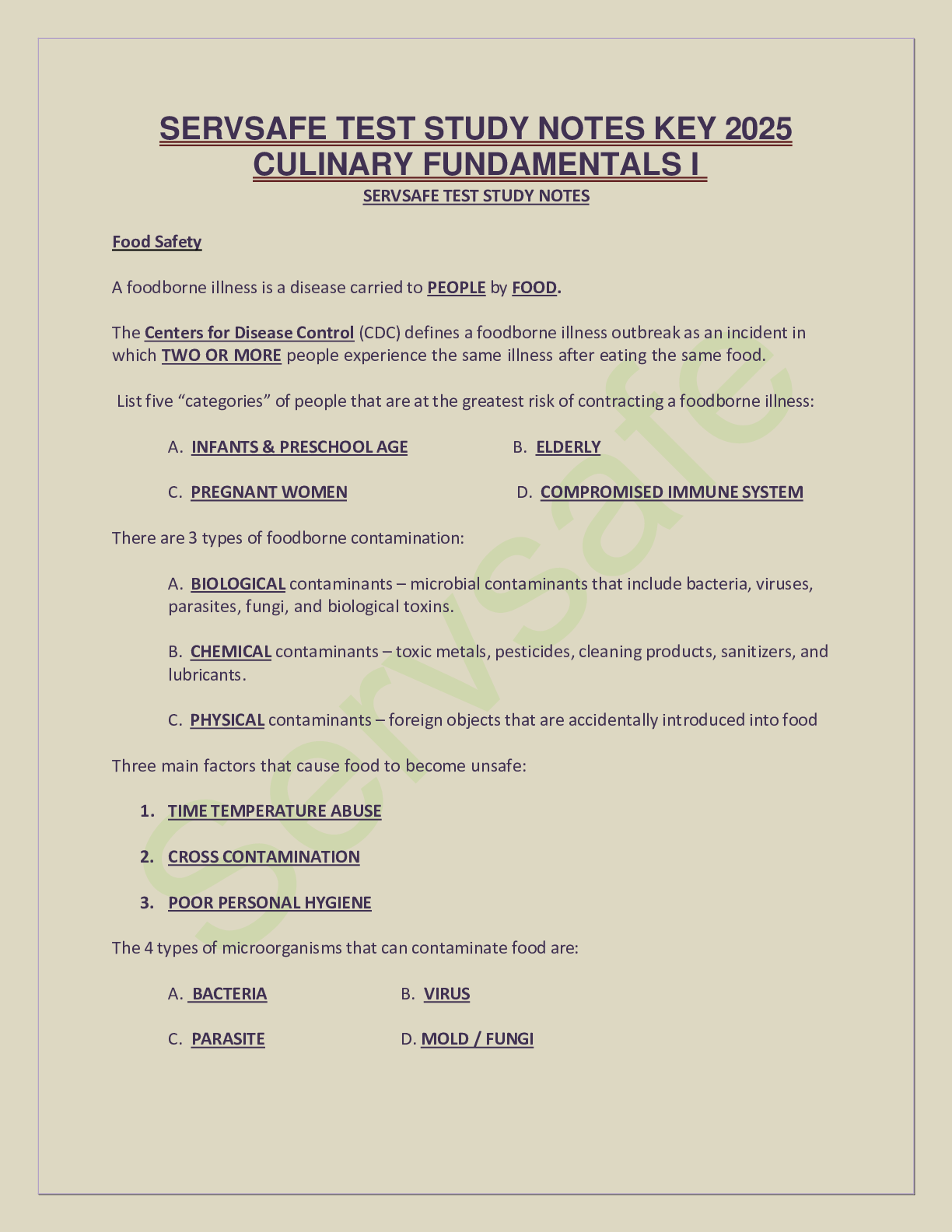
Hazards for the Environment ✔✔Biological, chemical, and physical
Biological hazards ✔✔bacteria, viruses, parasites, and fungi
Chemical hazards ✔✔Cleaners, saniti
...
ServSafe Food Handler Guide
(2022/2023) Already Passed
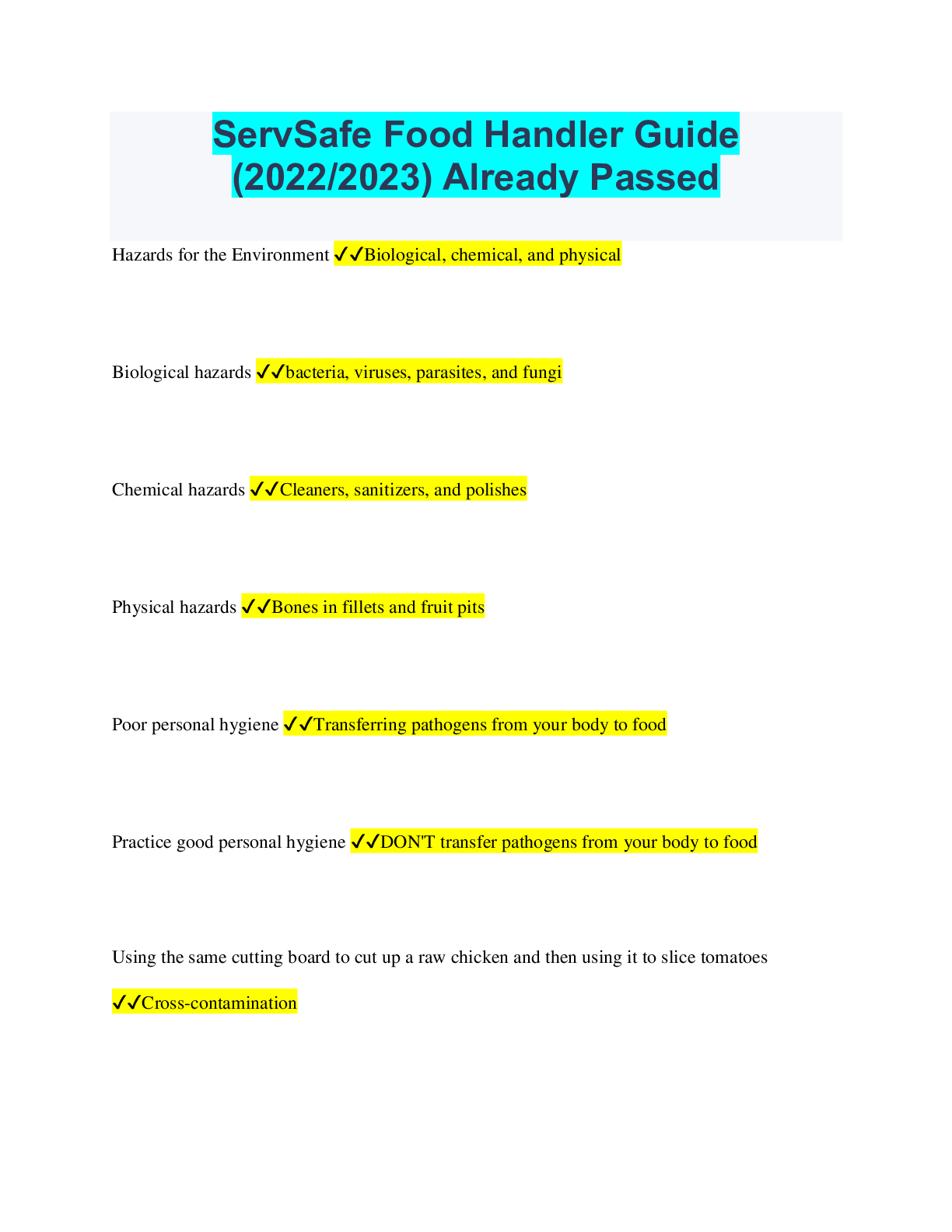
Hazards for the Environment ✔✔Biological, chemical, and physical
Biological hazards ✔✔bacteria, viruses, parasites, and fungi
Chemical hazards ✔✔Cleaners, sanitizers, and polishes
Physical hazards ✔✔Bones in fillets and fruit pits
Poor personal hygiene ✔✔Transferring pathogens from your body to food
Practice good personal hygiene ✔✔DON'T transfer pathogens from your body to food
Using the same cutting board to cut up a raw chicken and then using it to slice tomatoes
✔✔Cross-contamination
How to wash your hands ✔✔Wet, soap, scrub (for ten to fifteen seconds), rinse, and dry
When to wash your hands ✔✔After touching your hair, face, or body
Clearing tables or busing dirty dishes
Using hand antiseptics ✔✔Use an antiseptic after you wash your hands
Use a hand washing sink ✔✔Wash your hands only in a designated hand washing sink
Change gloves... ✔✔Before beginning a new task or after handling raw meats and before
handling ready-to-eat food
Wounds ✔✔Cover wounds with a bandage and then place a single use glove over it
Jewelry ✔✔Only able to wear plain band
Tell your manager if you have any of these symptoms: ✔✔Vomiting, diarrhea, jaundice, or a
sore throat with a fever
Time temp control ✔✔Bacteria can grow well in some foods especially when food is held at
unsafe temperatures overtime
Food most likely to become unsafe ✔✔Sliced melons, cut tomatoes, and leafy greens
Heat treated plant food such as cooked rice, beans, and veggies
Temp danger zone ✔✔41` F to 135`F
Receive cold TCS food at... ✔✔41`F or lower
Ready to eat TCS food must be marked with a ____, and held for no longer than ____. ✔✔Label
and 24 hours
Thawing TCS food ✔✔In a cooler at 41 or lower; in a microwave if food is cooked immediately;
submerged under running water at 70 or lower; and as a part of the cooking process
Poultry ✔✔165 for 15 seconds
Ground meat ✔✔155 for 15 seconds
Seafood ✔✔145 for 15 seconds
Pork, beef, veal, and lamb
Steaks or chops
Roasts ✔✔145 for 15 seconds
145 for 4 minutes
Fruit, veggies, grains, and beans ✔✔135
Keep hot food at... ✔✔135 or higher
Pathogens can be transferred from one surface or food to another. This is... ✔✔Crosscontamination
Preventing cross contamination ✔✔Clean and sanitize work surfaces, utensils, and equipment
between each product
NEVER scoop ice with... ✔✔Bare hands or a glass
Store towels for cleaning food spills in... ✔✔A sanitizer solution when you aren't using them
Storing chemicals and cleaning supplies ✔✔Always store them in the designated storage area
What to do if cross contamination happens ✔✔Set aside contaminated food with a label saying
do not use and ask your manager what to do
Cross contact ✔✔When a food item containing an allergen comes in contact with another food
item and their protein mix
Big Eight ✔✔Milk, eggs, soy, fish, tree nuts, peanuts, crustacean, and wheat
What to do if cross contact happens ✔✔Don't serve food, set it aside so no one uses it and ask
your manager what to do
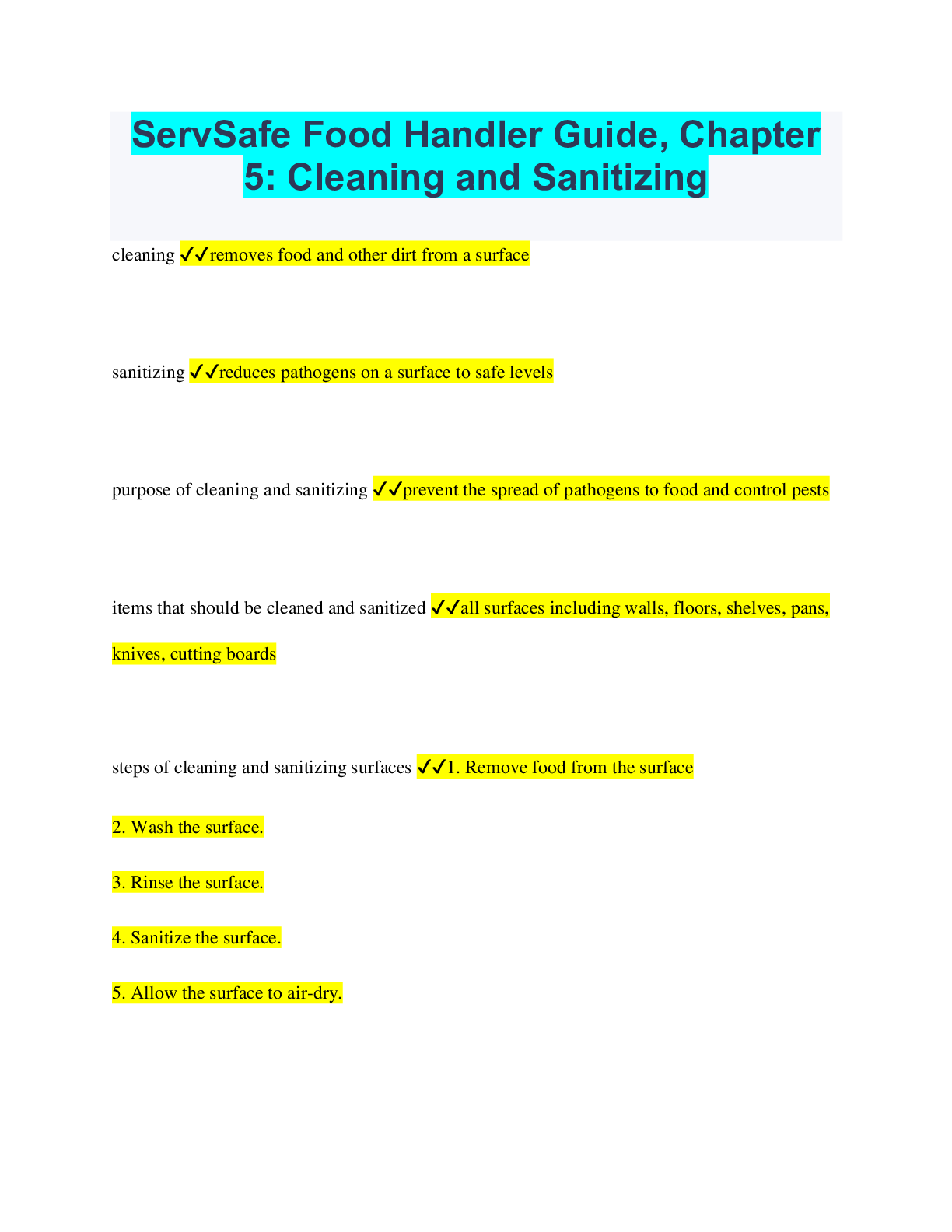
Surfaces to clean and sanitize ✔✔All surfaces must be cleaned and rinsed, and any surface that
touches food
How to clean and sanitize surfaces ✔✔Scrape, wash, rinse, sanitize, and air dry
When to clean and sanitize and change gloves ✔✔Every four hours
How to make sure sanitizer's are effective ✔✔Leave the items with the sanitizer the correct
amount of time
Sanitizer test kit
Sink three ✔✔Fill with water and add correct amount of sanitizer
Insect parts can be a source of... ✔✔Physical contamination and biological contamination
[Show More]