NGR 5141 ADVANCED PATHO EXAM 1
Immunity, Inflammation, and Infection Quiz
Question 1
Many neonates have a transient depressed inflammatory response because of a(n):
circulatory system that is too immature to ad
...
NGR 5141 ADVANCED PATHO EXAM 1
Immunity, Inflammation, and Infection Quiz
Question 1
Many neonates have a transient depressed inflammatory response because of a(n):
circulatory system that is too immature to adequately perfuse tissues.
insufficient number of mast cells
respiratory system that is too immature to deliver oxygen to tissues
deficiency in complement and chemotaxis
Question 2
Once they have penetrated the first line of defense, which microorganisms do natural killer (NK) cells actively attack?
bacteria
fungi
mycoplasma
viruses
Question 3
A person cannot contract canine distemper because the person has _____immunity to it.
natural, innate or species specific
active
active acquired
passive
immunoglobulin-mediated
Question 4
The first antibody of a typical primary immune response is:
IgG
IgM
IgA
IgD
IgE
Question 5
The immune response can be subdivided into two responses, humoral and cell mediated. These two mechanisms include all of the following except:
B cells
T cells
bradykinin
antibodies
Question 6
Cytokines:
produce erythrocytes
may be produced by macrophages and lynphocytes
are the the only hormones of the immune response
B and C
Question 7
Inflammation is triggered by:
cellular injury
microorganisms
oxygen deprivation
all of the above
Question 8
The predominant phagocytic cells early in the inflammatory response are:
neutrophils
monocytes
macrophages
eosinophils
Question 9
Hypersensitivity is best defined as:
a reduced immune response found in most pathologic states
a normal immune response to an infectious agent
antigenic desensitization
an excessive or inappropriate response of the immune system to a sensitizing antigen
Question 10
Erythroblastosis fetalis is an example of:
autoimmunity
alloimmunity
homoimmunity
alleimmunity
Question 11
What is the basic common characteristic of neutrophils and macrophages?
mitotic diversion
number in circulation
phagocytosis
opsonization
Question 12
Both B and T cells are originally derived from cells of the:
pancreas
gut associated lymphoid tissue
bone marrow
thymus
Question 13
The most severe immediate hypersensitivity reaction is:
urticaria
hives
anaphylaxis
ADCC
Question 14
When the maternal immune system becomes sensitized against antigens expressed by the fetus, _____ disease is a result.
allergic
fetal immune
autoimmune
alloimmune
Question 15
The inflammatory response:
prevents blood from entering the injured tissue
elevates body temperature significantly to prevent the spread of infection
prevents the formation of abcesses
minimizes injury and promotes healing
Fluid and Electrolyte Imbalance Quiz
Question 1
A patient with chronic kidney disease is admitted with a potassium of 6.9 mEq/L. What clinical signs may accompany this disorder? SELECT ALL THAT APPLY
Tall, peaked T waves
Muscle paralysis
Constipation
U waves
Cardiac arrest
Question 2
A client is prescribed lisinopril, an ACE inhibitor, for treatment of hypertension. The following lab findings are reported:
Glucose: 112 mg/dL
Sodium: 144 mEq/L
Chloride: 102 mEq/L
Potassium: 5.2 mEq/L
What electrolyte abnormalities are present?
Hyponatremia
These values are normal.
hypernatremia
Hyperkalemia
Hypokalemia
Question 3
A client with hypoparathyroidism is admitted to the unit. A total calcium of 7.3 mEq/L is reported. What clinical signs accompany this disorder? SELECT ALL THAT APPLY
Depressed reflexes
Bradycardia
Laryngospasm
Tetany
Constipation
Question 4
A client with multiple myeloma is admitted to the oncology unit. The following labs results are reported.
Glucose: 325 mg/dL
Sodium: 148 mEq/L
Chloride: 111 mEq/L
Potassium: 4.9 mEq/L
Calcium: 12.2 mEq/L
What abnormalities are present?
Hypocalcemia
Hyperkalemia
Hypercalcemia
Hypokalemia
These values are normal.
Question 5
A patient who it taking a thiazide diuretic for treatment of hypertension. The following lab report is received.
Glucose 134 mg/dL
Sodium 136 mEq/L
Chloride 101 mEq/L
Potassium 3.1 mEq/L
If present, what lab abnormalities are present?
These values are normal.
hyponatremia
hypokalemia
hyperkalemia
hypernatremia
Question 6
A patient with a history of heart failure is admitted with a plasma sodium of 118 mEq/L. What clinical signs accompany this electolyte disorder? SELECT ALL THAT APPLY
Tetany
Seizures
Edema
Hyperreflexia
Ascites
Question 7
A 2-month-old infant is hospitalized after experiencing 24 hours of vomiting and diarrhea. The following values are reported on the chemistry panel:
Glucose 87 mg/dL
Sodium 151 mEq/L
Chorlide 110 mEq/L
Potassium 4.6 mEq/L
Calcium 9.4 mEq/L
What electrolyte disorder(s) are present?
Hypokalemia
Hyperkalemia
Normal lab
Hypernatremia
Hyponatremia
Question 8
A client who is receiving chemotherapy for advanced colon cancer presents to the emergency department with clinical signs of sepsis. The following blood gas report is obtained:
pH 7.12
PaCO2 15 mmHg
PaO2 88 mmHg
Sat 91%
HCO3 20 mEq/L
How do you interpret these findings?
Metabolic acidosis
Metabolic alkalosis
Respiratory alkalosis
Respiratory acidosis
These values are normal.
Question 9
A 50-year-old morbidly obese male is admitted for bariatric surgery. The following blood gas report is received preoperatively:
pH 7.31
PaCO2 58 mmHg
PaO2 90 mmHg
Sat 92%
HCO3 24 mEq/L
What is the interpretation of these findings?
Metabolic acidosis
Respiratory acidosis
Respiratory alkalosis
These values are normal.
Metabolic alkalosis
Question 10
A client is admitted to the medical intensive care with a diagnosis of pancreatitis. The client has an NG tube to low intermittent suction. The following blood gas report is received:
pH 7. 49
PaCO2 42 mmHg
PaO2 90 mmHg
Sat 94%
HCO3 27 mEq/L
What is the interpretation of these findings?
Respiratory alkalosis
Metabolic alkalosis
Respiratory acidosis
These values are normal.
Metabolic acidosis
Question 11
A client with a peanut allergy comes in contact with a peanut-containing food. The patient experiences begins to wheeze and collapses. The following blood gases are obtained in the emergency department.
pH 7.23
PaCO2 58 mmHg
PaO2 72 mmHg
Saturation 84%
HCO3 26 mEq/L
What is the interpretation of the ABG report?
Respiratory alkalosis
Respiratory acidosis
Metabolic acidosis
Metabolic alkalosis
These values are normal.
Question 1
Groups at risk for fluid imbalance include:
elderly persons, thin women, and infants
infants, thin women, and obese persons
obese persons, elderly persons, and infants
Question 2
Excessive use of magnesium- and aluminum-containing antacids can result in:
hypomagnesemia
hypophosphatemia
hyponatremia
hypokalemia
Question 3
Hypernatremia may be caused by:
oversecretion of aldosterone
Cushing syndrome
inappropriate administration of hypertonic saline solution
A, B, and C
Question 4
Edema may be caused by:
increasing capillary permeability
increasing hydrostatic pressure
reducing plasma proteins
increasing interstitial proteins
any of the above
Question 5
Hypermagnesemia is usually caused by:
hepatitis
renal failure
trauma to the hypothalamus
pancreatitis
Question 6
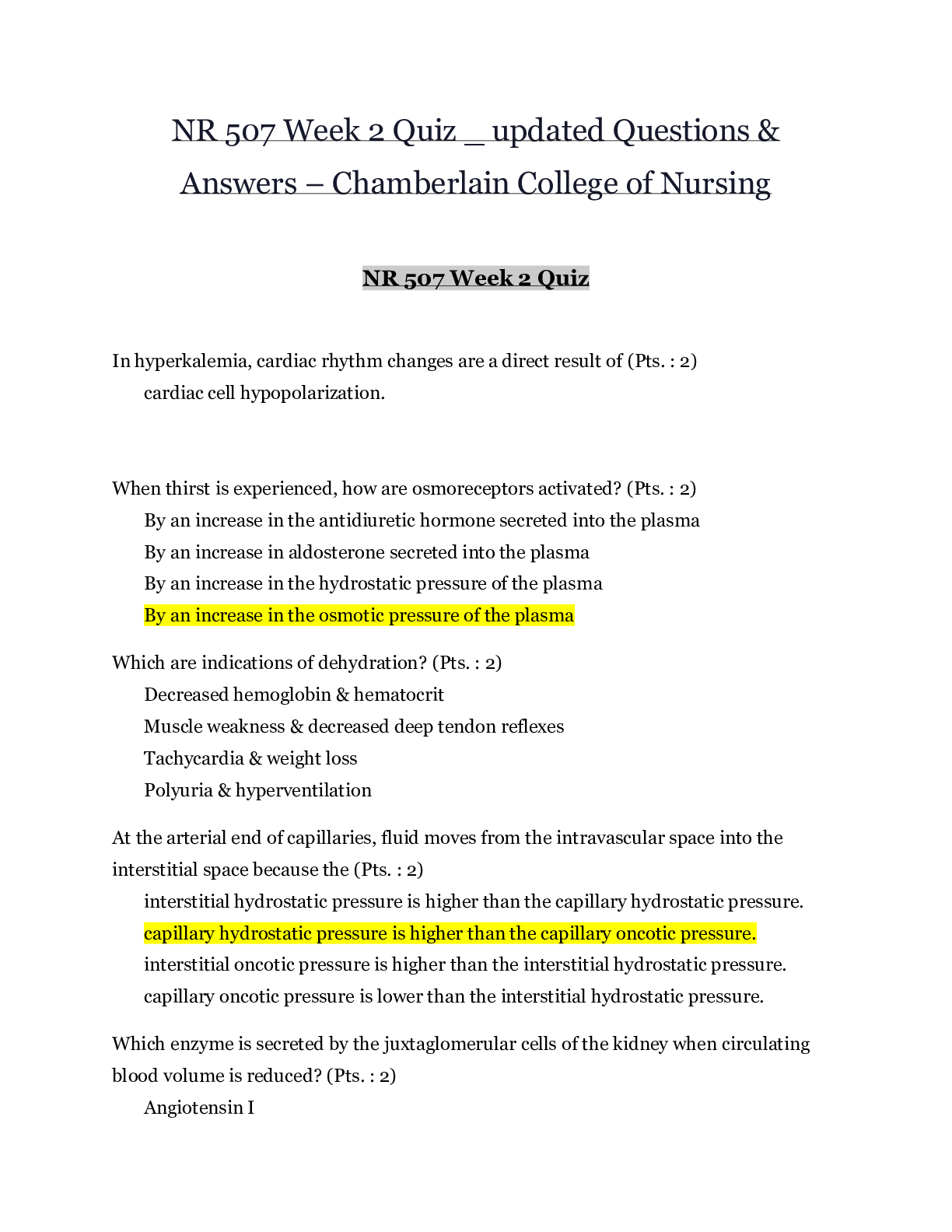
An enzyme secreted by the juxtaglomerular cells of the kidney when circulating blood volume is reduced is:
angiotensin I
angiotensin II
aldosterone
renin
Question 7
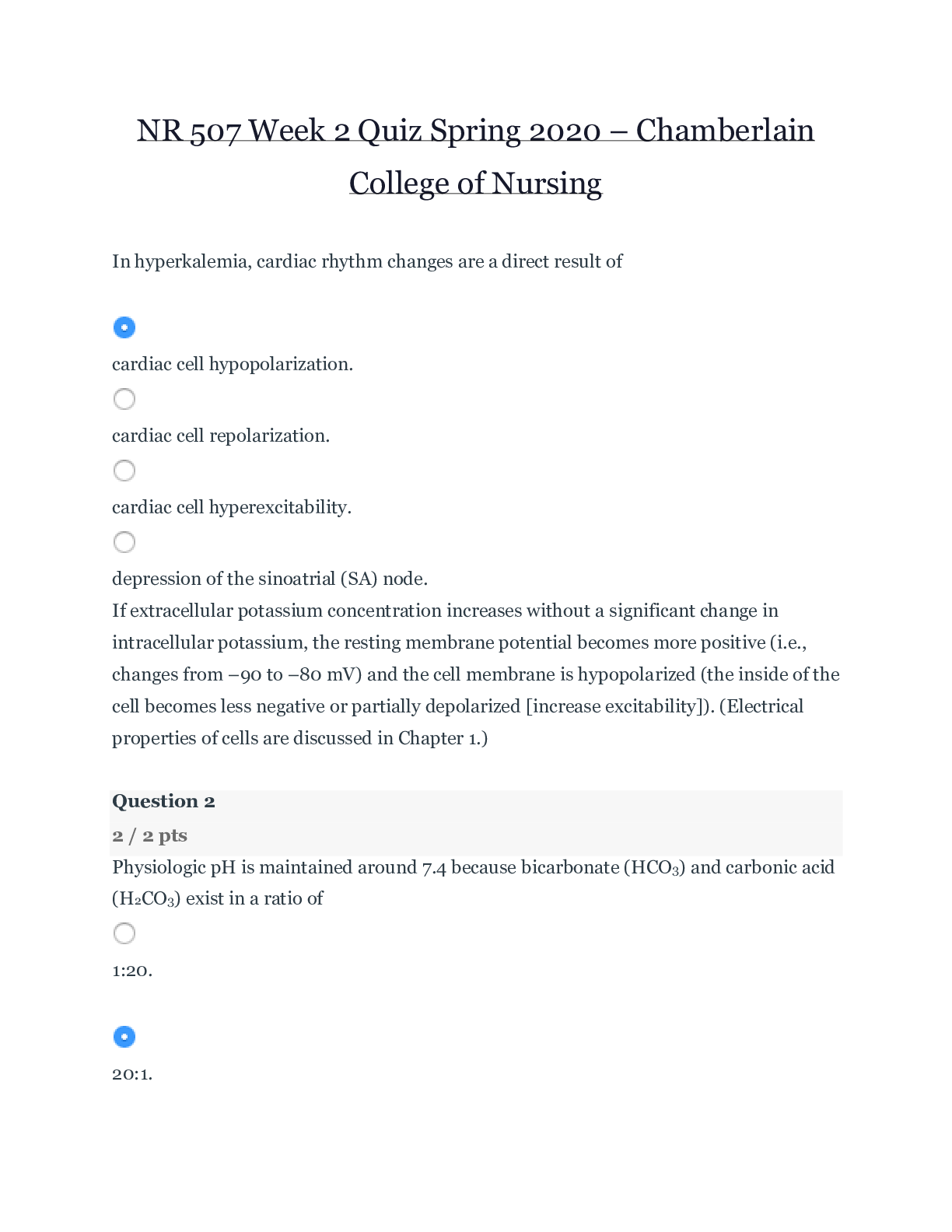
Physiologic pH is maintained around 7.4 because HCO3 and H2CO3 exist in a ratio of:
20:1
1:20
10:2
10:5
Question 8
_____ alterations occur when changes in TBW are accompanied by proportional changes in electrolytes.
Isotonic
Hypertonic
Hypotonic
none of the above
Question 9
In hyperkalemia, cardiac rhythm changes are a direct result of:
cardiac cell hypopolarization
cardiac cell hyperexcitability
changes in plasma
changes in oxygen delivery
Question 10
Dehydration may result in any of the following except:
an increased hematocrit
dry skin
Tachycardia
postural hypertension
Question 11
Water movement between the intracellular fluid compartment and the extracellular compartment is primarily a function of:
osmotic forces
plasma oncotic pressure
antidiuretic hormone
Filtration
Question 12
The secretion of aldosterone is influenced by:
plasma concentration of potassium
blood volume
plasma concentration of sodium
A, B, and C
Question 13
Which of the following buffer pairs is considered the major buffering system?
Hb/HHb
HCO3/H2CO3
HPO4/H2PO4
NH3/NH4
Question 14
Causes of respiratory acidosis include:
Vomiting
sodium retention and loss of hydrogen ion
pneumonia
B and C
Question 15
Tony Buffer, 54 years old, has a long history of smoking. He decides to undergo lung and blood studies done because he is very tired, is short of breath,and just does not feel good. His blood gases reveal the following findings: pH, 7.3; HCO3, 27; CO2, 58. Tony’s condition may be:
respiratory alkalosis
metabolic acidosis
respiratory acidosis
respiratory alkalosis
Cell and Genetics Quiz
Question 1
Active transport occurs only across membranes that:
use energy generated by cellular metabolism
are semipermeable to water and small electrically uncharged molecules
have receptors that are capable of recognizing and binding with the substances to be transported
A and C
Question 2
Asphyxial injuries include:
suffocation
strangulation
chemical injuries
drowning
all of the above
Question 3
Melanin is synthesized by epidermal cells called ____________ and accumulates in epidermal cells called _____________.
cuboid, keratinocytes
melanocytes, keratinocytes
malanocytes, somatic
columnar, basal surface
Question 4
In chemical injury, membrane destruction results from:
lipid peroxidation
reactive free radicals
direct toxicity
A, B, and C
Question 5
Muscular hypertrophy may involve:
an increase in muscle cell number
an increase in muscle cell size
an increase in protein synthesis
B and C
Question 6
Cells that are particularly susceptible to ionizing radiation are those of the:
gastrointestinal tract
bone marrow
lymph nodes
fetus
all of the above
Question 7
The consequences of hypoxic injury include:
decreased production of ATP
increased intracellular lactate
decreased protein synthesis
A, B, and C
Question 8
After ovulation the uterine endometrial cells divide under the influence of estrogen; this is an example of:
hormonal hyperplasia
hormonal dysplasia
hormonal hypertrophy
none of the above
Question 9
Compared with normal aerobic metabolism, cells that use anaerobic metabolism produce _______ ATP and _______ lactic acid.
more, more
less, less
less, more
more, less
Question 10
Acute cellular swelling during ischemia is reversible if _________ is supplied quickly.
normal saline
potassium
glucose
oxygen
Question 11
The single most common cause of cellular injury is:
hypoxic injury
chemical injury
infectious injury
genetic injury
Question 12
Proteins facilitate transport across membranes by serving as:
receptors
enzymes
transporters
A, B, and C
Question 13
Free radicals can be initiated in cells by:
ultraviolet light
normal metabolic processes
metabolism of drugs
A, B, and C
Question 14
Atypical hyperplasia is another name for:
metaplasia
dysplasia
Hypertrophy
none of the above
Question 15
The mammary glands enlarge during pregnancy primarily as a consequence of:
Hypoplasia
hormonal hyperplasia
hormonal anaplasia
Dysplasia
Question 16
A couple has three offspring: one child with an autosomal dominant disease trait and two who are normal. The father is affected by the autosomal dominant disease, but the mother does not have the disease gene. What is the recurrence risk of this autosomal dominant disease for their next child?
25%
Cannot be determined
50%
33%
Question 17
A somatic cell that does not contain a multiple of 23 chromosomes is called:
A diploid cell
an aneuploid cell
polyploidy cell
a haploid cell
CANCER QUIZ
Question 1
Most childhood cancers arise from the:
embryologic ectodermal layer.
the epithelium cells
the mesodermal germ layer
the vicera
Question 2
What is the role of vascular endothelial growth factor(VEGF), basis fibroblast growth factor (bFGF) and transforming growth factor alpha in cell metastasis?
To stimulate growth of near by tumor cells
To develop new blood vessels to feed cancer cells
To prevent cancer cells from escaping apoptosis
To act as a chemical gradient to guide cells to blood vessels
Question 3
What are tumor cell markers and how are they used?
Hormones, enzymes, antigens and antibodies produced by cancer cells and are used to screen individuals for cancer
Receptor sites on tumor cells that identify tumor type
Cytokines produced against cancer cells -- used to follow the clinical course of a chemotherapy
Identification marks used in the administration of chemo and radiation therapy
Question 4
Interleukin is used as adjuvnat therapy for a patient with metastatic renal cell carcinoma. The goal of the therapy is to:
improve the cellular response to chemotherapy
enhance the immune response to tumor cells
reduce the metastasis of malignant cells
prevent bone marrow depression
Question 5
Which cytokine is involved in producing cachexia syndrome?
Interleukin 1 (Il-1)
Colony-stimulating fctor (CSF)
Interleukin 15 (Il-15)
Tumor necrosis factor (TNF)
Question 6
When are childhood cancers most often diagnosed
After an acute illness
During infancy
after early warning signs
At peak times of physical growth
Question 7
What are characteristics of benign tumors?
They invade local tissues
They spread through lymph
They have low mitotic index
They cause systemic syptoms
Question 8
How does chronic inflammation cause cancer?
By releasing compounds such as reactive oxygen species that promote mutations
By vasodilation and increased permeability that alter cellular response to DNA damage
By liberating lysosomal enzymes when cells are damaged, which initiates mutations
By increasing leukotrienes that are associated with some cancers
Question 9
Most human cancers appear to arise via:
autosomal recessive gene inheritance
spontaneous gene mutations
sX-linked recessive gene inheritance
envirornent and nutrition
Question 10
Which cells of the immune system provide defense for the host against circulating tumor cells?
cytotoxic T, Helper T1 lymphocytes
Neutrophils
B-lymphocytes
Natural Killer cells and macrophages
Question 11
Many cancers create a mutation of ras. What is "ras"?
A tumor suppressor gene
A growth promoting gene
An intracellular signaling protein that regulated cell growth
A cell surface receptor that allows signaling to the nucleus about cell growth
Question 12
What are oncogenes?
Genes that have undergone mutation that directs the synthesis of protein to accelerate the rate of tissue proliferation
Genes that direct protein synthesis to regulate growth and provide replacement of tissue
Genes that encode proteins that halt the replacement of tissue
Genes that have undergone mutation to direct malignant tissue toward blood vessels and lymph nodes for metastasis
Question 13
Normally, which cells, if any, are "immortal" (never die)?
stem cells and germ cells
Blood cells
Epithelial cells
None, all cells eventually die
Question 14
What is autocrine stimulation?
The abilit of cancer cells to secrete growth factors that stimulate their own growth
The abiltiy of cancer cells to create their own blood supply
lThe ability of cancer cells to divert nutrients away for normal tissue for their own use
The ability of cancer cells to turn off normal growth inhibitors
Question 15
What is the most common route for distant metastasis?
seeding
Blood
Lymphatics
Bone marrow and stem cells
[Show More]


.png)




 – Chamberlain College of Nursing.png)
 – Chamberlain College of Nursing.png)