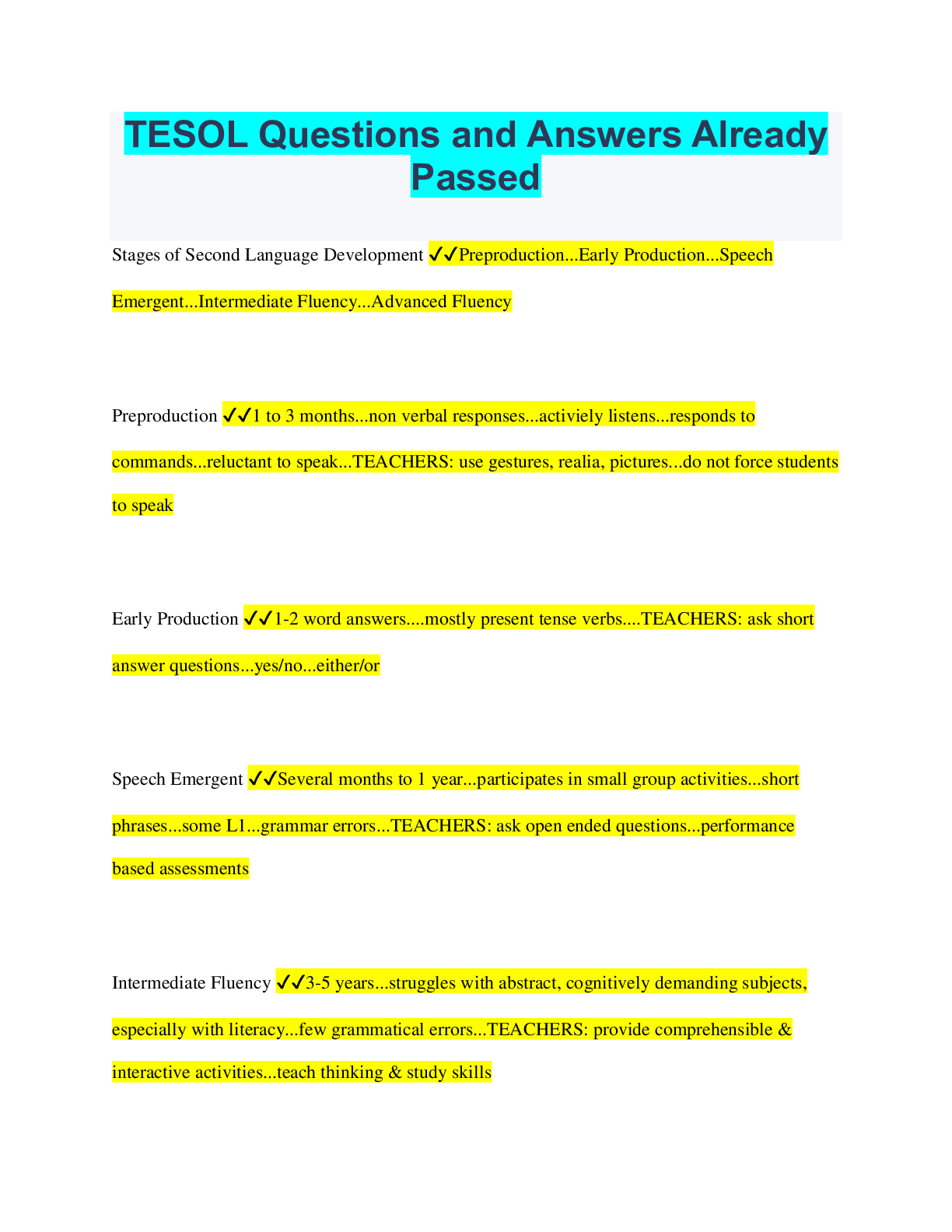
TESOL Questions and Answers Already
Passed
Stages of Second Language Development ✔✔Preproduction...Early Production...Speech
Emergent...Intermediate Fluency...Advanced Fluency
Preproduction ✔✔1 to 3 months...non verb
...
TESOL Questions and Answers Already
Passed
Stages of Second Language Development ✔✔Preproduction...Early Production...Speech
Emergent...Intermediate Fluency...Advanced Fluency
Preproduction ✔✔1 to 3 months...non verbal responses...activiely listens...responds to
commands...reluctant to speak...TEACHERS: use gestures, realia, pictures...do not force students
to speak
Early Production ✔✔1-2 word answers....mostly present tense verbs....TEACHERS: ask short
answer questions...yes/no...either/or
Speech Emergent ✔✔Several months to 1 year...participates in small group activities...short
phrases...some L1...grammar errors...TEACHERS: ask open ended questions...performance
based assessments
Intermediate Fluency ✔✔3-5 years...struggles with abstract, cognitively demanding subjects,
especially with literacy...few grammatical errors...TEACHERS: provide comprehensible &
interactive activities...teach thinking & study skills
Advanced Fluency ✔✔5-7 yearss...developed content area vocabulary...participates in grade
level activities with minimal support...TEACHERS: continue to support students as necessary
Krashen's Natural Approach ✔✔focus on natural communication...speech will emerge...goal is
the learn BICS for everyday situations
BICS ✔✔Basic Interpersonal Communcation Skills...social & conversational language...2-3
years to understand social language..."recess talk"
Affective Filter ✔✔think of a car window...down: info passes through and students learn...up:
high level of anxiety, blocks info from reaching learner
Cummin's Iceberg Model ✔✔surface features to two languages (top of two separated
icebergs)...concepts are transferable from L1 to L2...CUP
Student Support Schema ✔✔4 quadrants of cognitive and lingusitc demands...TEACHERS: have
cognitively demanding tasks that are context embedded
CALP ✔✔Cognitive Academic Language Proficiency...proficiency in the context reduced
academic language...7 or more years to become proficient
Instrumental Motivation ✔✔learning L2 to achieve goals...for a career...corporation sends
Japanese businessman to US for language training
Integrative Motivation ✔✔learning L2 to intergrate with culture...for immigration or
marriage...Japanese-American parents send kids to Japanese language school
Fossilization ✔✔aka stablization...plateaus with L2...so accustomed to an error that he does not
hear the correct use even though he is relatively fluent
Chomsky ✔✔born with capacity for language (aka universal grammar)...part of brain call the
LAD (Language Aquistion Device)
Grammatical Approach ✔✔L2 is learned by memorizing rules and patterns...isolated from
meaningful context
Behaviorism ✔✔learning is based on stimulus repsonse...Pavlov and Skinner were notable
behaviorist
Grammar-Translation Method ✔✔associate with Greek & Latin...focused on grammatical rules,
syntactic structures, rote memorization...time spent talking ABOUT language, but no time
talking IN the language
Direct Method ✔✔learn best by listening in large quantities...connecting words and prases to
actions and objects...L1 translation not allowed
Audiolingual Method ✔✔memorization & recall of patterns...patterned drills & dialouge to
develop grammatical structures & vocabulary in a sequence
The Communicative Approach ✔✔student centered...communication based...not in a
sequence...must provide context for authentic communication
Constructivism ✔✔meaning from experiences...born with ability to acquire language
comprehension...enviromental interactions
The Silent Way ✔✔teacher is silent...students describe what they observe in L2...L1 not
used...students develop their own critieria for language acquisition
The Natural Way ✔✔aka Krashen's Natural Approach...language develops naturally in
stages...comprehension preceeds production...communicative goals guide instruction...interactive
activities lower affective filter
Suggestopedia ✔✔fear of language learning stops rapid acquisition...create a relaxing
environement to enhance acquisition...students see text in L1 then L2...use conversation,
retelling, role playing...downfall was budget cuts
Community Language Learning ✔✔students choose what they want to learn...collaborate with
each other...teacher is conselor...L1 is encouraged...similar to Natural Approach
Top-Down Method ✔✔traditional view at the contextual level...Listening, Speaking, Reading,
Writing
Bottom-Up Method ✔✔traditional order is reversed...writing taught first...students develop
quicker because it is a private activity so the affective filter is low
Cognitive Approach ✔✔learner centered...learning functions (memory & cognition)...explicit
teaching of learning stategies in communivative ways
CALLA ✔✔Cognitive Academic Language Learning Approach...scaffolding, critical thinking &
learning strategies guide learning...gradual release of responsibilities
SIOP ✔✔Sheltered Instruction Observation Protocol...rubric to make content material
comprehensible...preperation, building background, comprehensible input, learning strategies,
interation, practice & application, lesson delivery, review & assessment
Zone of Proximal Development ✔✔span between with help & without help...Vygotsky's
theory...instructional level is just beyond independent ability, but not unattainable (i + 1)
Total Physical Repsonse ✔✔student respond physically to lessons...Simon Says
Bilingual Education ✔✔part of day in L1 other part in L2...students are able to keep up with
grade level work while learning English
Dual Immersion Education ✔✔native & non-native work together...all students learning through
two languages being translated back to back...students assume leadership roles, grade level
instruction in both languages...strive for bilingualism & biliteracy
Transitional Bilingual Education ✔✔first aquire fluency in L1...goal is to transition into English
only classroom asap...3 years of lessons in L1 while learning L2...many skills transfer to the L2
later
ESL Pull Out ✔✔most expensive, least effective...common in elementary schools...students
pulled out for a portion of the day to recieve instruction in ESL
ESL Collaboration/Push In ✔✔most of day in mainstream...team teaching & team
planning...ESL instruction is integrated into the content areas using listening, speaking, reading,
writing, study skills, content vocabulary & cultural orientation
[Show More]


.png)