NR507 WEEK 8 FINAL EXAM
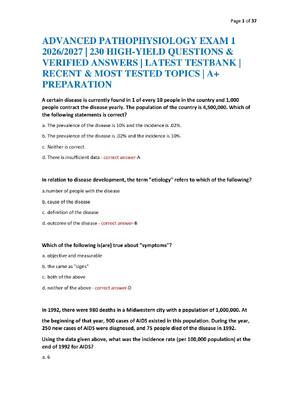
Question 1.
What phrase describes the condition in which a series of alveoli in the left lower lobe receive adequate ventilation but lack adequate perfusion?
A. A right to left shunt
(B). A
...
NR507 WEEK 8 FINAL EXAM
Question 1.
What phrase describes the condition in which a series of alveoli in the left lower lobe receive adequate ventilation but lack adequate perfusion?
A. A right to left shunt
(B). Alveolar dead space
C. A low ventilation-perfusion ratio
D. Pulmonary hypotension
Question 2.
A function of the pericardium is to:
(A). Provide a barrier against extracardial infections
B. Improve blood flow through the heart
C. Play a role in cardiac conduction
D. Assist in cardiac contraction
Question 3.
Clinical manifestations of bile salt deficiencies are r/t poor absorption of:
(A). Fats & fat-soluble vitamins
B. Water-soluble vitamins
C. Proteins
D. Minerals
Question 4.
The FNP is teaching the community about health promotion. Which information should the FNP include for innate immunity?
A. following an illness
(B). At birth
C. via injection of specific antibodies
D. In adulthood
Question 5.
A 10 y/o develops pneumonia. Physical exam reveals subcostal and intercostal retractions. The child reports that breathing is difficult with feelings that, "I can't get enough air." What term should the FNP use to document this condition?
A. cyanosis
(B). Dyspnea
C. Hyperpnea
D. Orthopnea
Question 6.
When the FNP is reviewing lab results & notices that the erythrocytes contain an abnormally low concentration of hgb, the nurse calls these erythrocytes:
A. hyperchromic
(B). Hypochromic
C. Macrocytic
D. Microcytic
Question 7.
A 45 y/o/m complains of heart burn after eating & difficulty swallowing. These symptoms support which diagnosis?
A. pyloric stenosis
B. Gastric cancer
C. Achalasia
(D). Hiatal hernia
Question 8.
A 25 y/o/f has a heavy menses during which she loses a profuse amount of blood. Which of the following adaptations should the nurse expect?
A. Movement of fluid into the cell
B. Decreased cardiac output
C. Decreased oxygen release from hgb
(D). Peripheral vasoconstriction
Question 9.
Which pt will develop active immunity? A pt who:
(A). has natural exposure to an antigen or receives an immunization
B. Receives preformed antibodies or T cells from a donor
C. Has T cells that become B cells
D. Receives immunoglobulin
Question 10.
Chronic gastritis is classified according to the:
A. Severity
(B). Location of lesions
C. Pt's age
D. Signs & symptoms
Question 11.
A 16 y/o/f student is driving to school when another driver nearly hits her. Her hrt begins beating harder & faster as she becomes aroused & scared. Which of the following states of the general adaptation syndrome is she experienced?
(A). Alarm stage
B. Stage of resistance
C. Adaptation
D. Exhaustion
Question 12.
50 y/o is diagnosed with gastroesophageal reflux. This condition is:
A. Fibrosis of the lower third of the esophagus.
B. Sympathetic nerve stimulation
(C). Loss of muscle tone at the lower esophageal sphincter
D. Reverse peristalsis of the stomach
Question 13.
A low ventilation-perfusion ratio of the lung will result in:
A. Increased dead space
(B). Shunting
C. Alveolar collapse
D. Bronchospasm
Question 14.
A 52 y/o/m is diagnosed with urinary tract obstruction. While designing the treatment plan, the nurse realizes that the pt is expected to have hydronephrosis & a decreased glomerular filtration rate caused by:
A. Decreased renal blood flow
B. Decreased peritubular capillary pressure
(C). Dilation of the renal pelvis & calyces proximal to a blockage
D. Stimulation of antidiuretic hormone
Question 15.
A 40 y/o/m's hx includes being a vegetarian & abusing alcohol. Which of the following factors put him at greatest risk for developing folate deficiency anemia?
A. Being vegetarian
(B). Being alcoholic
C. Age
D. Gender
Question 16.
A 20 u/o underwent an echocardiogram to assess chest pain. Results revealed a congenital defect in the papillary muscles. Which of the following would the nurse expect to occur?
A. Closure of the semilunar valve
(B). Backward expulsion of the atrioventricular valves
C. Closure of the atrioventricular valve.
D. Backward expulsion of the semilunar valves.
Question 17.
A 58 y/o/f presents in the clinic with fatigue, weight loss, and tingling of her fingers. Laboratory findings show low hgb & hct, a high mean corpuscular volume, & normal plasma iron. These assessment findings are consistent with which type of anemia?
A. hemolytic anemia
(B). Pernicious anemia
C. Iron deficiency anemia
D. Aplastic anemia
Question 18.
A 54 y/o/m with a long hx of smoking presents with a chief concern of excessive tiredness, sob, & overall ill feelings. Lab results reveal decreased pH, CO2, & normal bicarbonate ion. These findings help to confirm the diagnosis of:
A Respiratory alkalosis
B. Metabolic acidosis
(C). Respiratory acidosis
Question 19.
A 50 y/o/m reports episodes of frequently recurring crampy abd pain, diarrhea & bloody stools. A possible diagnosis would be:
(A). Ulcerative colitis
B. Hiatal hernia
C. Pyloric obstruction
D. Achalasia
Question 20.
As a result of blockage in the pulmonary artery, blood would first back up into the:
A. Aorta
B. Left ventricle
C. Pulmonary veins
(D). Right ventricle
Question 21.
What is the most likely cause of croup?
A. Bacteria
B. Acute hyperventilation
C. Allergy
(D). Viral Infection
Question 22.
A pt's anemia is described as having erythrocytes that demonstrate poikilocytosis. The FNP would recognize the erythrocytes would be:
A. Pale in color
B. Present in various sizes
(C). Able to assume various shapes
D. Live only a few days
Question 23.
A newborn is diagnosed with respiratory distress syndrome. When obtaining the pt's hx, which of the following is the most important predisposing factor for this condition?
A. Low birth weight
B. Alcohol consumption by the mother during pregnancy
(C). Premature birth
D. Smoking by the mother during pregnancy
Question 24.
Which of the following is responsible for initiating clonal selection ?
A. T cells
B. B cells
(C). Antigens
D. Lymphocytes
Question 25.
A 39 y/o is diagnosed with a duodenal ulcer. Which of the following behaviors mays have contributed to the development of the development of the ulcer?
(A). Regular NSAID use
B. Drinking caffeinated beverages
C. Consuming limited fiber
D. Antacid consumption
Question 26.
A 50 y/o/m recently underwent a liver transplant & is taking immunosuppressive drugs. He now has painful vesicular eruptions on the face & trunk. He reports that he had chickenpox as a child. Which of the following is the most likely diagnosis based on his chicken pox history?
A. Erysipelas
B. Herpes Simplex
C. Warts
(D). Herpes zoster
Question 27.
A 5 y/o presents to the clinic with high fever, inspiratory stridor, severe respiratory distress, drooling, & dysphagia. Acute epiglottis is suspected. When assessing the child, the FNP should avoid:
A. Trying to keep the child calm
(B). Examining the throat for redness
C. Auscultating the child's respiratory rate
D. Counting the heart rate apically
Question 28.
A 44 y/o patient who demonstrates chronic gastrointestinal bleeding is diagnosed with anemia. What is the primary cause of the pt's anemia?
A. Vitamin B12 deficiency
(B). Iron deficiency
C. Folate deficiency
D. Bone marrow failure
Question 29.
Biochemical secretions that trap & kill microorganisms include:
A. Hormones
B. Neurotransmitters
(C). Ear wax
D. Gastric acid
Question 30.
Which statement indicates a correct understanding of antibodies? The most abundant class of antibody in the serum is:
(A). IgG
B. IgM
C. IgA
D. IgE
[Show More]













.png)